
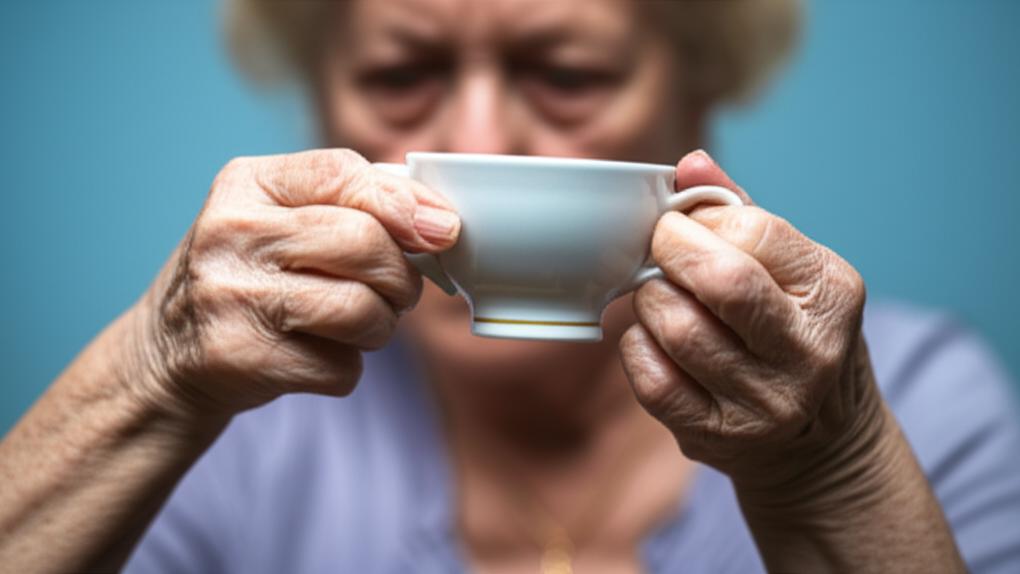
You may have seen a grandmother or grandfather in our house shaking or trembling hands while trying to drink a cup of tea or signing a letter. Most of the time, we think, "Oh... that's just something that happens when you get older." But the latest medical research suggests that there may be a story behind this shaking hands that we don't think about. That's what we're talking about today.
Know your body mass index (BMI) and weight classification
First of all, what is Essential Tremor?
Simply put, it is a condition that occurs in the nervous system. The main symptom is a rhythmic shaking of parts of the body, especially the hands. For some, this shaking can also affect the head, voice, and legs.
Many people confuse this with Parkinson 's disease . But there is a clear difference between the two. Think about it this way,
- In Parkinson's disease: Tremor is most noticeable when a person is not doing anything, just holding their hand.
- In Essential Tremor (ET): The tremor increases when a person is about to perform a certain action, for example, holding a glass of water, eating food, or writing.
For a long time, even doctors considered this Essential Tremor condition to be a harmless, nuisance tremor. That is, they thought that it didn't have a big impact on life, except for a little disruption to daily activities . But a new study has completely shaken this view.
What did the new study reveal?
A recent, very important study has found that people with Essential Tremor'' are about three times more likely to develop dementia than normal healthy people.
This is a discovery that really surprised many people.
Let's take a look at the details of this study:
This study involved 222 adults with essential tremor, with an average age of 79. Their brain function and memory were monitored continuously for 5 years.
The results obtained at the end of the research are very important.
- 18.5% of those with Essential TremorThat means about one in five people has dementia.
- Also, 26.6% have mild cognitive impairment (MCI), a condition characterized by mild memory loss. This rate is about twice that of the general population.
"The idea that essential tremor is just a slight tremor of the limbs is now over. This study completely destroys that idea," said a leading neurologist.
To clearly understand this risk numerically, see the table below.
| Team of people | Dementia risk |
|---|---|
| Normal healthy adults | Basic level (average risk) |
| People with Essential Tremor (ET) | About 3 times higher than normal |
| People with Parkinson's disease | The risk is higher than for those with ET (but the ET risk is also very significant) |
So, what is the message for us from this?
This doesn't mean that you should panic if you or someone in your family has Essential Tremor. It just means that you should be careful .
That means, in addition to hand tremors, it's also important to pay attention to symptoms such as changes in memory, difficulty understanding things, and difficulty performing daily tasks.
What are the things you want to do?
1. Be observant: If an adult in your family has Essential Tremor, watch for changes in their memory. For example, does they often forget things? Does they get confused? Does they have difficulty with simple calculations? Things like that.
2. Don't ignore the features:Don't dismiss these symptoms as "just things that happen when you get older." These could be early signs of a change in brain function.
3. Seek medical advice (most important): If you have any doubts or fears like this, definitely talk to your family doctor ) about this. Explain clearly about the Essential Tremor condition and the changes in memory. Then the doctor can do the necessary tests and give the right advice.
This discovery is a prime example of how we need to change the way we look at Essential Tremor. We need to be aware of the risks to memory and intelligence in these patients now.
Therefore, Essential Tremor is no longer something to be taken lightly. It can be an external symptom of another deeper process occurring in the brain. Therefore, it is important to be aware and seek medical advice at the right time.
💡 Take-Home Message
- Essential Tremor (ET) is not just a shaking hand. It significantly increases the risk of dementia.
- Recent research shows that this risk is about three times higher than the average person.
- If you or a loved one has Essential Tremor, watch out for changes in memory, thinking ability, and behavior in addition to tremors.
- If you notice any such changes, do not ignore them and discuss them with your doctor immediately. Early detection and management are very important.





No comments yet. Be the first to share your question or experience below.