Are you scared when you find a small lump or tumor somewhere on your body? Especially when you find a lump like this in a place like your neck, breast, or armpit, it is very normal to feel a lot of fear and anxiety, wondering, 'Is this cancer?' But the most important thing we need to remember is that not all lumps that form on the body are dangerous cancer cells. So, the FNAC that we are talking about today is a very simple, painless, and quick test that doctors use to find out exactly what this lump is and whether it is dangerous or not. Simply put, what is this FNAC test?
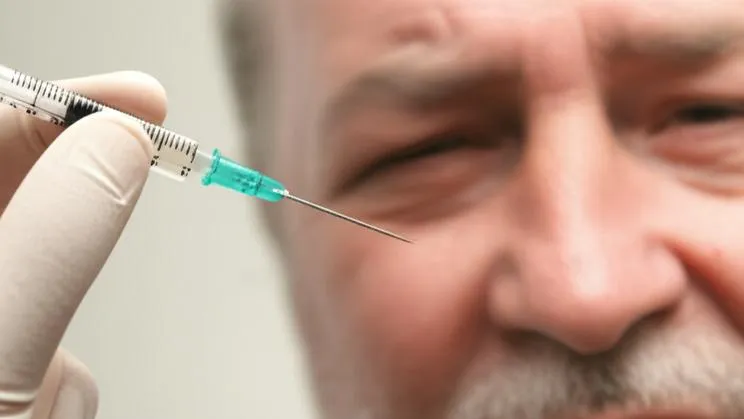
The full name of FNAC is Fine Needle Aspiration. This is actually a type of biopsy . A biopsy is when a piece of tissue is taken from our body and examined. This is what happens in FNAC. Simply put, a very thin needle (just like a blood test needle) is inserted into a lump or cyst in your body and a small sample of cells is sucked into a syringe. This cell sample is then sent to a lab and examined under a microscope to see what kind of cells they are. This is exactly like taking a little of our blood and checking things like diabetes and cholesterol . It gives us information about something inside our body. FNAC also gives us information about the cells inside that lump.
Based on the report from this test, your doctor will be able to accurately determine whether the lump is cancerous, a normal fatty tumor, a fluid-filled cyst, or something caused by another infection. FNAC is most often performed for lumps or swellings that are usually felt under the skin. You may find a lump like this yourself, or a doctor may see it when you are examining you. Sometimes, lumps inside the body can be found with various scans. For example: If a scan like this shows something unusual deep inside the body, an FNAC can be performed to find out exactly what it is. Common occasions and locations where FNAC testing is performed
| The nature of the knot | - Fluid-filled cysts )
- Nodules or masses
- Enlarged lymph nodes
|
| Most commonly examined body parts | - Breast
- Thyroid gland - front of the neck
- Lymph nodes in the neck, armpit, or groin
|
How should you prepare before the test?
This is a very simple test, so there is no need for much preparation. However, it is very important to follow your doctor's instructions exactly. Usually, they say things like this:- Medication Information: If you are taking blood thinners such as aspirin , warfarin , or clopidogrel, you may be asked to stop taking them a few days before the test. Never stop taking your medication without first talking to your doctor.
- Food and drink: You may be asked to refrain from eating or drinking for a few hours before the test, especially if you are given sedating medication.
- Someone to help: If you are given a medication that makes you feel a little sleepy, it is essential that you bring someone with you to take you home after the test.
What actually happens during an FNAC?
Most FNAC tests are performed on an outpatient basis and take less than 10 minutes, so there is no reason to be afraid. What happens step by step:
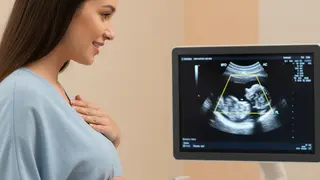
1. Cleaning: First, the skin around the needle insertion site is thoroughly cleaned with an antiseptic. 2. Numbness:Next, a small injection of numbing medicine may be given to reduce the pain in that area. You may not even feel the needle being inserted after this. 3. Scan: Sometimes, an ultrasound scan is used to find the exact location of the lump. The doctor inserts the needle into the lump while looking at the scan, so the test can be done very accurately. 4. Sample collection: Then, a thin needle connected to a syringe is inserted into the lump through a hole in the skin. The vacuum created inside the syringe sucks some of the cells or fluid from the lump into the syringe along the needle. This takes a few seconds. 5. Test completion: After the sample is taken, the needle is removed and a small plaster is applied to the area. That's it. Sometimes the sample is examined under a microscope to make sure that a sufficient sample was obtained. Or it is sent to the laboratory for further testing. What happens after the test?
Unless you have been given medication to make you sleepy, you can go home normally after the test. If you are given medication, you may feel sleepy and sluggish for a while. Where the test is performed:- It may swell a little.
- You may feel a little pain.
- It may be blue, like a bruise.
These things usually subside within a day or two. If you are in pain, you can take a common painkiller like Paracetamol. However, do not take other painkillers (especially aspirin) without asking your doctor. It can take about a week to get the final report of the test. Sometimes a preliminary report may be received earlier. Are there any risks or complications with this?
FNAC is a very safe procedure , and serious complications are rare.- Bleeding: A small amount of bleeding under the skin may occur, causing swelling and bruising (hematoma). This usually heals on its own in a few days.
- Infection: The risk of infection is very low because sterile equipment is used every time the test is performed.
Therefore, do not be unnecessarily afraid of an FNAC test. This is a very important and safe step to accurately diagnose your condition.
💡 Take-Home Message
- FNAC (Fine Needle Aspiration) is a very simple, safe, and quick biopsy test used to examine a lump or tumor in the body.
- The main purpose of this test is to accurately identify whether the lump is cancerous or not.
- The test takes only a few minutes. The pain is minimal. The risk of serious complications is very low.
- If you have an unusual lump or swelling on your body, never ignore it. See your doctor immediately for advice.






Janiw kuna arsuwinakas jichhakamax uñt’ayatäkiti. Aka chiqanx amuyt’awim jan ukax jiskt’awim yapxatañamawa.