
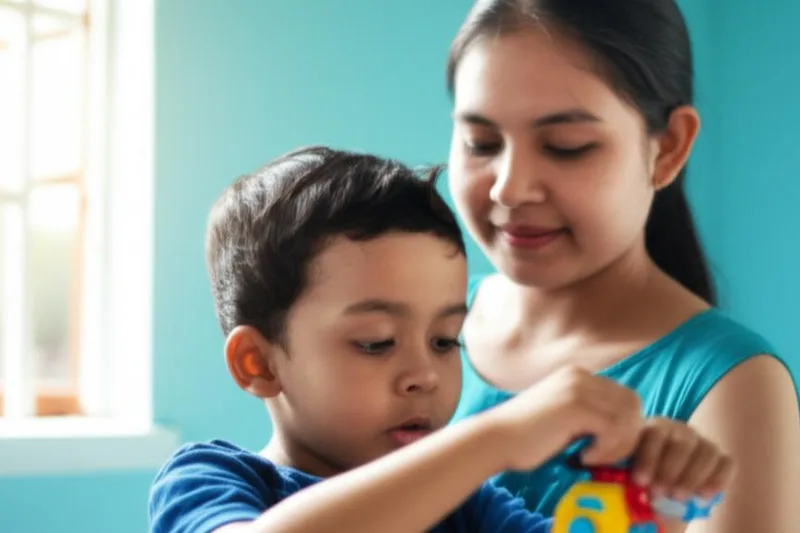
Let's talk about autism without fear: A guide for parents

Let's talk about autism without fear: A guide for parents

As a mother or father , do you sometimes think, "My child is a little different from other children?" Maybe he doesn't want to join in with others. Or maybe he does the same thing over and over again. It's normal to feel a little scared and worried when you see things like this. But the most important thing you need to know is that you are not alone in this journey. There are many families in the world who face such challenges. Today we are talking about such a very special topic, which is autism.

What is Autism Spectrum Disorder?

Simply put, Autism Spectrum Disorder (ASD) is not a disease. It is a condition caused by changes in brain development. This can affect a child's social interactions, communication skills, and behavior patterns.

Do you know why it's called a "spectrum"? Because this condition doesn't affect every child in the same way. Just like the colors of the rainbow, they are different from each other. While some children are affected very mildly, others may need adult assistance to even complete daily tasks. That's why no two children with autism are ever the same.

Every child is unique. The journey of a child with autism is also unique. Understanding their abilities and challenges and supporting them is the most important thing.

What are the common characteristics of autism?

While these symptoms vary from child to child, there are some common things that parents can look out for. These are usually seen within the first two to three years of a child's life. If your child has one or more of these, it doesn't necessarily mean that he or she has autism. But it's a good reason to talk to a doctor about it.

Affected sector Common features seen
Social relations and communication

  • Not looking back when called by name orNon- response .
  • Not looking directly at other people's faces (poor eye contact).
  • Preferring to play alone.
  • Difficulty understanding other people's emotions (happiness, sadness).
  • Having a speech delay or not speaking at all.
  • Repeating words or sentences (Echolalia).

Repetitive Behaviors

  • Continuing to do things like clapping, snapping fingers, or rocking your body back and forth.
  • Playing with toys in the same order.
  • Inability to tolerate even minor changes in daily routines (eating, drinking, and commuting).
  • Showing excessive interest in only one thing (e.g. a wheel on a car).
  • Hypersensitivity or no sensitivity at all to certain sounds, smells, or touches.

A rare but serious condition: Childhood Disintegrative Disorder (CDD)

Doug Flutie's son, mentioned in the source article, has a very rare autism spectrum condition called Childhood Disintegrative Disorder (CDD) . This is when a child develops normally until about two years of age, and then suddenly loses the things he learned (talking, walking, social skills). Although this is a very rare occurrence, it is a good example of how diverse the autism spectrum is.

What causes autism?

This is still being researched, but scientists believe that it is mainly caused by a combination of genetic and environmental factors . That is, things like genes passed down from generation to generation and certain conditions the mother faces during pregnancy can affect it.

The most important thing is that autism is not caused by parental upbringing . Also, all major health organizations, including the World Health Organization, have confirmed that there is no scientific link between vaccines and autism. So don't be fooled by such myths.

What do I do if I suspect my child has autism?

This is the most important part. If you have any doubts, follow these steps.

1. Don't panic:First, calm down. Your suspicions may be wrong. Every child develops at their own pace.

2. Keep a journal: Write down any unusual behaviors you notice, changes in your child's communication patterns, and social interactions. This will be very helpful when talking to the doctor.

3. Seek immediate medical advice: Without further delay, see your family doctor or pediatrician . Explain your observations to him or her.

4. Early Intervention: The sooner autism is identified, the sooner the child can receive the necessary treatment and support to develop their abilities . So don't delay, saying, "Let's wait a little longer."

The importance of seeking support and help

Doug Flutie and his wife, who founded a foundation for their son and are helping thousands of families with children with autism, show that this journey is not one to be undertaken alone. There are organizations and experts in Sri Lanka that help children and parents like this.

Speech Therapy, Behavioral Therapy, and Special Education can go a long way in helping a child succeed in life. Also, as a parent, talking to other parents who have similar experiences and sharing knowledge will be a great source of strength for you.

Take-Home Message

  • Autism is not a disease, it is a neurodevelopmental condition related to brain development.
  • This condition affects every child differently, which is why we call it a 'spectrum'.
  • If you have even the slightest doubt about your child's behavior, don't panic and talk to a pediatrician about it.
  • By identifying the child at an early age and providing the necessary treatment and support, the child's abilities can be maximized.
  • Autism is not caused by the parents' fault. You are not alone on this journey, and there are many people who can help you.

Autism, Autism Spectrum Disorder, ASD, Child Development, Pediatrics, Child Mental Health, For Parents, Child Behavior
⚠️ Important: The medical articles and information on Nirogi Lanka are for general awareness only, and are by no means a substitute for professional medical advice, diagnosis, or treatment. For any medical problem you have, consult a qualified physician immediately.

💬 Comments (0)

No comments have been posted yet. Add your comment here for the first time.

Add your comment

Please calculate: 8 + 3 =
Let's talk about autism without fear: A guide for parents
How the Body WorksJuly 6, 2026

Let's talk about autism without fear: A guide for parents

As a mother or father , do you sometimes think, "My child is a little different from other children?" Maybe he doesn't want to join in with others. Or maybe he does the same thing over and over again. It's normal to feel a little scared and worried when you see things like this. But the most important thing you need to know is that you are not alone in this journey. There are many families in the world who face such challenges. Today we are talking about such a very special topic, which is autism.

What is Autism Spectrum Disorder?

Simply put, Autism Spectrum Disorder (ASD) is not a disease. It is a condition caused by changes in brain development. This can affect a child's social interactions, communication skills, and behavior patterns.

Do you know why it's called a "spectrum"? Because this condition doesn't affect every child in the same way. Just like the colors of the rainbow, they are different from each other. While some children are affected very mildly, others may need adult assistance to even complete daily tasks. That's why no two children with autism are ever the same.

Every child is unique. The journey of a child with autism is also unique. Understanding their abilities and challenges and supporting them is the most important thing.

What are the common characteristics of autism?

While these symptoms vary from child to child, there are some common things that parents can look out for. These are usually seen within the first two to three years of a child's life. If your child has one or more of these, it doesn't necessarily mean that he or she has autism. But it's a good reason to talk to a doctor about it.

Affected sector Common features seen
Social relations and communication

  • Not looking back when called by name orNon- response .
  • Not looking directly at other people's faces (poor eye contact).
  • Preferring to play alone.
  • Difficulty understanding other people's emotions (happiness, sadness).
  • Having a speech delay or not speaking at all.
  • Repeating words or sentences (Echolalia).

Repetitive Behaviors

  • Continuing to do things like clapping, snapping fingers, or rocking your body back and forth.
  • Playing with toys in the same order.
  • Inability to tolerate even minor changes in daily routines (eating, drinking, and commuting).
  • Showing excessive interest in only one thing (e.g. a wheel on a car).
  • Hypersensitivity or no sensitivity at all to certain sounds, smells, or touches.

A rare but serious condition: Childhood Disintegrative Disorder (CDD)

Doug Flutie's son, mentioned in the source article, has a very rare autism spectrum condition called Childhood Disintegrative Disorder (CDD) . This is when a child develops normally until about two years of age, and then suddenly loses the things he learned (talking, walking, social skills). Although this is a very rare occurrence, it is a good example of how diverse the autism spectrum is.

What causes autism?

This is still being researched, but scientists believe that it is mainly caused by a combination of genetic and environmental factors . That is, things like genes passed down from generation to generation and certain conditions the mother faces during pregnancy can affect it.

The most important thing is that autism is not caused by parental upbringing . Also, all major health organizations, including the World Health Organization, have confirmed that there is no scientific link between vaccines and autism. So don't be fooled by such myths.

What do I do if I suspect my child has autism?

This is the most important part. If you have any doubts, follow these steps.

1. Don't panic:First, calm down. Your suspicions may be wrong. Every child develops at their own pace.

2. Keep a journal: Write down any unusual behaviors you notice, changes in your child's communication patterns, and social interactions. This will be very helpful when talking to the doctor.

3. Seek immediate medical advice: Without further delay, see your family doctor or pediatrician . Explain your observations to him or her.

4. Early Intervention: The sooner autism is identified, the sooner the child can receive the necessary treatment and support to develop their abilities . So don't delay, saying, "Let's wait a little longer."

The importance of seeking support and help

Doug Flutie and his wife, who founded a foundation for their son and are helping thousands of families with children with autism, show that this journey is not one to be undertaken alone. There are organizations and experts in Sri Lanka that help children and parents like this.

Speech Therapy, Behavioral Therapy, and Special Education can go a long way in helping a child succeed in life. Also, as a parent, talking to other parents who have similar experiences and sharing knowledge will be a great source of strength for you.

Take-Home Message

  • Autism is not a disease, it is a neurodevelopmental condition related to brain development.
  • This condition affects every child differently, which is why we call it a 'spectrum'.
  • If you have even the slightest doubt about your child's behavior, don't panic and talk to a pediatrician about it.
  • By identifying the child at an early age and providing the necessary treatment and support, the child's abilities can be maximized.
  • Autism is not caused by the parents' fault. You are not alone on this journey, and there are many people who can help you.

Autism, Autism Spectrum Disorder, ASD, Child Development, Pediatrics, Child Mental Health, For Parents, Child Behavior
⚠️ Important: The medical articles and information on Nirogi Lanka are for general awareness only, and are by no means a substitute for professional medical advice, diagnosis, or treatment. For any medical problem you have, consult a qualified physician immediately.

💬 Comments (0)

No comments have been posted yet. Add your comment here for the first time.

Add your comment

Please calculate: 8 + 3 =