
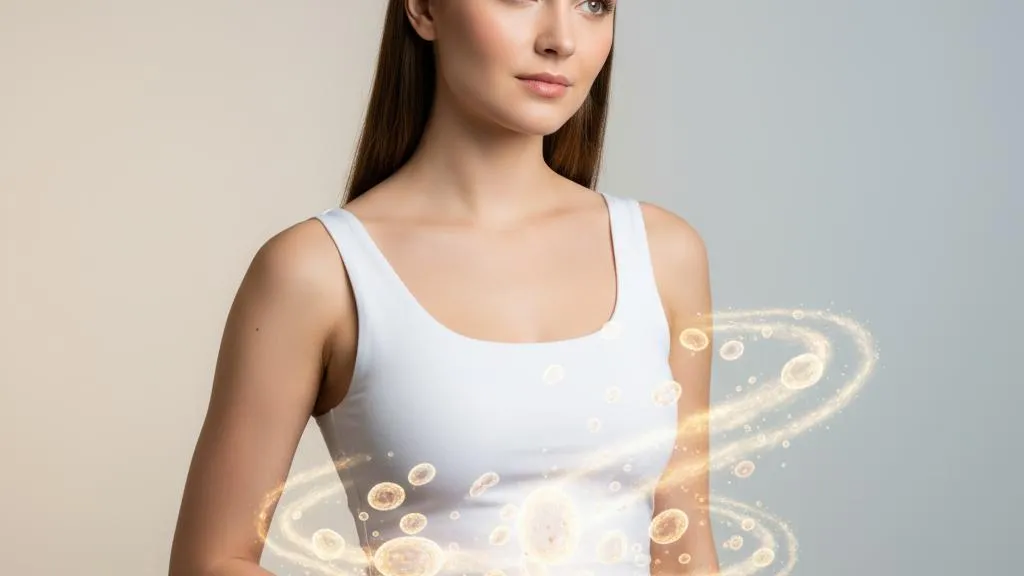
Your monthly period, or "having your period" as we usually call it, is not just a few days. It's just one part of an amazing, complex process that happens in your body. This entire process is called the Menstrual Cycle. So today we're going to talk about the "follicular phase," which is a very important, early part of this cycle.
Gratis Periodo Calculadora & Ciclo Rastreador ukax mä jach’a uñacht’äwiwa. Qhipa periodo uru ukhamaraki ciclo largo ukanaka qillqt’aña, jutïri 3 periodos, ovulación uru, ukhamaraki ventana fértil ukanaka yatiñataki.
What is the Follicular Phase?
Simply put, the follicular phase is the period of your monthly menstrual cycle when an egg matures in your ovaries. This is the first and longest step in the hormonal process that prepares your body for pregnancy throughout your fertile period.
Our entire monthly menstrual cycle can be divided into two main phases:
1. Follicular Phase: The period during which an egg matures.
2. Luteal Phase: The time after ovulation.
The main events that occur between these two phases are menstruation and ovulation. Think of it like a story. The story begins with menstruation, the first half of the story is the follicular phase, the climax of the story is ovulation, and the second half is the luteal phase.
Let's explain this further with the table below.
| The event of the cycle | Simply description |
|---|---|
| Menstruation | The lining of your uterus (endometrium) is shed and comes out with blood. The follicular phase begins from this day. |
| Follicular Phase | Immature eggs, which are contained in small sacs called follicles, begin to mature. Among these , one dominant follicle grows better than the others. |
| Ovulation | The fully mature egg breaks free from the main follicle and emerges from the ovary. This marks the end of the follicular phase and the beginning of the luteal phase. |
| Luteal Phase | The follicle from which the egg was released develops into a structure called the corpus luteum, which produces hormones necessary for pregnancy. If pregnancy does not occur, this breaks down and menstruation begins again, starting the cycle. |
What is really happening inside the body during this time?
This follicular phase is an amazing hormonal dialogue that takes place between your brain and your ovaries. Think of your brain as the master control room.
1. The first signal is from the brain: The hypothalamus in your brain sends a signal to the pituitary gland. The pituitary gland then releases a hormone called Follicle-Stimulating Hormone (FSH) into the bloodstream. As the name suggests, this hormone's job is to go to the ovaries and stimulate the follicles to grow.
2. Follicle competition begins: Under the influence of the FSH hormone, about 11 to 20 follicles inside the ovaries begin to develop at once. But this is like a competition. Not all of them win.
3. Emergence of the Dominant Follicle: One of these developing follicles grows faster and healthier than the others. We call it the Dominant Follicle. It is the egg inside this follicle that will be released during ovulation in the future.
4. Increased Estrogen: As the primary follicle grows, it produces more estrogen and releases it into the bloodstream. This estrogen hormone is very important. It thickens the lining of your uterus (endometrium), creating a favorable environment for a fertilized egg (embryo) to implant.
5. Elimination of unwanted competitors: When estrogen levels rise in the blood, it sends a signal back to the brain saying, "Okay, enough now, reduce the production of the FSH hormone." When FSH decreases, the other small follicles that were growing in addition to that main follicle lose their nutrition, and they shrink and are reabsorbed by the body. This ensures that only one healthy egg matures per cycle.
6. The final signal for ovulation: As the follicular phase nears its end, estrogen levels peak. This high estrogen level triggers the pituitary gland to release another hormone, called luteinizing hormone (LH).It signals a large, sudden release of the hormone LH. This sudden increase in LH (LH surge) is the final push for the mature egg to break free from the follicle and be released (ovulated).
Simply put, the follicular phase is the time when the body selects the best egg, nourishes it, and prepares the uterus to receive a guest.
How long is the follicular phase? Can it change?
A healthy menstrual cycle usually lasts between 28 and 35 days. The follicular phase can last between 14 and 21 days . The luteal phase that follows is usually about 14 days long.
That means the main factor that determines the length of your entire menstrual cycle is how long your follicular phase is. This time can vary at different points in your life. It depends entirely on how long it takes for that main follicle to produce a fully mature egg.
Long follicular phase
Just because your follicular phase is longer than normal doesn't mean you're less likely to get pregnant. It often just means your overall menstrual cycle is a little longer. There can be a few reasons for this:
- It could be a normal function of your body. Not everyone's body is the same.
- This period may be prolonged due to the birth control method you are taking.
- Vitamin D deficiency can sometimes also affect this.
Short follicular phase
A shortened follicular phase can sometimes be a sign of difficulty getting pregnant. It's common for the follicular phase to shorten (from 14 days to about 10 days, for example) especially as you approach menopause, which is when you're in your late 30s.
This is because, although FSH hormone levels increase with age, the LH surge required for ovulation may not be as strong as before. As a result, the follicle may grow rapidly and release the egg before the egg inside has fully matured. An egg that is released too quickly, and not mature enough, is not suitable for pregnancy.
Is it possible to get pregnant during this follicular phase?
Yes, you definitely can. In fact, your highest chance of getting pregnant is during the last few days of the follicular phase.
To be precise, the day of ovulation and within the five days before itThe chances of getting pregnant through sexual intercourse are very high. This is because sperm can live in the female body for up to 5 days. After ovulation, an egg can only live for a short time, about 12-24 hours. Therefore, the best way is to have sperm ready when the egg is released.
Things like ovulation calendars can help you know your fertile days.
What are the characteristics of the follicular phase? How do we know?
Your body gives you clues about the different phases of this cycle. One of the main clues is your basal body temperature. This is especially useful if you are trying to conceive.
- How to take your temperature: You should take your temperature in your mouth as soon as you wake up, at the same time every morning, before you get out of bed. It's more accurate to use a sensitive thermometer with decimal places (Basal Body Thermometer) rather than a regular thermometer.
- Follicular Phase Temperature: Your body temperature remains relatively low throughout this phase (between 97 and 97.6 Fahrenheit / 36.1 and 36.4 Celsius).
- Where the difference is: After ovulation, during the luteal phase, this temperature suddenly rises slightly and remains at that high level until your next period.
By recording your temperature for several months in this way, you will be able to identify a pattern in your cycle.
Knowing when the different phases of your menstrual cycle occur can be a big help when planning for a baby. It's best to track your cycle and symptoms and talk to your doctor or a fertility specialist about the best ways to increase your chances of getting pregnant.
💡 Take-Home Message
- The follicular phase is the first part of your menstrual cycle. It begins on the first day of your period and ends with ovulation.
- During this time, hormones released from your brain and ovaries (especially FSH and Estrogen) work together to mature a single healthy egg.
- The length of this phase can vary from person to person. It is the main factor that determines the length of your entire menstrual cycle.
- You are most likely to get pregnant during the last few days of the follicular phase and on the day of ovulation.
- If you have any concerns or doubts about the length, regularity, or fertility of your menstrual cycle, the best person to talk to is your doctor .





Janiw kuna arsuwinakas jichhakamax uñt’ayatäkiti. Aka chiqanx amuyt’awim jan ukax jiskt’awim yapxatañamawa.