
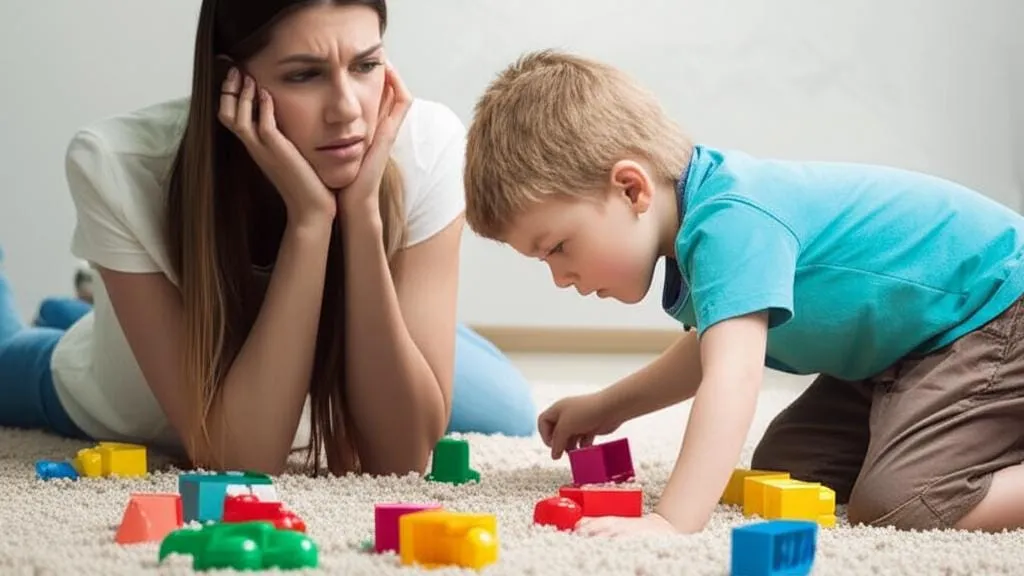
A question that many parents come to our clinics with is, "Oh, doctor, when he drinks a colored drink or eats a piece of colored cake, his mischievousness increases about tenfold." Perhaps you feel the same way about your child. So do these artificial food dyes really affect children's behavior, especially conditions like ADHD? This is a topic that has caused a lot of discussion around the world. Let's talk about this simply and clearly today.
Escala de Autoinforme de TDAH Adulto de la OMS (ASRS-v1.1 Parte A) ukan 6 jiskt’äwin validada ukan uñakipirip apsuñamawa, ukhamat jilïr jaqinakan jan yäqawipa, disfunción ejecutiva ukat hiperactividad ukanakat uñakipañataki.
First, let's see what ADHD is.
Before we get into this story, let's understand what ADHD (Attention Deficit Hyperactivity Disorder) is. ADHD is not a deliberate misbehavior of a child, nor is it a parenting mistake. It is a neurodevelopmental condition related to brain development. Children with this condition may exhibit three main symptoms:
- Inattention: Difficulty staying focused on one task. Easily distracted. Difficulty following instructions and completing tasks in an orderly manner.
- Hyperactivity : Never stays in one place. Always fidgeting, running, jumping. Has difficulty staying quiet and doing work.
- Impulsivity: Acts without thinking. Answers questions before they are finished. Cannot wait for their turn.
These symptoms can affect their academic performance, relationships with friends, and family life. So, as parents wonder, is the 'color' in food a cause of this?
Does food coloring really make children more naughty?
Scientists have been trying to answer this question for more than 30 years, but the results have been conflicting. However, one of the most important studies on this topic was conducted by the UK's Food Standards Agency in 2007.
Imagine, about 300 children participated in this research. Children aged 3 and 8-9 were given three types of drinks, and then their behavior was observed by parents and teachers.
Check out the table below to see what those drinks are.
| Drink type | Contents |
|---|---|
| Drink mix 1 | Artificial colors (Sunset yellow, Carmoisine, Tartrazine, Ponceau 4R) and the preservative sodium benzoate. |
| Drink mix 2 | Other artificial colors (Quinoline yellow, Allura red, Sunset yellow, Carmoisine) and sodium benzoate. |
| Drink Mix 3 (Placebo) | A drink that does not contain any artificial colors or preservatives. |
The results of the study are quite interesting. After drinking both types of drinks containing artificial colors, hyperactive behavior increased in 8- and 9-year-old children. While hyperactivity increased in 3-year-old children after the first drink, the second did not show such a significant increase.
From these results, the researchers concluded that there may be an adverse association between some artificial food colorings and hyperactive behavior in children.
So are food colorings the only cause of ADHD?
This is where we need to understand exactly. Although the research mentioned above shows a link, no scientific research has definitively proven that food coloring causes ADHD.
ADHD is a very complex condition, with a combination of factors contributing to it.
- Changes in brain structure and chemistry: Children with ADHD have certain changes in the function and neurotransmitters of certain parts of the brain.
- Heredity: If someone in the family has ADHD, the risk of a child developing the condition is higher.
- Environmental Factors: Things like maternal smoking, alcohol consumption , and low birth weight during pregnancy can also have some impact.
Simply put, food coloring is a trigger that can sometimes exacerbate symptoms in a child with ADHD, but it is not the primary cause of the condition.
Is it true that children become naughty when they eat sugar?
This is something that many parents hear, just like the food coloring story. You probably know from experience that your child will start to fuss as soon as they eat a sweet food, chocolate, or drink a sweet drink.
There is a scientific explanation for this. When we eat sugar (especially processed sugars), that sugar is quickly absorbed into our bloodstream. This causes a sudden surge in the hormone adrenaline in our bodies. This is what we call a 'sugar rush'. This can make a child very active for a while. After a while, as the blood sugar level drops, the child's activity also decreases.
But the most important thing here is that no research has been done so far to prove that sugar causes ADHD. Sugar only temporarily increases a child's activity.
What should I do as a parent?
With all of this, you might be wondering, 'So what do I do now?' Don't worry. There are some simple things you can do.
1. Read labels: If you buy something for your child from the store, make it a habit to read the ingredients list on the back of the package. Check to see if it says 'Contains Permitted Artificial Colours'.
2. Limit processed foods: Limit your child's intake of processed foods, such as colored drinks, toffee, jelly, and cakes, which may contain artificial colors and high levels of sugar.
3. Give priority to natural things: Instead, add natural things like home-cooked meals, fresh fruits, and vegetables to your child's diet. Even fruit juices are better if they are made at home.
4. Seek medical advice: This is the most important thing. If you have serious concerns or fears about your child's behavior, or if you think he or she has ADHD, the best thing to do is to see a pediatrician or psychiatrist . Don't judge your child based on what you read online or hear from others. Only a doctor can properly examine your child and prescribe treatment if necessary.
💡 Take-Home Message
- ADHD is a complex condition related to brain development. It has many causes. Food coloring or sugar alone does not cause ADHD.
- There is some evidence that some artificial food colorings can worsen mischievous behavior in some children with or who are predisposed to ADHD.
- Foods high in sugar only temporarily increase a child's activity, but do not cause ADHD.
- If you have any concerns or concerns about your child's behavior, attention, or misbehavior, the best thing to do is to seek advice from a qualified doctor , rather than guessing.






Janiw kuna arsuwinakas jichhakamax uñt’ayatäkiti. Aka chiqanx amuyt’awim jan ukax jiskt’awim yapxatañamawa.