
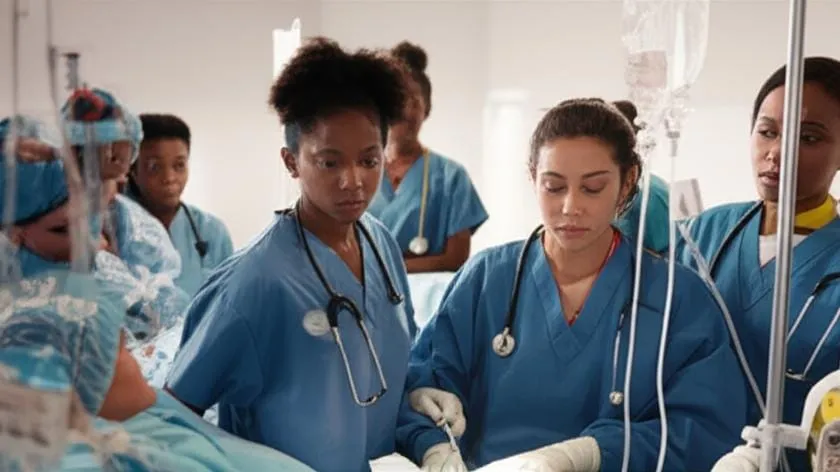
We are all a little afraid of the possibility of a mother's life being at risk during pregnancy, childbirth, or after the baby is born . In fact, this is a problem even in developed countries of the world. In medicine, this is called 'Maternal Mortality'. So, hospitals around the world are now using a new method to reduce such sad events as much as possible. That is, training doctors and nurses using real emergencies as well as simulated ones. Let's see how this saves mothers' lives.
Gratis usurïña uruxa calculadora. Qhipa periodo uru jan ukax concepción uru qillqt’aña, EDD, jichha trimestre ukat jach’a lurawinakat jikxatañataki.
What is this new training method?
Simply put, this is just like what happens in a real labor room. But the patient here is not a real person, but a specially built high-tech robot. This is called a mannequin. This robot mother and robot baby behave exactly like a real person. That is, they breathe, have a heartbeat, blood pressure changes, and even dangerous complications that can occur during childbirth are shown through these robots.
So in these simulation centers, the entire medical team, including doctors and nurses, come together and treat this robot patient. Just like they would treat a real patient. This allows them to practice making quick and accurate decisions in the event of a real emergency without panicking.
The robot patients used in these trainings now come in different skin tones. That's very important. Because it makes a big difference mentally for a doctor to train with a robot that looks like the patient they're treating .
What emergencies are encountered during these trainings?
Childbirth may seem like a very normal thing at one time, but it can also be an emergency. So, the training focuses most on such emergencies.
| Emergency Situation | A simple explanation |
|---|---|
| Maternal Hemorrhage | Excessive bleeding from the mother's uterus after giving birth. This is very dangerous and can be life-threatening if not controlled quickly. |
| Eclampsia (seizures caused by high blood pressure) | High blood pressure during pregnancy can cause seizures in the mother. This is dangerous for both the mother and the baby. |
| Cord Prolapse | The umbilical cord enters the vagina before the baby is born. This can cause the umbilical cord to become compressed and deprive the baby of oxygen. An emergency C-section may be required. |
| Shoulder Dystocia | After the baby's head comes out, the shoulders get stuck in the mother's pelvic bones. At this time, special methods must be used to carefully remove the baby. |
| Sudden Cardiac Arrest | Although very rare, a mother's heart can suddenly stop during childbirth. The medical team is trained on how to respond in such cases. |
How does training affect real life?
Think about it this way. Some drills are announced to the medical team in advance. But sometimes, without saying anything, they suddenly come in and shout, "A patient has a low umbilical cord, take him to the emergency room (ETU) right away!" And then you see how quickly the anesthesiologist gets ready, how quickly the operating room nurse gets ready, how long it takes for the whole team to assemble. This means that in a real emergency, they can act in seconds.
Since emergencies like this don't happen often, it can take years for a doctor or nurse to lose that kind of experience. So this training fills that gap.
The most important thing is that during childbirth, we have to think not about one patient, but about two patients. That is, the mother and the baby. This training teaches us how to save the lives of both of them in a balanced way.
Is this training really effective?
Yes! This has been proven by numerous studies. Because of this training:
- Injuries to babies in cases of shoulder dystocia have decreased significantly .
- Medical teams have become skilled at quickly identifying cases like cord prolapse and providing the necessary treatment.
- Since the decision was made to perform an emergency cesarean section, the time it takes to deliver the baby has decreased significantly .
Another thing is that through this training, even the shortcomings of the hospital can be identified. For example, in an emergency , it is checked how long it takes to get to the place where blood products are needed and whether the necessary equipment is easily available.
Also, during these trainings, we focus on how to talk to the patient and explain things to the family. This helps us to identify whether there are unconscious biases that sometimes lead to differences in treatment and to correct those shortcomings.
Today, organizations like the American College of Obstetrics and Gynecology (ACOG) are working to make this technology available to any hospital in the world, through low-cost robots and free training resources, as they strive to ensure that every mother and baby have the right to a safe birth.
💡 Take-Home Message
- Training doctors and nurses to deal with emergencies that may arise during childbirth is very important to protect the lives of both mother and baby.
- The use of high-tech robotic patients (simulation mannequins) for this purpose has been proven to be a very successful method worldwide.
- This training enables the medical team to work quickly, accurately, and simultaneously in an emergency.
- This technology can reduce maternal and infant mortality rates due to complications during childbirth.
- If you are pregnant, trust the medical team at the hospital where you will deliver your baby. They are dedicated to you and your baby. If you have any concerns, talk openly with your doctor.





Janiw kuna arsuwinakas jichhakamax uñt’ayatäkiti. Aka chiqanx amuyt’awim jan ukax jiskt’awim yapxatañamawa.