

If you have diabetes, you are probably familiar with the word 'insulin'. Maybe you are already taking insulin, or maybe your doctor has told you about it. So, what exactly is insulin? How does it help control our blood sugar levels? Today, we will talk about all this in a very simple way that you can understand.
What exactly is insulin?
Simply put, insulin is a hormone that our bodies produce. It is produced by an organ called the pancreas in our stomach. Think of the billions of cells in our bodies as tiny houses. These houses need energy to work and live. That energy comes from the sugar, or glucose, that is produced when we digest the food we eat.
So, to get this energy called glucose into the cells, we need a key to open the doors of those cells. That magic key is insulin . When insulin travels through the blood and binds to the cells, the doors of the cells open and glucose enters. In this way, insulin is essential for maintaining healthy blood sugar levels.
What happens to insulin in diabetes?
Diabetes is a disorder of this insulin process. There are two main types of diabetes. Both affect insulin in two different ways.
Type 1 Diabetes
What happens in this is that our own immune system mistakenly attacks and destroys the insulin-producing cells (beta cells) in the pancreas. It's as if the insulin-producing factory itself is being damaged. As a result, the body is unable to produce enough insulin. That is, there is a lack of keys to open the doors of the cells. Everyone with this condition must obtain insulin from outside sources to survive.
Type 2 Diabetes
This is the most common type of diabetes in society. There can be two problems here.
1. Insulin Resistance: In the early stages, the body produces insulin, but our cells do not respond to it properly. This means that even though the key (insulin) is there, the lock (cells) on the door is rusty and cannot be opened properly. This makes it difficult for glucose to enter the cells.
2. Decreased insulin production: The pancreas tries to produce more insulin to control the rising sugar levels. Over time, the insulin-making factory gets tired of working so hard, and the amount it produces gradually decreases.
The end result of both types of diabetes is the same. That is, blood sugar (glucose) cannot enter the cells and instead accumulates in the blood vessels. Continuously high blood sugar levels can gradually damage our blood vessels, nerves, and vital organs like the eyes, kidneys, and heart .
How does insulin treatment help?
The insulin that doctors prescribe to control diabetes is made in a laboratory and works just like the natural insulin produced by our bodies.
When we eat food, the carbohydrates in it are digested and converted into glucose, which is then added to the blood. This causes the blood sugar level to rise. When you take an insulin injection, that insulin goes and does that key job I mentioned earlier. That is, it helps the extra glucose floating in the blood enter the cells. The cells use some of that sugar right away for energy. The rest is stored in the liver, muscles, and fat cells for later use.
When sugar enters the cells in this way, your blood sugar level returns to a normal, healthy level .
Remember, insulin is not a punishment for your body, it is an aid to your body's natural processes.
Methods of taking insulin and its types
You may be wondering if you can't take insulin as a pill. The reason is that if you take it as a pill, the digestive enzymes in our stomach will destroy it. So it won't work. That's why insulin has to be injected under the skin. There are several ways to do this:
- A syringe and a small needle: This is the traditionally used method.
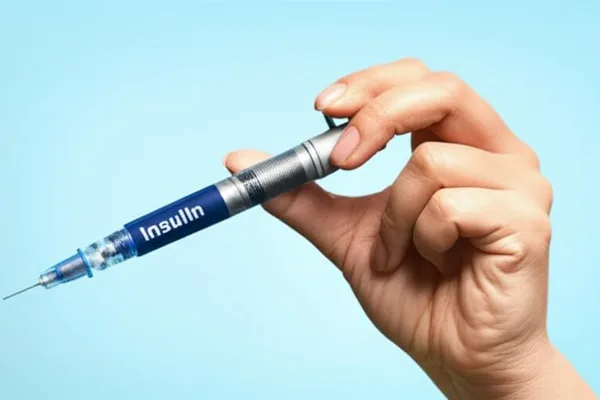
- Insulin Pen: This is very easy to use. Many people like this method because it allows you to get the exact dose you need.
- Insulin Pump: This is a small device, like a pager, that delivers insulin slowly throughout the day.
- Inhaled insulin: This is a type of insulin that is inhaled through a device similar to an inhaler used for asthma.
People with type 1 diabetes need to take insulin several times a day. Some people with type 2 diabetes can do with just one dose a day. Your doctor will decide based on your condition.
Also, there are different types of insulin. Each type has a different onset of action and a different duration of time for controlling blood sugar.
| Insulin Type | Time to start working. | Duration of effect |
|---|---|---|
| Rapid-acting | Within 15 minutes | 2 to 4 hours |
| Short-acting | Within 30 minutes | 3 to 6 hours |
| Intermediate-acting | 2 to 4 hours | From 12 to 18 hours |
| Long-acting | Within a few hours | About 24 hours |
Your doctor will recommend the type or combination of insulin that works best for you based on your diet, amount of exercise, and blood sugar levels at different times of the day. So, if you have any questions or concerns about insulin, be open and honest with your doctor.
Take-Home Message
- Insulin is an essential hormone produced by our own pancreas that controls blood sugar.
- In diabetes, the body's insulin production may decrease, or the body's cells may not respond to the insulin that is produced. This causes blood sugar levels to rise.
- Exogenous insulin therapy helps move excess sugar in the blood into cells and use it for energy.
- Insulin cannot be taken as a pill. It is given under the skin through an injection, pen, or pump.
- There are different types of insulin. Your doctor will determine the type and dose that is right for you. Therefore, it is very important to follow his or her instructions exactly.




💬 Comments (0)
No comments have been posted yet. Add your comment here for the first time.
Add your comment