Have you heard of a new way to use insulin for those with diabetes? (Insulin Pump)

Have you heard of a new way to use insulin for those with diabetes? (Insulin Pump)

If you are living with Diabetes Mellitus, taking insulin several times a day can sometimes be a bit of a hassle, right? You may even get tired of giving injections or taking it with a pen. But, did you know, there are new, very easy ways to do this now. One such way is the insulin pump . Shall we talk about it in more detail today?

What is an Insulin Pump?

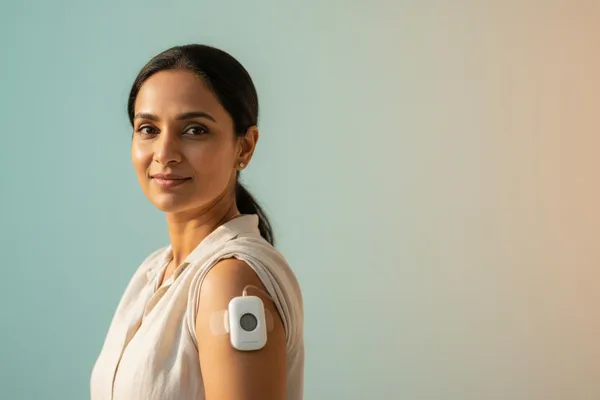
Simply put, it's a small, wearable medical device that delivers small amounts of insulin under your skin, almost continuously. Think of it like a small juice box or a deck of cards. Many pumps are computerized, meaning they're 'computerized.'

This is actually a good alternative to multiple daily injections (MDI) using a syringe or pen. This is especially useful for those who absolutely need insulin.

Insulin pump technology on the market is advancing rapidly. Like all pumps currently available in the United States, they are designed to work with CGM (Continuous Glucose Monitoring) technology, a device that continuously measures your blood sugar levels. This means that these new pumps can automatically adjust the amount of insulin you need at that time, based on your blood sugar levels.

How does this (Insulin Pump) work?

This insulin pump works by mimicking the way our pancreas naturally releases insulin. It delivers insulin to your body in two main ways:

1. Meeting Basal Insulin Needs

What happens is that your body receives a very small amount of insulin continuously throughout the day, hour by hour. We call this 'basal insulin' . This is what covers your body's basic insulin needs.

Did you know that the amount of basal insulin our bodies need varies at different times of the day? For example, many people need slightly more basal insulin in the morning than in the evening. This is because our bodies naturally secrete more of the hormone cortisol in the morning. This cortisol causes our blood sugar levels to rise slightly.

You should talk to your doctor and work out a 'basal rate' that suits you, that is, how much insulin you need per hour. Over time, as your body changes and your daily habits change, you will need to change this 'basal rate'. Many pumps now have the ability to automatically adjust this basal rate based on the data coming from your (CGM). You can also set it 'manually', that is, manually, using a rate that you and your doctor have worked out together.

2. Insulin given for meals and when blood sugar levels rise (Bolus Insulin)

This is the second method. When you eat a meal, or when your blood sugar level is higher than the recommended amount, you are given the required amount of insulin all at once . This is called 'bolus insulin' .

When you enter the amount of carbohydrates in the food you eat and your blood sugar level at that time into the pump, it calculates and tells you the amount of 'bolus' insulin needed. In most cases, the pump itself will suggest the appropriate amount. You can check it to see if it's right, make small changes if necessary, and confirm that you want to give insulin.

What other features are there?

Every type of insulin pump, every brand, has different technical features and settings. Here are a few examples:

  • The ability to work in conjunction with (CGM) technology to automatically increase, decrease, or temporarily stop insulin delivery based on blood sugar levels.
  • The ability to temporarily increase or decrease the 'Basal Rate' for a certain period of time, as you wish (for example, during exercise).
  • There are alarms for things like when the battery is low or when the insulin reservoir is almost empty.
  • If the CGM is connected to a pump, it will also notify you if your blood sugar level goes outside the specified range.
  • Being able to connect to phone apps and other smart devices.

Types of Insulin Pumps

There are two main types of insulin pumps: those with tubing and those without tubing.

1. Tubed Insulin Pumps

As the name suggests, this pump has a long, thin tube attached to it. This tube is what carries insulin from the pump to a small tube called a 'cannula' under your skin. Let's look at some of its parts:

  • Pumping machine and technology:This pump is made of plastic and metal. It has a screen to view and select various settings, data. It has a cartridge, or reservoir, filled with insulin. Depending on the brand, it can be either a replaceable battery or a rechargeable one. The amount of insulin that can be put in this reservoir varies from pump to pump. But you only fill it with the amount that you usually use for two to three days. You can put this pump in your pocket or clip it to a piece of clothing, such as your pants.
  • The tubing and infusion set: This is a few inches long tube that carries insulin from the insulin reservoir in the pump to the infusion set that is placed under your skin. The infusion set is attached to the skin with adhesive tape and has a small, flexible plastic tube (cannula) that goes under the skin. The cannula is only a few millimeters long. You can inject the infusion set by hand, or you can use a small device that comes with it. The cannula has a needle that goes through the skin and into the needle. The needle is then removed, leaving only the cannula under the skin. You can have this done on your upper arm, stomach, hip, buttock, or thigh.

Most of the time, the reservoir and infusion set need to be changed every two to three days. If the insulin runs out, the reservoir must be changed. A new infusion set, reservoir, and tubing should be used each time. However, the pump can usually be used for several years.

Although some tube pumps are waterproof, many people disconnect them from the infusion set when bathing or diving. They can then be reconnected. Some are only water resistant, not completely waterproof.

2. Tubeless Insulin Pumps / Patch Pumps

These pumps also have a flexible plastic tube (a 'cannula') that goes under the skin. However, both the insulin reservoir and the 'cannula' are in the same 'pod', which is a small patch-like part. This can be secured to the skin with an adhesive patch. There is no visible tube. It is then controlled wirelessly with a handheld 'controller'.

Each 'Pod' is used only once. Like a pump with a tube, it needs to be changed every two to three days. It must be changed if the insulin runs out.

Before you put on the Pod, you fill the reservoir with insulin and attach the adhesive strip to your skin. Then, when you press a button, the needle inside the cannula in the Pod comes out, pierces the skin, and goes back into the Pod. Only the cannula remains under the skin. You can also put it on your upper arm, stomach, hip, buttock, or thigh.

The special thing is that these tubeless pumps are waterproof, so you can wear them while swimming or going in the water.

What types of insulin pumps are available on the market?

There are different types of insulin pumps in different countries around the world. Here are some of the popular types currently available on the American market:

  • iLet® Bionic Pancreas System (a pump with a tube)
  • Medtronic MiniMed™ (several types of reed pumps)
  • Omnipod® (several types of reedless pumps)
  • Tandem® t:slim (several types of reed pumps)

There is another tubeless pump called the Accu-Chek® Solo Micropump System available in the UK, which is awaiting approval from the US (FDA - Food and Drug Administration). Some of these or other new types may be available in Sri Lanka as well. The best thing to do is ask your diabetes doctor about this.

Who uses this insulin pump?

Any diabetic who needs to take insulin artificially can use an insulin pump. This means:

  • For those with Type 1 Diabetes - that means both young children and adults.
  • For some people with Type 2 Diabetes.
  • A pump may also be suitable for people with Type 3c Diabetes or 'Monogenic' Diabetes.

Each type of pump has a minimum age limit for use, approved by agencies such as the FDA. Some pumps are approved for use by children as young as 2 years old. Many others are approved for use by people over 7 years old.

An insulin pump is just one treatment option for managing diabetes – it's a personal decision. You (or your child) may consider a pump if:

  • If you have difficulty controlling your blood sugar levels even after taking injections (MDI) several times a day.
  • If you want to adjust the amount of insulin you give more accurately, to your liking.
  • If you are someone who is constantly changing, unable to do your daily tasks or mealtimes.
  • If a small amount of insulin is needed. This often applies to young children and babies with diabetes.
  • If you have gastroparesis (meaning that food is slow to be digested and absorbed).
  • If you have the 'Dawn Phenomenon' (that is, if your blood sugar just increases in the morning).
  • If you are hoping to get pregnant.

Who is not suited to an insulin pump?

Insulin pumps aren't the best option for everyone – there are a number of reasons why a pump may not be a good fit for you or your child, including:

  • If you have difficulty using your hands and fingers: You need to use your hands and fingers to fill the insulin reservoir and press the pump buttons. If you have difficulty using your hands, whether due to a condition like arthritis or neuropathy, working with a pump can be a challenge.
  • If you have poor eyesight or are blind: If you have poor eyesight, your options with Pump technology may be limited. You will need to consider things like the size of the Pump screen, the clarity of the text, the size of the letters and numbers, and the backlight.
  • If you have trouble holding the pump: For example, if you or your child has sensory challenges, or severe skin allergies, a pump may not be suitable because it requires you to hold it in place at all times.

What are the benefits of using an insulin pump?

There are several advantages to using an insulin pump over taking multiple injections (MDI) several times a day:

  • The ability to adjust the amount of insulin given (in some pumps) to match different meals and exercise. This allows for more precise insulin dosing.
  • Insulin delivery can be combined with CGM technology.
  • Being able to 'download' data. This will help you and your diabetes doctor (Endocrinologist) better tailor your treatment plan.
  • Better blood sugar control. Studies in adults and children have shown that long-term pump users have significantly better blood sugar control than those using MDIs.
  • One thing that many people who switch from MDI to an insulin pump say is that their quality of life has improved significantly .
  • Decreased frequency of insulin injections.

Many diabetes specialists (Endocrinologists) encourage the use of these pumps because of their proven benefits.

Are there any disadvantages to insulin pumps?

Along with the advantages, there may be some disadvantages. When compared to injections (MDI), one of the biggest disadvantages of insulin pumps is the problems that can occur when getting insulin into the body.

Possible problems when receiving insulin:

These can be due to various reasons:

  • Cannula kinking or getting stuck: The cannula can become kinked or stuck due to pressure from the tissue under the skin. This stops the insulin from getting into the body.
  • Insulin Crystallization: Over the course of a few days, insulin can crystallize inside the cannula or tube. This can prevent you from getting the right amount of insulin. That's why many infusion sets and tubeless pumps are recommended to be changed every two to three days.
  • Infusion Set Disconnection: If you are using a pump with a tube, the tube may unknowingly come loose from the infusion set. This will cause insulin to leak out of the tube instead of going into your body.
  • Swelling or blood collection (Hematoma) at the infusion site: If there is severe swelling near the cannula, or if there is a blood clot, the insulin will not be absorbed properly.
  • Broken or clogged tubing: The tubing on the pump can get tangled or broken (for example, your pet can chew on the tubing). Even then, insulin will not be delivered to the body.
  • Adhesive Tape Problems: Infusion Sets and Tubeless Pumps are attached to the skin with adhesive. These can come off unintentionally or prematurely. Additional adhesive can be used to prevent this.
  • Pump failure: In rare cases, your insulin pump may break or not work properly. The battery may also run out.

Sometimes, your pump will detect an occlusion and notify you to change either the pump or the infusion set. But other times, for example, if the tubing comes off the set, the pump may not detect the problem. If you use a CGM, you may notice that your blood sugar is unexpectedly high, which may indicate a problem with your insulin delivery.

The most important thing: If you go without insulin for a period of time – usually a few hours – you are at increased risk of developing hyperglycemia and a life-threatening condition called diabetic ketoacidosis (DKA) .

Because of these insulin delivery issues, if you use a pump, it's very important to always have a backup plan in place. It could look like this:

  • When leaving the house, take insulin and pump-related supplies with you.
  • Keep insulin, syringes, or an insulin pen nearby for injection.
  • Keep the customer service number of the company that made the pump handy so that you can get help quickly if you have a technical problem.

To prevent or detect these problems early, make it a habit to check your pump and/or infusion set at least once a day. It is also very important to check your blood sugar levels regularly.

Are there any other disadvantages?

In addition to the main disadvantages mentioned above, there are some other things you may find disadvantageous:

  • Cost: Insulin pumps and supplies can be more expensive than insulin therapy (MDI). This cost will vary depending on your health insurance plan.
  • You should always be aware of your body: Every pump is an extra piece of equipment that you attach to your body. There are many clever ways to use them, but they take some getting used to.
  • Quantity of items needed: Compared to an MDI, insulin pumps require a lot more items – "stuff" – than an insulin pump. They require space to store them at home, and you have to carry extra bags when traveling, especially on long trips.
  • Allergic reactions to adhesives: Some people may have allergic reactions to the adhesives used on insulin pumps and infusion sets.

What to consider when choosing an insulin pump?

Choosing an insulin pump is a big decision. And there are a lot of things to think about. The good news is that pump companies have a lot of information about this, and they have trainers to answer your questions. Your diabetes doctor is also a great resource.

Here are some things to consider and ask when choosing a pump:

  • Do you want a tubed pump or a tubeless pump? What are the pros and cons of each type?
  • What is the weight, size, and appearance of the pump?
  • What pumps are covered by your health insurance, what are the costs associated with them, and how much does it cost per year?
  • How is the customer service from the company that makes the pump?
  • How do you get training?
  • How does this pump fit in with CGM technology?
  • How soon can I switch to a new pump?
  • Is it waterproof/watertight?
  • What types of insulin delivery settings and programs are there?
  • What kind of alarms and alerts are there? Do they make sounds or vibrate?
  • Can you read the pump screens clearly?
  • What smart devices can be connected?
  • How easy is it to use (intuitive)?
  • What software programs are available for downloading data that you can share with your doctor?

Finally, things to remember

So, an insulin pump is a flexible and convenient option for many people to take insulin. Many people with diabetes find an insulin pump easier than injections.

The important thing is that an insulin pump is not permanent. If you start using a pump and don't like it, you can switch back to injections at any time.

Choosing between the many different types of pumps on the market can be a daunting task. However, remember that your diabetes doctor will help you make the right decision for you. So, talk to your doctor about this further.


` Insulin pump, diabetes, insulin, blood sugar, CGM, basal insulin, bolus insulin

Frequently Asked Questions (FAQ)

What other features are there?

Every type of insulin pump, every brand, has different technical features and settings. Here are a few examples:

Are there any other disadvantages?

In addition to the main disadvantages mentioned above, there are some other things you may find disadvantageous:

⚠️ Important: The medical articles and information on Nirogi Lanka are for general awareness only, and are by no means a substitute for professional medical advice, diagnosis, or treatment. For any medical problem you have, consult a qualified physician immediately.

💬 Comments (0)

No comments yet. Be the first to share your thoughts here.

Add Your Comment

Please calculate: 8 + 8 =
Have you heard of a new way to use insulin for those with diabetes? (Insulin Pump)
MedicationsJuly 5, 2026

Have you heard of a new way to use insulin for those with diabetes? (Insulin Pump)

If you are living with Diabetes Mellitus, taking insulin several times a day can sometimes be a bit of a hassle, right? You may even get tired of giving injections or taking it with a pen. But, did you know, there are new, very easy ways to do this now. One such way is the insulin pump . Shall we talk about it in more detail today?

What is an Insulin Pump?

Simply put, it's a small, wearable medical device that delivers small amounts of insulin under your skin, almost continuously. Think of it like a small juice box or a deck of cards. Many pumps are computerized, meaning they're 'computerized.'

This is actually a good alternative to multiple daily injections (MDI) using a syringe or pen. This is especially useful for those who absolutely need insulin.

Insulin pump technology on the market is advancing rapidly. Like all pumps currently available in the United States, they are designed to work with CGM (Continuous Glucose Monitoring) technology, a device that continuously measures your blood sugar levels. This means that these new pumps can automatically adjust the amount of insulin you need at that time, based on your blood sugar levels.

How does this (Insulin Pump) work?

This insulin pump works by mimicking the way our pancreas naturally releases insulin. It delivers insulin to your body in two main ways:

1. Meeting Basal Insulin Needs

What happens is that your body receives a very small amount of insulin continuously throughout the day, hour by hour. We call this 'basal insulin' . This is what covers your body's basic insulin needs.

Did you know that the amount of basal insulin our bodies need varies at different times of the day? For example, many people need slightly more basal insulin in the morning than in the evening. This is because our bodies naturally secrete more of the hormone cortisol in the morning. This cortisol causes our blood sugar levels to rise slightly.

You should talk to your doctor and work out a 'basal rate' that suits you, that is, how much insulin you need per hour. Over time, as your body changes and your daily habits change, you will need to change this 'basal rate'. Many pumps now have the ability to automatically adjust this basal rate based on the data coming from your (CGM). You can also set it 'manually', that is, manually, using a rate that you and your doctor have worked out together.

2. Insulin given for meals and when blood sugar levels rise (Bolus Insulin)

This is the second method. When you eat a meal, or when your blood sugar level is higher than the recommended amount, you are given the required amount of insulin all at once . This is called 'bolus insulin' .

When you enter the amount of carbohydrates in the food you eat and your blood sugar level at that time into the pump, it calculates and tells you the amount of 'bolus' insulin needed. In most cases, the pump itself will suggest the appropriate amount. You can check it to see if it's right, make small changes if necessary, and confirm that you want to give insulin.

What other features are there?

Every type of insulin pump, every brand, has different technical features and settings. Here are a few examples:

  • The ability to work in conjunction with (CGM) technology to automatically increase, decrease, or temporarily stop insulin delivery based on blood sugar levels.
  • The ability to temporarily increase or decrease the 'Basal Rate' for a certain period of time, as you wish (for example, during exercise).
  • There are alarms for things like when the battery is low or when the insulin reservoir is almost empty.
  • If the CGM is connected to a pump, it will also notify you if your blood sugar level goes outside the specified range.
  • Being able to connect to phone apps and other smart devices.

Types of Insulin Pumps

There are two main types of insulin pumps: those with tubing and those without tubing.

1. Tubed Insulin Pumps

As the name suggests, this pump has a long, thin tube attached to it. This tube is what carries insulin from the pump to a small tube called a 'cannula' under your skin. Let's look at some of its parts:

  • Pumping machine and technology:This pump is made of plastic and metal. It has a screen to view and select various settings, data. It has a cartridge, or reservoir, filled with insulin. Depending on the brand, it can be either a replaceable battery or a rechargeable one. The amount of insulin that can be put in this reservoir varies from pump to pump. But you only fill it with the amount that you usually use for two to three days. You can put this pump in your pocket or clip it to a piece of clothing, such as your pants.
  • The tubing and infusion set: This is a few inches long tube that carries insulin from the insulin reservoir in the pump to the infusion set that is placed under your skin. The infusion set is attached to the skin with adhesive tape and has a small, flexible plastic tube (cannula) that goes under the skin. The cannula is only a few millimeters long. You can inject the infusion set by hand, or you can use a small device that comes with it. The cannula has a needle that goes through the skin and into the needle. The needle is then removed, leaving only the cannula under the skin. You can have this done on your upper arm, stomach, hip, buttock, or thigh.

Most of the time, the reservoir and infusion set need to be changed every two to three days. If the insulin runs out, the reservoir must be changed. A new infusion set, reservoir, and tubing should be used each time. However, the pump can usually be used for several years.

Although some tube pumps are waterproof, many people disconnect them from the infusion set when bathing or diving. They can then be reconnected. Some are only water resistant, not completely waterproof.

2. Tubeless Insulin Pumps / Patch Pumps

These pumps also have a flexible plastic tube (a 'cannula') that goes under the skin. However, both the insulin reservoir and the 'cannula' are in the same 'pod', which is a small patch-like part. This can be secured to the skin with an adhesive patch. There is no visible tube. It is then controlled wirelessly with a handheld 'controller'.

Each 'Pod' is used only once. Like a pump with a tube, it needs to be changed every two to three days. It must be changed if the insulin runs out.

Before you put on the Pod, you fill the reservoir with insulin and attach the adhesive strip to your skin. Then, when you press a button, the needle inside the cannula in the Pod comes out, pierces the skin, and goes back into the Pod. Only the cannula remains under the skin. You can also put it on your upper arm, stomach, hip, buttock, or thigh.

The special thing is that these tubeless pumps are waterproof, so you can wear them while swimming or going in the water.

What types of insulin pumps are available on the market?

There are different types of insulin pumps in different countries around the world. Here are some of the popular types currently available on the American market:

  • iLet® Bionic Pancreas System (a pump with a tube)
  • Medtronic MiniMed™ (several types of reed pumps)
  • Omnipod® (several types of reedless pumps)
  • Tandem® t:slim (several types of reed pumps)

There is another tubeless pump called the Accu-Chek® Solo Micropump System available in the UK, which is awaiting approval from the US (FDA - Food and Drug Administration). Some of these or other new types may be available in Sri Lanka as well. The best thing to do is ask your diabetes doctor about this.

Who uses this insulin pump?

Any diabetic who needs to take insulin artificially can use an insulin pump. This means:

  • For those with Type 1 Diabetes - that means both young children and adults.
  • For some people with Type 2 Diabetes.
  • A pump may also be suitable for people with Type 3c Diabetes or 'Monogenic' Diabetes.

Each type of pump has a minimum age limit for use, approved by agencies such as the FDA. Some pumps are approved for use by children as young as 2 years old. Many others are approved for use by people over 7 years old.

An insulin pump is just one treatment option for managing diabetes – it's a personal decision. You (or your child) may consider a pump if:

  • If you have difficulty controlling your blood sugar levels even after taking injections (MDI) several times a day.
  • If you want to adjust the amount of insulin you give more accurately, to your liking.
  • If you are someone who is constantly changing, unable to do your daily tasks or mealtimes.
  • If a small amount of insulin is needed. This often applies to young children and babies with diabetes.
  • If you have gastroparesis (meaning that food is slow to be digested and absorbed).
  • If you have the 'Dawn Phenomenon' (that is, if your blood sugar just increases in the morning).
  • If you are hoping to get pregnant.

Who is not suited to an insulin pump?

Insulin pumps aren't the best option for everyone – there are a number of reasons why a pump may not be a good fit for you or your child, including:

  • If you have difficulty using your hands and fingers: You need to use your hands and fingers to fill the insulin reservoir and press the pump buttons. If you have difficulty using your hands, whether due to a condition like arthritis or neuropathy, working with a pump can be a challenge.
  • If you have poor eyesight or are blind: If you have poor eyesight, your options with Pump technology may be limited. You will need to consider things like the size of the Pump screen, the clarity of the text, the size of the letters and numbers, and the backlight.
  • If you have trouble holding the pump: For example, if you or your child has sensory challenges, or severe skin allergies, a pump may not be suitable because it requires you to hold it in place at all times.

What are the benefits of using an insulin pump?

There are several advantages to using an insulin pump over taking multiple injections (MDI) several times a day:

  • The ability to adjust the amount of insulin given (in some pumps) to match different meals and exercise. This allows for more precise insulin dosing.
  • Insulin delivery can be combined with CGM technology.
  • Being able to 'download' data. This will help you and your diabetes doctor (Endocrinologist) better tailor your treatment plan.
  • Better blood sugar control. Studies in adults and children have shown that long-term pump users have significantly better blood sugar control than those using MDIs.
  • One thing that many people who switch from MDI to an insulin pump say is that their quality of life has improved significantly .
  • Decreased frequency of insulin injections.

Many diabetes specialists (Endocrinologists) encourage the use of these pumps because of their proven benefits.

Are there any disadvantages to insulin pumps?

Along with the advantages, there may be some disadvantages. When compared to injections (MDI), one of the biggest disadvantages of insulin pumps is the problems that can occur when getting insulin into the body.

Possible problems when receiving insulin:

These can be due to various reasons:

  • Cannula kinking or getting stuck: The cannula can become kinked or stuck due to pressure from the tissue under the skin. This stops the insulin from getting into the body.
  • Insulin Crystallization: Over the course of a few days, insulin can crystallize inside the cannula or tube. This can prevent you from getting the right amount of insulin. That's why many infusion sets and tubeless pumps are recommended to be changed every two to three days.
  • Infusion Set Disconnection: If you are using a pump with a tube, the tube may unknowingly come loose from the infusion set. This will cause insulin to leak out of the tube instead of going into your body.
  • Swelling or blood collection (Hematoma) at the infusion site: If there is severe swelling near the cannula, or if there is a blood clot, the insulin will not be absorbed properly.
  • Broken or clogged tubing: The tubing on the pump can get tangled or broken (for example, your pet can chew on the tubing). Even then, insulin will not be delivered to the body.
  • Adhesive Tape Problems: Infusion Sets and Tubeless Pumps are attached to the skin with adhesive. These can come off unintentionally or prematurely. Additional adhesive can be used to prevent this.
  • Pump failure: In rare cases, your insulin pump may break or not work properly. The battery may also run out.

Sometimes, your pump will detect an occlusion and notify you to change either the pump or the infusion set. But other times, for example, if the tubing comes off the set, the pump may not detect the problem. If you use a CGM, you may notice that your blood sugar is unexpectedly high, which may indicate a problem with your insulin delivery.

The most important thing: If you go without insulin for a period of time – usually a few hours – you are at increased risk of developing hyperglycemia and a life-threatening condition called diabetic ketoacidosis (DKA) .

Because of these insulin delivery issues, if you use a pump, it's very important to always have a backup plan in place. It could look like this:

  • When leaving the house, take insulin and pump-related supplies with you.
  • Keep insulin, syringes, or an insulin pen nearby for injection.
  • Keep the customer service number of the company that made the pump handy so that you can get help quickly if you have a technical problem.

To prevent or detect these problems early, make it a habit to check your pump and/or infusion set at least once a day. It is also very important to check your blood sugar levels regularly.

Are there any other disadvantages?

In addition to the main disadvantages mentioned above, there are some other things you may find disadvantageous:

  • Cost: Insulin pumps and supplies can be more expensive than insulin therapy (MDI). This cost will vary depending on your health insurance plan.
  • You should always be aware of your body: Every pump is an extra piece of equipment that you attach to your body. There are many clever ways to use them, but they take some getting used to.
  • Quantity of items needed: Compared to an MDI, insulin pumps require a lot more items – "stuff" – than an insulin pump. They require space to store them at home, and you have to carry extra bags when traveling, especially on long trips.
  • Allergic reactions to adhesives: Some people may have allergic reactions to the adhesives used on insulin pumps and infusion sets.

What to consider when choosing an insulin pump?

Choosing an insulin pump is a big decision. And there are a lot of things to think about. The good news is that pump companies have a lot of information about this, and they have trainers to answer your questions. Your diabetes doctor is also a great resource.

Here are some things to consider and ask when choosing a pump:

  • Do you want a tubed pump or a tubeless pump? What are the pros and cons of each type?
  • What is the weight, size, and appearance of the pump?
  • What pumps are covered by your health insurance, what are the costs associated with them, and how much does it cost per year?
  • How is the customer service from the company that makes the pump?
  • How do you get training?
  • How does this pump fit in with CGM technology?
  • How soon can I switch to a new pump?
  • Is it waterproof/watertight?
  • What types of insulin delivery settings and programs are there?
  • What kind of alarms and alerts are there? Do they make sounds or vibrate?
  • Can you read the pump screens clearly?
  • What smart devices can be connected?
  • How easy is it to use (intuitive)?
  • What software programs are available for downloading data that you can share with your doctor?

Finally, things to remember

So, an insulin pump is a flexible and convenient option for many people to take insulin. Many people with diabetes find an insulin pump easier than injections.

The important thing is that an insulin pump is not permanent. If you start using a pump and don't like it, you can switch back to injections at any time.

Choosing between the many different types of pumps on the market can be a daunting task. However, remember that your diabetes doctor will help you make the right decision for you. So, talk to your doctor about this further.


` Insulin pump, diabetes, insulin, blood sugar, CGM, basal insulin, bolus insulin

Frequently Asked Questions (FAQ)

What other features are there?

Every type of insulin pump, every brand, has different technical features and settings. Here are a few examples:

Are there any other disadvantages?

In addition to the main disadvantages mentioned above, there are some other things you may find disadvantageous:

⚠️ Important: The medical articles and information on Nirogi Lanka are for general awareness only, and are by no means a substitute for professional medical advice, diagnosis, or treatment. For any medical problem you have, consult a qualified physician immediately.

💬 Comments (0)

No comments yet. Be the first to share your thoughts here.

Add Your Comment

Please calculate: 8 + 8 =