
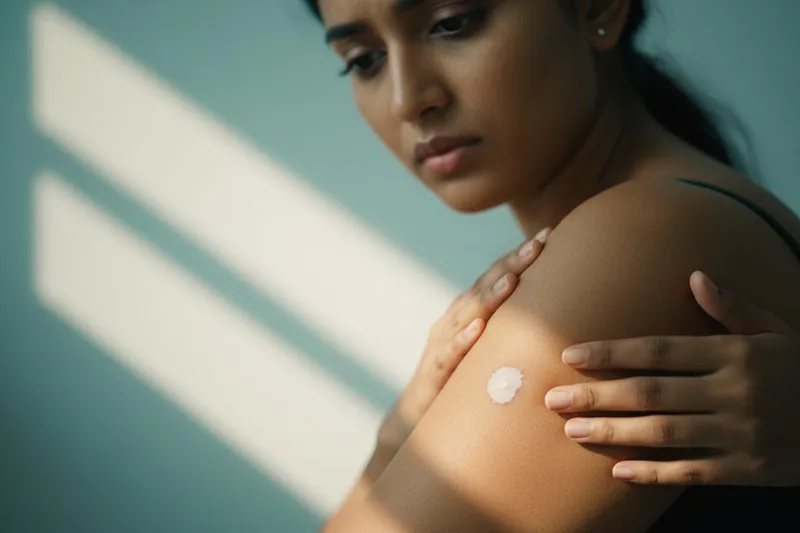
Do you have white spots and itching like this on your skin? Let's talk about Lichen Sclerosus!

Do you have white spots and itching like this on your skin? Let's talk about Lichen Sclerosus!

Have you ever had white patches or unbearable itching in your private parts, that is, around your genitals or anus? Perhaps the skin is thin and peeling like a crust. Don't just dismiss these as just a skin problem. It could be a symptom of a condition called Lichen Sclerosus. Don't worry, we'll talk about this in detail.

What is Lichen Sclerosus?

Simply put, Lichen Sclerosus is a skin condition that can cause a variety of problems with your skin. The condition most commonly affects:

  • To the area outside the vagina ( vulva )
  • To the penis
  • Foreskin
  • To the urethra
  • To the anus

This condition sometimes appears as a discolored, scaly, itchy, or scaly patch. Some people may also develop blisters and sores (often from constant scratching) around the genitals. However, these symptoms are rarely seen elsewhere on the body.

Lichen sclerosus is a long-term, chronic condition that can last a lifetime. If left untreated, it can cause scarring, difficulty having sex (dyspareunia), urinating , or having a bowel movement (bowel movement), and even pain . Untreated lichen sclerosus can also increase the risk of developing certain types of skin cancer (penile cancer and vulvar squamous cell carcinoma) . There is no cure for this condition, but treatment can help control symptoms.

Other names for this are ``Balanitis Xerotica Obliterans (BXO)`` and ``white spot disease``.

How does this look?

When lichen sclerosus first starts, it appears as small, white, shiny, slightly raised spots on your genitals or around your anus. Over time, more spots may form, and they may merge together to form a white patch that looks like a wrinkled sheet of parchment or tissue .

How common is this condition?

Lichen sclerosus is actually not a very common condition. For example, it affects about 200,000 people in the United States. Even if you have several risk factors , it is very rare to develop it.

What are the symptoms of Lichen Sclerosus?

The main symptoms are white, raised patches on your vulva, anus, foreskin, or glans. These can cause itching , pain, discomfort, or inflammation . Other symptoms may include:

  • Ulcers and sores
  • Inflammation ( i.e. swelling, redness)
  • Scarring
  • Skin cracking
  • Pain when urinating (dysuria)
  • Pain during sex
  • Decreased urination rate. Sometimes urine may not flow continuously and may even leak.
  • Tightening of your foreskin.
  • Inability to retract the foreskin (phimosis).
  • Penile discharge.

Very rarely, lichen sclerosus can also affect the skin on other parts of the body. For example:

  • Neck
  • Chest
  • Torso
  • On the outside
  • Wrist
  • Inside the mouth

Who is more likely to develop this? (Risk factors)

Anyone can develop it, but it is more common in postmenopausal women between the ages of 40 and 60. Girls who have not yet reached puberty are also at higher risk.

Men with foreskin are less likely to develop lichen sclerosus. Your risk may be slightly higher if you have an autoimmune disease or allergies .

Diabetes and a body mass index (BMI) of over 30 (i.e., overweight/obesity) can also increase the risk of developing lichen sclerosus.

What are the causes of Lichen Sclerosus?

Doctors and medical researchers still don't know exactly what causes lichen sclerosus. However, they believe it is an autoimmune disease.It may be related to. If you have an autoimmune disease, your immune system attacks healthy cells instead of protecting your body from germs.

Genetics and hormonal changes can also affect who gets the disease. Sometimes, lichen sclerosus develops after a person has experienced trauma (such as an injury or sexual abuse). Very rarely, it can be passed down from parents to children through genes.

Doctors and researchers are still researching lichen sclerosus to find the exact causes.

Most importantly: Lichen sclerosus is not contagious. You cannot spread it to someone else.

How do doctors recognize this? (Diagnosis)

Lichen sclerosus is diagnosed by a doctor. He or she will ask you questions about your symptoms and then perform a physical examination , which includes examining the affected areas.

What kind of tests are done?

To confirm the diagnosis, your doctor may perform a biopsy , which involves taking a small piece of the affected skin and examining it under a microscope.

Can this be cured without circumcision?

Yes, doctors can treat lichen sclerosus without circumcision . Although lichen sclerosus can sometimes be treated with circumcision, there are other alternative treatments.

What are the treatments for this?

Your doctor may suggest these types of lichen sclerosus treatments:

  • Topical corticosteroid creams: These are medications that are applied directly to the affected area. Often, medications like ``clobetasol`` are prescribed.
  • Phototherapy: Phototherapy uses ultraviolet light (usually ultraviolet B - `UVB`) from special lamps. This can reduce inflammation and minimize itching.
  • Immunosuppressants: These medications help stop your immune system from attacking healthy cells. They are often prescribed as a topical medication called tacrolimus.
  • Surgery: Depending on the part of the body affected by lichen sclerosus, a doctor may recommend surgery. For example, circumcision if the foreskin is affected, or urethroplasty if there are urethral strictures.

The most important thing is to have regular checkups with a doctor during lichen sclerosus treatment.Going to the. Then they can check for signs of skin cancer, and help prevent scarring around the genitals.

How long does it take to recover after treatment?

How quickly you recover depends on the type of treatment you receive.

  • It can take several weeks to see improvement with topical corticosteroids and immunosuppressant medications .
  • Phototherapy can take several treatments to improve the affected areas, and it can take up to two months to start to improve.
  • It can take about a week and a half to heal after circumcision . After circumcision, children should avoid sleeping on their stomachs and riding toys that bounce from side to side (e.g., rocking horses, seesaws, swings, bicycles). Adults should refrain from having sex or masturbating until their doctor gives them permission.
  • If you have urethroplasty , you will need to keep a catheter ( a tube) in your urethra for three to four weeks.

What can be done to prevent this and reduce the symptoms?

Although lichen sclerosus cannot be completely prevented, you can reduce the symptoms by making some lifestyle changes .

To reduce friction and irritation, do the following:

  • Practice good skin care habits . This means washing your skin regularly with soap and clean water, applying a moisturizer, and following your doctor's instructions to keep your skin healthy.
  • Wear loose underwear and clothes .
  • Avoid wearing clothing that irritates the skin (e.g., wool, silk).
  • When bathing or washing, use a mild soap . When wiping the skin, pat it dry without rubbing. Apply a moisturizing cream immediately after wiping. This will help the remaining moisture penetrate the skin.
  • Use lukewarm water instead of hot water when bathing or washing.
  • Avoid bubble baths ( baths with soapy water). The numbing effect of the foam can make itching worse.
  • Use unscented laundry detergent .
  • Avoid long-distance cycling, motorcycling, and horseback riding.
  • Change out of wet swimsuits and clothes quickly without leaving them on.

Early circumcision at a young age may reduce the risk of developing lichen sclerosus.

What should you expect when living with this condition?

Lichen sclerosus is chronic.Condition. Most people respond well to treatment, but symptoms may return later. You may develop scarring , which can make it difficult or uncomfortable to go to the toilet and have sex. If lichen sclerosus is present around the opening of the urethra (the meatus) in men, early treatment can help prevent scar tissue from forming in other parts of the urethra.

You also have a higher risk of developing things like squamous cell carcinoma and penile cancer . So see a doctor regularly for checkups so they can check for signs of cancer.

How is the outlook?

If a doctor can diagnose and treat lichen sclerosus as early as possible, the outlook is very good. However, even with early diagnosis and treatment, symptoms can recur throughout life.

Do you need to be careful about food and drink?

There is no specific diet recommended for lichen sclerosus. Some studies have shown that making changes to your diet can reduce your risk and improve symptoms. Talk to your doctor about which foods you should avoid and how to make healthy food choices.

When should I see a doctor?

Because lichen sclerosus has a variety of symptoms, they can mimic those of other conditions. Therefore, it is important to see a doctor as soon as possible if you notice any changes in your genitals or the surrounding areas.

If you have lichen sclerosus, see a doctor if your symptoms return after treatment. Also, make regular appointments with them to check for signs of cancer.

When should you go to an Emergency Treatment Unit (ETU) ?

If you are unable to urinate due to lichen sclerosus, go to an emergency room immediately.

What questions should you ask the doctor?

You can ask your doctor questions like these:

  • How can you tell if I have lichen sclerosus?
  • If I don't have lichen sclerosus, what other disease could I have?
  • What treatment option do you recommend?
  • What are the side effects of the treatment you recommend?
  • Is it safe for me to have sex or masturbate?
  • Should I see a dermatologist or another specialist?

Is this cancer? Is it a sexually transmitted disease? Let's learn a little more about this!

Is lichen sclerosus a cancer?

Lichen sclerosus is not cancer. Just because you have lichen sclerosus does not mean you will definitely develop cancer. However, lichen sclerosus is associated with penile cancer and vulvar squamous cell carcinoma.There may be a connection. If you have lichen sclerosus, it's very important to see a doctor regularly for checkups so they can check for signs of cancer. If you notice any changes in the appearance of your skin, let a doctor know.

Is lichen sclerosus a sexually transmitted disease (STI)?

No, lichen sclerosus is not a sexually transmitted disease (STI) , and it is not contagious. However, lichen sclerosus can look like an STI. It is best to avoid having sex until you have been diagnosed with lichen sclerosus by a doctor.

Can I have sex if I have lichen sclerosus?

Yes, you can have sex or masturbate if you have lichen sclerosus. However, sex can cause more numbness. Whether you have sex or masturbate, using a condom or an internal condom can help protect your skin and reduce discomfort.

Even though lichen sclerosus is not an STI, and your partner cannot get lichen sclerosus from you, it's a good idea to be honest with them about your condition. Encourage them to talk to a doctor if they have any concerns.

Is lichen sclerosus an autoimmune disease?

There is not enough data yet to classify lichen sclerosus as an autoimmune disease. However, people with lichen sclerosus often have autoimmune diseases. For example:

  • Alopecia areata ( patchy hair loss)
  • Vitiligo ( white patches on the skin)
  • Pernicious anemia ( anemia caused by vitamin B12 deficiency)
  • Type 1 diabetes
  • Some thyroid diseases

The close links between these diseases and lichen sclerosus suggest that this condition may be caused by your body's autoimmune response.

What is the difference between Balanitis and Lichen Sclerosus?

Balanitis is a condition that affects the tip of your penis (glans), usually caused by a yeast infection. It often occurs in men with a foreskin, because the warm, moist environment between the tip of the penis and the foreskin is a good place for yeast and other bacteria to grow. Balanitis can be treated with antifungal creams, antibiotics, circumcision, and by keeping the foreskin, glans, and the area under the foreskin clean and dry.

Lichen sclerosusIt can affect your genitals, anus, and urethra. Doctors don't know exactly what causes it, but they think it's related to your immune system. Treatments include topical corticosteroid creams, light therapy (phototherapy), immunosuppressant drugs, and surgery.

What is the difference between BXO and lichen sclerosus?

Balanitis Xerotica Obliterans (BXO) and lichen sclerosus are the same condition. Lichen sclerosus is the name doctors now prefer to use.

Final Take-Home Message

Lichen Sclerosus is not a common condition, and it is not a sexually transmitted disease. However, any condition that affects your genitals or anus can be embarrassing and embarrassing. Therefore, if you notice any changes or discomfort in your genitals, see a doctor as soon as possible . Although this is a chronic condition that can last a lifetime, and symptoms may appear from time to time, early treatment can lead to much better results . You are not alone, and don't be afraid to ask for help.


` Lichen Sclerosus, Skin Diseases, Itching, White Spots, Sexual Health, BXO, Skin Cancer, Women's Health, Men's Health

Frequently Asked Questions (FAQ)

Is lichen sclerosus an autoimmune disease?

There is not enough data yet to classify lichen sclerosus as an autoimmune disease. However, people with lichen sclerosus often have autoimmune diseases. For example:

⚠️ Important: The medical articles and information on Nirogi Lanka are for general awareness only, and are by no means a substitute for professional medical advice, diagnosis, or treatment. For any medical problem you have, consult a qualified physician immediately.

💬 Comments (0)

No comments have been posted yet. Add your comment here for the first time.

Add your comment

Please calculate: 9 + 3 =
Do you have white spots and itching like this on your skin? Let's talk about Lichen Sclerosus!
Reproductive HealthFebruary 24, 2026

Do you have white spots and itching like this on your skin? Let's talk about Lichen Sclerosus!

Have you ever had white patches or unbearable itching in your private parts, that is, around your genitals or anus? Perhaps the skin is thin and peeling like a crust. Don't just dismiss these as just a skin problem. It could be a symptom of a condition called Lichen Sclerosus. Don't worry, we'll talk about this in detail.

What is Lichen Sclerosus?

Simply put, Lichen Sclerosus is a skin condition that can cause a variety of problems with your skin. The condition most commonly affects:

  • To the area outside the vagina ( vulva )
  • To the penis
  • Foreskin
  • To the urethra
  • To the anus

This condition sometimes appears as a discolored, scaly, itchy, or scaly patch. Some people may also develop blisters and sores (often from constant scratching) around the genitals. However, these symptoms are rarely seen elsewhere on the body.

Lichen sclerosus is a long-term, chronic condition that can last a lifetime. If left untreated, it can cause scarring, difficulty having sex (dyspareunia), urinating , or having a bowel movement (bowel movement), and even pain . Untreated lichen sclerosus can also increase the risk of developing certain types of skin cancer (penile cancer and vulvar squamous cell carcinoma) . There is no cure for this condition, but treatment can help control symptoms.

Other names for this are ``Balanitis Xerotica Obliterans (BXO)`` and ``white spot disease``.

How does this look?

When lichen sclerosus first starts, it appears as small, white, shiny, slightly raised spots on your genitals or around your anus. Over time, more spots may form, and they may merge together to form a white patch that looks like a wrinkled sheet of parchment or tissue .

How common is this condition?

Lichen sclerosus is actually not a very common condition. For example, it affects about 200,000 people in the United States. Even if you have several risk factors , it is very rare to develop it.

What are the symptoms of Lichen Sclerosus?

The main symptoms are white, raised patches on your vulva, anus, foreskin, or glans. These can cause itching , pain, discomfort, or inflammation . Other symptoms may include:

  • Ulcers and sores
  • Inflammation ( i.e. swelling, redness)
  • Scarring
  • Skin cracking
  • Pain when urinating (dysuria)
  • Pain during sex
  • Decreased urination rate. Sometimes urine may not flow continuously and may even leak.
  • Tightening of your foreskin.
  • Inability to retract the foreskin (phimosis).
  • Penile discharge.

Very rarely, lichen sclerosus can also affect the skin on other parts of the body. For example:

  • Neck
  • Chest
  • Torso
  • On the outside
  • Wrist
  • Inside the mouth

Who is more likely to develop this? (Risk factors)

Anyone can develop it, but it is more common in postmenopausal women between the ages of 40 and 60. Girls who have not yet reached puberty are also at higher risk.

Men with foreskin are less likely to develop lichen sclerosus. Your risk may be slightly higher if you have an autoimmune disease or allergies .

Diabetes and a body mass index (BMI) of over 30 (i.e., overweight/obesity) can also increase the risk of developing lichen sclerosus.

What are the causes of Lichen Sclerosus?

Doctors and medical researchers still don't know exactly what causes lichen sclerosus. However, they believe it is an autoimmune disease.It may be related to. If you have an autoimmune disease, your immune system attacks healthy cells instead of protecting your body from germs.

Genetics and hormonal changes can also affect who gets the disease. Sometimes, lichen sclerosus develops after a person has experienced trauma (such as an injury or sexual abuse). Very rarely, it can be passed down from parents to children through genes.

Doctors and researchers are still researching lichen sclerosus to find the exact causes.

Most importantly: Lichen sclerosus is not contagious. You cannot spread it to someone else.

How do doctors recognize this? (Diagnosis)

Lichen sclerosus is diagnosed by a doctor. He or she will ask you questions about your symptoms and then perform a physical examination , which includes examining the affected areas.

What kind of tests are done?

To confirm the diagnosis, your doctor may perform a biopsy , which involves taking a small piece of the affected skin and examining it under a microscope.

Can this be cured without circumcision?

Yes, doctors can treat lichen sclerosus without circumcision . Although lichen sclerosus can sometimes be treated with circumcision, there are other alternative treatments.

What are the treatments for this?

Your doctor may suggest these types of lichen sclerosus treatments:

  • Topical corticosteroid creams: These are medications that are applied directly to the affected area. Often, medications like ``clobetasol`` are prescribed.
  • Phototherapy: Phototherapy uses ultraviolet light (usually ultraviolet B - `UVB`) from special lamps. This can reduce inflammation and minimize itching.
  • Immunosuppressants: These medications help stop your immune system from attacking healthy cells. They are often prescribed as a topical medication called tacrolimus.
  • Surgery: Depending on the part of the body affected by lichen sclerosus, a doctor may recommend surgery. For example, circumcision if the foreskin is affected, or urethroplasty if there are urethral strictures.

The most important thing is to have regular checkups with a doctor during lichen sclerosus treatment.Going to the. Then they can check for signs of skin cancer, and help prevent scarring around the genitals.

How long does it take to recover after treatment?

How quickly you recover depends on the type of treatment you receive.

  • It can take several weeks to see improvement with topical corticosteroids and immunosuppressant medications .
  • Phototherapy can take several treatments to improve the affected areas, and it can take up to two months to start to improve.
  • It can take about a week and a half to heal after circumcision . After circumcision, children should avoid sleeping on their stomachs and riding toys that bounce from side to side (e.g., rocking horses, seesaws, swings, bicycles). Adults should refrain from having sex or masturbating until their doctor gives them permission.
  • If you have urethroplasty , you will need to keep a catheter ( a tube) in your urethra for three to four weeks.

What can be done to prevent this and reduce the symptoms?

Although lichen sclerosus cannot be completely prevented, you can reduce the symptoms by making some lifestyle changes .

To reduce friction and irritation, do the following:

  • Practice good skin care habits . This means washing your skin regularly with soap and clean water, applying a moisturizer, and following your doctor's instructions to keep your skin healthy.
  • Wear loose underwear and clothes .
  • Avoid wearing clothing that irritates the skin (e.g., wool, silk).
  • When bathing or washing, use a mild soap . When wiping the skin, pat it dry without rubbing. Apply a moisturizing cream immediately after wiping. This will help the remaining moisture penetrate the skin.
  • Use lukewarm water instead of hot water when bathing or washing.
  • Avoid bubble baths ( baths with soapy water). The numbing effect of the foam can make itching worse.
  • Use unscented laundry detergent .
  • Avoid long-distance cycling, motorcycling, and horseback riding.
  • Change out of wet swimsuits and clothes quickly without leaving them on.

Early circumcision at a young age may reduce the risk of developing lichen sclerosus.

What should you expect when living with this condition?

Lichen sclerosus is chronic.Condition. Most people respond well to treatment, but symptoms may return later. You may develop scarring , which can make it difficult or uncomfortable to go to the toilet and have sex. If lichen sclerosus is present around the opening of the urethra (the meatus) in men, early treatment can help prevent scar tissue from forming in other parts of the urethra.

You also have a higher risk of developing things like squamous cell carcinoma and penile cancer . So see a doctor regularly for checkups so they can check for signs of cancer.

How is the outlook?

If a doctor can diagnose and treat lichen sclerosus as early as possible, the outlook is very good. However, even with early diagnosis and treatment, symptoms can recur throughout life.

Do you need to be careful about food and drink?

There is no specific diet recommended for lichen sclerosus. Some studies have shown that making changes to your diet can reduce your risk and improve symptoms. Talk to your doctor about which foods you should avoid and how to make healthy food choices.

When should I see a doctor?

Because lichen sclerosus has a variety of symptoms, they can mimic those of other conditions. Therefore, it is important to see a doctor as soon as possible if you notice any changes in your genitals or the surrounding areas.

If you have lichen sclerosus, see a doctor if your symptoms return after treatment. Also, make regular appointments with them to check for signs of cancer.

When should you go to an Emergency Treatment Unit (ETU) ?

If you are unable to urinate due to lichen sclerosus, go to an emergency room immediately.

What questions should you ask the doctor?

You can ask your doctor questions like these:

  • How can you tell if I have lichen sclerosus?
  • If I don't have lichen sclerosus, what other disease could I have?
  • What treatment option do you recommend?
  • What are the side effects of the treatment you recommend?
  • Is it safe for me to have sex or masturbate?
  • Should I see a dermatologist or another specialist?

Is this cancer? Is it a sexually transmitted disease? Let's learn a little more about this!

Is lichen sclerosus a cancer?

Lichen sclerosus is not cancer. Just because you have lichen sclerosus does not mean you will definitely develop cancer. However, lichen sclerosus is associated with penile cancer and vulvar squamous cell carcinoma.There may be a connection. If you have lichen sclerosus, it's very important to see a doctor regularly for checkups so they can check for signs of cancer. If you notice any changes in the appearance of your skin, let a doctor know.

Is lichen sclerosus a sexually transmitted disease (STI)?

No, lichen sclerosus is not a sexually transmitted disease (STI) , and it is not contagious. However, lichen sclerosus can look like an STI. It is best to avoid having sex until you have been diagnosed with lichen sclerosus by a doctor.

Can I have sex if I have lichen sclerosus?

Yes, you can have sex or masturbate if you have lichen sclerosus. However, sex can cause more numbness. Whether you have sex or masturbate, using a condom or an internal condom can help protect your skin and reduce discomfort.

Even though lichen sclerosus is not an STI, and your partner cannot get lichen sclerosus from you, it's a good idea to be honest with them about your condition. Encourage them to talk to a doctor if they have any concerns.

Is lichen sclerosus an autoimmune disease?

There is not enough data yet to classify lichen sclerosus as an autoimmune disease. However, people with lichen sclerosus often have autoimmune diseases. For example:

  • Alopecia areata ( patchy hair loss)
  • Vitiligo ( white patches on the skin)
  • Pernicious anemia ( anemia caused by vitamin B12 deficiency)
  • Type 1 diabetes
  • Some thyroid diseases

The close links between these diseases and lichen sclerosus suggest that this condition may be caused by your body's autoimmune response.

What is the difference between Balanitis and Lichen Sclerosus?

Balanitis is a condition that affects the tip of your penis (glans), usually caused by a yeast infection. It often occurs in men with a foreskin, because the warm, moist environment between the tip of the penis and the foreskin is a good place for yeast and other bacteria to grow. Balanitis can be treated with antifungal creams, antibiotics, circumcision, and by keeping the foreskin, glans, and the area under the foreskin clean and dry.

Lichen sclerosusIt can affect your genitals, anus, and urethra. Doctors don't know exactly what causes it, but they think it's related to your immune system. Treatments include topical corticosteroid creams, light therapy (phototherapy), immunosuppressant drugs, and surgery.

What is the difference between BXO and lichen sclerosus?

Balanitis Xerotica Obliterans (BXO) and lichen sclerosus are the same condition. Lichen sclerosus is the name doctors now prefer to use.

Final Take-Home Message

Lichen Sclerosus is not a common condition, and it is not a sexually transmitted disease. However, any condition that affects your genitals or anus can be embarrassing and embarrassing. Therefore, if you notice any changes or discomfort in your genitals, see a doctor as soon as possible . Although this is a chronic condition that can last a lifetime, and symptoms may appear from time to time, early treatment can lead to much better results . You are not alone, and don't be afraid to ask for help.


` Lichen Sclerosus, Skin Diseases, Itching, White Spots, Sexual Health, BXO, Skin Cancer, Women's Health, Men's Health

Frequently Asked Questions (FAQ)

Is lichen sclerosus an autoimmune disease?

There is not enough data yet to classify lichen sclerosus as an autoimmune disease. However, people with lichen sclerosus often have autoimmune diseases. For example:

⚠️ Important: The medical articles and information on Nirogi Lanka are for general awareness only, and are by no means a substitute for professional medical advice, diagnosis, or treatment. For any medical problem you have, consult a qualified physician immediately.

💬 Comments (0)

No comments have been posted yet. Add your comment here for the first time.

Add your comment

Please calculate: 9 + 3 =