
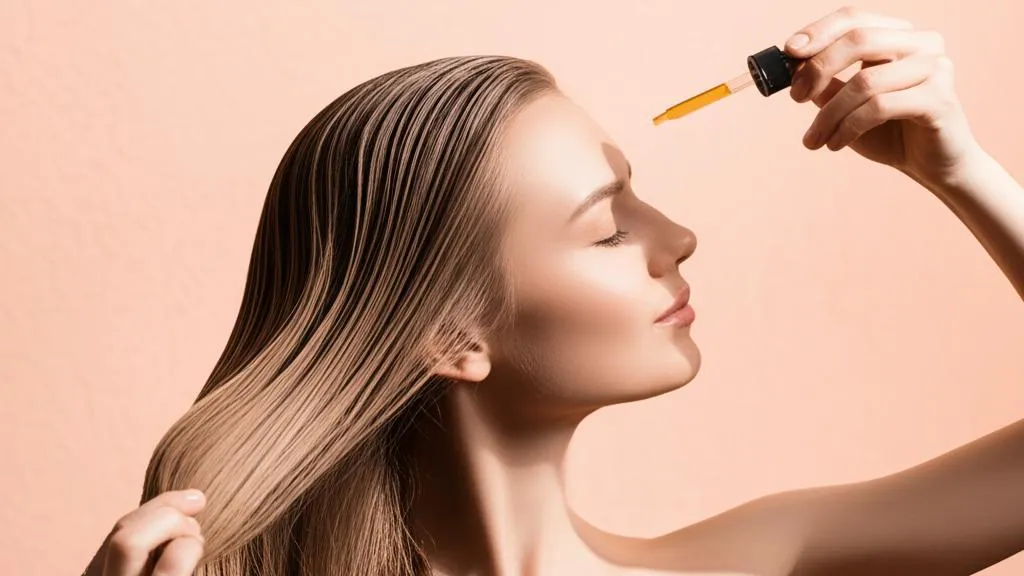
Nowadays, when it comes to hair care, using 'oil' has become very popular, hasn't it? Every shampoo and serum we see in the store is heavily advertised as containing these essential oils. Some people use things like coconut oil and castor oil to care for their hair at home. This is actually nothing new. For hundreds of years, even our ancestors have used these types of oils for various medical conditions as well as for beauty purposes. So today, let's talk about the types of oils used for hair, their differences, and how to use them properly.
What are Essential Oils and Carrier Oils?
You may have heard these two names before. Although they are both derived from plants, there is a big difference between the two. Let's understand that first.
Essential Oils
Simply put, these are the essences of a plant. That is, the fragrant oil that is distilled from parts of a plant such as leaves, flowers, bark, and roots, and is obtained in a highly concentrated form. These are very powerful. Imagine, it takes about 100 kilos of lavender flowers to make one kilo of lavender oil. That much is the essence of the plant. These also have the specific scent of that plant.
Carrier Oils
These are also obtained from plants. For example, coconut oil, almond oil, olive oil, jojoba oil, etc. But these are not as highly concentrated as essential oils . And they usually have a mild scent.
So why is this called a 'carrier' oil? The reason is that if we apply that highly concentrated Essential Oil directly to our skin, it can sometimes cause allergies and inflammation. Therefore, we use that powerful Essential Oil by diluting a few drops in this Carrier Oil . To be precise, this carrier oil, that powerful fragrant oil, acts as a safe "vehicle" for our skin and scalp. Do you understand?
Several types of oils that are good for hair and their properties
Now let's look at some popular oils that help with hair health and what their benefits are. I'll put this in an easy-to-understand table for you.
| Oil type | Benefits for hair |
|---|---|
| Almond Oil | Soothes the scalp and provides moisture. |
| Cedarwood Oil | Stimulates the scalp and helps hair growth. |
| Chamomile Oil | Gives shine and softness to hair, soothes the scalp. |
| Clary Sage Oil | Helps hair growth and stimulates the scalp. |
| Coconut Oil | Softens hair and adds shine. (This is a Carrier Oil) |
| Geranium Oil | Strengthens hair shafts. |
| Jojoba Oil | Moisturizes and nourishes the hair, stimulates the scalp. (This is a Carrier Oil) |
| Lavender Oil | Provides deep conditioning care to hair, maintains shine, and helps control frizz. |
| Moroccan Argan Oil | Provides moisture, nutrition, and antioxidants. |
| Rosemary Oil | It stimulates hair roots, improves blood circulation in the scalp, and helps hair growth. |
| Sandalwood Oil | It treats dry hair and adds a fragrance to the hair. |
How to use these essential oils safely on hair?
Okay, now you have an idea about the types of oils. Now let's see how to use them exactly. This is a very important part, because if used incorrectly, it can damage the skin.
Very important: Remember, never apply an essential oil directly to your scalp. They are highly concentrated and can cause skin irritation and allergies. Always dilute it.
How to dilute?
You only need a few drops of essential oil.
1. With shampoo or conditioner: You can mix two to three drops of essential oil into the shampoo or conditioner you use.
2. With a carrier oil : This is the best and recommended method. Mix a few drops of essential oil with a carrier oil, such as coconut oil or almond oil. Typically, 3-5 drops of essential oil per two tablespoons (about 30 ml) of carrier oil is enough.
Be careful about allergies.
If you have allergies to certain plants or flowers, be sure to do a patch test before using these oils.
- Apply a little of the oil mixture you have prepared to a small area of skin, such as behind the ear or on the inside of the elbow.
- Cover that area with a plaster and leave it for about 24 hours.
- If your skin doesn't become red, itchy, or blistered during that time, you're not allergic to the oil. Then you can apply it to your scalp.
- If you have any allergic reactions, do not use the oil. Also, if you have a severe allergic reaction , see a doctor immediately .
What do you do with the oil mixture?
Take the oil mixture you have prepared with your fingertips and gently massage it into your scalp for about 5-10 minutes, making sure it is well absorbed. Then, apply the remaining oil to your hair.
Next, cover your head with a shower cap or a towel soaked in hot water and wrung out. The heat will help the oil absorb better into your scalp and hair.
- You can leave this treatment on for about 30 minutes and then rinse it off.
- Or, you can leave it on overnight and wash it off with shampoo the next morning.
- Some people also use a small amount as a 'leave-in conditioner' after washing their hair.
Experiment with these methods and decide for yourself which one best suits your hair texture.
💡 Take-Home Message
- Essential oils are highly concentrated, very powerful plant extracts. Do not apply them directly to the skin.
- Always dilute essential oils in a carrier oil such as coconut oil or almond oil.
- Before using a new oil, be sure to do a patch test to check for allergies.
- If you have severe skin conditions, such as eczema, psoriasis, or severe allergies, be sure to consult your doctor before undergoing this treatment.
- Not everyone gets the same results. You may have to experiment a bit to find what works best for your hair.





Janiw kuna arsuwinakas jichhakamax uñt’ayatäkiti. Aka chiqanx amuyt’awim jan ukax jiskt’awim yapxatañamawa.