

Hello! Your little one is two months old now, isn't it? It's amazing how time flies! During these two months, your baby's checkup with the doctor or midwife is very important. Today, let's talk about what happens at this checkup, what you should expect, and how to take care of your baby until the next checkup.
BMI Calculator
Know your body mass index (BMI) and weight classification
What does the doctor look for during this checkup?
When you take your baby to the clinic, the doctor or nurse will take care of a few things. Don't worry, all of this is done for the good of you and your baby.
Measuring baby's growth
First, they measure the baby's weight, height, and head circumference and record them on a growth chart . This is how the doctor can see if the baby's growth is appropriate for his age and healthy. This is like a "progress report" for the baby.
Asks you questions, listens to your problems
The doctor will ask you a few questions about your baby's daily routine. If you have any questions, concerns, or concerns, this is the best time to ask.
- Breastfeeding pattern: The doctor will definitely ask about the baby's breastfeeding pattern. Your baby may be going without milk for a little longer now than before. But sometimes they may have "cluster feedings" where they want milk in a row. This is normal.
- If breastfeeding : A baby this age usually breastfeeds about 8 times a day.
- If you are feeding formula: Your baby will need about 26-28 ounces (780-840 milliliters) of formula per day.
Remember, not all babies are the same. Feed according to your baby's hunger .
- Urination and defecation: Your baby should have wet diapers several times a day. The number of times they defecate may have decreased a bit by now.
- Breastfed babies' poop should usually be yellow in color, slightly liquid, boneless, and soft.
- Formula-fed babies should have a slightly firm stool, but not as hard as a rock. If they have symptoms of constipation, tell your doctor.
- Sleep: Your baby may now be starting to stay awake a little longer during the day and sleep more at night.
- A breastfed baby can sleep for about 4-5 hours straight at night.
- A formula -fed baby may sleep for 5-6 hours straight.
- But even at this age , it's normal to wake up once or twice at night to drink milk.
- Developmental Milestones: By two months, babies usually start doing certain things. These are what we call developmental milestones .
- Do they make other small sounds (cooing, gurgling) besides crying?
- Does it startle or react to loud noises?
- Do you feel calmer when you talk or take more?
- Are you looking straight at your face?
- Can you stare at a toy for even a few seconds at a time?
- When you smile, talk, or play, do you smile back at yourself? (This is called a social smile, it's a beautiful thing!)
- Does your baby lift his head slightly when he is on his stomach (tummy time)?
- Can you move your arms and legs well?
- Does holding your hands together make you open them for a while?
If your baby isn't doing any of these things, or if you feel like they're not doing something they used to, be sure to talk to your doctor about it. Not all babies develop at the same rate, but your doctor can make sure everything is okay.
Complete physical examination
Next, the doctor will completely undress the baby (you'll do this in front of them, don't be afraid) and examine them. During this:
- Eyes are examined.
- They put a stethoscope to the heart and listen, checking the pulse.
- Checks to see if the hips are properly positioned.
- Attention is also paid to the baby's movements and muscle tone.
Special tests (Screening tests) if necessary
The doctor will review the results of some screening tests done at the hospital where the baby was born. Sometimes, if necessary, those tests may be repeated.
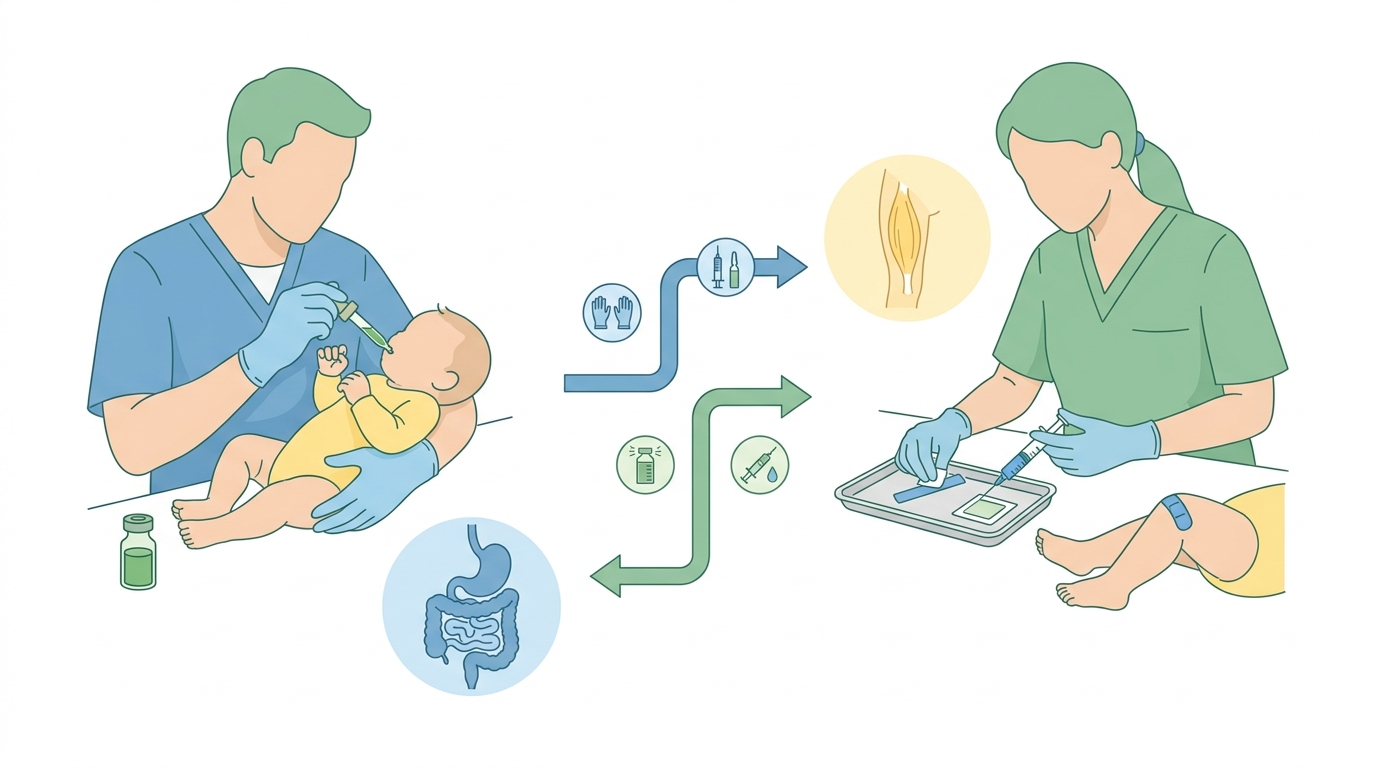
Giving vaccines
Vaccinations are very important to protect your baby from serious diseases . Therefore, it is essential to give them the right vaccines on time. There are usually a few vaccines that are given every two months. The vaccination schedule may vary slightly from doctor to doctor, so talk to your doctor about it.
Attention to the mother's mental health
Postpartum depression , a condition that mothers experience after having a baby, is more common than you might think. That's why your doctor may ask you to fill out a short questionnaire to find out about your mental state. If you're feeling stressed, sad, or anxious, don't hide it and tell your doctor. It's nothing to be ashamed of, and you can get help.
Keep these things in mind until your next checkup (in 4 months).
Okay, now the two-month checkup is over. The next big checkup is when the baby is four months old. Until then, there are a few things you need to take care of.

Natural solutions for hair fall
100% natural hair solutions for alopecia and medical hair loss.
Check Availability →


No comments yet. Be the first to share your question or experience below.