

Your little one is now four months old, isn't it? Words cannot express the joy you feel as your baby grows and learns new things. It's important to see your doctor or nurse at this time to learn about your baby's health and development. Let's see what happens at this 4-month check-up and what you need to know.
BMI Calculator
Know your body mass index (BMI) and weight classification
What happens when you go to see the doctor this time?
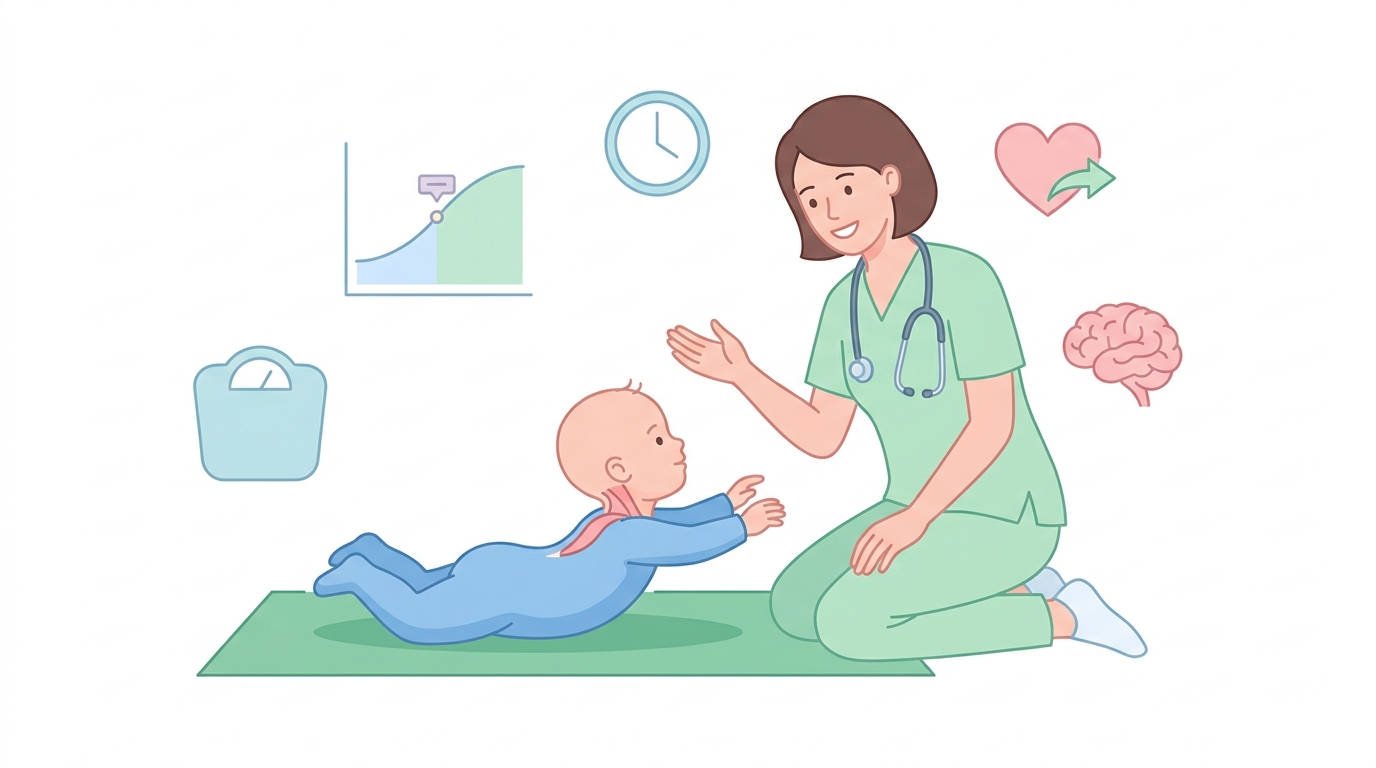
When you meet the doctor or nurse, they will check a lot of things about your baby and ask you questions. Don't worry, they are all doing this for the baby's best interest.
How to monitor baby's growth
First, the doctor or nurse will measure the baby's weight, height (length), and head circumference . Then, they will plot these measurements on a special chart called a "growth chart." This is how they can tell if the baby is growing properly. That is, if the baby is growing and developing at the right rate for his or her age, the baby's head will grow.
Questions the doctor asks and advice you can give
Next, the doctor will ask you about your baby. You can ask any questions or concerns you have at this time. They will also give you valuable advice.
About food and drink
At this point, your baby will still need breast milk or formula . Babies are usually ready to start eating solid foods around 6 months of age. This means things like iron-fortified cereals and pureed meats. However, before starting any solid foods, you should definitely talk to your doctor . He or she will be the one to tell you if your baby is ready for solid foods and what to give them.
About how to urinate and defecate
Babies this age should urinate several times a day, which means they should wet several nappies. They should also poop regularly. Some babies poop every day, while others poop every two to three days. As long as the poop is soft, it's normal . But if the poop is dry, hard like a rock, or seems difficult to pass, you should tell your doctor about it.
About sleep
Babies at this age sleep between 12 and 16 hours a day. This includes naps during the day. Most babies sleep for about 5 to 6 hours at a time at night. However, babies, especially those who are breastfed , may wake up more often . This is normal.
About baby's development (developmental milestones)
By 4 months, your baby will have started doing lots of new things. Check to see if your baby is doing these things:
- Do you turn your head to your side when you talk?
- Like 'Uu', 'Aaah'Do they make sounds like birds (cooing)?
- Does he respond by making some noise when you talk to him?
- Do you laugh a little, do you giggle? (This is not laughing out loud yet)
- When they see you, do they move or make noise to get your attention?
- Do you look at your own hands with interest?
- Will you grab a toy when you give it to you?
- Do you keep your head straight while holding it?
- Do they push up onto their elbows/forearms while lying on their stomach?
- Do you use your hands to play with toys?
Just think, all these little things are showing us how your baby's brain is developing.
>
However, if your child still isn't doing one or more of these things, or if they seem to be doing something they used to, then definitely talk to your doctor about it . There's nothing to worry about, but it's good to be aware.
Full body check-up
Next, the doctor will remove all of the baby's clothes in front of you and perform a complete physical exam . This will include checking the baby's eyes , listening to the heart, checking the pulse, checking the hip bones, and paying attention to the baby's movements.
You also need to remember about vaccines.
Vaccines are very important to protect your baby from serious diseases. Therefore, it is essential to give your baby the vaccines on time. The vaccination schedule may vary slightly from one clinic to another. Therefore, ask your doctor to find out which vaccines are being given this time and which ones will be given next.
The mother's mental well-being is also important (Postpartum Depression)
You know, it's normal for mothers to feel sad and depressed after having a baby. This is called postpartum depression . This is something that many mothers can experience. Therefore, your baby's doctor may ask you about your happiness and mental state. They may also have you fill out a short questionnaire. This is to help you, not for anything else.
Should we remember these things until the next check-up (in 6 months)?
Okay, now let's see what other things you need to take care of your baby until the next 6-month check-up.

Magnesium Muscle and Joint Care
A natural magnesium treatment that relieves muscle spasms, frizz and sore muscles.
Check Availability →


No comments yet. Be the first to share your question or experience below.