
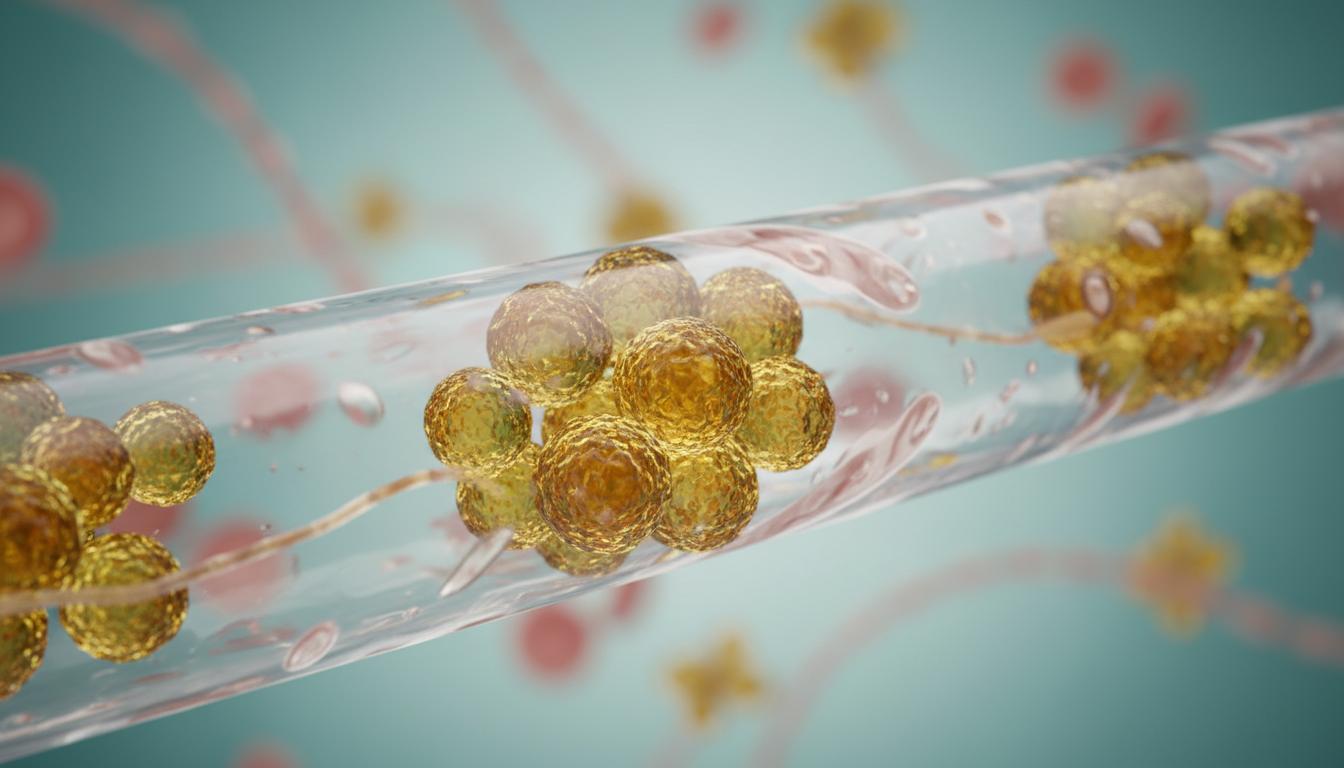
How many times have you heard the word " cholesterol "? Maybe you've heard someone at home talking about it, or maybe a doctor has told you or someone you know about it. What exactly is cholesterol? Is it good or bad for us? Let's talk about all this in a simple way today, in a way that you can understand. Just like talking to a friend.
Heart disease risk
Check the risk of developing a heart disease within the next 10 years with the Framingham Score
What is cholesterol? Where does it come from?
Simply put, cholesterol is a type of fat in your blood. Think of it like oil. It's essential for our bodies.
Now you're probably thinking, "Oh... so where does this cholesterol come from?" Our bodies get cholesterol in two main ways:
1. Made by our own body: Your liver does this job. It makes the amount of cholesterol your body needs every day. Isn't it amazing?
2. From the foods we eat: Yes, some of the foods we eat also contain cholesterol. For example:
- Meats ( beef , pork , chicken)
- Fish
- Eggs (especially the yolks)
- Butter
- Cheese
- Milk and milk products (like yogurt , skim milk)
But remember this too, fruits , vegetables, and grains like oats contain no cholesterol at all. That's why they are said to be very good for the body.
We need some cholesterol, not a lot!
Now you're probably thinking, "So cholesterol is a good thing?" Yes, that's true. But, like anything, too much cholesterol can cause problems. Just like a medicine can be poisonous if taken in excess.
Why does the body need cholesterol?
Cholesterol is actually an essential substance found in every cell in our body. It performs many important functions in our body. Just think:
- Cholesterol helps your brain function properly .
- Helps keep your skin healthy .
- Cholesterol is also necessary for the functioning of other organs in our body.
- Also, cholesterol is needed to make certain hormones and things like vitamin D, which helps with digestion.
So, do you understand? Cholesterol is like a friend to our body. But the problem is when that friendship goes beyond limits.
What happens if cholesterol increases?
This is where we need to be a little careful. If too much cholesterol accumulates in the blood, whether from the food we eat or from the amount our body makes, it's like a traffic jam on a road.
This excess cholesterol begins to build up inside your blood vessels. Think of it like rust building up inside a water pipe. Over time, this buildup builds up:
- Blood vessels thicken and become tight.
- The space inside the blood vessels narrows.
- Sometimes the blood vessels can become completely blocked.
When blood vessels become blocked over many years, it can lead to very dangerous conditions. This is a major cause of heart attacks and strokes in adults. This means that blood flow to the heart and brain is reduced or stopped.
The sad thing is, this cholesterol buildup in the blood can sometimes start at a young age, meaning when you're a child. That's why healthy eating habits are important from a young age.
How to know cholesterol level?
It's easy to find out what your blood cholesterol level is. A doctor can take a small sample of your blood and have it tested in a laboratory. This is called a "lipid profile" test. It can tell you not only your cholesterol, but also other types of fat in your blood.
What are the types of cholesterol?
Now let's dig a little deeper. Cholesterol doesn't travel alone in the blood. It doesn't mix together like water and fat. So, cholesterol combines with proteins to travel through the blood. When these cholesterol and proteins come together, we call them lipoproteins. Think of cholesterol as a passenger, and proteins are like a vehicle that carries it.
We're mainly talking about two types of lipoproteins. These are the "good cholesterol" and "bad cholesterol" you often hear about.
1. LDL (low-density lipoprotein) - "bad" cholesterol
This is called LDL (Low-Density Lipoprotein) cholesterol. Simply put, this is the "bad" type of cholesterol. Do you know why? LDL carries cholesterol from the liver to the blood vessels. This LDL helps to carry it and deposit it on the walls of the blood vessels. This means that the biggest reason for the blockage of blood vessels is the increase in LDL levels.
2. HDL (high-density lipoprotein) - "good" cholesterol
This is called HDL (High-Density Lipoprotein) cholesterol. This is the "good" type of cholesterol.HDL does a very valuable job. It picks up unwanted cholesterol from the blood vessels and carries it back to the liver. In the liver, this cholesterol is broken down and removed from the body. It's like sweeping and cleaning a street.
This is an easy way to remember!
Are you confused about LDL and HDL? Here's an easy way:
- LDL: Since it starts with the letter 'L', think of it as " Leda - sickness". Because if LDL increases, it brings illness to the body. Or you can also remember it as "Lousy" (bad) as they say in English.
- HDL: Since it starts with the letter 'H', think of it as " Hithakara - beneficial/healthy". Because HDL is beneficial to the body, good. In English, you can also remember it as "Healthy".
Do you understand? So our LDL levels need to decrease and our HDL levels need to increase.
How to control cholesterol without increasing it?
Okay, now we know what cholesterol is, what types it is, and what happens if it increases. So the most important thing is how to control this cholesterol level properly. Don't worry, this is not a big deal. We can overcome this by making a few small changes in our lifestyle.
Here are some things you can do:
1. Eat a healthy diet:
- Add more fruits, vegetables, and greens to your diet. These are high in fiber and low in cholesterol.
- Eat foods made from whole grains . Examples: brown rice, buckwheat, oats.
- Reduce the consumption of oily and fried foods as much as possible. Especially limit the use of oils that contain saturated fats, such as palm oil and coconut oil.
- Reduce sugary drinks and foods (sweetened drinks, cakes, biscuits, toffees, etc.) as these can lead to unnecessary weight gain and affect cholesterol.
- Reduce your intake of red meat (beef, pork, goat meat) and add fish (especially fish rich in omega-3s like salmon, mackerel, and herring) and chicken (without the skin) to your diet.
2. Exercise regularly:
- Make it a habit to exercise for at least 30-60 minutes a day . You don't have to do this all at once. You can break it up into 15 minutes in the morning and 15 minutes in the evening.
- Do whatever you like, like brisk walking, running, swimming, cycling, dancing.
- Exercise helps increase your "good" HDL cholesterol levels, and it also helps reduce "bad" LDL cholesterol and triglycerides (another type of fat in the blood).
3. Maintain a healthy weight:
- Check if you have a healthy weight for your height. If you are overweight, try to lose some weight. Even losing a few kilos can have a big impact on your cholesterol levels.
4.Avoid smoking:
- If you smoke, make every effort to quit. Smoking lowers HDL ("good") cholesterol and also damages blood vessels.
5. Limit alcohol consumption:
- Excessive alcohol consumption can also negatively affect cholesterol levels.
Remember, these changes won't happen overnight. Try to change them gradually, one habit at a time. If you need help, seek advice from a doctor or nutritionist.
Finally, remember this (Take-Home Message)
Okay, so we've talked a lot about cholesterol today, haven't we? I hope you've understood all of this simply. Finally, I have this to tell you:
- Cholesterol is essential for our bodies, but it's important to keep it at the right level.
- We should try to reduce "bad" LDL cholesterol and increase "good" HDL cholesterol .
- Healthy eating, regular exercise, and a healthy lifestyle are the best ways to control cholesterol.
- If you have any concerns about your cholesterol, don't be afraid to talk to a doctor. It's also very important to get regular blood tests.
Remember, your health is in your hands. Treat your heart with love! That's the most valuable advice I can give you.






No comments yet. Be the first to share your question or experience below.