
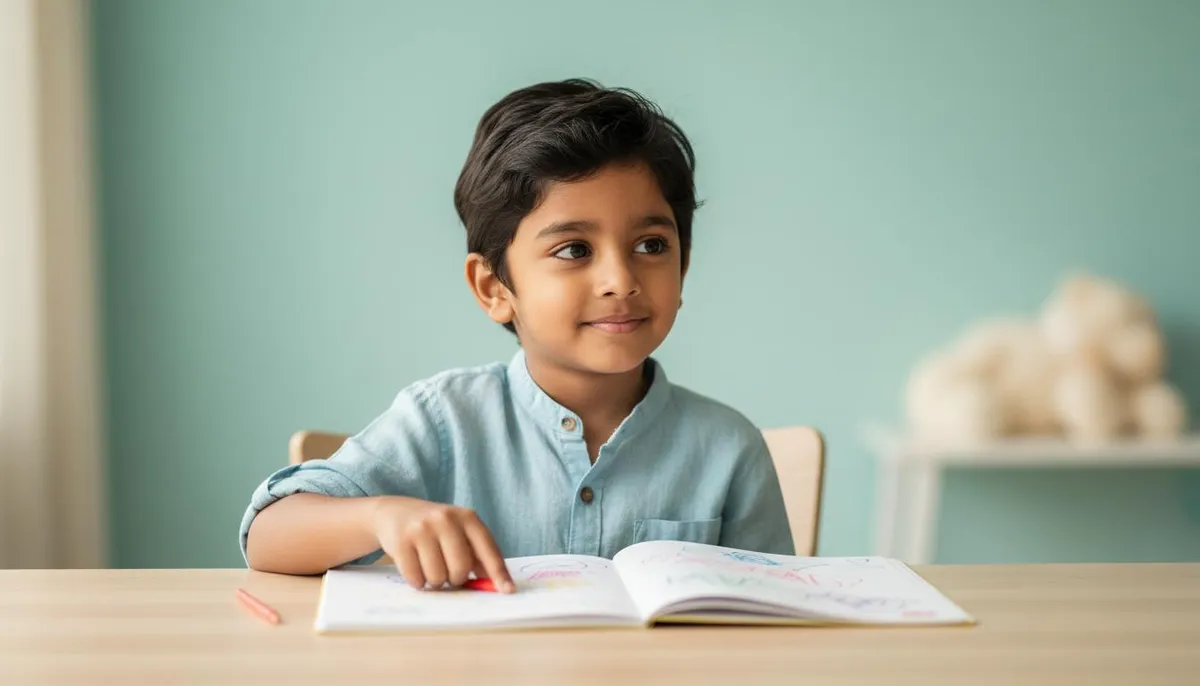
Taking care of a child with ADHD can be a bit challenging at times, right? But don't worry, you are not alone. If you are well-informed about this condition and help your child in the right way, you can definitely make his life a lot more successful. Let's talk about this a little more.
Escala de Autoinforme de TDAH Adulto de la OMS (ASRS-v1.1 Parte A) ukan 6 jiskt’äwin validada ukan uñakipirip apsuñamawa, ukhamat jilïr jaqinakan jan yäqawipa, disfunción ejecutiva ukat hiperactividad ukanakat uñakipañataki.
What is ADHD? How does it affect children?
Simply put, ADHD, or Attention Deficit Hyperactivity Disorder , is a condition that affects children's ability to pay attention, control their behavior, and sometimes stay still, compared to their age. It is associated with certain changes in brain function. This makes it harder for children to develop the ability to control their attention, behavior, emotions, and activities than other children. As a result, they may behave in ways that are difficult for parents to control.
There are three main symptoms of ADHD. Let's look at them one by one:
1. Inattentiveness
Children with this trait have a hard time focusing on one thing. Imagine, when a teacher is teaching a lesson at school, he or she can't keep his or her mind in one place.
- Excessive distraction: They easily become distracted by other things, as if they are distracted by even the slightest sound.
- Doesn't seem to be listening: You may feel like he's not listening when you're talking.
- Difficulty concentrating on a task: It is difficult to stay focused continuously, whether playing a game or studying.
- Doesn't follow instructions well: They may have difficulty following exactly what you say, especially instructions that have multiple steps.
- You need to be constantly reminded to do things: You have to constantly remind yourself to do things like brush your teeth and do your homework.
- Seems uninterested in schoolwork: It may seem like they are not putting much effort into schoolwork or homework.
- They have difficulty keeping their things organized: Keeping books and toys organized is a big challenge for them.
2. Hyperactivity
These children are always very active and don't like to stay in one place.
- They run and jump even when they want to play quietly: Even when they want to be quiet, they have a hard time not fidgeting. They are constantly shaking their legs and getting up from their chairs.
- It's like they can't stay in one place, they're always moving around: they're always running and walking around, as if they've got a motor running in their body.
- Even things that should be done slowly are done in a hurry: Trying to do everything very quickly.
- Mistakes happen due to carelessness: They make small mistakes due to haste.
- Always busy with something, can't stay in one place: it's like being "on the go".
3. Impulsivity
It's a little difficult for these children to think things through and wait for their turn.
- Suddenly jumping in while others are talking: Starting to speak without waiting for the end of a conversation.
- Saying or doing things impulsively without thinking: Doing or saying whatever comes to mind without thinking about the consequences.
- Doing things that you know are not good to do: There are times when you do certain things even though you know they are wrong.
- Difficulty waiting their turn and sharing with others: They don't like things like waiting in line, waiting for their turn, or sharing a toy with others.
- You get angry suddenly and have difficulty controlling your emotions: You get angry over small things, you can't control your emotions and suddenly explode.
How do parents feel about this?
At first, parents may not realize that these behaviors are caused by ADHD. You may think that the child is just being naughty or is deliberately disobedient. This can cause parents a lot of stress , frustration , and sometimes even the feeling that the child does not care about them.
Imagine, when you go to your friend's house, your child is running around, screaming, and won't stay in one place. It's normal to feel embarrassed and uncomfortable about what others will think of your child, and of you. You might even blame yourself, wondering, "Did I do something wrong to make this child behave like this?"
But in reality, children with ADHD don't naturally develop these abilities to control attention, behavior, and activity. It's not their fault, and it's not your fault.
But if we, as parents, learn about ADHD properly and understand the best ways to help our child, we can improve our child's condition and help them stay healthy.
What can we do as parents?
The role of parents in the treatment of a child with ADHD is very important. In fact, parental support and involvement are as important as any other treatment. Depending on how parents respond, a child's ADHD condition can either improve or worsen .
So, if your child has been diagnosed with ADHD by a doctor, there are a few things you can do:
1. Be involved in everything, be well informed
The first thing you need to do is learn as much as you can about this condition called ADHD. Read books about ADHD, visit trusted websites, and ask doctors. Follow the treatment recommended by your child's doctor or therapist exactly. Be sure to attend therapy sessions with your child. Talk to them about your questions and concerns.
2. If you are giving medicine to your child, be careful with it.
Doctors prescribe medication to help manage ADHD in some children. If you are prescribing medication, consider the following:
- Give the medicine exactly at the recommended time and dose as prescribed by the doctor .
- Never change the dose or stop taking medication without asking your doctor.
- Keep your child's medicine in a safe place where no one else can get it .
3. Understand exactly how ADHD affects your child
Not all children are the same. Not all children with ADHD are affected in the same way. Identify the specific problems your child has with ADHD. Some children may need to improve their attention span and listening skills. Others may need to slow down and work more calmly. Ask your child's therapist for advice and suggestions on this. Also ask about ways you can help your child practice these skills.
4. Focus on teaching one thing at a time.
Don't try to do everything at once. Doing so will tire you out and put pressure on your child. Start small . Choose one behavior or habit and focus on improving it first. Praise your child for their efforts . If they show even a small improvement, praise them and encourage them. Say something like, 'I can see you're working hard, that's great, son/daughter.' This is called Positive Reinforcement . That is, praising your child when they do something good and encouraging them to do it again.
5. Work together with your child's school.
If ADHD is affecting your child's academic performance, it is very important to work closely with the school.
- Talk to the child's teacher. Inform them about the child's condition.
- Find out if your child needs a special education plan, such as an IEP - Individualized Education Program'' or 504 plan'' as it is available in some countries, or similar special educational support according to the Sri Lankan system. These are the special supports provided by the school to suit the child's educational needs.
- Meet with teachers regularly to find out how your child is doing in school.
- Work with the teacher to develop a plan to help your child learn better. This may include having your child sit at the front of the class or breaking the work into smaller chunks.
6. Connect with others for support and awareness
There are organizations and support groups that help parents of children with ADHD.
- For example, there are international organizations like (CHADD - Children and Adults with Attention-Deficit/Hyperactivity Disorder). From places like these, you can get the latest treatment methods, information, etc.
- Find out if there are any support groups like this in Sri Lanka. Or, at least connect with such groups online. Then you will realize that you are not alone. You can also learn a lot from the experiences of other parents.
7. Find out if you also have ADHD
ADHD can sometimes run in families. That is, it can have a genetic influence . Parents (or other close relatives) of children with ADHD may not know that they have ADHD. You may have had similar symptoms when you were a child, but you were not aware of it at the time. So, if your parents also have ADHD, getting it diagnosed and treated can help you as parents to do your best to help your child. When you understand your own challenges, it is easier to understand your child's challenges, right?
💡 The most important things to remember (Take-Home Message)
Although caring for a child with ADHD can sometimes feel like a big challenge, it's not impossible. With patience, understanding, and the right approach, you can help your child live a successful, happy life.
The most important thing is to let your child know that you love them unconditionally and that you will always support them.
Remember, every child is valuable, every child has their own unique talents. ADHD is not a child's identity, it is just a challenge they face. With the right support, these children can do amazing things.
Never hesitate to seek help from doctors, therapists, and teachers when needed. You are not alone on this journey.






Janiw kuna arsuwinakas jichhakamax uñt’ayatäkiti. Aka chiqanx amuyt’awim jan ukax jiskt’awim yapxatañamawa.