
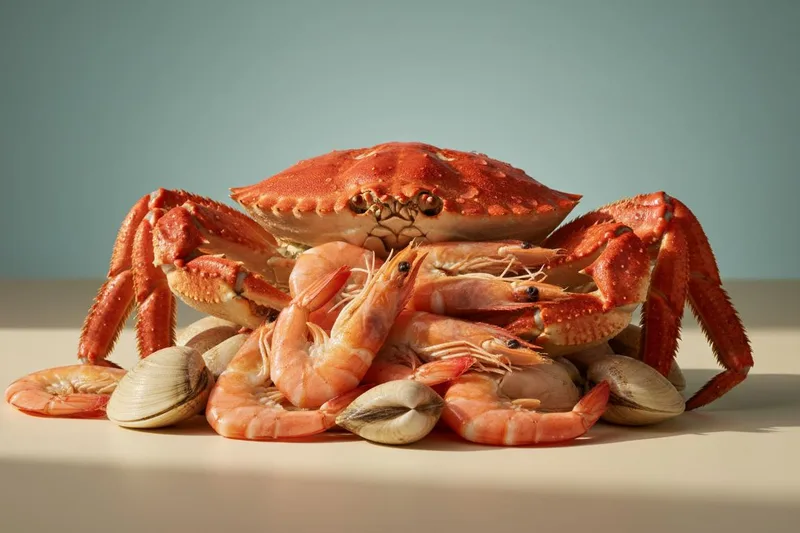
Do you also get allergic to shrimp, crab, or shellfish? This is about (Shellfish Allergy)!

Do you also get allergic to shrimp, crab, or shellfish? This is about (Shellfish Allergy)!

Hello! You may be someone who enjoys eating shellfish, such as shrimp and crab . But have you heard that some people can be allergic to these foods? This is really a bit scary, but if you are properly informed, you can reduce many problems. Today, let's talk about this condition (Shellfish Allergy) in a simple way, in a way that you can understand.

What is this (Shellfish Allergy) ? Let's understand it simply!

First of all, it should be said that (Shellfish Allergy) is not the same as what we usually call " SeafoodAllergy ". When we say seafood , it includes both types of fish (e.g. tuna, mackerel) and the types of shellfish we are talking about. However, the two are biologically different. Therefore, someone with a (Shellfish Allergy) will not be allergic to eating fish, unless they are also allergic to other fish.

Now let's look at what these shellfish are. They fall into two main categories:

1. Crustaceans : To be precise, people like shrimp, crabs, and lobsters.

2. Mollusks : This phylum includes shellfish such as oysters, mussels, scallops, clams, and octopuses.

Some people can be allergic to both of these groups. But some people can be allergic to only one group. For example, some people may only have trouble eating shrimp, but may not have any problems eating shellfish.

Most of the time, this (Shellfish Allergy) occurs when someone eats this type of food. But sometimes, even touching this food or inhaling the fumes from cooking it can trigger an allergy.

This (Shellfish Allergy) can occur at any age. Even if you have eaten shrimp or crab without any problems before, you can suddenly become allergic. Some food allergies go away over time, but people with a (Shellfish Allergy) usually have it for life.

What are the symptoms of a (Shellfish Allergy) ? How do we recognize it?

When someone is allergic to shellfish , their body's immune system – the system that normally protects us from disease – reacts to this (shellfish).It's an overreaction to the proteins in the food. Every time he eats these foods (sometimes just by touching them or even by smelling them), the body thinks these proteins are very harmful invaders. Then the body releases chemicals like histamine . This is what causes various symptoms.

Let's see what these symptoms are:

  • Wheezing
  • Difficulty breathing
  • Cough
  • Hoarseness of voice
  • Feeling like your throat is constricted
  • Stomach ache
  • Vomiting
  • Diarrhea
  • Itchy eyes, watery eyes, swollen eyes
  • Skin rashes, hives
  • Red spots on the body
  • Swelling (especially of the lips, tongue, and face)
  • A sudden drop in blood pressure , feeling dizzy, or losing consciousness.

Shellfish allergy reactions can vary from person to person, and even within the same person. Sometimes the reaction is very mild, sometimes it just leaves a small rash on the skin. But sometimes it can be very severe, affecting several parts of the body.

Most importantly: Risk of Anaphylaxis !

A shellfish allergy can cause a very severe, life-threatening reaction called anaphylaxis . Even if you had a mild allergy the first time, you can have anaphylaxis the next time. This starts with some of the symptoms mentioned above and then gets worse very quickly. You may not be able to breathe or lose consciousness. It can affect several parts of the body at once. If not treated quickly, it can be life-threatening.

What to do when you get a (Shellfish Allergy) ? How is it treated?

If you or your child has a shellfish allergy (or any other severe food allergy), it's essential to always carry two doses of epinephrine . This is a medication that should be given in case of a sudden, severe reaction.

Epinephrine is a medicine prescribed by a doctor. It comes in a small, portable device (sometimes called an EpiPen ). It is easy to use. Your doctor will teach you how to use it. For older children, you can teach them how to inject it themselves. If your child is carrying this medicine, it should not be left in their locker or in the school nurse 's office; it should be kept nearby.

And also,Your doctor can give you an Allergy Action Plan . This will help you prepare for, recognize, and treat an allergic reaction. Share this plan with everyone who cares for your child (relatives, school officials, parents of friends). Also, consider having your child wear a Medical Alert Bracelet (a bracelet with special medical information).

Every second counts in an allergic reaction. Give your child an epinephrine injection as soon as they start to show severe allergic symptoms (such as swelling of the mouth, throat, difficulty breathing). Or, if symptoms occur in two different parts of the body at the same time (for example, skin rash with vomiting), give epinephrine quickly. Then call an ambulance immediately (in Sri Lanka, 1990) or take the child to a hospital emergency room immediately. Keep the child under medical supervision, because sometimes even when the worst seems to be over, a second wave of severe symptoms can occur.

Sometimes allergists recommend keeping over-the-counter antihistamines on hand. These can help relieve mild allergy symptoms. But remember, in the case of a severe reaction, an antihistamine should be given *after* epinephrine , not as a substitute for epinephrine .

What else do we need to know about this (Shellfish Allergy) ?

If you have a shellfish allergy , it's best to avoid eating shellfish . This is easier said than done, as these can be found in foods you don't expect.

How to be careful with food and drink

  • Read food labels carefully, because the ingredients used in food can change. Shellfish can sometimes be found in foods we don't expect. For example, some sauces and soups may contain them.
  • Some people also have a hard time being in places where shellfish is cooked. That means they can be allergic to the smoke and steam from cooking, so they have to avoid such places.

Be careful about cross-contamination !

This is very important. Cross-contamination is simply the process of mixing something unrelated into a dish while cooking. For example, if you fry chicken in the same oil that you used to fry shrimp, any bits or proteins from the shrimp can end up in the chicken.

  • Be aware of advisory labels on food packages that say "May contain shellfish," "Processed in a facility that also processes shellfish," or "Manufactured on equipment also used for shellfish." This means that "these (shellfish)Something like "may contain". Not all companies label like this. So if in doubt, call or email the company and ask.
  • Also, food manufacturers are not always required by law to list the presence of mollusks (clams, mussels, oysters, and clams) on their labels because they are rarely considered a "major food allergen." If the label says "contains shellfish," it often means "crustaceans ." So it's a good idea to ask the company if there is a risk of mollusks .

What do you do when you eat out at restaurants?

Cross-contamination often occurs in restaurants. In kitchens, the same utensils, knives, and pans are used to prepare shellfish and other dishes, so parts of the shellfish can end up on other dishes.

  • This is especially common in seafood restaurants , which is why some people avoid such places altogether.
  • Also, since Asian cuisine (Chinese, Vietnamese, Thai, Japanese) uses a lot of shellfish , the risk of cross-contamination is high in such places.
  • When eating at a restaurant, be careful with fried foods, as many places fry things like chicken, French fries, and shellfish in the same oil.

Keep these things in mind when eating out:

  • Always keep two unexpired doses of epinephrine with you whenever your child (or you) goes out.
  • Be clear about your shellfish allergy to your cooks and servers.
  • Sometimes, it can be better to take food from home that you know is safe and reliable.
  • If the restaurant's chef , manager , or owner shows reluctance or hesitation to comply with your request (to prepare a safe meal), it's best to avoid eating there.

At school and elsewhere

Talk to staff about the risk of cross-contamination in school canteen food. Some families feel that it is safer to prepare meals for their children at home.

If you want to learn more about managing food allergies, you can visit websites of international organizations like Food Allergy Research & Education (FARE) . But the most important thing is to talk to your doctor about this and get advice that works best for you.

Take-Home Message

Okay then, (Shellfish Allergy)I hope you learned something important from what we've talked about. Keep these points in mind:

  • Shellfish allergy can be a serious condition , and can cause severe reactions such as anaphylaxis, which can be life-threatening.
  • Always carry two doses of epinephrine and know exactly how to use it.
  • Avoid foods containing shellfish completely.
  • Read food labels very carefully.
  • Always be aware of cross-contamination, especially when eating out.
  • Inform others (at school, at work, relatives) about your/your child's allergy.
  • If in doubt, don't guess, don't eat that food. Safety comes first.

If you or someone in your family has this type of allergy, don't panic. With proper education and taking the necessary steps, you can live a healthy, happy life. Don't forget to talk to your doctor about this regularly!

👩🏽‍⚕️ Frequently Asked Questions (FAQ) from the Doctor

💬 What is this 'shellfish allergy'? Is it the same as seafood allergy?

This 'shellfish allergy' is not the same as the 'seafood allergy' we usually call it. When we say 'seafood', we mean both types of fish and these 'shellfish'. But the two are biologically different. Therefore, even if someone is allergic to 'shellfish', they will not be allergic to eating fish, unless they are also allergic to other fish.

💬 I've eaten shrimp before and nothing happened. Is it possible to suddenly become allergic now?

Yes, it can happen. This 'shellfish allergy' can occur at any age. Even if you have eaten shrimp and crabs without any problems before, you can suddenly start to become allergic. Usually, this allergy is lifelong.


shellfish allergy, shellfish allergy, shrimp allergy, crab allergy, seafood allergy, anaphylaxis, epinephrine, cross-contamination, food allergy Sinhala, food allergy

⚠️ Important: The medical articles and information on Nirogi Lanka are for general awareness only, and are by no means a substitute for professional medical advice, diagnosis, or treatment. For any medical problem you have, consult a qualified physician immediately.

💬 Comments (0)

No comments have been posted yet. Add your comment here for the first time.

Add your comment

Please calculate: 5 + 2 =
Do you also get allergic to shrimp, crab, or shellfish? This is about (Shellfish Allergy)!

Do you also get allergic to shrimp, crab, or shellfish? This is about (Shellfish Allergy)!

Hello! You may be someone who enjoys eating shellfish, such as shrimp and crab . But have you heard that some people can be allergic to these foods? This is really a bit scary, but if you are properly informed, you can reduce many problems. Today, let's talk about this condition (Shellfish Allergy) in a simple way, in a way that you can understand.

What is this (Shellfish Allergy) ? Let's understand it simply!

First of all, it should be said that (Shellfish Allergy) is not the same as what we usually call " SeafoodAllergy ". When we say seafood , it includes both types of fish (e.g. tuna, mackerel) and the types of shellfish we are talking about. However, the two are biologically different. Therefore, someone with a (Shellfish Allergy) will not be allergic to eating fish, unless they are also allergic to other fish.

Now let's look at what these shellfish are. They fall into two main categories:

1. Crustaceans : To be precise, people like shrimp, crabs, and lobsters.

2. Mollusks : This phylum includes shellfish such as oysters, mussels, scallops, clams, and octopuses.

Some people can be allergic to both of these groups. But some people can be allergic to only one group. For example, some people may only have trouble eating shrimp, but may not have any problems eating shellfish.

Most of the time, this (Shellfish Allergy) occurs when someone eats this type of food. But sometimes, even touching this food or inhaling the fumes from cooking it can trigger an allergy.

This (Shellfish Allergy) can occur at any age. Even if you have eaten shrimp or crab without any problems before, you can suddenly become allergic. Some food allergies go away over time, but people with a (Shellfish Allergy) usually have it for life.

What are the symptoms of a (Shellfish Allergy) ? How do we recognize it?

When someone is allergic to shellfish , their body's immune system – the system that normally protects us from disease – reacts to this (shellfish).It's an overreaction to the proteins in the food. Every time he eats these foods (sometimes just by touching them or even by smelling them), the body thinks these proteins are very harmful invaders. Then the body releases chemicals like histamine . This is what causes various symptoms.

Let's see what these symptoms are:

  • Wheezing
  • Difficulty breathing
  • Cough
  • Hoarseness of voice
  • Feeling like your throat is constricted
  • Stomach ache
  • Vomiting
  • Diarrhea
  • Itchy eyes, watery eyes, swollen eyes
  • Skin rashes, hives
  • Red spots on the body
  • Swelling (especially of the lips, tongue, and face)
  • A sudden drop in blood pressure , feeling dizzy, or losing consciousness.

Shellfish allergy reactions can vary from person to person, and even within the same person. Sometimes the reaction is very mild, sometimes it just leaves a small rash on the skin. But sometimes it can be very severe, affecting several parts of the body.

Most importantly: Risk of Anaphylaxis !

A shellfish allergy can cause a very severe, life-threatening reaction called anaphylaxis . Even if you had a mild allergy the first time, you can have anaphylaxis the next time. This starts with some of the symptoms mentioned above and then gets worse very quickly. You may not be able to breathe or lose consciousness. It can affect several parts of the body at once. If not treated quickly, it can be life-threatening.

What to do when you get a (Shellfish Allergy) ? How is it treated?

If you or your child has a shellfish allergy (or any other severe food allergy), it's essential to always carry two doses of epinephrine . This is a medication that should be given in case of a sudden, severe reaction.

Epinephrine is a medicine prescribed by a doctor. It comes in a small, portable device (sometimes called an EpiPen ). It is easy to use. Your doctor will teach you how to use it. For older children, you can teach them how to inject it themselves. If your child is carrying this medicine, it should not be left in their locker or in the school nurse 's office; it should be kept nearby.

And also,Your doctor can give you an Allergy Action Plan . This will help you prepare for, recognize, and treat an allergic reaction. Share this plan with everyone who cares for your child (relatives, school officials, parents of friends). Also, consider having your child wear a Medical Alert Bracelet (a bracelet with special medical information).

Every second counts in an allergic reaction. Give your child an epinephrine injection as soon as they start to show severe allergic symptoms (such as swelling of the mouth, throat, difficulty breathing). Or, if symptoms occur in two different parts of the body at the same time (for example, skin rash with vomiting), give epinephrine quickly. Then call an ambulance immediately (in Sri Lanka, 1990) or take the child to a hospital emergency room immediately. Keep the child under medical supervision, because sometimes even when the worst seems to be over, a second wave of severe symptoms can occur.

Sometimes allergists recommend keeping over-the-counter antihistamines on hand. These can help relieve mild allergy symptoms. But remember, in the case of a severe reaction, an antihistamine should be given *after* epinephrine , not as a substitute for epinephrine .

What else do we need to know about this (Shellfish Allergy) ?

If you have a shellfish allergy , it's best to avoid eating shellfish . This is easier said than done, as these can be found in foods you don't expect.

How to be careful with food and drink

  • Read food labels carefully, because the ingredients used in food can change. Shellfish can sometimes be found in foods we don't expect. For example, some sauces and soups may contain them.
  • Some people also have a hard time being in places where shellfish is cooked. That means they can be allergic to the smoke and steam from cooking, so they have to avoid such places.

Be careful about cross-contamination !

This is very important. Cross-contamination is simply the process of mixing something unrelated into a dish while cooking. For example, if you fry chicken in the same oil that you used to fry shrimp, any bits or proteins from the shrimp can end up in the chicken.

  • Be aware of advisory labels on food packages that say "May contain shellfish," "Processed in a facility that also processes shellfish," or "Manufactured on equipment also used for shellfish." This means that "these (shellfish)Something like "may contain". Not all companies label like this. So if in doubt, call or email the company and ask.
  • Also, food manufacturers are not always required by law to list the presence of mollusks (clams, mussels, oysters, and clams) on their labels because they are rarely considered a "major food allergen." If the label says "contains shellfish," it often means "crustaceans ." So it's a good idea to ask the company if there is a risk of mollusks .

What do you do when you eat out at restaurants?

Cross-contamination often occurs in restaurants. In kitchens, the same utensils, knives, and pans are used to prepare shellfish and other dishes, so parts of the shellfish can end up on other dishes.

  • This is especially common in seafood restaurants , which is why some people avoid such places altogether.
  • Also, since Asian cuisine (Chinese, Vietnamese, Thai, Japanese) uses a lot of shellfish , the risk of cross-contamination is high in such places.
  • When eating at a restaurant, be careful with fried foods, as many places fry things like chicken, French fries, and shellfish in the same oil.

Keep these things in mind when eating out:

  • Always keep two unexpired doses of epinephrine with you whenever your child (or you) goes out.
  • Be clear about your shellfish allergy to your cooks and servers.
  • Sometimes, it can be better to take food from home that you know is safe and reliable.
  • If the restaurant's chef , manager , or owner shows reluctance or hesitation to comply with your request (to prepare a safe meal), it's best to avoid eating there.

At school and elsewhere

Talk to staff about the risk of cross-contamination in school canteen food. Some families feel that it is safer to prepare meals for their children at home.

If you want to learn more about managing food allergies, you can visit websites of international organizations like Food Allergy Research & Education (FARE) . But the most important thing is to talk to your doctor about this and get advice that works best for you.

Take-Home Message

Okay then, (Shellfish Allergy)I hope you learned something important from what we've talked about. Keep these points in mind:

  • Shellfish allergy can be a serious condition , and can cause severe reactions such as anaphylaxis, which can be life-threatening.
  • Always carry two doses of epinephrine and know exactly how to use it.
  • Avoid foods containing shellfish completely.
  • Read food labels very carefully.
  • Always be aware of cross-contamination, especially when eating out.
  • Inform others (at school, at work, relatives) about your/your child's allergy.
  • If in doubt, don't guess, don't eat that food. Safety comes first.

If you or someone in your family has this type of allergy, don't panic. With proper education and taking the necessary steps, you can live a healthy, happy life. Don't forget to talk to your doctor about this regularly!

👩🏽‍⚕️ Frequently Asked Questions (FAQ) from the Doctor

💬 What is this 'shellfish allergy'? Is it the same as seafood allergy?

This 'shellfish allergy' is not the same as the 'seafood allergy' we usually call it. When we say 'seafood', we mean both types of fish and these 'shellfish'. But the two are biologically different. Therefore, even if someone is allergic to 'shellfish', they will not be allergic to eating fish, unless they are also allergic to other fish.

💬 I've eaten shrimp before and nothing happened. Is it possible to suddenly become allergic now?

Yes, it can happen. This 'shellfish allergy' can occur at any age. Even if you have eaten shrimp and crabs without any problems before, you can suddenly start to become allergic. Usually, this allergy is lifelong.


shellfish allergy, shellfish allergy, shrimp allergy, crab allergy, seafood allergy, anaphylaxis, epinephrine, cross-contamination, food allergy Sinhala, food allergy

⚠️ Important: The medical articles and information on Nirogi Lanka are for general awareness only, and are by no means a substitute for professional medical advice, diagnosis, or treatment. For any medical problem you have, consult a qualified physician immediately.

💬 Comments (0)

No comments have been posted yet. Add your comment here for the first time.

Add your comment

Please calculate: 5 + 2 =