

There are no words to describe the joy you feel when you watch your toddler do cute things, right? When he suddenly runs up to you and hugs you, when he laughs out loud, when he cuddles you when he's tired... love is boiling. But as a mother or father of young children, you know that along with these cute things, sometimes these children also do things that upset us and are a little naughty. Kicking, screaming, or... biting others . This chewing is something that is often seen among children of this age. But when you see it, or when you face it, it is also normal to feel very worried and frustrated. So today, let's talk about this chewing habit and what we can do to control it.
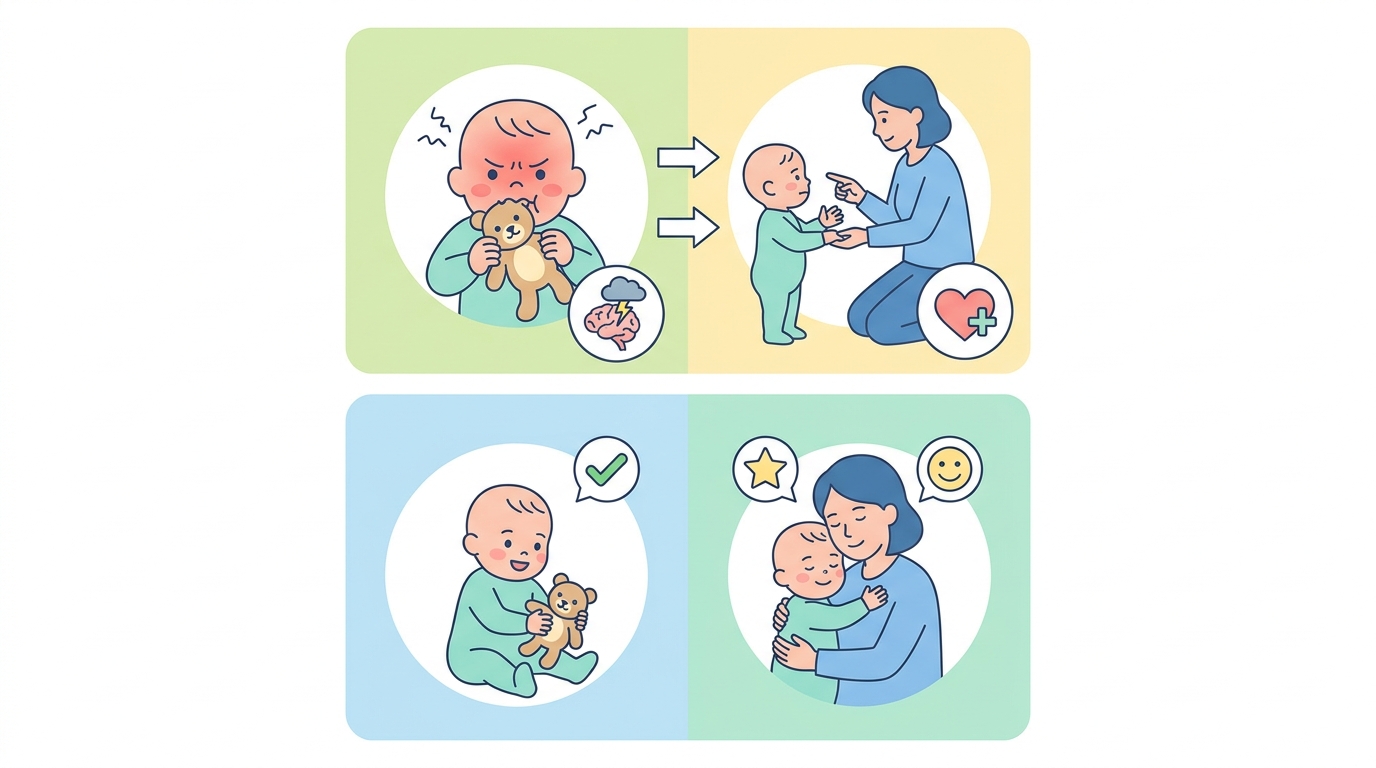
Why do little ones chew like this? What are the reasons?
First of all, we need to understand that when a young child bites another person, it is not done with bad intentions. They are still in the process of understanding the world. So, there can be a variety of reasons for this biting.
- Curiosity and exploration: Little ones learn about the world around them by putting things in their mouths and touching them. So sometimes they may chew out of curiosity, wondering, "What will happen if I chew?", just like putting a toy in their mouth.
- Teething pain: When teething, the itching and pain in the gums can make them want to chew on anything they can get their hands on. They may even bite someone nearby at the time.
- Express their feelings: Little ones don't know how to express their sadness, anger, or frustration in words like we do. So when they get angry, when someone else takes a toy, or when they don't get something they want, they may chew as a way to release those feelings.
- Get attention: Sometimes a child knows that chewing will get a lot of attention from mom or dad. Even if that attention is a scolding, it can feel like "attention" to them, especially when they are feeling lonely or bored.
- Imitation : If they see an older sibling at home or another child at daycare chewing, they are likely to imitate it too.
- For self-defense: Sometimes, people may bite as a way to protect themselves, whether from a child who is older than them or when they feel they are in danger.
- Tiredness, hunger , or discomfort: If a child is very tired, hungry, or in some discomfort (e.g., wet clothing), they may express it by chewing because they don't understand how to say it.
Think about it, sometimes a small child gets angry when another child takes their toy, and they don't know how to put it into words. So they take out their anger by biting the other child. It's like they're shouting, "I'm angry! Give me my toy!"
Why do we get nervous when we see someone chewing? Is that normal?
In fact, it's normal to feel shocked, embarrassed, and angry when you see your child biting someone else. Things like, "Did the other child get hurt?" and "What will the other parent think?" come to mind. But remember, chewing is very common among children between the ages of 1 and 3. It can sometimes be considered a stage in their development. That doesn't mean that all children bite, but it's not surprising if they do. The important thing is how we respond to it and how we help our child stop the habit.
What should we do when a child chews? What is the best way?
How we react when a child bites is very important. It is based on our response that the child learns whether this is a good or bad thing, and whether or not it should be done again.
First, calm down as much as possible!
This is easier said than done. However, if you get upset or yell, your child may become even more scared or try to bite you to get their attention. Take a deep breath and give yourself some time.
Say "no" clearly and firmly.
As soon as your child bites, look them straight in the eye and say, not loudly, but in a clear, firm voice, "No, don't bite. It hurts." You should also show that reluctance on your face. But not in a threatening way.
Pay attention to the child who is biting.
The next most important thing is to go to the child who bit and comfort them. Say something like, "Are you hurt? I'm sorry," and look at the wound. This sends a message to your child that biting hurts others and that it's a sad thing.
Remove the biting child from there for a while.
Remove the biting child from the area where he was playing or from the activity for a while. This is like a "time-out." However, this should not be used as a punishment, but rather as a way to give the child a chance to think about what he did and calm down. Say, "You bit, so I'm going to stay here for a while," and leave him alone for a minute or two in a place where he has nothing to play with and is bored (the time should vary depending on the child's age. Usually, it's about a minute per year of age).
Explain simply.
Say something simple, appropriate to the child's age and level of understanding, such as "We don't bite other people. When we bite, it hurts our friends. It's not a good thing." Don't give long lectures.
Teach alternatives
Teach your child other ways to express their anger, sadness, or need without biting. Teach them things like, "When you're angry, say 'I'm angry,'" "If you want a toy, ask for it, 'Give it to me,'" and "If you're angry, tell mom/dad." You can also teach these things through songs and stories .
Praise good behavior.
When your child is playing well with friends without chewing, and when he/she expresses his/her feelings in words, be sure to praise him/her. Encourage him/her by saying something like, "My son/daughter played very well today. He/she was not chewing, right? He/she is very happy." This is called positive reinforcement .
Don't name these things! What are the wrong methods?
Sometimes, things we do without realizing it can make this chewing habit worse. So, don't make these mistakes.
- Chewing back at your child: Saying, "Now do you understand how it hurts?" will only teach your child that chewing is a problem-solving tool. It will only confuse your child further. Never do this.
- Harsh punishment, yelling, hitting: These things will only scare the child and prevent them from understanding that what they did was wrong. They can also make the child more aggressive and encourage you to do these things secretly.
- Shaming the child: Shaming the child in front of others by saying things like "This is the one who hit Raya. What a bad kid" will only damage their self-esteem.
- Labeling a child as "bad": When you say things like "you're a bad child," "you're naughty," the child may start to believe it. We need to focus on the behavior, not the child. There's a big difference between saying "chewing is bad" and saying "you're a bad child."
What else can we do to stop chewing?
In addition to the immediate responses mentioned above, there are other things we can do to reduce this habit in the long term.
- Try to find out the reason: When does your child chew the most? When he is tired? When he is hungry? When he has lost a toy? Or when he is around a special person? If you pay attention to these things (Observe for triggers ) , you can either avoid those situations or help your child at those times.
- Provide opportunities for active play: It is very important to give children the opportunity to run around and play, to release their energy. This will reduce their frustration and restlessness.
- Adequate rest and sleep: Make sure your child gets enough sleep. Even when they are tired or sleepy, little ones can be restless and chew.
- Teething toys: During teething, give your baby a safe, clean teething toy to chew on, such as a chilled carrot or cucumber slice. But be sure to be nearby when giving them these items, as they can cause choking.
- Role-playing:While playing, use dolls or animals to act out things like, "Friends don't bite, we're fine like this," and "This is what we say when we're angry."
- Read books: Read books with your child that talk about their feelings and how to get along with friends.
When should we seek medical advice?
Often, this chewing habit will subside on its own as the child gets older and is able to express themselves verbally. Usually, it will go away by the age of 3-4. However, there are some cases where we should seek advice from a doctor or a child psychiatrist.
- If the child's chewing is very frequent and aggressive .
- If this habit continues after the age of 3 or 4.
- If this chewing is causing problems for the child to the point of having to be removed from daycare.
- If you notice any other concerning behaviors or developmental delays along with the chewing, such as speech delays or social difficulties.
- If you feel like you can't control this situation and you feel a lot of pressure about it.
Remember, it's never a bad idea to consult a doctor. They can help you find the exact cause and provide solutions that are best for your child.
Take-Home Message
Okay, so I hope what we talked about today will help you remember some of the most important things.
- Chewing is common among young children , but it can be controlled. Don't worry.
- Patience and consistency are the key. You may not be able to stop this in one day. But don't give up. Respond the same way every time.
- Focus on teaching your child, not punishing them. Teach them what is right and wrong, and how to control their emotions .
- This is a challenge that many parents face. You are not alone. If necessary, talk to other parents and share your experiences.
- Never hesitate to ask for help. If you are having a hard time coping with this on your own, seek professional help.
We hope that your little one will soon break this habit and that the day will come when we will only see their cuteness again!
ukat juk’ampinaka Doctoran qillqatapa
ukat juk’ampinaka Ch’akhuñax 1 maranit 3 marani wawanakan sarnaqawipawa, kunapachatix wawanakax jan arunakamp arsuñ yatipki ukhax kunjams jikxatasipxi, colerasiñapa jan ukax estrés ukax utji ukhax uka tuqiw jan walt’awip uñacht’ayapxi. Kunapachatï mä wawax maynir jawqʼjki ukhaxa, arnaqasiñat sipansa, juchañchañat sipansa, ‘jawqʼjañax janiw walïkiti, chuym usuyañawa’ sasaw samarañapa ukat chʼamampi qhanañchtʼañama. Wawarux arunakamp apnaqañ yatichañamawa jan ukax yaqha tuqit kunjams jikxatasi uk uñacht’ayaña (jan ukax almohada ukar ch’allt’aña jan ukax mä anatt’añ yänak ch’allt’aña) colerat ukhax ch’allt’añat sipansa.


💬 Comments (0)
No comments have been posted yet. Add your comment here for the first time.
Add your comment