

The weather around the world is really strange these days, isn't it? There are more things like sudden thunderstorms, severe ` hurricanes` , and `tornadoes` now than ever before. So at a time like this, when we see the news on TV, radio, `social media`, and when a storm actually hits, it can be a little difficult for our little ones to handle. They may be scared and worried. So today, let's talk about what we can do to reduce the fear and stress in our children's minds and keep them calm during a time like this.
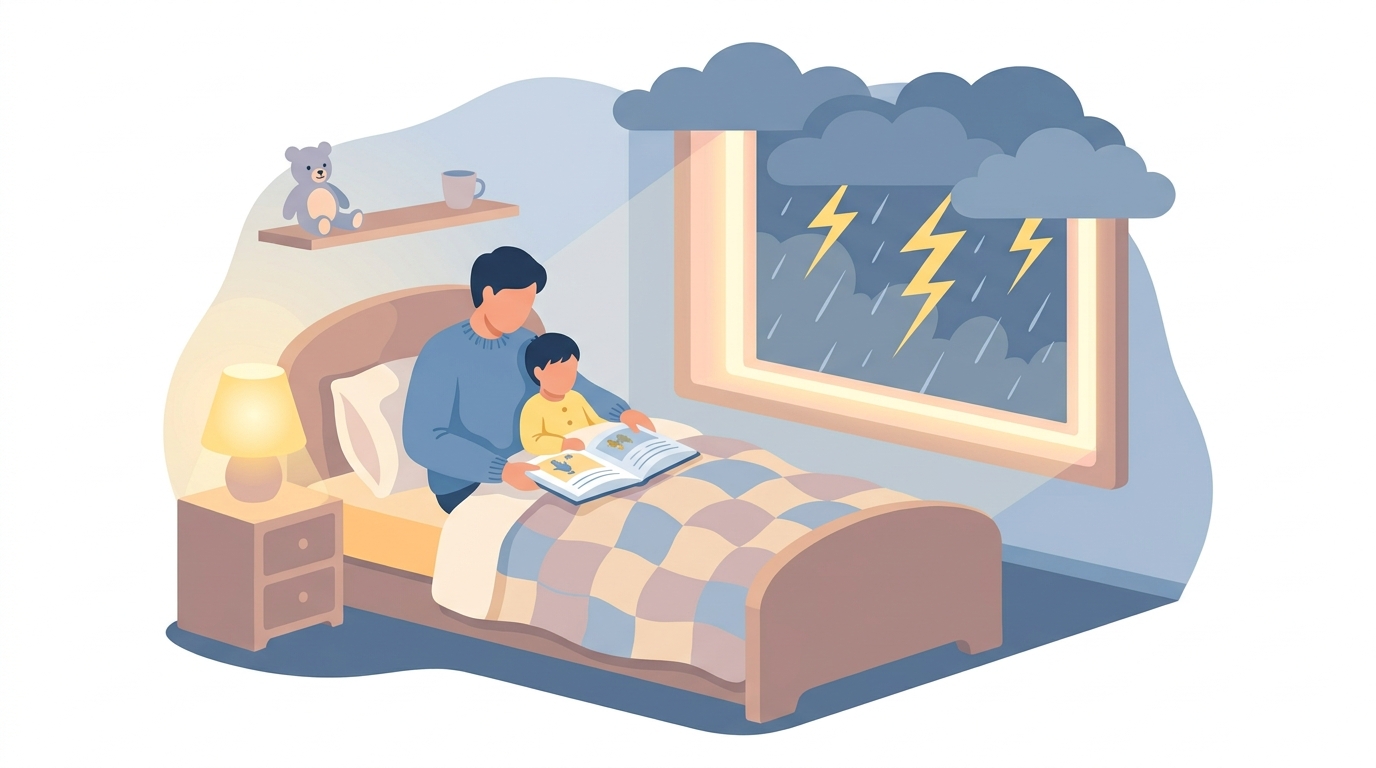
How to prepare your little one before a storm hits?
If your area is prone to thunderstorms during certain times of the year, such as summer thunderstorms or hurricanes, it's important to talk to your children about them in advance. Explain what a storm is and what it can do in a way that's age-appropriate and easy to understand. Okay, so let's see how we can do it.
For example, consider:
- Regarding hurricanes: What is the difference between 'evacuating' (meaning leaving your home when the storm is coming and going to a safe place, perhaps a government-run storm shelter) and 'sheltering in place' (meaning staying safely at home during the storm).
- Regarding tornadoes: Explain the difference between a tornado watch (meaning a tornado could be coming to your area) and a tornado warning (meaning a tornado is already in your area).
- About Thunderstorms: As with Tornadoes, explain the difference between a severe thunderstorm watch and a severe thunderstorm warning. Children can be scared by lightning and thunder, especially if they hear it up close. But tell them that they can stay safe by staying indoors. If hail and strong winds are possible, tell them in advance what it looks like and sounds like.
When talking to young children, think of it this way. Staying indoors during a storm is like the way wild animals like squirrels and birds stay in their burrows and nests. You could say something like, "Look, son, let's stay safe in our house just as that little squirrel stays in his house." Just as those animals gather food for times like these, your child can choose a favorite food to eat or a favorite toy to play with during a storm.
Tell your children what you are doing to stay safe. Explain, "When we are inside during a storm, we don't go near doors, windows, or skylights, because they can break in the wind." If your home has a "safe room" that you can go to during a storm, such as a basement or a room without windows, point it out to your child and say, "This is where we will be during a storm. It's very safe here."
If your children seem scared, ask them about it and encourage them to talk about what's on their mind. Sharing their fears with you can be a great relief for them. Just saying you're listening to them sends a big message. Got it?
How to keep children calm during a storm?
Thunderstorms and hurricanes can last for a while. So these things can help keep your children calm until everything calms down. Now take a look at these:
- Try to limit what your children see and hear about the storm. Stories and pictures about the storm on websites, social media, TV, and radio can make them even more scared. If you see your children watching it, watch it together and let them ask questions. But if the news is very scary, you can just focus on it and direct your children to something else. You can say something like, " Hey , son, can we watch a cartoon now?"
- Take your child's concerns seriously. Children's fantasies can make their fears worse. Let them know that you understand their feelings. At the same time, talk about what could actually happen and how your family is prepared to keep everyone safe. Say things like, "Yes, son, I understand that you're scared. But we're all in this together, so there's nothing to be afraid of."
- Also, watch how you behave. Children look up to their parents , they see your mood, how you react. So set a good example, try to stay calm yourself. If you get nervous, the children will be even more scared.
- Give them a small task. Find small tasks that are age-appropriate for your child to do to prepare for a storm. This could be something like keeping a flashlight in an easy-to-find spot in their room, filling the bathtub with water (explain that this water can be used for things like flushing the toilet if needed), or keeping a pet calm. A little one could put away her toys or take care of the cat 's urine . When they are in charge of a task, children feel like they have control.
- Suggest activities that calm the mind.If your child seems anxious, hold them close to you or a pet. You can also suggest that they write about their feelings, draw pictures, or listen to songs. Keep a flashlight ready so that they can read books, play games, do puzzles, or do crafts if the lights go out.
- Try breathing exercises . Teach your children how to take a few 'belly breaths': Breathe in through your nose, letting your belly expand like a balloon when it's full. Then breathe out through your nose, letting your belly flatten out again. Doing this a few times can help you calm down.
How do you comfort a child after a storm?
If a storm is coming to your area, talking to your kids about it can be a bit challenging. Try these tips:
- Tell the truth. Tell the truth about what happened, but don't go into details that your child won't be interested in. Stick to the basics. Explain things according to their age and maturity. Simply put, speak in language they understand.
- Ask questions. If children aren't talking about the storm, asking questions can help them get involved. You can ask questions like, "What were you feeling when the storm came?" It may take them a while to express what's on their mind, so be patient and listen.
- Support your child’s feelings. Don’t underestimate what children are feeling. If they tell you that they are upset or scared, repeat what they said: “Yes, I understand that you are very upset about this.” This will let them know that you are listening to them and that you understand them. Reassure them that the storm is over and that they are safe now.
- Make this an opportunity to learn. If your children are a little older, help them understand the science behind the storm. Then they can see it as something meaningful. This can also help reduce their fear of future storms. Go online together and learn about storms, or get weather books from the library. Children can also talk about this with their science teacher.
How do you get back to normal life after a storm?
It can take some time to recover from a storm, especially if your home or neighborhood has been damaged. Here are some things that can help:
- Get back into routines. Maintaining regular routines, such as mealtimes and bedtimes, helps children feel normal. This gives them a sense of security.
- Show children who are helping.Point out people in your community who are helping, such as police officers, firefighters, utility workers, neighbors, and even strangers. Say things like, "Look how hard those guys are working to get us back on our feet."
- Help others. If it's safe, find ways you and your child can help others in your community after the storm. This can strengthen children and keep them busy. For example, something as small as helping a neighbor clean up their yard can make a big difference.
What else do we need to know?
If your child is showing changes in behavior (such as not sleeping or eating well, not wanting to be around people, or being anxious all the time), call their doctor or a behavioral health care provider. They can help manage your child's anxiety and help them feel better about themselves.
There's nothing wrong with asking for help at a time like this. It shows how much you care about your child.
If your child is having trouble learning or concentrating after the storm, you can talk to school counselors, staff, and teachers . They can make sure your child is getting the support they need at school.
The most important thing to keep in our minds
Imagine, a big storm is not only a burden for the little ones, but also for us. But with our love, attention, and simple preparation, we can ease the fear in our children. Listening to their feelings, understanding them, and being with them is the most important thing. Remember, storms come and go, but the strength and unity of our family is more valuable than anything else. If you have any more questions about this, don't be afraid to ask a doctor or a specialist in this area. You are not alone!
` Storm stress, children's mental health , storm preparation, calming children, weather disasters, parenting advice, anxiety
ukat juk’ampinaka Doctoran qillqatapa
ukat juk’ampinaka Mä rasgo psicológico wali uñt’atawa wawanakan thaya thayt’awinakaru ukhamarak qhixu qhixunakar axsarañataki. Uka axsarañar saykatañatakix janiw wawarux juchañchañasäkiti ni larusiñasäkiti. Thaya thaytʼani ukhaxa, wawar jan sapak katxarusaw jañchi tuqit chuymachtʼañax wali askixa, ventananakan cortinanakap jistʼantañamawa, ukhamat jan llijullijunak utjañapataki, ukat yaqha lurañanakanwa wawarux mayjtʼayañasa (jan ukax qʼuchtʼasa, anattʼasa jan ukax sarnaqäwinakat liytʼasa).
❓ ukat juk’ampinaka Mä qawqha juk’amp jiskt’äwinakampiw jikisipxasma (FAQ) .
ukat juk’ampinaka ¿Kunatsa wawanakax qhixu qhixunaka, llijullijunak axsarapxi?▼
ukat juk’ampinaka Ukax jan uñt’at yänak axsarañatw utji (Jan uñt’at yänak axsarañat) ukax wawanakan sensibilidad sensación ukanakatakix janiw aguantañjamakiti, akatjamat llijullijunaka ukat thayanaka.
ukat juk’ampinaka ¿Kunjamsa mä wawar samarañapa kunapachatï thaya thaytʼki ukhaxa?▼
ukat juk’ampinaka Wawarux sum jamp’att’añamawa ukat chuymacht’kir arunak arsuñamawa, ‘jichhax utaruw puripxta, wali jan kuna usunïpxtwa’ ukat mä suma pachaw utjañapa.
¿Kunjamsa jaya tiempon thaya thaytʼanir ajjsarañar saykatañasa?▼
ukat juk’ampinaka Kunjamsa llijullijunakampi qʼixu qʼixunakampi normal urunakax jan jallu purinkipanxa, uk wawar qhanañchañax ciencia jan ukax cuentonak tuqiw axsarañax jukʼamp jiskʼachasispa.


💬 Comments (0)
No comments have been posted yet. Add your comment here for the first time.
Add your comment