
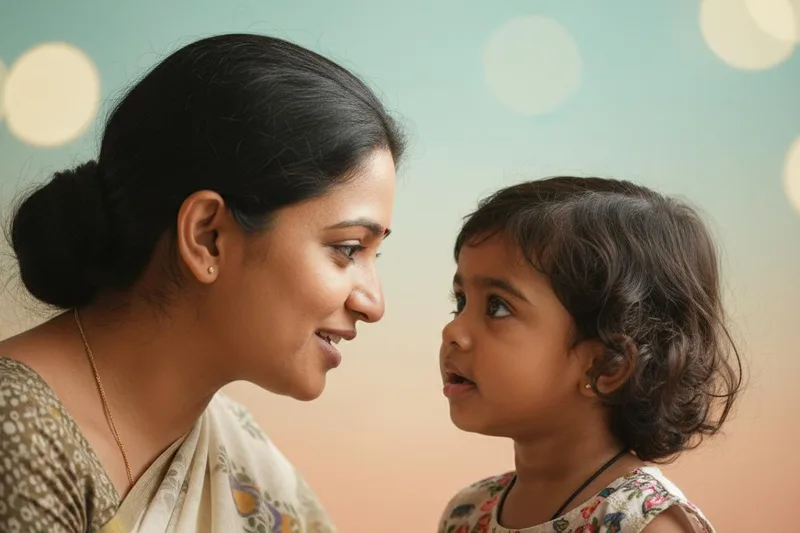
Do you tell stories to your little one? The amazing benefits of storytelling for children!

Do you tell stories to your little one? The amazing benefits of storytelling for children!

Are there times when your child says, "Mommy, I'm bored!" after playing with all the books , toys, songs, food, and video games? What do you do then? At such a time, how about asking, "Shall I tell you a story?"? It may be more than you think. Today, let's talk about how valuable this storytelling is and what benefits it brings to a child.
Why is storytelling so important?

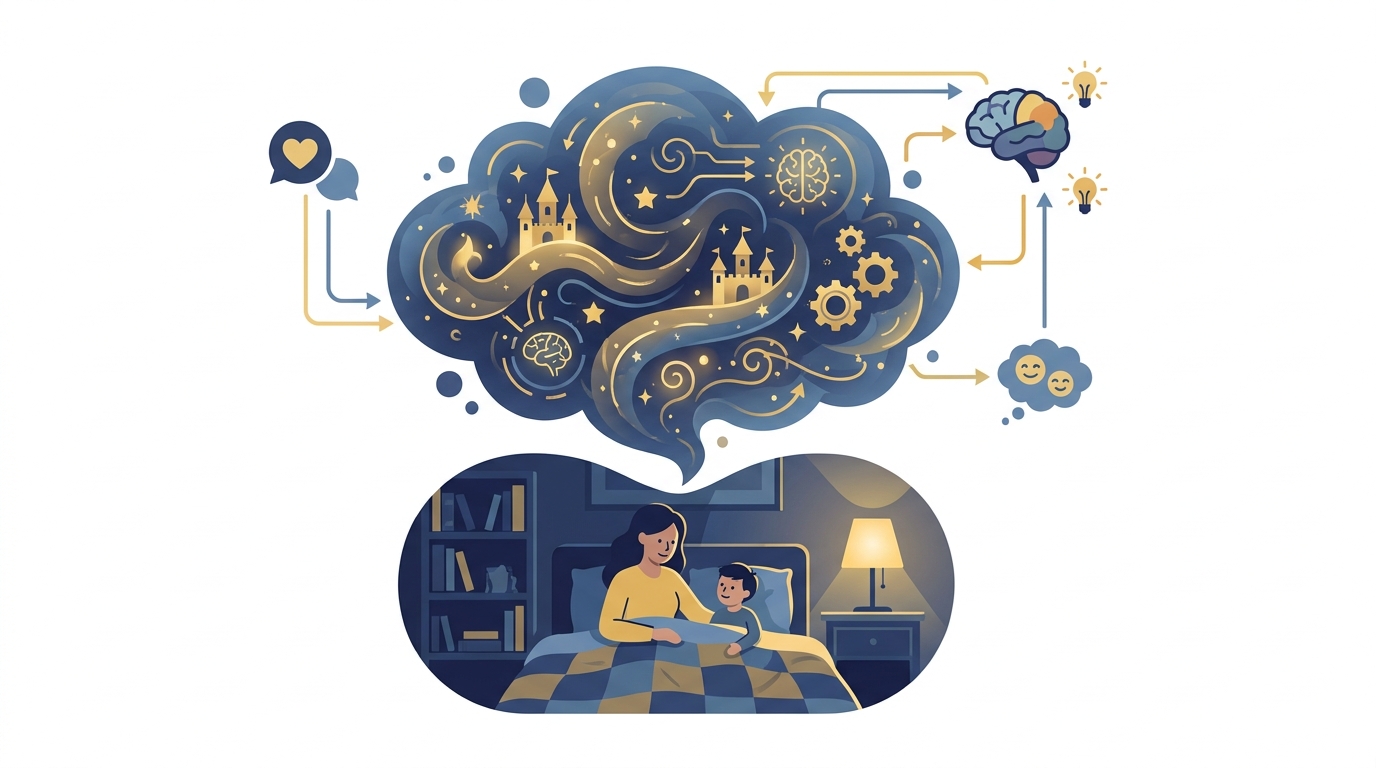
Simply put, telling a story to a child is not just a way to pass the time. It is something that helps a child's brain develop in an amazing way. Imagine, when you tell a story, the child is listening to it, imagining the characters in it, and following a chain of events in his mind. All of this creates new neural connections between the cells in his brain. It's like watering and nurturing a small plant.

  • Language Skills Develop: The child learns new words, how to construct sentences, and the flavor of a story. His vocabulary develops. This is a great help in expressing, writing, and reading well in the future.
  • Imagination and Creativity Increase: While listening to stories, the child gets lost in his own world. He imagines characters and events in his mind. This expands his way of thinking and focuses his mind on creating new things.
  • Bonding with parents is strengthened: When you hold your child and tell them a story in your voice, the child feels an indescribable sense of security and love. It greatly strengthens the bond between the two of you.
  • Help with Understanding Emotions: Characters in stories feel happy, sad, and angry. By listening to these, children can learn to understand and respond to their own and others' emotions.

You too have many stories to tell!

You might be thinking, "What kind of stories am I telling?" You probably don't realize that you have a lot of stories yourself. You don't need to make them up. Stories from your childhood, stories from books you've read, are a good place to start. What's more, children love to hear stories about themselves and their experiences. For example, you could tell a story about a trip you and your child took to the zoo, or a trip to their grandparents' house.

Think about a story that has been passed down from generation to generation , about how your first tooth fell out when you were a child, about a teacher you loved at school, or about a ghost that supposedly lived in your grandmother's attic. There's nothing more fun for little ones than a story about a funny thing their parents did when they were kids. Children love to hear about a past that has a connection to them.

What kind of stories can you tell a little baby?

Two- or three-year-olds, or even younger, love to hear stories about you and your family. Imagining what you were like when you were little is a great way to stimulate their imagination.

You can also tell stories about characters from their favorite books . Imagine taking " Pee -Tee the Chicken" around the farm, or taking "Fireman Bob" on a surprise trip around town. You don't need to think too much about the plot here. What's important to little ones is the opportunity to join in on the chicken's 'cheep-cheep' sound and imitate the sound of the fire truck's siren. That experience is valuable to them.

When telling stories to young children, involve them in the story. Say things like animal sounds and vehicle sounds together. That will make them more interested.

How do you tell stories to older children?

School-age and older children love fun, surprising stories. You can take a story they know and tell it in a new way, changing the setting, characters, or plot. Imagine a funny cat in a big striped hat who goes on a rocket to the moon, or comes to your village and causes trouble.

Another great idea is to make your child the main character and create an adventure story that interests them. For example, going back in time to see dinosaurs, or working as a train conductor. Stories like this challenge their thinking and increase their interest .

What else can you do beyond the story?

There are ways to make storytelling more interesting and broaden the experience.

  • Let's make your own book? Together, you and your child will make a book based on the story you told. Cut out and paste pictures of people and places from old magazines and newspapers that fit the story.
  • Let's write the story, or let the child tell it: You can write the words, or let the child retell the story in his or her own words.
  • Let's draw pictures: If it's hard to find pictures, draw pictures that match the story. Let your child draw them too. They will feel great joy when their imagination comes to life on paper.
  • Let's act out a story using puppets and costumes: Act out a familiar story using puppets, or dress up in different costumes. Make this fun for the whole family. The possibilities are endless!

Give your child a chance to tell a story too!

After you have told your child stories in different ways and given them experiences, encourage your child to make up and tell his own stories. This is very important. Because it gives the child the opportunity to use his thinking power, develop ideas, and create a story. This helps his communication skills (Communication Skills, Organization Skills, and Creativity are strengthened. The child's story may not be complete at the beginning, middle, or end, but that's okay. What matters is that he tries.

When your child is telling a story, encourage them. Ask them things like, "Oh, that's so beautiful," "What happened next?" This will help them build confidence.

This will give the child things that will last a lifetime.

When you tell a story to a child, you are really showing them how to put words together to make meaning. You are sharing something new about yourself, something that will probably make the child listen with great interest, something that will pique their curiosity. It can also be a good starting point for questions and discussions.

Most importantly, you are nurturing a love and passion for language and stories in your child. That will be valuable to them for the rest of their lives. So, take a deep breath and start: "Once upon a time in a country..."

Finally, a few things to remember (Take-Home Message)

Okay, so from what we've talked about, you should understand how valuable storytelling is.

  • Storytelling is not just a hobby, it makes a big contribution to a child's brain development, language skills, thinking skills, and emotional development.
  • Telling stories about your own experiences, childhood events, and your child will strengthen the bond between you.
  • Tell stories that are appropriate for your child's age, engage them in the story, and encourage them to tell stories too.
  • The love of language and interest in reading that a child gains from this is a valuable asset for their entire life.

So, start telling your little one at least one story a day starting today. It will be the most precious gift you can give your child!

👩🏽‍⚕️ Additional questions (FAQs)

💬 What are the benefits of storytelling for a child's future?

Children who grow up listening to stories have a very high level of imagination. Their vocabulary develops greatly at an early age, so when they go to school, they are able to write essays, talk to others, and face the challenges of society without fear.

💬 How do you tell a good story to a child? Should you tell it the same way?

No! Facial expressions and changes in voice are very important when telling a story. When a giant speaks, say it in a high voice, and when a rabbit speaks, say it in a low voice. That way, the child will listen with concentration throughout the story.

💬 Is it good to let children ask questions when telling stories?

Definitely! Ask your child questions like, 'What will happen next?', 'Will he cry when he feels that?'. Move the story forward with the child's answers. This will help your child's brain learn to think and make decisions on its own.


` storytelling, child development, parenting, Sinhala , language skills, imagination, bonding, stories

⚠️ Important: The medical articles and information on Nirogi Lanka are for general awareness only, and are by no means a substitute for professional medical advice, diagnosis, or treatment. For any medical problem you have, consult a qualified physician immediately.

💬 Comments (0)

No comments have been posted yet. Add your comment here for the first time.

Add your comment

Please calculate: 8 + 5 =
Do you tell stories to your little one? The amazing benefits of storytelling for children!
All About ReadingApril 2, 2026

Do you tell stories to your little one? The amazing benefits of storytelling for children!

Are there times when your child says, "Mommy, I'm bored!" after playing with all the books , toys, songs, food, and video games? What do you do then? At such a time, how about asking, "Shall I tell you a story?"? It may be more than you think. Today, let's talk about how valuable this storytelling is and what benefits it brings to a child.

Why is storytelling so important?

Simply put, telling a story to a child is not just a way to pass the time. It is something that helps a child's brain develop in an amazing way. Imagine, when you tell a story, the child is listening to it, imagining the characters in it, and following a chain of events in his mind. All of this creates new neural connections between the cells in his brain. It's like watering and nurturing a small plant.

  • Language Skills Develop: The child learns new words, how to construct sentences, and the flavor of a story. His vocabulary develops. This is a great help in expressing, writing, and reading well in the future.
  • Imagination and Creativity Increase: While listening to stories, the child gets lost in his own world. He imagines characters and events in his mind. This expands his way of thinking and focuses his mind on creating new things.
  • Bonding with parents is strengthened: When you hold your child and tell them a story in your voice, the child feels an indescribable sense of security and love. It greatly strengthens the bond between the two of you.
  • Help with Understanding Emotions: Characters in stories feel happy, sad, and angry. By listening to these, children can learn to understand and respond to their own and others' emotions.

You too have many stories to tell!

You might be thinking, "What kind of stories am I telling?" You probably don't realize that you have a lot of stories yourself. You don't need to make them up. Stories from your childhood, stories from books you've read, are a good place to start. What's more, children love to hear stories about themselves and their experiences. For example, you could tell a story about a trip you and your child took to the zoo, or a trip to their grandparents' house.

Think about a story that has been passed down from generation to generation , about how your first tooth fell out when you were a child, about a teacher you loved at school, or about a ghost that supposedly lived in your grandmother's attic. There's nothing more fun for little ones than a story about a funny thing their parents did when they were kids. Children love to hear about a past that has a connection to them.

What kind of stories can you tell a little baby?

Two- or three-year-olds, or even younger, love to hear stories about you and your family. Imagining what you were like when you were little is a great way to stimulate their imagination.

You can also tell stories about characters from their favorite books . Imagine taking " Pee -Tee the Chicken" around the farm, or taking "Fireman Bob" on a surprise trip around town. You don't need to think too much about the plot here. What's important to little ones is the opportunity to join in on the chicken's 'cheep-cheep' sound and imitate the sound of the fire truck's siren. That experience is valuable to them.

When telling stories to young children, involve them in the story. Say things like animal sounds and vehicle sounds together. That will make them more interested.

How do you tell stories to older children?

School-age and older children love fun, surprising stories. You can take a story they know and tell it in a new way, changing the setting, characters, or plot. Imagine a funny cat in a big striped hat who goes on a rocket to the moon, or comes to your village and causes trouble.

Another great idea is to make your child the main character and create an adventure story that interests them. For example, going back in time to see dinosaurs, or working as a train conductor. Stories like this challenge their thinking and increase their interest .

What else can you do beyond the story?

There are ways to make storytelling more interesting and broaden the experience.

  • Let's make your own book? Together, you and your child will make a book based on the story you told. Cut out and paste pictures of people and places from old magazines and newspapers that fit the story.
  • Let's write the story, or let the child tell it: You can write the words, or let the child retell the story in his or her own words.
  • Let's draw pictures: If it's hard to find pictures, draw pictures that match the story. Let your child draw them too. They will feel great joy when their imagination comes to life on paper.
  • Let's act out a story using puppets and costumes: Act out a familiar story using puppets, or dress up in different costumes. Make this fun for the whole family. The possibilities are endless!

Give your child a chance to tell a story too!

After you have told your child stories in different ways and given them experiences, encourage your child to make up and tell his own stories. This is very important. Because it gives the child the opportunity to use his thinking power, develop ideas, and create a story. This helps his communication skills (Communication Skills, Organization Skills, and Creativity are strengthened. The child's story may not be complete at the beginning, middle, or end, but that's okay. What matters is that he tries.

When your child is telling a story, encourage them. Ask them things like, "Oh, that's so beautiful," "What happened next?" This will help them build confidence.

This will give the child things that will last a lifetime.

When you tell a story to a child, you are really showing them how to put words together to make meaning. You are sharing something new about yourself, something that will probably make the child listen with great interest, something that will pique their curiosity. It can also be a good starting point for questions and discussions.

Most importantly, you are nurturing a love and passion for language and stories in your child. That will be valuable to them for the rest of their lives. So, take a deep breath and start: "Once upon a time in a country..."

Finally, a few things to remember (Take-Home Message)

Okay, so from what we've talked about, you should understand how valuable storytelling is.

  • Storytelling is not just a hobby, it makes a big contribution to a child's brain development, language skills, thinking skills, and emotional development.
  • Telling stories about your own experiences, childhood events, and your child will strengthen the bond between you.
  • Tell stories that are appropriate for your child's age, engage them in the story, and encourage them to tell stories too.
  • The love of language and interest in reading that a child gains from this is a valuable asset for their entire life.

So, start telling your little one at least one story a day starting today. It will be the most precious gift you can give your child!

👩🏽‍⚕️ Additional questions (FAQs)

💬 What are the benefits of storytelling for a child's future?

Children who grow up listening to stories have a very high level of imagination. Their vocabulary develops greatly at an early age, so when they go to school, they are able to write essays, talk to others, and face the challenges of society without fear.

💬 How do you tell a good story to a child? Should you tell it the same way?

No! Facial expressions and changes in voice are very important when telling a story. When a giant speaks, say it in a high voice, and when a rabbit speaks, say it in a low voice. That way, the child will listen with concentration throughout the story.

💬 Is it good to let children ask questions when telling stories?

Definitely! Ask your child questions like, 'What will happen next?', 'Will he cry when he feels that?'. Move the story forward with the child's answers. This will help your child's brain learn to think and make decisions on its own.


` storytelling, child development, parenting, Sinhala , language skills, imagination, bonding, stories

⚠️ Important: The medical articles and information on Nirogi Lanka are for general awareness only, and are by no means a substitute for professional medical advice, diagnosis, or treatment. For any medical problem you have, consult a qualified physician immediately.

💬 Comments (0)

No comments have been posted yet. Add your comment here for the first time.

Add your comment

Please calculate: 8 + 5 =