
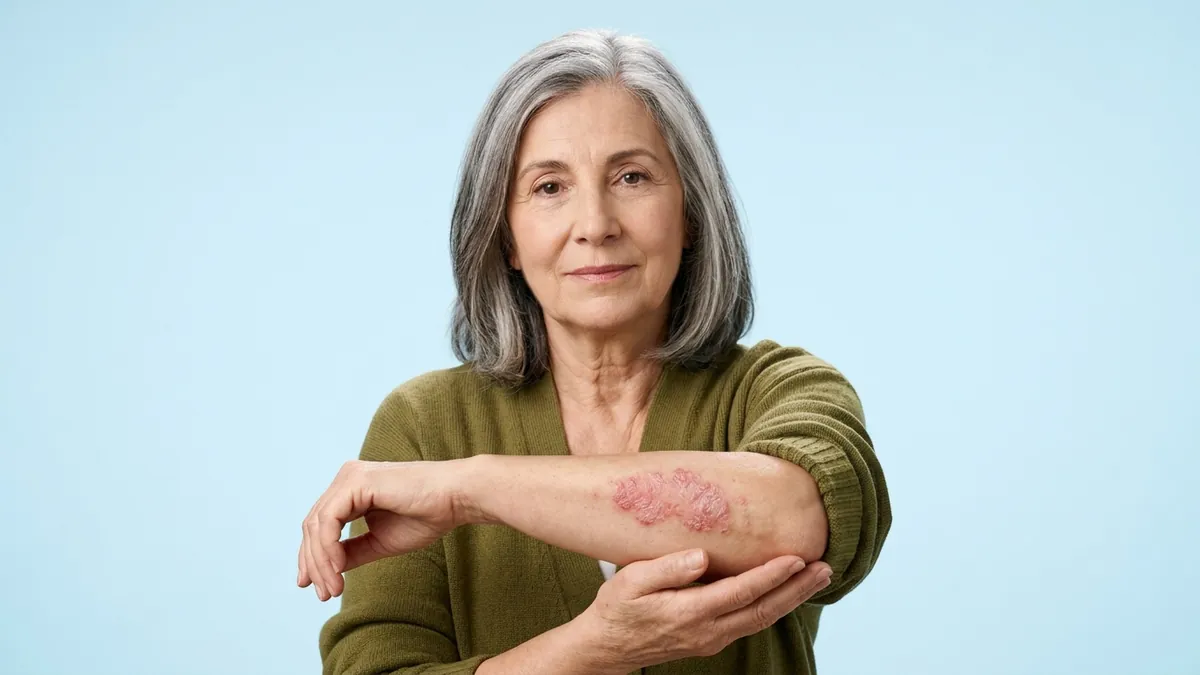
Do you remember chickenpox when you were a child? It was a very annoying experience, with blisters all over your body and itching, right? Many people think that once the chickenpox has healed, the disease is over. But in fact, the virus that caused the chickenpox lies dormant in our bodies, in the nerve cells, and can come back to haunt us years later. That's how we call shingles, or herpes zoster, when the virus reactivates for the second time.
What are the main symptoms of shingles?
The most obvious and prominent symptom of shingles is a painful, blistering rash on the skin . These rashes usually appear on only one side of the body. They can appear in a band around the waist, or on only one side of the face, neck, chest, stomach, or back.
But other symptoms may appear before or along with these symptoms.
| Symptom | Description |
|---|---|
| Nerve pain | A burning sensation, a sharp stabbing pain, under the skin. This is the most bothersome symptom. |
| Itching or numbness | You may feel a tingling or numbness in the area where the injection is scheduled to be given. |
| Skin discoloration | Some areas may turn red before the rash appears. |
| Common symptoms | Fever, malaise, chills , headache, and stomach upset may also occur. |
Sometimes these symptoms, such as nerve pain and skin discoloration, can start weeks before the rash actually appears. After about three to four days, the rash turns into water-filled blisters. After about 10 days, these blisters dry up and crust over. It can take several weeks for the crusts to completely fall off.
The important thing is that some people can get shingles without any symptoms, just the pain. So if you have these symptoms, be sure to see a doctor, even if you don't have any symptoms.
Why do we get shingles?
Simply put, it's caused by the same virus that causes chickenpox. We call it the Varicella-zoster virus (VZV) . After you get over chickenpox, the VZV virus doesn't completely disappear from your body. It stays dormant, like sleeping, in your nerve cells for a long time.
But if for some reason our immune system weakens , the dormant virus can reawaken. It travels along the nerves and reaches the skin, causing shingles. Since immunity naturally decreases with age, people over the age of 50 are at higher risk of developing shingles. Also, people with conditions such as cancer, HIV, or those taking immunosuppressive medications are at higher risk.
Is shingles contagious from person to person?
This is where many people make mistakes. Remember this:
- You cannot catch shingles from someone who has shingles.
- However, someone with shingles can spread chickenpox to someone who has not had chickenpox before.
How does it happen? The fluid from shingles blisters contains the VZV virus. If that fluid comes into contact with the skin of someone who hasn't had chickenpox (for example, a young child or a pregnant woman), that person can get the virus and develop chickenpox. So while you have shingles and blisters, it's very important to keep those blisters well covered and stay away from people who don't have chickenpox.
Complications of shingles
Although shingles usually resolves on its own, some people can develop complications. The most common and painful of these is a condition called post-herpetic neuralgia .
This means that even after all the blisters on the skin have healed, the intense pain along that nerve continues. This pain can last for months, even years.
In addition, there are other complications that can occur.
| Complication | Description |
|---|---|
| Bacterial infections | Bacteria can enter the broken blisters and cause skin infections. |
| Vision problems | If shingles occurs in the eyes, it can lead to eye infections and even loss of vision. |
| Facial paralysis | Facial nerve dysfunction known as Ramsay Hunt syndrome. |
| Hearing problems | If shingles occurs in the ear, hearing loss and ringing in the ears (tinnitus) may occur. |
| Other serious conditions | Very rarely, serious conditions such as brain infections (encephalitis) and pneumonia can occur. |
When should you seek treatment and medical advice?
There is no complete "cure" for shingles. However, there are treatments to control symptoms, speed recovery, and reduce the risk of complications.
The doctor usually recommends the following as treatment:
- Antivirals: For example, medications like Acyclovir. These medications are most effective when started within the first 3 days of symptoms.
- Painkillers: Common painkillers such as Paracetamol or Ibuprofen.
- Corticosteroids: If shingles has affected the eyes or other parts of the face, these may be given to reduce swelling.
When should I see a doctor?
If you suspect you have shingles symptoms, see your doctor immediately . It's best to start treatment as soon as possible.
| When to go to the Emergency Treatment Unit (ETU) |
|---|
If you have any of the following serious symptoms with shingles, go to a hospital's emergency department (ETU) immediately:
|
Can shingles be prevented?
Yes, there is a way to reduce your risk of getting shingles. That is to get the shingles vaccine (Shingrix®) . You can get this vaccine if you have had chickenpox before. Even if you have already had shingles and recovered, it is recommended that you get this vaccine to reduce your risk of getting it again in the future. You can ask your doctor for more information about this.
💡 Take-Home Message
- Shingles is a disease caused by the same chickenpox virus that you had as a child, reactivating years later.
- The main symptom is a painful, blistering rash that occurs on only one side of the body.
- You cannot get shingles from someone who has shingles. However, you can get chickenpox from your blisters to someone who doesn't have chickenpox.
- As soon as you suspect you have symptoms, see a doctor immediately . Starting treatment early can greatly reduce complications.
- There is a vaccine that can reduce the risk of getting shingles. Talk to your doctor about it.






Janiw kuna arsuwinakas jichhakamax uñt’ayatäkiti. Aka chiqanx amuyt’awim jan ukax jiskt’awim yapxatañamawa.