
Do you love sports? Then know these things to stay safe from accidents! (Sports and Exercise Safety)

Do you love sports? Then know these things to stay safe from accidents! (Sports and Exercise Safety)
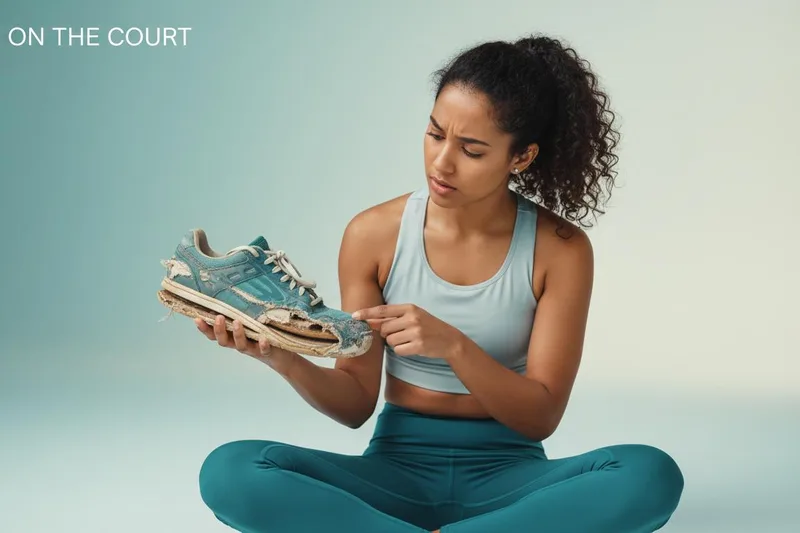
Are you someone who loves to play sports and exercise? Doing so is very good for the body. But if you are not careful, there is a high chance of a small accident. Sometimes we don't even think about it, using equipment that doesn't fit properly can be a big problem. Did you know that playing tennis in old shoes can be just as dangerous as playing football without shoulder protection? So, today we will talk about how to avoid possible accidents while playing these sports and exercising, and what safety equipment we should use.

The importance of wearing a helmet

When playing sports, especially when cycling, skateboarding, playing sports like football, hockey, and baseball, it is important to protect your head. It is said that a good helmet can reduce head injuries by 75% to 85% . That is a lot of protection, right?

So, how do you choose the right helmet?

  • Choose a helmet that is designed for the sport you play. There are different types of helmets for each sport. Also, the helmet should be well-maintained, fit properly, worn properly at all times, and be certified.
  • When buying a bicycle helmet, look for a sticker that says it meets the standards of the Consumer Product Safety Commission (CPSC). This is the main agency that determines the safety of bicycle helmets.
  • There are some helmets called ``Multi-sport helmets'', and even though they are used for things like skating and skateboarding, they are not safe for cycling unless they have that ``(CPSC)'' sticker.
  • Find the right size for you: Here's how. Take a tape measure and measure around your head, from the top of your forehead, just above your eyebrows and ears. Then choose the helmet size that fits that measurement.
  • When you put the helmet on your head , it should fit snugly, neither too tight nor too loose. It should be horizontal on your head, not tilted forward or backward. The two straps should form a "V" around your ears, and the buckle should be on at all times.
  • It is essential to get a new helmet after an accident, because there may be damage inside that we cannot see.
  • Football helmets must be certified by an organization called ``NOCSAE - National Operating Committee on Standards for Athletic Equipment''.
Important: While helmets can greatly reduce the risk of serious head injuries , it is important to remember that they do not provide complete protection against a concussion.

Eyes are like gold! How do you protect them?

It's also important to protect your eyes when playing a lot of sports. In fact, participating in sports is the leading cause of eye injuries for young people. But if you use properly fitting protective eyewear, you can reduce the risk of serious eye injuries by about 90%. Think about it, how big a difference that makes!

What kind of eye mask is good?

  • The best protective eyewear is made with lenses called ``Polycarbonate'' or ``Trivex''. These are specifically tested for sports.
  • Facemasks or polycarbonate shields attached to helmets are used in sports such as football, ice hockey, lacrosse, softball, and baseball.
  • Goggles are commonly used in soccer, basketball, racquet sports , snowboarding, street hockey, lacrosse, paintball, baseball, and softball.
  • If you wear glasses , you may need to get prescription polycarbonate goggles. Don't wear your regular glasses on the field, they won't protect you. Contact lenses won't protect you either.
  • All eyewear should fit properly. It should also have cushions above your eyebrows and above your nose.
  • If an eye mask is broken or old and starting to turn yellow, get a new one.
  • Sometimes, when skiing, climbing, or playing water sports, these goggles provide protection from ultraviolet radiation . Not only that, but they also provide protection from things that can get into your eyes, such as flies and insects, while riding a bicycle.
  • All eye protection must comply with the standards of the American Society for Testing and Materials (ASTM).

Some more essential safety gear

There are several other important pieces of gear, including the helmet and goggles, so let's take a look at those too.

A mouthguard to protect your mouth and teeth!

Did you know that a mouthguard can protect your mouth, teeth, and tongue?
  • Everyone who plays contact sports, in particular, is advised to use a mouthguard to reduce dental trauma.
  • You like football, lacrosse, basketball, hockey, volleyball, martial arts, boxing, wrestling.If you play a sport that could pose a risk to your head , be sure to wear a mouthguard.
  • These can be custom-made by a dentist, or you can buy them from sporting goods stores.
  • It is also very important to wash the mouthguard thoroughly after using it and keep it clean.
  • If you wear a retainer, be sure to remove it before exercising, training, or playing.

Guards for hands, knees and elbows

If you inline skate, snowboard, skateboard, or ride a scooter, it is very important to use these types of guards.
  • Elbow and wrist guards can help prevent fractures. Knee guards can help protect your knees from cuts and fractures.

Pads for various parts of the body

In some sports, especially those involving contact, pads are indispensable.
  • From hockey to volleyball, from soccer to inline skating, many sports use different types of pads . There are pads for the ankles, knees, elbows, wrists , chest, shoulders, hips, and thighs.
  • Ask your coach or doctor what kind of pads you need for the sport you play.

Boys, think about this too - a protective cup

For boys who play high-impact sports like hockey, football, basketball, baseball, and soccer, it is a good idea to use a protective cup to protect the groin area.
  • If you play non-contact, running sports, use an `(Athletic supporter)`.
  • If you have any doubts about this, ask your coach, athletic trainer, or parents to find out if this is necessary for the sport you play.

Just putting on your shoes is a big deal!

Last but not least, shoes are very important. Wearing a pair of shoes that fit properly can help prevent you from slipping and tripping.
  • You probably know that cleats are required for sports like football, baseball, softball, and soccer. But you may not know that things like skateboarding and cycling also require special types of shoes.
  • Ask your trainer or doctor what shoes are best for the sport you play.
  • Get rid of old, worn-out shoes and cleats that don't provide proper support and buy new ones.

It's not enough to just get the gear, it also has to fit properly!

Remember, as well as choosing the right type of gear, it is also important to get the right fit. If you are unsure whether the gear you are using fits you properly, ask your coach, school sports teacher, sports coach or parents to make sure you have the right size and are wearing it correctly. Many sporting goods stores will also help you find the right fit.
Simply put: using the right gear that fits properly will greatly reduce your chances of having an accident!

Warming up before playing is a must!

Before starting any sport or exercise, don't jump into it all at once. It's very important to warm up first. Muscles that are not properly prepared are more likely to get injured.

How do you do a proper warm-up?

  • First, do some light cardiovascular activities. For example, you can do things like jogging, jumping jacks, shuffling, high knees, and butt kicks. These will increase your heart rate, increase your body temperature, and warm up your muscles.
  • After this 10-minute warm-up, do some dynamic stretches. (It is best to stretch after a warm-up because the body heats up and the blood flow to the muscles increases, making the tissues more flexible.)
  • Dynamic stretches that can be done before exercise include toe walking, heel walking, forward lunges, side lunges, toy soldier, inchworm, and arm circles.

Static stretching is also important after playing.

After you're done playing, do some static stretching to prevent your muscles from getting too tight. Stretch a muscle until you feel a slight discomfort, and hold it there for about 30 seconds. Static stretches that can be done like this include standing quadriceps stretches, hamstring stretches, calf stretches, shoulder stretches, wrist stretches, groin stretches, back stretches, iliotibial band stretches, triceps stretches, and chest stretches.

The value of practice

In addition to warm-ups and stretching, practice sessions are also a good preparation for many sports and activities. If you are on a team, participate in as many team practices and games as possible. It is important to gradually build up to full participation through practice. Typically, you should start getting in shape at least 3 weeks before your competition season starts. Even if you are not on a team, you can still improve your skills and reduce your risk of injury by exercising and practicing regularly.
But remember, even though you should train regularly, it's not good to overdo it! If you suddenly increase the frequency, duration, or intensity of training, it may seem like you're improving at first, but over time, you may end up with overuse injuries. Do two days of activity and one day of rest. Alternate between activities.

Keep these things in mind when starting to play again after an injury

If you get injured while playing sports, if you go back to playing before it has fully healed, you are much more likely to get injured again, perhaps even worse. So be very careful. If you are starting again after a long period of time away from a sport or activity, gradually increase your activity level by 10% per week until you are back to your peak fitness level. Don't go back to playing until you are fully healed, even if someone forces you to.

If you get a concussion, you need to be very careful.

It is especially important to give an injury time to heal if you have suffered a concussion, a type of blow to the head. If you return to play too soon, you run the risk of suffering another concussion or, more seriously, a brain injury. Many countries have laws that require you to see a doctor before you can play again after a concussion.

Is it okay to play with painkillers?

Many athletes use pain relievers to keep the pain at bay. However, if you are in constant pain, don't use pain relievers to mask it. Pain is a signal from your body that something is wrong. If you are in pain, talk to a doctor.

If you have these symptoms, you should definitely see a doctor.

If you have any of these, definitely seek medical advice:
  • Moderate to severe pain
  • Pain that interferes with daily activities or sleep
  • The injured area is swollen.
  • If you feel numbness or tingling after the injury
  • If you have difficulty doing normal tasks
  • If you are unable to maintain proper form due to pain
  • If you are limping
  • If the range of motion of a joint has changed or decreased
  • If you feel low on energy

Don't play if you're not feeling well.

This advice is also true when you have a cold or a fever. Don't play if you're sick. Don't play at all if you have a fever. When your head is heavy and you have a runny nose, you can't concentrate properly. That lack of concentration can put you at greater risk of getting into an accident.

The rules are for our own good!

Rules and regulations exist for a good reason. They are to keep you and your teammates safe and to prevent accidents. Learn the rules and follow them to help you do your best. Rules are not restrictions. They are designed to promote safety and to make the game fun for everyone. For example, in football, a late hit after the referee has blown the whistle is a serious penalty. Sometimes the rules may not be directly related to the sport or activity, but they should still be followed. For example, if you are inline skating, skateboarding, or cycling, you should pay close attention to all traffic laws.

Why are proper techniques and sportsmanship important?

Proper technique and sportsmanship also increase safety. It is important to breathe correctly when lifting weights. Exhale as you push a weight up. Holding your breath can increase your blood pressure.
So, when you follow the rules and regulations, remember that they are not there to limit you - they are there to keep you safe and injury-free!

Remember this! (Take-Home Message)

Okay, so we've talked a lot today about how to stay safe while playing sports and exercising. Let's remind ourselves of these important points again:
  • Always wear protective gear that fits properly for the sport you are playing, especially things like a helmet, goggles, and mouthguard.
  • Before starting a sport, it is essential to warm up your body (Warm-up). Also, when you are done, do a cool-down/Static stretching .
  • Practice is not just a hobby, it increases your skills and safety. But it's not good to do too much.
  • If you get injured, don't rush back into playing until you're completely healed. Seek medical advice.
  • If you have pain, don't try to mask it with painkillers. Talk to a doctor.
  • Follow the rules of the game. They are for your own safety.
  • If you are not feeling well, especially if you have a fever, don't go out to play.
If you keep these simple things in mind while playing, you will be able to enjoy the game without any accidents. Wishing everyone a healthy and safe gaming life!
Sports safety, exercise accidents, helmets, eye protection, mouthguards, warm-ups, sports injuries
⚠️ Important: The medical articles and information on Nirogi Lanka are for general awareness only, and are by no means a substitute for professional medical advice, diagnosis, or treatment. For any medical problem you have, consult a qualified physician immediately.

💬 Comments (0)

No comments have been posted yet. Add your comment here for the first time.

Add your comment

Please calculate: 3 + 8 =
Do you love sports? Then know these things to stay safe from accidents! (Sports and Exercise Safety)
Physical FitnessFebruary 12, 2026

Do you love sports? Then know these things to stay safe from accidents! (Sports and Exercise Safety)

Are you someone who loves to play sports and exercise? Doing so is very good for the body. But if you are not careful, there is a high chance of a small accident. Sometimes we don't even think about it, using equipment that doesn't fit properly can be a big problem. Did you know that playing tennis in old shoes can be just as dangerous as playing football without shoulder protection? So, today we will talk about how to avoid possible accidents while playing these sports and exercising, and what safety equipment we should use.

The importance of wearing a helmet

When playing sports, especially when cycling, skateboarding, playing sports like football, hockey, and baseball, it is important to protect your head. It is said that a good helmet can reduce head injuries by 75% to 85% . That is a lot of protection, right?

So, how do you choose the right helmet?

  • Choose a helmet that is designed for the sport you play. There are different types of helmets for each sport. Also, the helmet should be well-maintained, fit properly, worn properly at all times, and be certified.
  • When buying a bicycle helmet, look for a sticker that says it meets the standards of the Consumer Product Safety Commission (CPSC). This is the main agency that determines the safety of bicycle helmets.
  • There are some helmets called ``Multi-sport helmets'', and even though they are used for things like skating and skateboarding, they are not safe for cycling unless they have that ``(CPSC)'' sticker.
  • Find the right size for you: Here's how. Take a tape measure and measure around your head, from the top of your forehead, just above your eyebrows and ears. Then choose the helmet size that fits that measurement.
  • When you put the helmet on your head , it should fit snugly, neither too tight nor too loose. It should be horizontal on your head, not tilted forward or backward. The two straps should form a "V" around your ears, and the buckle should be on at all times.
  • It is essential to get a new helmet after an accident, because there may be damage inside that we cannot see.
  • Football helmets must be certified by an organization called ``NOCSAE - National Operating Committee on Standards for Athletic Equipment''.
Important: While helmets can greatly reduce the risk of serious head injuries , it is important to remember that they do not provide complete protection against a concussion.

Eyes are like gold! How do you protect them?

It's also important to protect your eyes when playing a lot of sports. In fact, participating in sports is the leading cause of eye injuries for young people. But if you use properly fitting protective eyewear, you can reduce the risk of serious eye injuries by about 90%. Think about it, how big a difference that makes!

What kind of eye mask is good?

  • The best protective eyewear is made with lenses called ``Polycarbonate'' or ``Trivex''. These are specifically tested for sports.
  • Facemasks or polycarbonate shields attached to helmets are used in sports such as football, ice hockey, lacrosse, softball, and baseball.
  • Goggles are commonly used in soccer, basketball, racquet sports , snowboarding, street hockey, lacrosse, paintball, baseball, and softball.
  • If you wear glasses , you may need to get prescription polycarbonate goggles. Don't wear your regular glasses on the field, they won't protect you. Contact lenses won't protect you either.
  • All eyewear should fit properly. It should also have cushions above your eyebrows and above your nose.
  • If an eye mask is broken or old and starting to turn yellow, get a new one.
  • Sometimes, when skiing, climbing, or playing water sports, these goggles provide protection from ultraviolet radiation . Not only that, but they also provide protection from things that can get into your eyes, such as flies and insects, while riding a bicycle.
  • All eye protection must comply with the standards of the American Society for Testing and Materials (ASTM).

Some more essential safety gear

There are several other important pieces of gear, including the helmet and goggles, so let's take a look at those too.

A mouthguard to protect your mouth and teeth!

Did you know that a mouthguard can protect your mouth, teeth, and tongue?
  • Everyone who plays contact sports, in particular, is advised to use a mouthguard to reduce dental trauma.
  • You like football, lacrosse, basketball, hockey, volleyball, martial arts, boxing, wrestling.If you play a sport that could pose a risk to your head , be sure to wear a mouthguard.
  • These can be custom-made by a dentist, or you can buy them from sporting goods stores.
  • It is also very important to wash the mouthguard thoroughly after using it and keep it clean.
  • If you wear a retainer, be sure to remove it before exercising, training, or playing.

Guards for hands, knees and elbows

If you inline skate, snowboard, skateboard, or ride a scooter, it is very important to use these types of guards.
  • Elbow and wrist guards can help prevent fractures. Knee guards can help protect your knees from cuts and fractures.

Pads for various parts of the body

In some sports, especially those involving contact, pads are indispensable.
  • From hockey to volleyball, from soccer to inline skating, many sports use different types of pads . There are pads for the ankles, knees, elbows, wrists , chest, shoulders, hips, and thighs.
  • Ask your coach or doctor what kind of pads you need for the sport you play.

Boys, think about this too - a protective cup

For boys who play high-impact sports like hockey, football, basketball, baseball, and soccer, it is a good idea to use a protective cup to protect the groin area.
  • If you play non-contact, running sports, use an `(Athletic supporter)`.
  • If you have any doubts about this, ask your coach, athletic trainer, or parents to find out if this is necessary for the sport you play.

Just putting on your shoes is a big deal!

Last but not least, shoes are very important. Wearing a pair of shoes that fit properly can help prevent you from slipping and tripping.
  • You probably know that cleats are required for sports like football, baseball, softball, and soccer. But you may not know that things like skateboarding and cycling also require special types of shoes.
  • Ask your trainer or doctor what shoes are best for the sport you play.
  • Get rid of old, worn-out shoes and cleats that don't provide proper support and buy new ones.

It's not enough to just get the gear, it also has to fit properly!

Remember, as well as choosing the right type of gear, it is also important to get the right fit. If you are unsure whether the gear you are using fits you properly, ask your coach, school sports teacher, sports coach or parents to make sure you have the right size and are wearing it correctly. Many sporting goods stores will also help you find the right fit.
Simply put: using the right gear that fits properly will greatly reduce your chances of having an accident!

Warming up before playing is a must!

Before starting any sport or exercise, don't jump into it all at once. It's very important to warm up first. Muscles that are not properly prepared are more likely to get injured.

How do you do a proper warm-up?

  • First, do some light cardiovascular activities. For example, you can do things like jogging, jumping jacks, shuffling, high knees, and butt kicks. These will increase your heart rate, increase your body temperature, and warm up your muscles.
  • After this 10-minute warm-up, do some dynamic stretches. (It is best to stretch after a warm-up because the body heats up and the blood flow to the muscles increases, making the tissues more flexible.)
  • Dynamic stretches that can be done before exercise include toe walking, heel walking, forward lunges, side lunges, toy soldier, inchworm, and arm circles.

Static stretching is also important after playing.

After you're done playing, do some static stretching to prevent your muscles from getting too tight. Stretch a muscle until you feel a slight discomfort, and hold it there for about 30 seconds. Static stretches that can be done like this include standing quadriceps stretches, hamstring stretches, calf stretches, shoulder stretches, wrist stretches, groin stretches, back stretches, iliotibial band stretches, triceps stretches, and chest stretches.

The value of practice

In addition to warm-ups and stretching, practice sessions are also a good preparation for many sports and activities. If you are on a team, participate in as many team practices and games as possible. It is important to gradually build up to full participation through practice. Typically, you should start getting in shape at least 3 weeks before your competition season starts. Even if you are not on a team, you can still improve your skills and reduce your risk of injury by exercising and practicing regularly.
But remember, even though you should train regularly, it's not good to overdo it! If you suddenly increase the frequency, duration, or intensity of training, it may seem like you're improving at first, but over time, you may end up with overuse injuries. Do two days of activity and one day of rest. Alternate between activities.

Keep these things in mind when starting to play again after an injury

If you get injured while playing sports, if you go back to playing before it has fully healed, you are much more likely to get injured again, perhaps even worse. So be very careful. If you are starting again after a long period of time away from a sport or activity, gradually increase your activity level by 10% per week until you are back to your peak fitness level. Don't go back to playing until you are fully healed, even if someone forces you to.

If you get a concussion, you need to be very careful.

It is especially important to give an injury time to heal if you have suffered a concussion, a type of blow to the head. If you return to play too soon, you run the risk of suffering another concussion or, more seriously, a brain injury. Many countries have laws that require you to see a doctor before you can play again after a concussion.

Is it okay to play with painkillers?

Many athletes use pain relievers to keep the pain at bay. However, if you are in constant pain, don't use pain relievers to mask it. Pain is a signal from your body that something is wrong. If you are in pain, talk to a doctor.

If you have these symptoms, you should definitely see a doctor.

If you have any of these, definitely seek medical advice:
  • Moderate to severe pain
  • Pain that interferes with daily activities or sleep
  • The injured area is swollen.
  • If you feel numbness or tingling after the injury
  • If you have difficulty doing normal tasks
  • If you are unable to maintain proper form due to pain
  • If you are limping
  • If the range of motion of a joint has changed or decreased
  • If you feel low on energy

Don't play if you're not feeling well.

This advice is also true when you have a cold or a fever. Don't play if you're sick. Don't play at all if you have a fever. When your head is heavy and you have a runny nose, you can't concentrate properly. That lack of concentration can put you at greater risk of getting into an accident.

The rules are for our own good!

Rules and regulations exist for a good reason. They are to keep you and your teammates safe and to prevent accidents. Learn the rules and follow them to help you do your best. Rules are not restrictions. They are designed to promote safety and to make the game fun for everyone. For example, in football, a late hit after the referee has blown the whistle is a serious penalty. Sometimes the rules may not be directly related to the sport or activity, but they should still be followed. For example, if you are inline skating, skateboarding, or cycling, you should pay close attention to all traffic laws.

Why are proper techniques and sportsmanship important?

Proper technique and sportsmanship also increase safety. It is important to breathe correctly when lifting weights. Exhale as you push a weight up. Holding your breath can increase your blood pressure.
So, when you follow the rules and regulations, remember that they are not there to limit you - they are there to keep you safe and injury-free!

Remember this! (Take-Home Message)

Okay, so we've talked a lot today about how to stay safe while playing sports and exercising. Let's remind ourselves of these important points again:
  • Always wear protective gear that fits properly for the sport you are playing, especially things like a helmet, goggles, and mouthguard.
  • Before starting a sport, it is essential to warm up your body (Warm-up). Also, when you are done, do a cool-down/Static stretching .
  • Practice is not just a hobby, it increases your skills and safety. But it's not good to do too much.
  • If you get injured, don't rush back into playing until you're completely healed. Seek medical advice.
  • If you have pain, don't try to mask it with painkillers. Talk to a doctor.
  • Follow the rules of the game. They are for your own safety.
  • If you are not feeling well, especially if you have a fever, don't go out to play.
If you keep these simple things in mind while playing, you will be able to enjoy the game without any accidents. Wishing everyone a healthy and safe gaming life!
Sports safety, exercise accidents, helmets, eye protection, mouthguards, warm-ups, sports injuries
⚠️ Important: The medical articles and information on Nirogi Lanka are for general awareness only, and are by no means a substitute for professional medical advice, diagnosis, or treatment. For any medical problem you have, consult a qualified physician immediately.

💬 Comments (0)

No comments have been posted yet. Add your comment here for the first time.

Add your comment

Please calculate: 3 + 8 =