
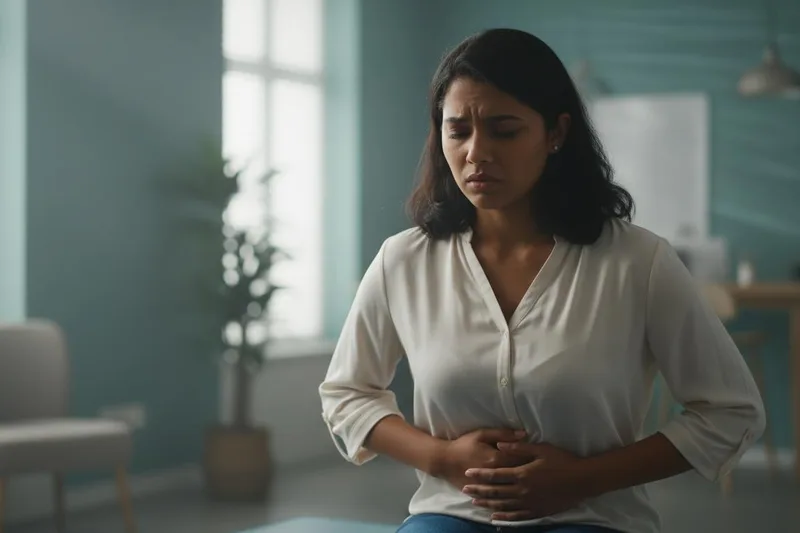
Do you also often feel like your stomach is full of gas, bloated, and bloated? Do you sometimes have severe stomach pain or discomfort after eating? Many people think of these as normal things, like "gastritis," but sometimes there may be a very important health condition behind this that we don't talk about much, but that we don't talk about much. That's what we call SIBO, which stands for Small Intestinal Bacterial Overgrowth. Although the name is a bit complicated, the story is very simple. Today, we'll talk about this clearly and in a way that you can understand.
Simply put, what is SIBO?
SIBO stands for "small intestinal bacterial overgrowth." Okay, now let's break this down a bit.
We have a lot of bacteria living in our digestive system, especially in the large intestine. This is very normal and healthy. These bacteria help our bodies a lot. However, in a condition called SIBO, these bacteria (or other types of bacteria) start to grow in excess in our small intestine . The small intestine is usually a place where there are very few bacteria. It is when there are too many bacteria that the problems start.
Think about it this way. You cook in the kitchen and entertain guests in the living room. The garbage can is outside the house. But imagine what happens if the garbage can ends up in the kitchen? The whole kitchen becomes dirty, stinks, and you can't get anything done. That's what happens to our small intestine with SIBO. Bacteria that should be in the large intestine settle in the small intestine and start eating the food there.
This overgrowth of bacteria ferments the food we eat, especially carbohydrates , and produces large amounts of gas . That's what causes bloating and gas. Not only that, but these bacteria also eat nutrients that our bodies need to absorb, such as vitamin B12. They also destroy bile salts, which help digest fats. The end result of all this is that food is not digested properly, nutrients are not absorbed by the body, and a variety of unpleasant symptoms arise.
How do you know if you have SIBO? What are the symptoms?
The symptoms of SIBO often resemble those of other gastrointestinal conditions, especially IBS (Irritable Bowel Syndrome). So it can sometimes be difficult to diagnose. But if you have one or more of these symptoms, it's important to be concerned.
| Symptom | Description |
|---|---|
| Bloating | Feeling of fullness and fullness in the stomach after eating. This may increase as the day goes on. |
| Abdominal pain | Cramp-like pain in the stomach or just a stomach ache. |
| Excessive gas (Gas) | Frequent passing of air or feeling full of gas in the stomach. |
| Diarrhea or Constipation | Some people may have constant diarrhea. Others may have constipation. Sometimes both may alternate. |
| Nausea | Feeling like you're going to vomit. |
| Unintentional weight loss | Because food is not absorbed properly, weight loss may occur. |
| Fatigue | Excessive fatigue and tiredness due to nutritional deficiencies. |
Is there a change in stools with SIBO?
Yes, SIBO can cause some changes in stool due to fat malabsorption.
- Oily or smelly stools: Stools may be oily and smell more strongly than usual because fat is excreted undigested.
- Stool floating in water: Sometimes stool can float in water.
- Other changes:There may be changes such as stool becoming more liquid than usual, passing with mucus, passing as thin as a pencil, or passing as hard as a ball.
Why do we get SIBO? What are the causes?
Our bodies have a wonderful mechanism to control the amount of bacteria in our small intestine. For SIBO to develop, one or more of these mechanisms must be impaired. There can be many reasons for this. Let's break them down into several parts.
| Reason | Description |
|---|---|
| 1. Changes in chemical processes | |
| Low stomach acid | Stomach acid is a protective barrier that kills unwanted bacteria that come with food. When acid is low (hypochlorhydria), bacteria can easily enter the small intestine. This can be caused by H. pylori infection or long-term use of gastritis medications such as PPIs. |
| Some medications | Frequent use of antibiotics, narcotics, and stomach acid-reducing medications can disrupt the balance between good and bad bacteria in the gut. |
| 2. Changes in mechanical processes | |
| Small intestine dysmotility | Our intestines have a "cleansing wave" that pushes food debris and bacteria forward. If this movement doesn't happen properly, bacteria can get stuck and grow. Conditions like gastroparesis and hypothyroidism can cause this. |
| Structural problems in the small intestine | Things like adhesions caused by abdominal surgery, obstructions in the intestines, or small pouches (diverticulosis) that form in the intestinal wall can cause bacteria to get stuck in one place and grow easily. |
Other factors that increase the risk of SIBO
- Aging: Stomach acid and intestinal motility may naturally decrease slightly as we age.
- Other medical conditions: People with conditions such as diabetes, lupus, celiac disease, Crohn's disease, and IBS are at increased risk of developing SIBO.
- Weakened immune system: People with weakened immune systems may have difficulty controlling bacteria.
What foods are bad for someone with SIBO?
The important thing is that food is not the primary cause of SIBO. However, once you develop SIBO, the foods you eat can either increase or decrease your symptoms.
Simply put, the favorite food of these unwanted bacteria in the small intestine is carbohydrates. If you feed them their favorite foods, they will grow more, produce more gas, and worsen your symptoms. So, when treating SIBO, "starving" these bacteria is one strategy.
Foods that usually increase symptoms are:
- Sugar and sweets: All types of sugar, sweet drinks, cakes, biscuits.
- Fruits and starchy vegetables: Some fruits (like apples, pears), things like potatoes, sweet potatoes.
- Milk and dairy foods:
- Grains: Lots of things like bread, pasta, noodles.
This is why doctors sometimes tell people with SIBO to follow special dietary regimens, such as the Low FODMAP diet .
What happens if SIBO is left untreated?
SIBO is more than just gas in the stomach. If left untreated, it can lead to serious complications.
- Malnutrition: Malnutrition can occur because the body does not properly absorb the fats, proteins, and carbohydrates in food.
- Vitamin deficiencies: Vitamin B12 deficiency in particular can occur. This can lead to anemia and nervous system problems.
- Calcium deficiency: Calcium is not absorbed properly, which can lead to osteoporosis or kidney stones over time.
Therefore, SIBO is not a condition that should be left untreated. In the long run, it can lead to serious health problems.
How does a doctor diagnose SIBO?
If your doctor suspects SIBO after listening to your symptoms and reviewing your medical history, there are several tests to confirm it.
- Breath Test: This is the main and simplest way to diagnose SIBO. In this test, you are given a sugary drink (lactulose or glucose) and asked to blow into a balloon at regular intervals for several hours. The levels of hydrogen and methane gases in your breath are measured. If there are too many bacteria in the small intestine, they will eat this sugary drink and produce these two gases. If the levels of these gases in your breath are higher than a certain level, it can confirm that you have SIBO.
- Other tests:
- Blood tests: Check for things like vitamin deficiencies or anemia.
- Stool tests: Check for undigested fat in the stool.
- Imaging Tests: Sometimes a test such as an endoscopy may be performed to see if there is a structural problem in the intestine.
What are the treatments for SIBO?
When treating SIBO, doctors focus on three main things.
1. Controlling bacterial growth: This is mainly done by giving a special type of antibiotic. These medications kill unwanted bacteria in the small intestine.
2. Treating complications: If you have nutritional deficiencies, you will be given vitamin and mineral supplements.
3. Treat the underlying cause: This is the most important thing. The underlying cause of SIBO needs to be found and treated. Otherwise, even if antibiotics provide temporary relief, SIBO may return. For example, if there is a lack of intestinal motility, medications (motility agents) can be given to help with it. If there is a structural problem, surgery may be required.
How do you prevent SIBO from coming back?
It is common to see SIBO symptoms return a few months after the antibiotic course is over, so these are important as a long-term solution.
- Treat the underlying cause: Talk to your doctor and continue treatment for the underlying cause of SIBO.
- Diet control: Following a low-carbohydrate diet can help control bacterial growth.
- Probiotics:After a course of antibiotics, probiotics can help replenish the good bacteria in your gut. However, you should definitely talk to your doctor before using them, as in some cases, probiotics can worsen SIBO symptoms.
Finally, if you have these symptoms, it is very important to see a qualified doctor for an accurate diagnosis and not just dismiss them as "gastritis." SIBO is a condition that can be cured if treated properly.
Take-Home Message
- SIBO is not just gas in the stomach, it is a medical condition caused by an overgrowth of bacteria in the small intestine.
- Don't ignore symptoms like frequent bloating, stomach pain, diarrhea, or constipation.
- There may be another underlying cause for SIBO (e.g., poor bowel movement, other diseases). It is essential to treat that cause.
- Simple tests like a breath test can confirm whether you have SIBO.
- Do not self-medicate or take over-the-counter medications. Always see your doctor for proper advice and treatment.


💬 Comments (0)
No comments have been posted yet. Add your comment here for the first time.
Add your comment