
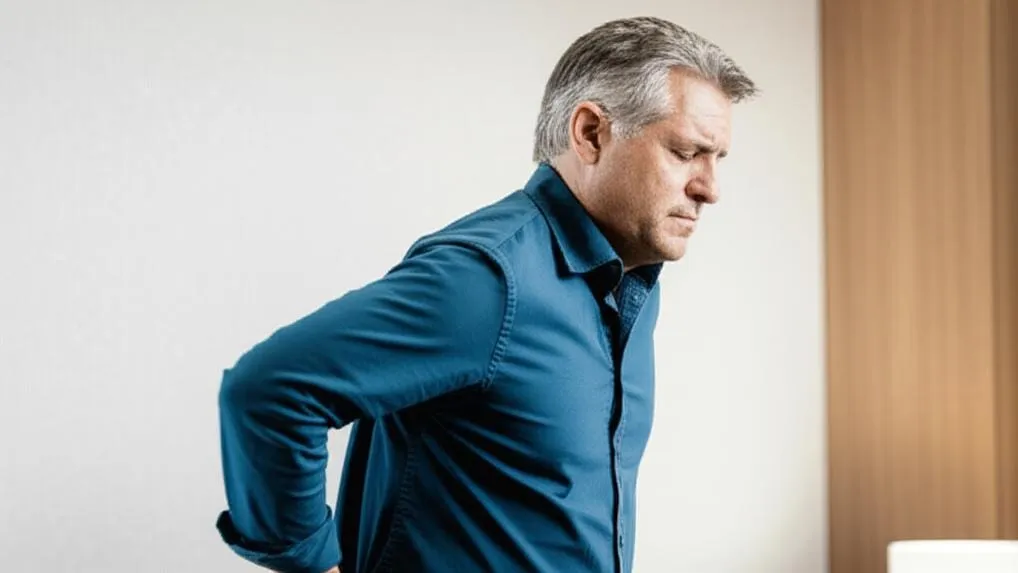
Do you also feel back pain, pain along the legs, or numbness when you stand or walk for a while? Sometimes the cause of this may not be as simple as you think. Today we are talking about a condition called ' spinal stenosis ', which is common among many people, but is not exactly known. When you hear this, it may sound like a big disease, but don't be afraid. Let's talk about this simply and clearly.
What is Spinal Stenosis simply?
Think of our spine as a tube. The spinal cord, the main nerve that carries messages from our brain to the rest of our body, runs through this tube. This tube, the spinal canal, starts to narrow over time due to various reasons. In medical terms, this narrowing of the spinal canal is called spinal stenosis .
When the space inside is reduced in this way, that most important nerve cord (the spinal cord) and the other nerves that branch out from it begin to get squeezed and compressed. That's when symptoms like back pain, numbness in the legs, and a feeling of being out of control in the legs appear.
There are two main types of spinal stenosis:
This condition can be divided into two main types depending on where in the spine it occurs.
- Cervical stenosis : This is a narrowing of the spinal canal in our neck.
- Lumbar Stenosis: This is a narrowing of the spinal canal in the lower third of the spine. This is the most common type.
In most cases, the main cause of this condition is osteoarthritis, which is a degenerative joint disease that occurs with age. As the cushioning cartilage between our vertebrae wears down, the vertebrae rub against each other. In response, the body creates new bone spurs. This extra bone can narrow the space even further.
What are the common symptoms of this?
Not everyone gets symptoms. But if they do, they can usually be things like back pain , stiffness, and numbness. Let's look at what other specific symptoms can come with this.
| Symptom | Description |
|---|---|
| Sciatica | A sharp pain that starts in the lower back or buttocks and travels down the leg like an electric shock. |
| Difficulty walking (Foot Drop) | Pain and weakness in the legs, which can make it feel like your feet are hitting the ground when you walk. The pain may worsen when you stand or walk. |
| Loss of Bladder/Bowel Control | (Cauda Equina Syndrome) - This is a very serious condition. This condition occurs due to severe compression of the nerves that connect the bladder and intestines. This is a medical emergency. You should go to a hospital's Emergency Department (ETU) immediately. |
| Nerve root compression (Radiculopathy) | Pain, numbness, or weakness in the arms and legs due to compression of the nerve roots coming out of the spine. |
| Spinal cord compression (Myelopathy) | Numbness and weakness in the arms and legs due to compression of the spinal cord. |
What are the main causes of spinal stenosis?
As we discussed earlier, arthritis is the main cause. Apart from that, there could be several other causes.
| Cause | What Happens |
|---|---|
| Herniated Disks | A disc between the vertebrae bursts, causing the jelly-like material inside to leak out and press on the nerves. |
| Injuries | A fracture or sprain of the spine due to an accident. |
| Tumors | Cancerous or other types of tumors growing in the spinal canal. |
| Thickened Ligaments | The ligaments that connect our bones together thicken over time and protrude into the cavity. |
What are the risk factors?
- Being over 50 years of age is the main risk factor.
- Women are more likely to develop this condition.
- If you have previously undergone back surgery.
- For some people, this condition may develop at a young age, between the ages of 30-50, due to certain congenital spinal abnormalities (e.g., scoliosis ).
How do you find this, Doctor?
When you go to see a doctor with these symptoms, he will first ask you about your condition. Then he will physically examine you. He may press on the areas of your back that are causing pain, and he may examine your gait and the way you stand.
To confirm this condition accurately, imaging tests must be performed.
- MRI Scan : This can take a very clear three-dimensional (3D) image of the spine. It can clearly see things like pinched nerves, disc damage, and tumors.
- CT Scan: This is also an X-ray technique that produces three-dimensional images. Sometimes a dye is injected into the body. This can help detect problems in not only the bones but also the soft tissues.
What are the treatments for this?
The first and most important thing to say is that there is still no cure for spinal stenosis.However, there are many treatments that can help control symptoms, reduce pain, and help you live a normal life. Your doctor will determine the best treatment for you.
- Painkillers: For general pain, you can use short-term medications like paracetamol and ibuprofen. For long-term pain, your doctor may recommend certain antidepressants and other medications for nerve pain.
- Corticosteroid Injections: A steroid is injected directly into the area of pain and swelling. This provides quick relief from pain, but it is not always possible due to side effects.
- Physical Therapy: This is a very important treatment. A physical therapist will design a series of exercises that are appropriate for you. These exercises can strengthen your back and abdominal muscles and reduce pressure on your spine.
- Surgery: Surgery is considered in severe cases, such as when no other treatment has helped, when there is difficulty walking, or when there is loss of urinary control. There are several types of surgery (e.g., Laminectomy) that create space where the nerve is compressed. Surgery is a last resort. You should discuss it with your doctor before making a decision.
Things you can do at home and things you should avoid
Along with the treatment provided by your doctor, you can get great relief from small changes in your lifestyle.
- Exercise: With your doctor's approval, engage in gentle exercise such as walking and swimming.
- Hot and cold compresses: Hot compresses relax the muscles. Ice packs reduce swelling. See which method gives you relief.
- Good posture: Stand up straight when standing and sitting. If you lift a heavy object, bend at the knees, not the back.
- Lose weight: Being overweight puts extra pressure on your back. Losing a little weight can greatly relieve pain.
- Avoid smoking: Smoking is very harmful to spinal health.
💡 Take-Home Message
- Spinal stenosis is a narrowing of the space inside the spine. This can cause nerve compression, pain, and numbness.
- Aging and arthritis are the main causes, but it can also occur in younger people.
- Back pain, pain that radiates down the legs (sciatica), and difficulty walking are common symptoms.
- If you suddenly lose control of your urine or stool, it is a medical emergency . Go to a hospital's Emergency Department (ETU) immediately.
- Although this condition cannot be completely cured, symptoms can be well controlled with medication, physical therapy, and lifestyle changes. Always follow your doctor's instructions.


Janiw kuna arsuwinakas jichhakamax uñt’ayatäkiti. Aka chiqanx amuyt’awim jan ukax jiskt’awim yapxatañamawa.