
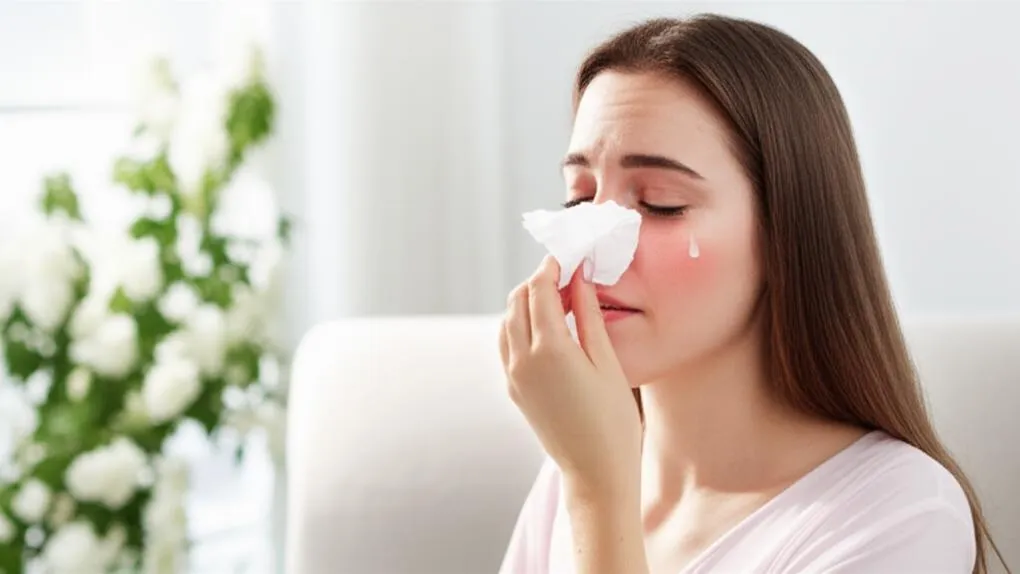
Why do we get allergies like this?
Simply put, the main culprit is pollen . Trees, grasses, and weeds release these tiny pollen particles into the air to spread their seeds. So, when this pollen enters the nose of someone with allergies, the body's defense system goes into overdrive. Think of our body's immune system as an army that defends a country. Normally, this army attacks bad germs that enter our bodies. But when this army in the body of someone with allergies sees something like harmless pollen, it mistakenly thinks that it is a big enemy.Because of this misconception, the body's immune system produces antibodies to fight the pollen . As a result of this fight, a chemical called histamine is released into our blood.It's that chemical called (Histamine) that causes all those annoying symptoms like runny nose , sneezing, and itchy eyes. Pollen can travel miles on the wind. So even pollen from a tree that's not in your yard can cause you allergies.
What things can cause allergies?
- Tree pollen: In Sri Lanka, we can see this condition more often, especially during the flowering season of trees like mango and cashew. Also, pollen from various types of flowers can be affected.
- Grasses and weeds: A major cause of pollination of grasses and various weeds.
- Mold: During the rainy season, mold grows more frequently with moisture inside and outside the home. This is also a strong allergen.
- Dust mites: When we clean our homes, these tiny creatures that live in things like bedding, pillows, and mattresses can also exacerbate allergies.
What are the symptoms of this?
A person with an allergy may experience one or more of these symptoms at the same time. Let's take a look at what these are.| Symptom | Simple explanation |
|---|---|
| Runny nose | A constant runny nose like water. |
| Nasal congestion | Nasal congestion that makes it difficult to breathe. |
| Watery and itchy eyes | Eyes are red, itchy, and teary. |
| Frequent sneezing | Sneezing several times in a row. |
| Cough | A dry cough with a tickle in the throat. |
| Dark circles under the eyes | Some people may develop allergic shiners due to swollen blood vessels under the eyes due to nasal congestion. |
How do you know for sure if this is an allergy?
If you continue to have these symptoms, the best thing to do is to see your family doctor . He or she will examine you and, if necessary, refer you to an allergist. The allergist will often do a test to find out exactly what you are allergic to. This is called a skin prick test . This involves pricking the skin of your arm or back with a small needle and placing a small amount of the substance you think you are allergic to (such as pollen or dust). If you are allergic to that substance, within a few minutes the area will turn red and a small blister will appear, similar to a mosquito bite. This can tell you exactly what you are allergic to. Sometimes a blood test may also be done.What are the treatments available?
There are several types of medications we can use to reduce these annoying symptoms.Medicines that can be purchased at the pharmacy and those prescribed by a doctor
- Antihistamines: These work by reducing the action of the chemical Histamine'' that we talked about earlier in the body. This helps control things like sneezing and itching . Some antihistamines can make you feel drowsy . So if you drive or work, ask your doctor about a non-drowsy type.
- Decongestants: These work by constricting the blood vessels in the nose, reducing nasal congestion.
- Nasal Sprays: There are several types of these.
- Steroid Nasal Sprays: These are often the first thing doctors recommend. They reduce swelling and inflammation in the nose. Types like Fluticasone and Budesonide are now available over-the-counter from pharmacies.
- Cromolyn sodium spray: This works by stopping the production of (Histamine) before allergy symptoms occur.
- Eye Drops: These help reduce itching and tearing in the eyes.
Most importantly: Although you can buy this medication over the counter at the pharmacy, it's important to talk to your doctor first to find the right dosage for you. If you need to continue using this medication for more than a few days, be sure to seek medical advice.If these medications don't help, your doctor may recommend immunotherapy, or "allergy shots." This involves slowly injecting your body with very small amounts of the substance you're allergic to, gradually building up your body's tolerance over time. This is a long-term solution.
Are there any natural remedies?
Yes, there are a few simple things that can help.- Nasal Irrigation: Using a Neti Pot or squeeze bottle, pour a mixture of lukewarm water, salt, and baking soda into one side of your nose and out the other. This will help flush out any debris, pollen, or other debris that may be stuck inside your nose, leaving your nose clear. Important: Use only boiled, sterile, or distilled water . Using regular tap water can cause serious infections.
- Some herbs: There is research on herbs like Butterbur and Quercetin, but there are mixed opinions about their effectiveness. Be sure to talk to your doctor before using any herbs, as they can interact negatively with other medications you are taking.
5 tips to stay safe from pollen
In addition to taking medication, it is also important to stay away from allergens as much as possible. 1. Stay indoors during peak pollen times: Pollen is usually highest in the morning. Reduce your time outside as much as possible. 2. Keep windows and doors closed: Keeping windows and doors closed during peak pollen times can help reduce the amount of pollen entering your home. It is best to use an air purifier. 3. Clean regularly: Wipe down dusty areas, such as bookshelves and fan blades, with a damp cloth. Vacuum at least twice a week. It is a good idea to wear a mask when vacuuming. 4. Wash your body after coming home: Washing your body and hair after coming home can help remove pollen from your body and hair. 5. Wash your bed sheets regularly: Wash your bed sheets and pillowcases with hot water at least once a week. This can eliminate things like dust mites.💡 Take-Home Message
- Seasonal allergies are an unwanted response by the body's immune system to harmless substances, such as pollen.
- Its main symptoms are frequent sneezing, nasal discharge , and itchy eyes and nose.
- If you continue to have these symptoms, it is very important to seek medical advice . Do not self-medicate.
- Just like medications, making small lifestyle changes to stay away from allergens like pollen can provide great relief.
- Although this condition is distressing, with proper treatment and management, you can live a normal life.





Janiw kuna arsuwinakas jichhakamax uñt’ayatäkiti. Aka chiqanx amuyt’awim jan ukax jiskt’awim yapxatañamawa.