
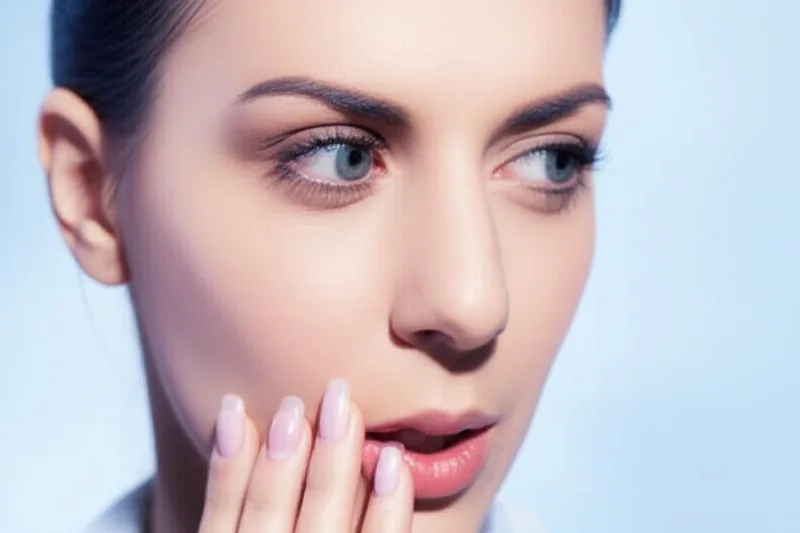
Do you ever find yourself chewing your fingernails without even realizing it? Maybe it's while watching TV, deep in thought, or when you're feeling a little nervous or scared... You're not alone, this is actually a habit that many people have. It's common among children, young people, and adults alike. So today, let's talk about why we develop this habit, whether it's harmful, and most importantly, how to break it.
Why do we tend to bite our nails?
It's difficult to pinpoint a single cause for nail biting. There can be several factors that contribute to it.
Imagine if your mother or father bit your nails. If so, you are more likely to develop the habit. Some studies have shown that even if parents stop this habit before the child is born, this tendency can be passed on to their children genetically. This means that there is a small chance that this is a hereditary trait .
But, the most common and main cause is mental conditions .
Simply put, nail biting is a way we use to express and deal with certain feelings in our minds.
You may bite your nails unconsciously when you are feeling nervous, scared, anxious, or down . Similarly, some people bite their nails when they are bored , hungry , or feeling insecure . Most of the time, this is not something we do consciously, it is an automatic action .
Why do I need to stop this habit? Is there any harm in it?
“Oh… what harm can just biting your nails do?” you might think. But there are several side effects to continuing this habit. It usually causes little permanent damage, but it is not without risks.
Let's see what those disadvantages are.
| Possible harm | What happens to it? |
|---|---|
| Ugly and deformed nails | When you bite your nails, you damage the delicate tissue around the nail. This is called nail bed damage. When this happens, the nails stop growing properly and start to grow in strange, crooked, and unsightly shapes. |
| Damage to your beautiful smile | Nails are stronger than you think. If you keep chewing on them, they can crack, break, and wear away your teeth's enamel. Over time, some people may develop jaw pain and problems. |
| Frequent illness | Our hands are a storehouse of germs. These germs are especially easy to hide under our fingernails. When you put your fingers in your mouth several times a day, these germs are more likely to enter your body directly and make you sick. Germs can also easily enter your body through small cuts in the skin caused by biting your nails. |
Okay, so how do we break this habit?
This is not something that can be changed overnight. But with a little effort and effort, you can definitely break this habit. Here are some simple ways you can try.
Things you can do yourself
- Keep your nails trimmed: When you keep your nails trimmed, there is nothing left to chew on. Then, even if you do try to chew, you won't feel much pleasure from it, so the habit may gradually decrease.
- Add a bitter taste: There are special nail polishes available at pharmacies. These have a very bitter, unpleasant taste. After applying this, even if you accidentally put your finger in your mouth, the bitter taste will make you think, "Oh, I can't eat this," and you'll want to take your finger out of your mouth.
- Get a manicure: Spend some money and time at a salon to get your nails done. You don't want to ruin your beautiful nails by breaking them and biting them. It's also a good mental boost.
- Use gloves: This may sound a bit ridiculous, but it is a very effective method. Especially when you are at home, watching TV, or when you feel like biting your nails, wear a pair of light gloves. Then you will have no chance of biting your nails. There are also nail stickers that you can stick on your nails.
- Find your triggers:Pay attention. When do you bite your nails? What emotions do you feel at that time? (Anxious? Sad? Boredom?) This way , once you've identified your 'trigger' , you can think of something else you can do instead of biting your nails when that feeling comes.
- Give your hands and mouth something else to do: When you feel like biting your nails, keep your hands busy. Squeeze a small stress ball, spin a pen, or hold something small in your hand and play with it. Also, give your mouth something to do. Chew a piece of gum. This will divert the urge to bite your nails.
Let's break the habit little by little.
If you find it difficult to stop biting all ten nails at once, set small goals . Think, “I will not bite the nails on my right hand this week.” Or start even smaller. Decide, “I will not bite the nail on my big toe today.” After you have done this successfully for a few days, add another finger to the “no” list. Try this until you have stopped biting all your fingers.
If you've tried all of these things and still can't break the habit, don't be embarrassed. It's normal. The best thing to do is to talk to your doctor about it . You may need to treat the underlying stress or anxiety. Your doctor can then refer you to a therapist who can help you find the root cause of your nail biting, treat it, and help you break the habit completely.
Take-Home Message
- Nail biting is more than just a bad habit. It can often be a symptom of underlying stress , anxiety , or other emotions.
- Continuing this habit can damage your nails, teeth, and overall health.
- You can try to break this habit with simple methods such as cutting your nails short, applying a bitter-tasting liquid, and identifying the triggers that make you bite your nails.
- If you can't stop this on your own, don't worry about it and seek the advice of a doctor. That's the wisest thing to do.
Nail biting, nail biting, bad habits, stress, anxiety, nail health, nail biting Sinhala


💬 Comments (0)
No comments have been posted yet. Add your comment here for the first time.
Add your comment