
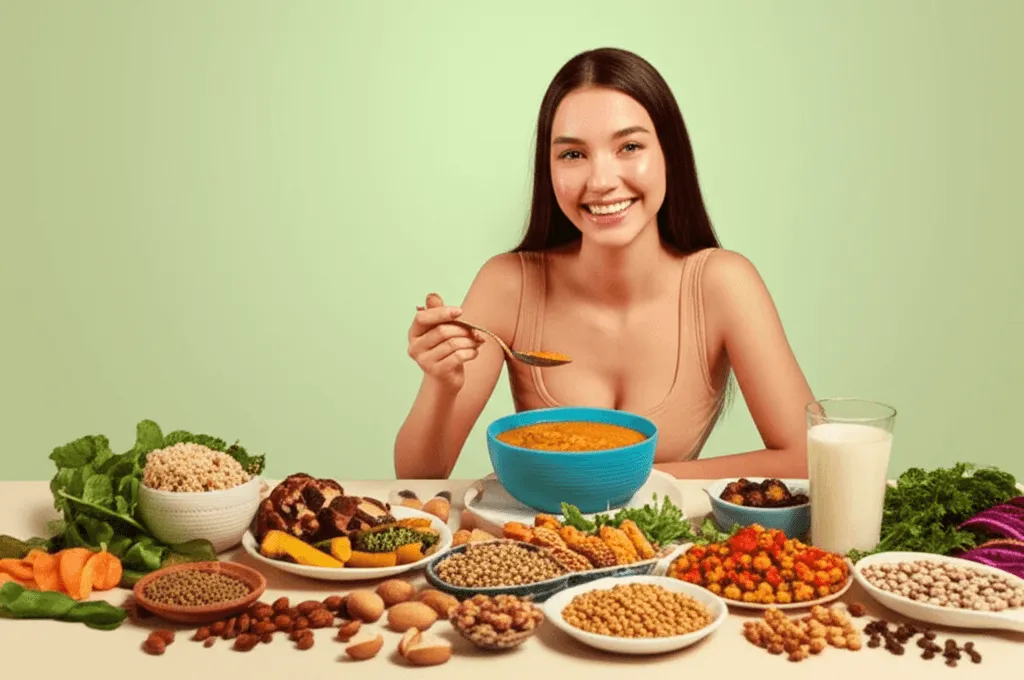
Who is this 'Vegetarian'?
Simply put, a 'vegetarian' is someone who avoids animal products such as meat, fish, and poultry. However, there are some variations. Some people eat eggs and dairy products (milk, yogurt, cheese), while others do not eat them at all. Typically, someone decides to become a vegetarian for the following reasons:- Think about your health: Protect yourself from certain diseases .
- Think about the environment: Reduce the impact of animal husbandry on the environment.
- Religious beliefs: According to their religious teachings.
- Because of love and compassion for animals (Animal rights).
So, what are the best ways to get protein without meat?
Imagine you don't eat meat or fish. But you need protein to stay strong and healthy. Luckily, there are plenty of superfoods in the plant-based world that are packed with protein. Let's take a look at what they are.| Food type | Examples and descriptions |
|---|---|
| Legumes and Beans | These are the kings of vegetarian meals. They can be used instead of meat in a soup, a salad, or anything else. Examples: lentils, chickpeas, peas, green beans, and kidney beans. |
| Nuts and Seeds | Great as a snack, or tossed with oats or yogurt. Examples: peanuts, cashews, almonds, pumpkin seeds, sunflower seeds, sesame seeds. |
| Whole Grains | Unprocessed grains are the richest in protein, vitamins, and minerals. Examples: oats, brown rice, millet, barley, quinoa. |
| Some vegetables | You can also get more protein from vegetables than you think. Examples: Brussels sprouts, spinach, broccoli, peas, corn. |
| Dairy | Dairy foods are a source of 'complete protein' that contains all the essential amino acids our body needs. Examples: Greek yogurt, milk, cheese, cottage cheese. |
| Eggs | Eggs are also a very good, complete source of protein. One large egg contains about 6-8 grams of protein. |
Who is a 'vegan'?
Okay, now let's see who is a 'Vegan'. A 'Vegan' is someone who goes one step further than a 'Vegetarian'. That means they don't eat any animal products.That means not only meat, fish , and poultry; they also don't eat things like milk, cheese, yogurt , and eggs . Some people don't even use honey . They follow a completely plant-based diet.
How can a vegan get protein?
Since a 'vegan' doesn't eat dairy or eggs, they need to be a little more careful about protein. But don't worry, they have great protein sources too.- Tofu and Tempeh: Both are made from soy. Tofu is made from soy milk. Tempeh is made from fermented whole soybeans. Both are very high in protein . One cup of tempeh has about 34 grams of protein.
- Seitan: This is made from gluten, a protein found in wheat flour. It has a meat-like appearance and texture, making it a good substitute for meat.
- Legumes and nuts: An essential part of a vegan's diet. You can get most of your daily protein from things like chickpeas, peas, and lentils.
- Edamame: These are boiled, shelled soybean pods. They are rich in protein and many essential amino acids.
- Soy milk or oat milk: These can be used instead of cow's milk. Soy milk in particular contains a good amount of protein.
Animal protein? Plant protein? What's the difference?
This is a problem that many people have. Protein is a nutrient that our body needs in large quantities. It is what gives us our:- Builds muscles and bones.
- Repairs damage to the body.
- Helps carry oxygen to the blood.
- Helps with digestion and hormone regulation.
- Animal Protein: This is called 'complete protein' because we can get all 9 essential amino acids our body needs from a single food (e.g. meat, eggs).
- Plant Protein: Many plant proteins are 'incomplete' . That is, a single plant doesn't contain all the essential amino acids. But the important thing is, when you eat a variety of plant foods (e.g., rice with lentils, vegetables), you can get all the amino acids you need.
But remember, just because you're vegetarian or vegan doesn't mean it's a healthy diet . Things like chips, soft drinks, and biscuits are also vegetarian, but they're not good for your health. The most important thing is to plan your meals well and get a balanced diet.If you have any concerns about your diet, especially your protein needs, it's best to talk to your doctor or a qualified nutritionist.
💡 Take-Home Message
- A vegetarian or vegan diet can be very healthy.
- It is not at all difficult to get the amount of protein your body needs without meat or fish.
- The key is to include a variety of plant foods in your daily diet. Eat a mix of legumes, nuts, seeds, vegetables, and nuts.
- Just being vegetarian doesn't guarantee health. It's essential to plan your meals in a balanced and planned manner .
- If you have any concerns about your nutrition or changing your diet, don't hesitate to seek advice from your doctor .






Janiw kuna arsuwinakas jichhakamax uñt’ayatäkiti. Aka chiqanx amuyt’awim jan ukax jiskt’awim yapxatañamawa.