
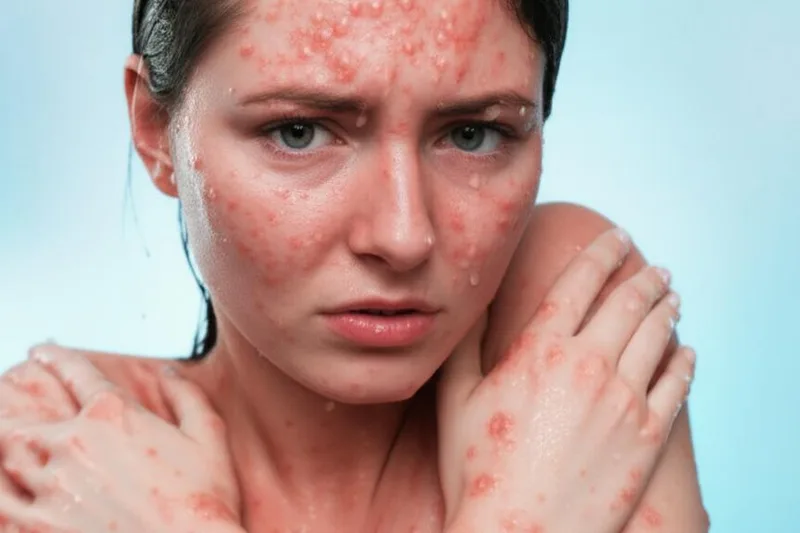
Imagine that after you take a shower or get wet in a light rain, your entire body suddenly starts to itch and turn red. This happens even if you sweat or cry and tears fall on your body. This is a very annoying and heartbreaking experience, isn't it? Although many people don't know, this is actually a medical condition. Today we are talking about this rare, but very important to know about 'water allergy'.
What is Aquagenic Urticaria?
Simply put, Aquagenic Urticaria is an allergic reaction that occurs when water comes into contact with the skin. This causes hives on the skin. In medicine, we call this hives Urticaria . Usually, the condition called urticaria can be caused by various reasons such as foods and medications. But this type is unique in that it is caused by water itself .
This is so rare that, according to medical records worldwide, only a very small number of people, about 100, have been diagnosed with this condition. So, if you have these symptoms, don't panic, this is not a disease that affects many people.
For someone with this condition, the temperature of the water (cold or hot) and its acidity/alkalinity are irrelevant. Rainwater , snow, your own sweat, or even tears can cause this irritation. Surprisingly, some people may not be allergic to sea water ( salt water ), while others may be allergic only to salt water.
Why is this happening? What is the reason?
To be honest, scientists still haven't figured out the exact cause of this. Since it's so rare, there's been little research into it. However, there are several theories that could explain it.
- First theory: A substance (allergen) dissolved in water enters the body through the skin and causes an allergic reaction. That is, the problem here is not the water itself, but something else mixed with the water.
- Second opinion : These lesions are caused by a chemical reaction that occurs when water comes into contact with something on the surface of our skin or inside it.
It is not yet known whether this condition is hereditary. Although it has been reported that several members of some families have this condition, in most cases there is no such familial link. The condition usually first appears during adolescence or young adulthood .
What are the symptoms of this condition?
Symptoms usually begin to appear within 20-30 minutes of contact with water. These symptoms usually disappear on their own within half an hour or an hour after the skin dries.
The main symptom is the lesions on the skin. However, other symptoms may also appear. Let's look at these in a table.
| Symptom | Description |
|---|---|
| Hives | Small, red or skin-colored bumps that are raised above the skin. These may be surrounded by a large red patch. They are most commonly seen on the neck, upper arms, and chest. |
| Itching or pain | These lesions are intensely itchy and can sometimes feel like a burning pain. |
| Other features | Some people may experience headaches, difficulty breathing, wheezing, dizziness, and fainting. |
Most importantly: Very rarely, a severe allergic reaction called anaphylactic shock can occur. This is very dangerous for life. It can even stop breathing. If this happens, you should go to a hospital's emergency room (ETU) immediately.
How does a doctor diagnose this?
When you go to see a doctor, he will first ask you questions about your health. Does it hurt when you get water on your body, how long does it take for it to happen, and if you have any other symptoms.
Then, to confirm this, a 'water challenge test' may be done. This is a very simple test.
- What you do is place a piece of cloth soaked in normal room temperature water on your upper chest for about 20 minutes and see if it helps.
- Before taking this test, you should not have taken any allergy medication ( antihistamine ), as this may cause incorrect test results.
What are the treatments for this?
First of all, there is no cure for this condition yet. However, there are several treatments that can help you manage your symptoms and live a normal life.
1. Antihistamines: This is the most commonly prescribed treatment. These medications control the allergic reaction. Doctors most often recommend second-generation antihistamines, such as Cetirizine, which are less sedating.
2. Topical Medications: There are creams that create a protective layer to prevent water from entering the skin. Examples of this include petroleum jelly. Applying these before bathing provides protection to the skin.
3. Phototherapy : This is a less common treatment. It uses ultraviolet (UV) light to reduce the sensitivity of the skin. The goal is to thicken the skin, similar to the skin on our palms and soles, and reduce its response to water.
4. Other medications: If these treatments are difficult to control, your doctor may also recommend medications such as Omalizumab (Xolair) , corticosteroids , or SSRIs for depression.
Remember, any of these treatments should only be started on the advice of your doctor or a dermatologist.
How to live with this situation?
Living with such a rare condition can be challenging, but with a few small changes, it can be largely managed.
- Drinking water: Most people don't have a problem drinking water. However, for some people, even getting water on their lips can be harmful. In such cases, using a straw is a good solution.
- The bath:It may be easier to take a bath or shower with treatment. As mentioned earlier, apply a protective cream. Some people reduce the number of baths and use alcohol-based cleaners or dry shampoo.
- Other situations: I limit my going out on rainy days, and I always use an umbrella. I wear rubber gloves when doing housework. I also try to stay away from sweaty activities and excessive exercise.
- Mental health: Living with something like this can be emotionally draining, so it can be a great help to connect with online support groups where people who have had similar experiences can connect.
Take-Home Message
- Aquagenic Urticaria is a very rare allergic condition that occurs when water comes into contact with the skin. It is also known as 'water allergy'.
- The exact cause of this has not yet been found, and there is no treatment that can completely cure it.
- Antihistamines, protective creams applied to the skin, and other specific treatments can be used to control symptoms.
- If severe symptoms such as difficulty breathing, dizziness, or fainting occur, immediately go to a hospital's Emergency Department (ETU) as it can be life-threatening.
- Before starting any treatment, it is imperative to seek the advice of your doctor or a dermatologist.


💬 Comments (0)
No comments have been posted yet. Add your comment here for the first time.
Add your comment