
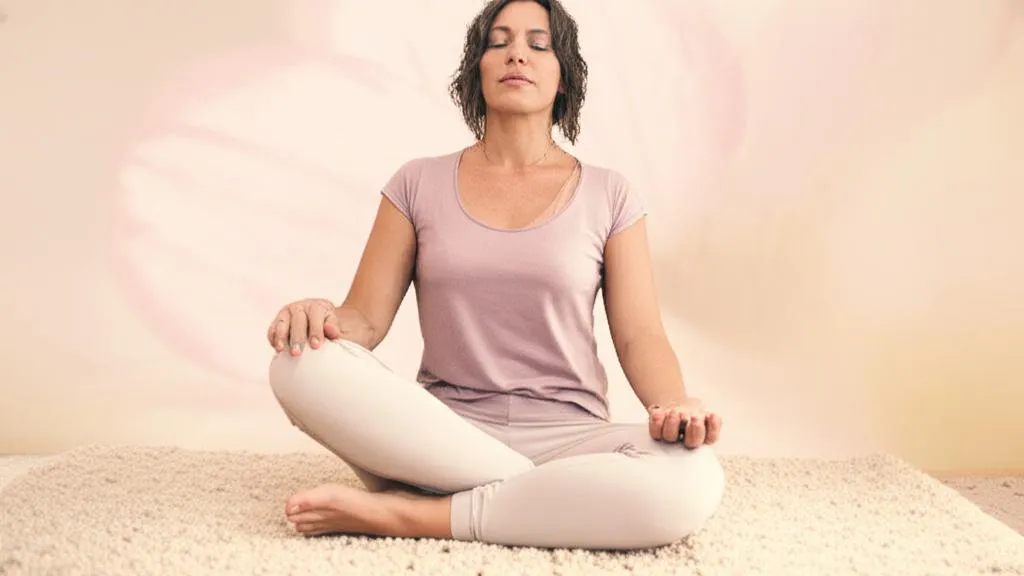
Have you ever thought about your breathing when you feel stressed, afraid, or anxious? Many of us find that our breathing becomes faster and shallower at times. This is one way our bodies respond to stress. But did you know that by controlling our breathing and breathing properly, we can control this stress? That's what we call 'breathing exercises' or 'Breathwork'.
What exactly is breathwork?
Although the term 'breathwork' has become very popular recently, it is not new. People have been practicing these breathing exercises for thousands of years. It is especially deeply connected to things like yoga.
Simply put, this involves exhaling toxins and stress from our bodies, and inhaling nourishment for the mind and body .
Think of your brain as a security guard. When you feel stressed, you start breathing shallowly and rapidly. This limits the amount of oxygen your body gets. At this point, the security guard in your brain thinks, "Oh, there's something wrong!" and prepares your entire body for fight or flight. This is a process in our central nervous system.
But when you deliberately take your time, breathe deeply, slowly, and deeply, the message goes out to that security guard, "There's nothing to worry about, everything's fine." Then the brain tells the whole body to relax, there's nothing to be afraid of. Then that 'fight or flight' response stops, and the body starts functioning normally again.
What are the breathing techniques? Shall we learn a little?
There are many different ways to do this breathing exercise. Here are a few of them.
1. Deep Abdominal Breathing
This is the simplest and most basic method. Place one hand on your stomach and the other on your chest . Now breathe in slowly through your nose. You should feel your stomach expand , rather than your chest. Then breathe out slowly through your mouth. As you breathe out, you will feel your stomach go back in. This gives your body a direct signal to relax.
2. 4-7-8 method
This is a good way to help keep your mind focused.
- First, breathe in through your nose for a count of four.
- Next, hold that breath for a count of seven.
- Finally, exhale slowly, making a sound through your mouth, for a count of eight.
Because the exhalation time is long, the air in the lungs is almost completely expelled.
3. Alternate Nostril Breathing
This helps balance the mind and body .
- Close your right nostril with the thumb of your right hand.
- Now take a deep breath through the left nostril only.
- While holding your breath, close the left nostril with the index finger of your right hand and exhale through the right nostril.
- Pause for a moment, inhale again through the right nostril, switch sides as before, and exhale through the left nostril. Do this several times.
4. Breath of Fire
This is a bit of an advanced technique , so it may take some practice. As you breathe in, relax your abdominal muscles . As you breathe out, use your abdominal muscles to push the air out quickly. When you do this properly, you will feel a sense of calmness in your mind.
5. Holotropic Breathwork
This method should definitely only be done under the guidance of an experienced instructor . Do not attempt to do it alone.
This involves breathing in and out continuously, without any pauses. This is said to provide the body with a large amount of oxygen and rejuvenate the cells.
What are the benefits of these methods?
Stress can sometimes make us feel helpless. We feel out of control. But when we focus on breathing, our bodies get a chance to release that stress and get back to normal. The benefits of this are both physical and mental.
| Physical Benefits | Emotional Benefits |
|---|---|
| Balancing blood pressure | Reduction in feelings such as depression and anxiety |
| Getting a deep sleep | Improving mental focus |
| Reducing stress caused by post-traumatic stress disorder (PTSD) | Reduced tendency towards addictions |
| Strengthening the function of the respiratory system | Allowing mental wounds to heal |
| Strengthening the immune system | Being able to look at life positively |
| Release of stress hormones from the body | Feeling happy and satisfied |
Are there any disadvantages or risks?
Yes, like everything else, there are some things we need to be aware of. Especially if you're new to these things, you need to be a little careful.
The most important thing is not to overdo these exercises, especially the more complex ones, as doing them incorrectly can lead to hyperventilation, which is breathing too fast.
This is a little dangerous, because at that time you may experience symptoms like:
| Symptoms that may occur during a hyperventilation situation | |
|---|---|
| - Dizziness | - Numbness in the hands, feet, and arms |
| - Irregular heartbeat | - Muscle spasms |
| - Vision changes due to lack of oxygen | - Hearing a ringing in the ears |
Very rarely, permanent damage can occur due to lack of oxygen to the brain. Therefore, if you have any health problems (e.g. high blood pressure, heart disease, asthma), it is best and safest to talk to your doctor before starting this type of exercise.
The other thing is, this is like meditation. Your focus is very important . If your mind is distracted by noise and other things around you, the results of this can be reduced. So it is important to choose a quiet place.
💡 Take-Home Message
- Breathwork is a very powerful and simple way to manage stress and anxiety.
- If you're new to this, start with a simple technique like Deep Abdominal Breathing.
- Be aware of risks like hyperventilation. Never exercise to a level that is uncomfortable for you. Listen to your body.
- If you have any medical conditions, be sure to consult your doctor before starting these.
- For best results, try to make this a daily habit. Even just 5-10 minutes a day will do.





Janiw kuna arsuwinakas jichhakamax uñt’ayatäkiti. Aka chiqanx amuyt’awim jan ukax jiskt’awim yapxatañamawa.