

Who doesn't want to have clear, smooth, and healthy skin, right? But you may also be a little worried about things like acne scars, sun-damaged skin, and peach fuzz. So, as a solution to these problems, Dermaplaning has been a hot topic among many people lately. Although the name may sound a bit strange, it's actually quite simple. Let's talk about this from the very beginning, in a very simple way.
Simply put, what is Dermaplaning?
Dermaplaning is a cosmetic treatment for your skin. To be precise, it involves a qualified professional (a doctor, dermatologist, or esthetician) using a specially designed small blade (surgical scalpel) to carefully remove the top layer of dead skin cells and the fine hairs (peach fuzz) that are on top of your skin.
This causes the new, healthy, undamaged skin underneath to come to the surface. This results in an immediate, smoother, and brighter appearance. Some people also use this treatment to remove hair. But remember, it is only a temporary solution, as hair will grow back. This treatment is most often done on the face, but it can be done on other parts of the body if desired.
How is this different from other skin treatments?
You've probably heard the names Dermabrasion'' and Microdermabrasion.'' Although all three are skin resurfacing treatments, the way they are performed and the effects they have on the skin are different.
| Treatment method | Method used | Description |
|---|---|---|
| Dermaplaning | A special blade (Scalpel) | Gently removing the top layer of skin and fine hair. |
| Dermabrasion | A fast-rotating device | A surgical procedure that removes deep layers of skin. |
| Microdermabrasion | A fine crystal or diamond tip | Gently scraping away the surface layer of skin. Not a surgical procedure. |
Who is this treatment good for? Who is it not so good for?
Dermaplaning is not for everyone. If you are considering this treatment, please be aware of the following conditions.
Dermaplaning may be suitable for people who:
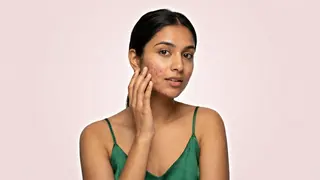
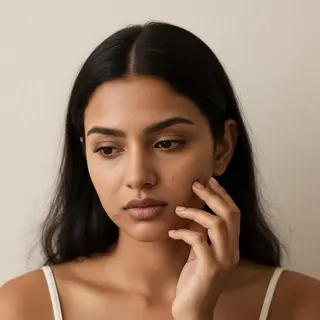
- People with acne scars .
- People with dry, dull skin.
- Those who want to remove fine facial hair (peach fuzz) .
- People with sun- damaged skin .
- Those who want to reduce fine lines / wrinkles on their skin.
- People with skin tags (Actinic keratosis).
Those who should avoid dermaplaning:
Most importantly: If you have any of the following skin conditions, you should definitely talk to your doctor before undergoing this treatment.
- When you have active acne .
- If you have frequent cold sores .
- Conditions such as eczema.
- If you have a lot of birthmarks, spots, warts, etc. on your skin .
- A disease like psoriasis .
- Burn injuries , for example, burns caused by radiation therapy.
- Various skin allergies or irritations (Skin rashes / contact dermatitis).
Let's learn about how the treatment works.
Imagine you decide to have this treatment. What happens then?
Before treatment
You should first see a qualified professional. There,
- We discuss what you expect from this treatment.
- We'll check your skin to see if it's healthy for this.
- They will explain to you what will happen before, during, and after the treatment.
- Asking about your health history.
- You may also want to take photos to compare before and after treatment.
During treatment
Dermaplaning does not require anesthesia. However, a numbing cream will be applied to your face about 30 minutes before the treatment.You can sing.
You may feel a tingling or burning sensation during the treatment. However, this is usually not painful. The practitioner uses a special instrument called a dermatome (which has a fine blade) to gently remove the top layer of your skin. This does not cut the skin, but is as gentle as shaving.
After the treatment, a soothing gel or ointment is applied to reduce redness, swelling, and inflammation. Depending on the size of the area being treated, this can take anywhere from a few minutes to about an hour and a half.
After treatment
After the treatment, your skin may be slightly red, swollen, and tender to the touch. Your doctor may advise you to take a simple pain reliever to help with this discomfort. If the swelling lasts longer than a week or gets worse, you should contact your doctor immediately.
What are the benefits and risks?
As with any cosmetic treatment, there are benefits as well as some minor risks.
Main advantages:
- It can reduce acne scars, fine lines, and skin dullness.
- The skin looks smoother, brighter, and healthier.
- If you wear makeup, you can apply it beautifully because your skin is smooth.
Possible risks:
Although dermaplaning is generally a safe treatment, sometimes things like this can happen.
- Infection: Infections can occur if the skin is not kept clean after treatment.
- Scarring: People with a history of keloid or hypertrophic scars are at increased risk.
- Skin discoloration: The treated area may appear whiter or darker than the surrounding skin.
What to expect during recovery
Recovery time varies from person to person, but here are some general things to expect.
- After the first week: The redness and swelling should be much reduced. The skin may appear enlarged and small white blisters may appear. These will disappear with the swelling. Do not shave the treated area.
- After two weeks: A crust may form at the treatment site and fall off. The skin underneath will be pink and slightly swollen. There may also be some itching. Most people can return to work after two weeks, but avoid strenuous activities.
- After 4-6 weeks: You can gradually return to activities such as sports, but you should be extremely careful with the sun.
- After 6-12 months:It is very important to stay protected from the sun until the treated area returns to your normal skin color.
Can this be done at home?
Absolutely not! Even though there are "at-home dermaplaning kits" sold online, this should only be done by a trained professional. If done incorrectly, it can cause serious skin damage, scarring, and infection. So don't take that risk.
💡 Take-Home Message
- Dermaplaning is a cosmetic treatment performed by a qualified professional that removes the top layer of dead skin cells and fine hair.
- This can reduce acne scars, fine lines, and skin dullness, giving the skin a brighter, smoother appearance.
- This is not suitable for people with skin conditions such as active acne and eczema.
- Never try to do this yourself at home. Always have this treatment performed by a qualified professional, such as a dermatologist.
- Sun protection is essential after treatment. Using a good sunscreen is very important.
- Before deciding to undergo this treatment, discuss and resolve any concerns you may have with your doctor.



Janiw kuna arsuwinakas jichhakamax uñt’ayatäkiti. Aka chiqanx amuyt’awim jan ukax jiskt’awim yapxatañamawa.