
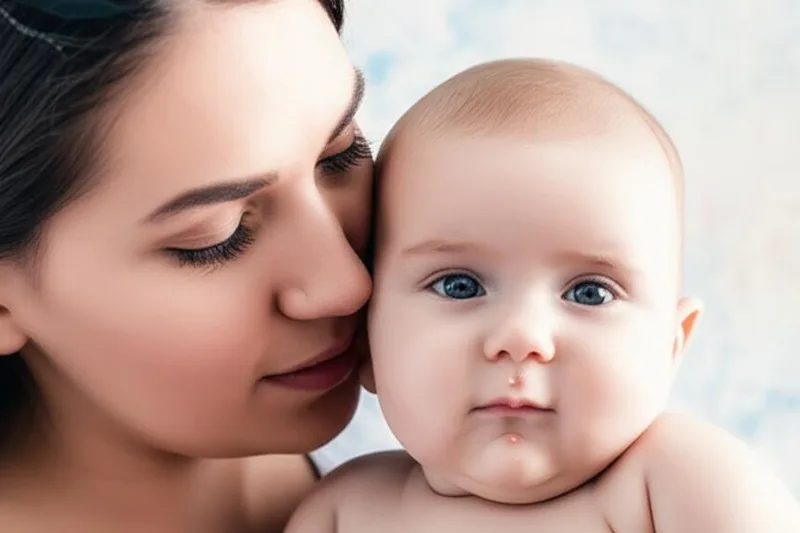
Does your baby have lip blisters? (Lip Blisters) Don't worry, let's talk about this.

Does your baby have lip blisters? (Lip Blisters) Don't worry, let's talk about this.

The greatest joy for a mother with a newborn baby is breastfeeding her baby. But sometimes you see little blisters on the baby's little lips. It's very normal to feel a little scared and worried when you see this. You think, "Is something wrong with my baby?" But most of the time, these are not dangerous things. Today, let's talk about what causes these blisters, what we should do, and when we should see a doctor.

What are the possible causes of blisters on a baby's lips?

Simply put, a blister is a small lump that appears on the skin and is filled with fluid. If it becomes hard or breaks, it can be a little painful. As a result, the baby may be a little uncomfortable and cry a lot.

There are several main reasons why babies get blisters on their lips.

Suckling Blisters

This is the most common and not a cause for concern . Babies suck very vigorously and vigorously. The friction caused by this intense sucking can cause small blisters to form on the skin of the lips. Just like when we put on new shoes, we get blisters on our feet. Some babies suck their hands and fingers while still in the womb, so they can be born with these blisters.

These blisters do not require any special treatment. As the baby gets used to breastfeeding and the skin on the lips adjusts to it, these blisters will heal on their own in a few days.

Cold Sores

This is something to be careful about . These are also called `(Cold Sores)` or `(Fever Blisters)`. These are caused by a virus called `(Herpes Simplex 1)`. Do not kiss your baby when you or someone else in your home has a `(Cold Sore)`. This is because this virus can be transmitted to the baby. A herpes infection can be a very dangerous condition for a newborn baby. Therefore, you need to be very careful about this.

Allergic Reactions

Sometimes these can be an allergic reaction . Your baby could be allergic to a lotion, cream, or lip balm you use on or near their lips. If your baby gets blisters after you introduce a new food, it could be a food allergy.

Impetigo

This is a skin infection caused by bacteria called Staphylococcus or Streptococcus. It causes blisters on the lips and around the mouth. These may burst and ooze a yellow fluid, which then forms a crust.

Oral Thrush

Oral thrush, a fungal infection in the mouth, can also cause white blisters. These white spots can be seen on the tongue, inside the cheeks, and on the roof of the mouth. They look like milk blisters. But they don't wipe off with a cloth. This can cause pain when the baby sucks and swallows milk, and may even cause the baby to refuse to drink milk.

Signs of a normal blister and an infection - let's know the difference

You may be wondering, "Is this just a milk blister, or is it an infection?" The table below will help you tell the difference .

Characteristic Sucking Blisters Signs of an Infection
Other symptoms There are no other symptoms. The baby is happy and active. Symptoms include fever, lethargy, and frequent crying.
Pain There is usually no pain. The baby is breastfeeding well. Crying due to pain when touching blisters or drinking milk.
Spread It stays in one place and does not spread to other parts of the body. The number of blisters increases and spreads to other parts of the face or body.
Appearance and liquid Filled with clear liquid. It is filled with white/yellow pus, may have a foul odor, and forms a crust.

What can be done to treat baby blisters?

Treatment depends on the cause of the blisters.

  • Sucking Blisters: As mentioned earlier, there is no specific treatment for these. They will get better on their own. You should breastfeed your baby as usual. Sometimes, you may need help from a lactation consultant to help your baby latch on properly.
  • Cold Sores : There is no cure for the herpes virus. This means that these blisters may still appear from time to time as your baby grows. But there are things we can do to help your baby feel better when they have blisters.
  • Wipe your lips with a clean cloth soaked in cool or lukewarm water.
  • Give your baby regular sips of milk or water (if over 6 months) to help ease pain and keep him hydrated.
  • If your baby is eating solid foods , avoid giving them things like sour fruits (oranges, tangerines) and tomatoes. These can increase the pain.
  • Only use a pain reliever or cream that is suitable for children that your doctor recommends.
  • Impetigo: Since this is a bacterial infection, your doctor will likely prescribe an antibiotic cream and may also recommend a bandage to stop the infection from spreading.
  • Thrush: For thrush, the doctor will prescribe an antifungal medicine. It should be applied to the baby's tongue and lips. Most importantly, if you are breastfeeding and your nipples are red and sore, you may have thrush. You may also need to apply the medicine to your nipples, as the infection can spread between you. You should also sterilize your baby's pacifiers, teethers, and bottles.

When is a blister an emergency?

Although these are usually not serious, sometimes if the blisters are accompanied by the following symptoms, it may be an emergency. In such a case, see a doctor immediately or go to the nearest hospital's Emergency Department (ETU).

  • If the baby stops drinking milk or other liquids completely .
  • If blisters or sores appear near the eyes .
  • If the skin around the blister is red, swollen, and feels hot to the touch .
  • If the baby is having a fit (seizures) .
  • If you have a high fever .
  • If the blisters spread rapidly throughout the body.
  • If you are showing symptoms such as difficulty breathing , rapid breathing, or wheezing.
  • Baby's skin turning blueOr if breathing seems to stop for a moment.
  • If you have yellowing of the skin or eyes (jaundice).
  • If there is bleeding from the blisters or a rash elsewhere on the skin.

If you see anything like this, the most important thing is to seek medical advice immediately, without staying home.

Take-Home Message

  • Most often, blisters on babies' lips are harmless "milk blisters" caused by sucking on milk. They do not require treatment and heal on their own.
  • If the blisters are accompanied by symptoms such as fever, pain, spreading, or crusting, it could be an infection. See your doctor immediately.
  • If you or someone in your family has cold sores on their lips, avoid kissing your baby. The herpes virus can be very dangerous for newborns.
  • If you have even the slightest doubt about a change in your baby's condition, always seek advice from your doctor rather than wasting time guessing. It's important for your peace of mind and your baby's safety.

Baby's lip blisters, milk blisters, baby health, herpes, oral thrush, impetigo, pediatrics
⚠️ Important: The medical articles and information on Nirogi Lanka are for general awareness only, and are by no means a substitute for professional medical advice, diagnosis, or treatment. For any medical problem you have, consult a qualified physician immediately.

💬 Comments (0)

No comments have been posted yet. Add your comment here for the first time.

Add your comment

Please calculate: 1 + 4 =
Does your baby have lip blisters? (Lip Blisters) Don't worry, let's talk about this.
Women's HealthJuly 6, 2026

Does your baby have lip blisters? (Lip Blisters) Don't worry, let's talk about this.

The greatest joy for a mother with a newborn baby is breastfeeding her baby. But sometimes you see little blisters on the baby's little lips. It's very normal to feel a little scared and worried when you see this. You think, "Is something wrong with my baby?" But most of the time, these are not dangerous things. Today, let's talk about what causes these blisters, what we should do, and when we should see a doctor.

What are the possible causes of blisters on a baby's lips?

Simply put, a blister is a small lump that appears on the skin and is filled with fluid. If it becomes hard or breaks, it can be a little painful. As a result, the baby may be a little uncomfortable and cry a lot.

There are several main reasons why babies get blisters on their lips.

Suckling Blisters

This is the most common and not a cause for concern . Babies suck very vigorously and vigorously. The friction caused by this intense sucking can cause small blisters to form on the skin of the lips. Just like when we put on new shoes, we get blisters on our feet. Some babies suck their hands and fingers while still in the womb, so they can be born with these blisters.

These blisters do not require any special treatment. As the baby gets used to breastfeeding and the skin on the lips adjusts to it, these blisters will heal on their own in a few days.

Cold Sores

This is something to be careful about . These are also called `(Cold Sores)` or `(Fever Blisters)`. These are caused by a virus called `(Herpes Simplex 1)`. Do not kiss your baby when you or someone else in your home has a `(Cold Sore)`. This is because this virus can be transmitted to the baby. A herpes infection can be a very dangerous condition for a newborn baby. Therefore, you need to be very careful about this.

Allergic Reactions

Sometimes these can be an allergic reaction . Your baby could be allergic to a lotion, cream, or lip balm you use on or near their lips. If your baby gets blisters after you introduce a new food, it could be a food allergy.

Impetigo

This is a skin infection caused by bacteria called Staphylococcus or Streptococcus. It causes blisters on the lips and around the mouth. These may burst and ooze a yellow fluid, which then forms a crust.

Oral Thrush

Oral thrush, a fungal infection in the mouth, can also cause white blisters. These white spots can be seen on the tongue, inside the cheeks, and on the roof of the mouth. They look like milk blisters. But they don't wipe off with a cloth. This can cause pain when the baby sucks and swallows milk, and may even cause the baby to refuse to drink milk.

Signs of a normal blister and an infection - let's know the difference

You may be wondering, "Is this just a milk blister, or is it an infection?" The table below will help you tell the difference .

Characteristic Sucking Blisters Signs of an Infection
Other symptoms There are no other symptoms. The baby is happy and active. Symptoms include fever, lethargy, and frequent crying.
Pain There is usually no pain. The baby is breastfeeding well. Crying due to pain when touching blisters or drinking milk.
Spread It stays in one place and does not spread to other parts of the body. The number of blisters increases and spreads to other parts of the face or body.
Appearance and liquid Filled with clear liquid. It is filled with white/yellow pus, may have a foul odor, and forms a crust.

What can be done to treat baby blisters?

Treatment depends on the cause of the blisters.

  • Sucking Blisters: As mentioned earlier, there is no specific treatment for these. They will get better on their own. You should breastfeed your baby as usual. Sometimes, you may need help from a lactation consultant to help your baby latch on properly.
  • Cold Sores : There is no cure for the herpes virus. This means that these blisters may still appear from time to time as your baby grows. But there are things we can do to help your baby feel better when they have blisters.
  • Wipe your lips with a clean cloth soaked in cool or lukewarm water.
  • Give your baby regular sips of milk or water (if over 6 months) to help ease pain and keep him hydrated.
  • If your baby is eating solid foods , avoid giving them things like sour fruits (oranges, tangerines) and tomatoes. These can increase the pain.
  • Only use a pain reliever or cream that is suitable for children that your doctor recommends.
  • Impetigo: Since this is a bacterial infection, your doctor will likely prescribe an antibiotic cream and may also recommend a bandage to stop the infection from spreading.
  • Thrush: For thrush, the doctor will prescribe an antifungal medicine. It should be applied to the baby's tongue and lips. Most importantly, if you are breastfeeding and your nipples are red and sore, you may have thrush. You may also need to apply the medicine to your nipples, as the infection can spread between you. You should also sterilize your baby's pacifiers, teethers, and bottles.

When is a blister an emergency?

Although these are usually not serious, sometimes if the blisters are accompanied by the following symptoms, it may be an emergency. In such a case, see a doctor immediately or go to the nearest hospital's Emergency Department (ETU).

  • If the baby stops drinking milk or other liquids completely .
  • If blisters or sores appear near the eyes .
  • If the skin around the blister is red, swollen, and feels hot to the touch .
  • If the baby is having a fit (seizures) .
  • If you have a high fever .
  • If the blisters spread rapidly throughout the body.
  • If you are showing symptoms such as difficulty breathing , rapid breathing, or wheezing.
  • Baby's skin turning blueOr if breathing seems to stop for a moment.
  • If you have yellowing of the skin or eyes (jaundice).
  • If there is bleeding from the blisters or a rash elsewhere on the skin.

If you see anything like this, the most important thing is to seek medical advice immediately, without staying home.

Take-Home Message

  • Most often, blisters on babies' lips are harmless "milk blisters" caused by sucking on milk. They do not require treatment and heal on their own.
  • If the blisters are accompanied by symptoms such as fever, pain, spreading, or crusting, it could be an infection. See your doctor immediately.
  • If you or someone in your family has cold sores on their lips, avoid kissing your baby. The herpes virus can be very dangerous for newborns.
  • If you have even the slightest doubt about a change in your baby's condition, always seek advice from your doctor rather than wasting time guessing. It's important for your peace of mind and your baby's safety.

Baby's lip blisters, milk blisters, baby health, herpes, oral thrush, impetigo, pediatrics
⚠️ Important: The medical articles and information on Nirogi Lanka are for general awareness only, and are by no means a substitute for professional medical advice, diagnosis, or treatment. For any medical problem you have, consult a qualified physician immediately.

💬 Comments (0)

No comments have been posted yet. Add your comment here for the first time.

Add your comment

Please calculate: 1 + 4 =