
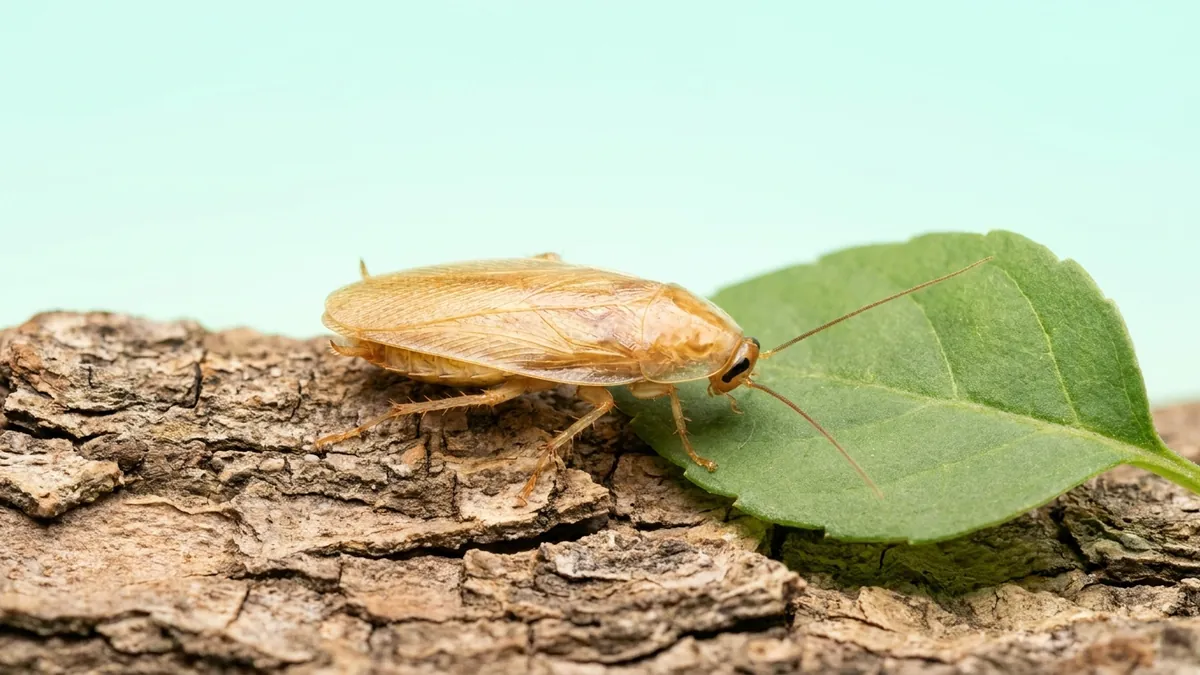
Imagine that you are in the kitchen and suddenly see a roach. But the strange thing is, this animal does not run to hide when it sees you, nor does it show any sign of fear. It just stares at you. Isn't it strange? Because as we know, roaches are a type of animal that runs around looking for a corner when it sees a human. So who is this strange roach? Maybe what you have seen is not an ordinary house roach, but a 'Wood Roach' . This name may be new to you. So today, let's talk about these wood roaches in detail.
Who are these woodcutters? How do you recognize them?
Simply put, woodlice are members of the cockroach family. However, they prefer to live outdoors, especially in places like decaying logs and woodpiles, rather than in the dark corners of the kitchen like the cockroaches we see in our homes. Like termites, they also feed on decaying organic matter.
How does it look?
- Body: Their bodies are flat, oval in shape, which allows them to easily hide under tree bark and in small spaces.
- Color: Usually varies from reddish-brown to dark brown.
- Size: Can range from 0.75 inches (19 mm) to about 1.25 inches (32 mm) long.
- Male and female: There is a big difference here. Males have well-developed wings, so they can fly. However, females only have small wing segments, so they cannot fly. Females are smaller than males, and their wings are a little stiffer.
One of the most distinctive features of these woodpeckers is the light-colored, sometimes translucent white, stripe that runs along the outer edge of their wings, on either side of their bodies.
What is the difference between wood-burning stoves and home-burning stoves?
This is the most important thing. It is very important to identify whether the animal in the house is a woodpecker or the troublesome housepecker that we all know. Because there are two ways to control them. Let's look at these differences in a table.
| Attribute | Wood Roach | Common household roach |
|---|---|---|
| Living environment | Often outdoors. In piles of wood, rotting logs, under tree bark. | Inside homes. Kitchens, bathrooms, dark, damp places. |
| Behavior | They are not afraid of people. They don't run to hide. They are active even during the day. | Very timid. Hides when people see it. Mostly active at night. |
| Infestation in homes | They do not breed indoors. They need moist, rotting wood to breed. | It breeds very quickly indoors. |
| Food | Decaying organic matter (wood, leaf litter). | Food that people eat, snacks, garbage, anything. |
| Health risk | There is no major health risk. It does not transmit diseases. Rarely, allergic reactions may occur. | They breed various pathogenic germs (bacteria, viruses), causing food poisoning. |
So why do these animals come inside houses?
This is a problem that many people have. Woodpeckers are not a house-invading species. They often enter homes by accident.
1. Bringing firewood into the house: This is the main reason. We use wood stoves to cook in our village homes. Then, when we bring firewood from the woodshed outside, these animals hiding behind those firewood logs can come into the house.
2. Attracted to the outdoors: Since males, in particular, can fly, they can be attracted to lights in homes at night and come in through windows and doors.
But remember, once they get home, they will simply die within a few days because the humidity they need to survive is not inside the house. So there is no need to worry about them spreading throughout the house like house mites.
Are there really health risks from woodpeckers?
This is a big fear for many people. The good news is that woodpeckers do not bite or sting people. They do not see you as a threat. They also do not damage household items or furniture.
However, there is one thing to be aware of. Very rarely, some sensitive people, especially young children, can develop allergies to the body fluids, feces, and skin flakes of these animals. This may be a little more likely to affect people with conditions like asthma.
If you or someone in your family notice that things like breathing difficulties, skin rashes, or frequent sneezing are getting worse after these animals come into your home, it's best to see your doctor for advice. That's the best thing to do.
How will you control these people if you come home?
The best way to control woodpeckers is to prevent them from entering your home. There are a few simple things you can do to help.
- Seal entry points: Keep doors and windows tightly closed. Seal small holes in walls and gaps where pipes enter.
- Firewood storage: Keep firewood piles as far away from the house as possible. Before bringing firewood into the house, shake it well and remove any animals from it.
- Use of lights: Reduce unnecessary outdoor lighting at night, especially during May and June (when males are most active). It is better to use yellow lights instead of white lights, which are less attractive to insects.
- Keep the environment clean: Remove leaf litter from roof gutters, rotting logs, and piles of leaves from the garden. These are breeding grounds for woodlice.
- Removal at home: If you see a woodchuck inside your home, catch it and throw it outside. Or you can use a fly swatter. Pulling it out with a vacuum cleaner is also an easy way.
- About pesticides: Common household insecticide sprays are not very effective against these insects. Also, avoid spraying insecticides on firewood. It can be harmful to your health when you use that firewood.
💡 Take-Home Message
- Wood roaches are not a dangerous species that thrives indoors. They mostly live outdoors.
- They often come to the house by accident, either while bringing firewood or attracted to the light at night.
- They do not bite or sting people, and they do not damage household items.
- Rarely, some sensitive people, especially children, may experience allergies. If this happens, seek medical advice.
- The best way to control them is to prevent them from entering the house. Be careful when bringing firewood and keep the garden clean.






Janiw kuna arsuwinakas jichhakamax uñt’ayatäkiti. Aka chiqanx amuyt’awim jan ukax jiskt’awim yapxatañamawa.