
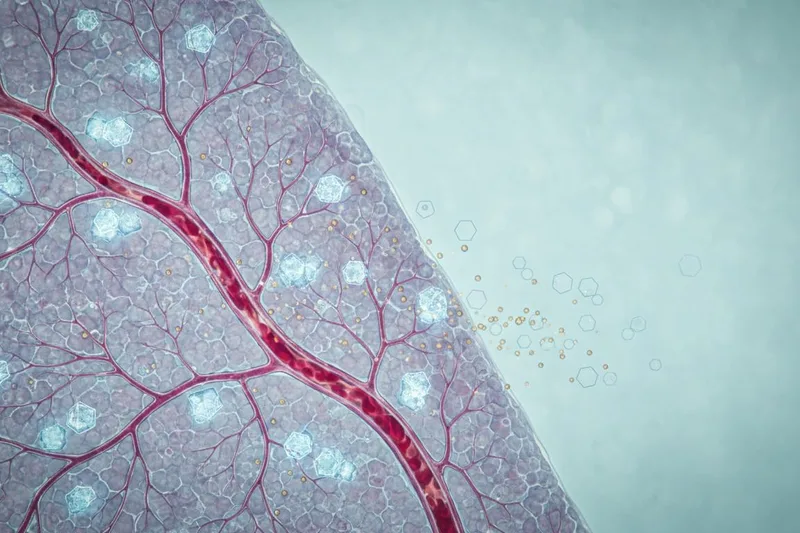
What is 'Perfusion Pressure'? Let's understand it simply.
Imagine, in order to water the plants in your garden, there needs to be good pressure in the pipe coming from the water pump, right? Similarly, in order for the most important organs in our body, namely the heart, brain, kidneys, all of these, to receive oxygen and nutrients through the blood, this so-called 'perfusion pressure' must be in place. Simply put, 'perfusion pressure' is the net pressure required to supply blood to a tissue or organ. As long as this pressure is at a sufficient level, that organ will receive the required amount of blood. That is why this is a very important part of our circulatory system. Imagine, what happens if this pressure decreases in some places? That is when big problems arise. This decrease in pressure can be dangerous, especially in our heart and brain. Because if these organs do not receive blood properly, it can lead to serious, sometimes life-threatening conditions.How does this 'perfusion pressure' work?
Our heart is like a pump. It works continuously, doesn't it? Every time our heart beats, it pushes a little blood out of the heart and sends it to the blood vessels (arteries) throughout our body. Then this blood travels from the arteries to the capillaries. That's where the oxygen in the blood is exchanged with the cells of our body. When that work is done, the blood in the capillaries returns to the heart through the veins. This cycle happens every second that the heart beats. So for this process to work properly, the so-called 'perfusion pressure' is essential.How do you know if this 'perfusion' is going well?
Perfusion tests that don't involve organs inside the body usually start with a device called a pulse oximeter. You've probably seen it, sometimes you put a clip-like device on your finger to check the oxygen in your blood. That's it. It sends red and infrared light through your skin. The molecule in our blood called hemoglobin carries oxygen. This hemoglobin absorbs light differently when it's carrying oxygen and when it's not. Using that difference, the pulse oximeter can calculate how much oxygen is in your blood and whether blood is getting to a certain area properly. Some of these pulse oximeters are like a clip that you put on your finger. Some come with a sensor that you stick on your finger or somewhere else, like a sticker. Sometimes this can be attached to the earlobe or forehead.So what is this 'Perfusion Index'?
Perfusion Index (PI) is a measure of how well blood is circulating in a specific part of your body. It measures the amount of oxygenated blood in that area compared to the amount of deoxygenated blood. The same ability of a pulse oximeter to measure the amount of oxygen in the blood also helps with the Perfusion Index. By measuring how much oxygen is being carried by hemoglobin, it is possible to measure how much new blood (i.e. blood that still has oxygen) is flowing through that area. The Peripheral Perfusion Index is a method that uses this principle to help doctors assess and treat someone who is sick. A low value means that either your heart is not pumping enough blood, or there is something preventing blood from flowing properly to the parts of your body that are farthest from your heart (like your arms and legs).What is the difference between 'Perfusion Index' and 'Blood Pressure'?
Both of these are measures of how well our circulatory system is working. But the methods are different, and they don't measure the same thing.- Perfusion Index: This is a measure of how much blood is flowing through a certain area. A higher value indicates better blood flow . A lower value may indicate a problem with your heart or blood vessels .
- Blood Pressure : This measures the pressure inside your blood vessels, measured in millimeters of mercury (mm/Hg). There is an upper and lower value. The upper value (`Systolic` pressure) is the pressure on the arteries each time the heart beats. The lower value (` Diastolic` pressure) is the pressure on the arteries between two heartbeats.
Important: Since these two measure different things, you can't assume that one is good and the other is also good. Both are important.
How does 'perfusion pressure' work in your heart?
Our heart is a muscle that needs to work continuously throughout our lives. To do its job properly, the heart needs a constant supply of oxygen. It receives this from special blood vessels called the coronary arteries . Imagine, the heart uses between 70% and 80% of the oxygen that passes through these arteries! No other organ uses as much oxygen.Coronary Perfusion Pressure (CPP) is what keeps blood flowing through these arteries. If this pressure drops, the heart doesn't get enough blood and oxygen. This can lead to life-threatening complications.How do you find this?
Pulse oximetry is not used to measure coronary perfusion pressure (CPP). To measure this, doctors take two other measurements and use them to calculate coronary perfusion pressure. These measurements can be taken either by echocardiography (a scan of the heart) or by heart catheterization ( a test in which a thin tube is inserted into the heart). The two measurements are: 1. Aortic Diastolic Pressure: This is the pressure in your aorta (the largest blood vessel that carries blood from the heart to the rest of the body) between heartbeats. This is found by measuring your normal 'blood pressure'. This is the bottom number (`Diastolic` pressure) of your blood pressure. 2. 'Left Ventricular End-Diastolic Pressure` (LVEDP): This is the pressure inside the left ventricle, one of the two lower chambers of the heart, between two heartbeats. Now this 'coronary perfusion pressure' (CPP) is found as follows: 'Aortic Diastolic Pressure' - 'Left Ventricular End-Diastolic Pressure' = 'Coronary Perfusion Pressure'So how does this 'perfusion pressure' affect the brain?
After the heart, the other most important organ that needs oxygen is our brain. Cerebral Perfusion Pressure (CPP) is what ensures that blood flows smoothly to all parts of the brain. If the brain doesn't get enough blood, you can lose consciousness in a matter of seconds. That's how important it is.How do you find this?
Two tests are also needed to calculate the 'cerebral perfusion pressure' (CPP) of the brain. 1. Blood Pressure: First, the 'blood pressure' is measured. Then, doctors calculate the 'Mean Arterial Pressure' (MAP) . This MAP is the average pressure in your arteries during one cardiac cycle (the time between when your heart contracts and relaxes). This MAP is calculated as follows:- Multiply the bottom number of your 'blood pressure' (`Diastolic` pressure) by two.
- Add the value above (`Systolic` pressure) to the answer you get.
- Add them all up and divide the resulting value by 3. (MAP = [Systolic BP + (2 x Diastolic BP)] / 3)
What are the common medical conditions caused by problems related to 'perfusion pressure'?
The main problem that occurs when there is insufficient 'perfusion pressure' anywhere in your body is called 'ischemia' . This means that the area is not getting enough blood, so it is not getting enough oxygen and nutrients. If this 'ischemia' occurs in an arm or leg, the tissue in that area can begin to die. This can lead to things like 'gangrene' (tissue rot) and infections. If this affects a major organ, that organ can gradually begin to fail, leading to more serious, even fatal complications. Here are some of the conditions that can be caused by or are associated with 'perfusion pressure' problems:- Heart attack
- Heart failure
- Coronary artery disease
- Stroke
- Cardiogenic shock
- Cerebral hypoxia (brain damage caused by lack of oxygen to the brain)
- Atherosclerosis
- Leg and foot ulcers
- Raynaud's disease (reduced blood supply to the limbs)
What can I do to keep my 'perfusion pressure' at a safe level?
Your 'perfusion pressure', especially in your heart and brain, is usually not a problem unless you have a specific disease involving your heart and circulatory system. However, you can do these things to prevent or delay the development of these diseases:- Maintain a healthy weight. It's not good to be too big or too thin.
- Eat a healthy diet. Eat foods that are low in oil, salt, and sugar, and high in fruits and vegetables.
- Stop using tobacco products (including smokeless tobacco and vaping). These cause significant damage to blood vessels.
"Think about it, a healthy lifestyle is like maintaining our bodies. Just like servicing a car to keep it in good condition, we need to take good care of our bodies."The best way to identify any problems that may be affecting 'perfusion pressure' is to have an annual physical examination.This is also called a 'wellness check'. With simple tests done at your doctor's appointment, you can often identify serious problems before you even show symptoms. If you catch them early, you can get treatment and stop permanent damage or reduce their impact. If you already have a condition that affects 'perfusion pressure', be sure to see a doctor regularly to monitor your condition and get treatment if necessary. Also, follow your doctor's instructions and take your medications as prescribed. If you have questions or need help, your doctor is the best person to talk to.
Final Take-Home Message
Perfusion pressure is essential for every part of our body, every organ, to function properly. Without this 'perfusion', blood doesn't flow to all the places it needs to. This lack of blood flow can have serious consequences over time, or even lead to serious, life-threatening complications. If you want to learn more about this 'perfusion pressure' and how it affects you, be sure to talk to a doctor. They are the best people to tell you exactly what you need and what you need to do to take care of yourself. Then you can take care of your health and spend time on the things that are most important to you. There's nothing more valuable than being healthy, right?Perfusion pressure, blood pressure, heart health, brain health, blood circulation, oxygen, health


💬 Comments (0)
No comments yet. Be the first to share your thoughts here.
Add Your Comment