

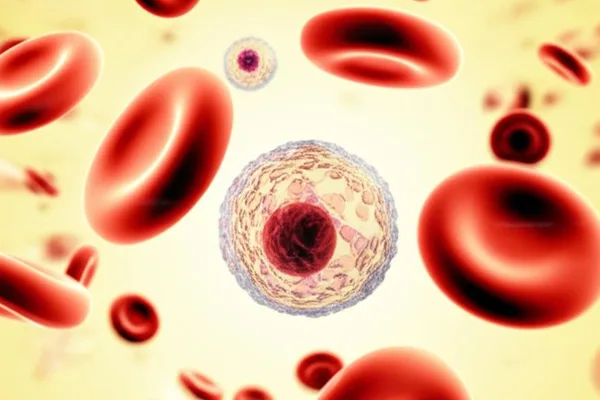
Have you ever wondered how these red blood cells, or red blood cells , are produced inside our bodies? This is truly an amazing, complex, and essential process for our lives. Today we are going to talk about how these red blood cells are produced, in medicine we call this ( Erythropoiesis). This is like a little factory in our body, constantly producing new red blood cells.
What is Erythropoiesis? Why is it important to us?
Simply put, (Erythropoiesis) is the process by which your body makes red blood cells (in medicine, we also call this ``Erythrocytes''). This process is what makes our bodies have the right amount of red blood cells – not too few, not too many. Just think how important these red blood cells are to our bodies!
They are:
- When we breathe, oxygen enters the lungs and is carried to every other tissue and cell in the body. It's like little postmen in our bodies.
- Also, carbon dioxide produced in our body tissues is brought back to the lungs, where it is exhaled when we exhale.
So you see, we can't live without these red blood cells. We are healthy because the process called erythropoiesis is happening properly.
Erythropoiesis is actually one part of a larger process. The entire process of making all three types of blood cells in our body is called `` Hematopoiesis ''.
- The process of making red blood cells is called ``Erythropoiesis'' (the one we're talking about now).
- The process of making white blood cells is called ``Leukopoiesis``.
- The production of platelets (cells that help blood clot) is called ``Thrombopoiesis''.
Where does this (Erythropoiesis) occur?
The place where these red blood cells are formed changes over time.
When a baby is in the womb (Fetal erythropoiesis)
This (Erythropoiesis) begins before we are born, that is, while we are still in our mother's womb.
- At about three weeks: This first begins in a structure called the `` Yolk Sac'' that nourishes the embryo.
- After two to three months: After that, red blood cells are produced in the liver and spleen of the fetus.
- Around five months: This process begins in the embryo's bone marrow . Bone marrow is the soft, spongy part inside our bones.
Children and adults (Erythropoiesis)
After we are born, red blood cells are mainly produced in our bone marrow .
- Children: During childhood, red blood cells are produced in the bone marrow of many bones in the body.
- Adults: As we grow older, this is only active in certain bones. For example, in places like the pelvis, vertebrae, ribs, and breastbone.
What is the difference between Medullary and Extramedullary erythropoiesis?
Although these two words may seem a bit complicated, they are easy to understand.
- `(Medullary)` means something related to the bone marrow. So, `(Medullary erythropoiesis)` means the formation of red blood cells inside the bone marrow. This is the normal condition.
- Extramedullary erythropoiesis refers to the formation of red blood cells outside the bone marrow, such as in the liver and spleen.
In the fetal stage, this (extramedullary erythropoiesis) is normal. But when it happens to an adult, it can often be a sign of some disease or problem in the bone marrow. Then doctors look into it.
What are the stages of red blood cell formation?
A red blood cell doesn't form all at once, it's a journey that goes through several stages. It's like a caterpillar becoming a butterfly.
All these blood cells start from a single basic cell. We call it a ``Hematopoietic stem cell'' (HSC) . This is like a ``master cell.'' This HSC cell can become any of these red blood cells, white blood cells, or platelets.
When a red blood cell is to be produced, this HSC cell first becomes a cell called a ``Common myeloid progenitor'' (CMP) . This CMP cell can also become a red blood cell, a platelet, or some types of white blood cells. Next, the CMP cell that is going to become a red blood cell develops into a ``Megakaryocyte-erythroid progenitor cell'' (MEP) .
Once it becomes an MEP, that cell is on its way to becoming a red blood cell. It then goes through several more stages:
- `(Proerythroblast)` (Proerythroblast)
- `(Erythroblast)` (Erythroblast)
- `(Normoblast)` (Normoblast)
- `(Reticulocyte)` (Reticulocyte) - This is a young red blood cell.
- Finally, it becomes a fully mature ``Erythrocyte'' , that is, a red blood cell as we know it.
These fully formed red blood cells are released into the bloodstream from the bone marrow. It is then that they begin their most important task - carrying oxygen around and removing carbon dioxide.
How long does this process take?
It usually takes about a week for one red blood cell to be fully formed.
What is the lifespan of a red blood cell?
A single red blood cell lives in our body for about 120 days. After that, the cells die and are replaced by new cells. This is a constant cycle.
What controls this (Erythropoiesis)?
Our bodies control this process (Erythropoiesis) in a very amazing way. The main thing is the level of oxygen in our body.
Imagine, if your tissues don't get enough oxygen (we call this condition ``Hypoxia''), your body will automatically speed up the production of red blood cells. Because when red blood cells increase, the amount of oxygen going to the tissues also increases.
This process (Erythropoiesis) is stimulated, that is, activated, by a special hormone. It is called `(Erythropoietin)` (EPO ).
What is this (Erythropoietin - EPO)?
Erythropoietin (EPO) is a hormone that increases the production of red blood cells. Hormones are like chemical messengers that coordinate various activities in our body. Most of the EPO our body needs is made by our kidneys .
Here's how this happens:
1. Because your red blood cell count is low, your body tissues are not getting enough oxygen.
2. In response to this, your kidneys secrete more of the hormone EPO.
3. This EPO hormone stimulates your bone marrow to make more red blood cells.
4. As the number of red blood cells increases, the amount of ``(Hemoglobin)`` (the protein that carries oxygen) in them also increases. When the kidneys sense this, they reduce their secretion of EPO.
5. In this way, the number of red blood cells in our body is maintained at a certain level. We call this balance ``(Homeostasis)`` (homeostasis).
Our kidneys are constantly secreting a small amount of EPO to keep red blood cells from forming. Because about 1% of our red blood cells die every day, (Erythropoiesis) is what makes up for that deficiency.
If the level of red blood cells changes due to an illness or an accident, the kidneys will increase or decrease the production of EPO accordingly.
What happens if there is a problem with erythropoiesis?
If there is a problem or defect in the process of making red blood cells, you may have fewer or more red blood cells.
- Low red blood cell count: This is called anemia . This means that your body's tissues don't get enough oxygen. This can make you feel weak, tired all the time, and sometimes even cold . There are different types of anemia.
- Increased red blood cell count: This is called `(Erythrocytosis)` (erythrocytosis). When this happens, you may sometimes experience minor symptoms like headaches and fatigue. However, depending on the cause, it can sometimes lead to serious complications like blood clots .
What conditions can affect erythropoiesis?
There are many diseases and other factors that can affect the production and control of red blood cells in our body.
Lung-related diseases
These can reduce the amount of oxygen the body receives, which can alter EPO production.
- Asthma
- Chronic obstructive pulmonary disease (COPD)
Cancers that affect the blood or bone marrow
These can directly interfere with the process of making red blood cells.
- Leukemia
- Lymphoma
- Myeloma
- Myeloproliferative disorders
Other reasons
- Nutritional deficiencies: Especially deficiencies in iron, vitamin B12, and folate (folic acid) can lead to poor red blood cell production. These are the building blocks needed to make red blood cells.
- Living at high altitudes: At high altitudes, there is less oxygen in the air. Therefore, to adapt, the body produces more EPO and increases red blood cell production.
Our bodies make new red blood cells throughout our lives. When old cells die, the body recognizes these changes and increases EPO production, thereby increasing the production of red blood cells. In order to maintain a healthy supply of oxygen to our tissues, we need to have the right number of red blood cells. Fortunately, the body controls this process automatically, without any effort on our part. However, if you develop a disease that interferes with this process (erythropoiesis), your doctor can treat or control it.
The most important things to remember (Take-Home Message)
- Erythropoiesis is a very important process that produces red blood cells in our body.
- These red blood cells are what carry oxygen throughout our bodies and remove carbon dioxide.
- This process mainly occurs in our bone marrow .
- A hormone called Erythropoietin (EPO) , produced primarily by the kidneys, helps control this process.
- Problems with this process can cause anemia (decrease in red blood cells) or erythrocytosis (increase in red blood cells).
- Proper erythropoiesis is essential for a healthy life. If you have any questions or doubts regarding this, be sure to seek medical advice .
So, I hope you now have a clear understanding of this amazing process called (Erythropoiesis). There are so many things going on inside our bodies that we don't even know about, right?
` Red blood cells, erythropoiesis, bone marrow, anemia, oxygen, erythropoietin, kidneys




💬 Comments (0)
No comments yet. Be the first to share your thoughts here.
Add Your Comment