

You know that your body goes through a lot of changes after having a baby. This is very normal. But sometimes you can feel a little scared and anxious because you don't know exactly what these changes are. So today, let's talk about what physical changes you should expect after having a baby and how to cope with them. Let's understand these things simply, like talking to a friend.
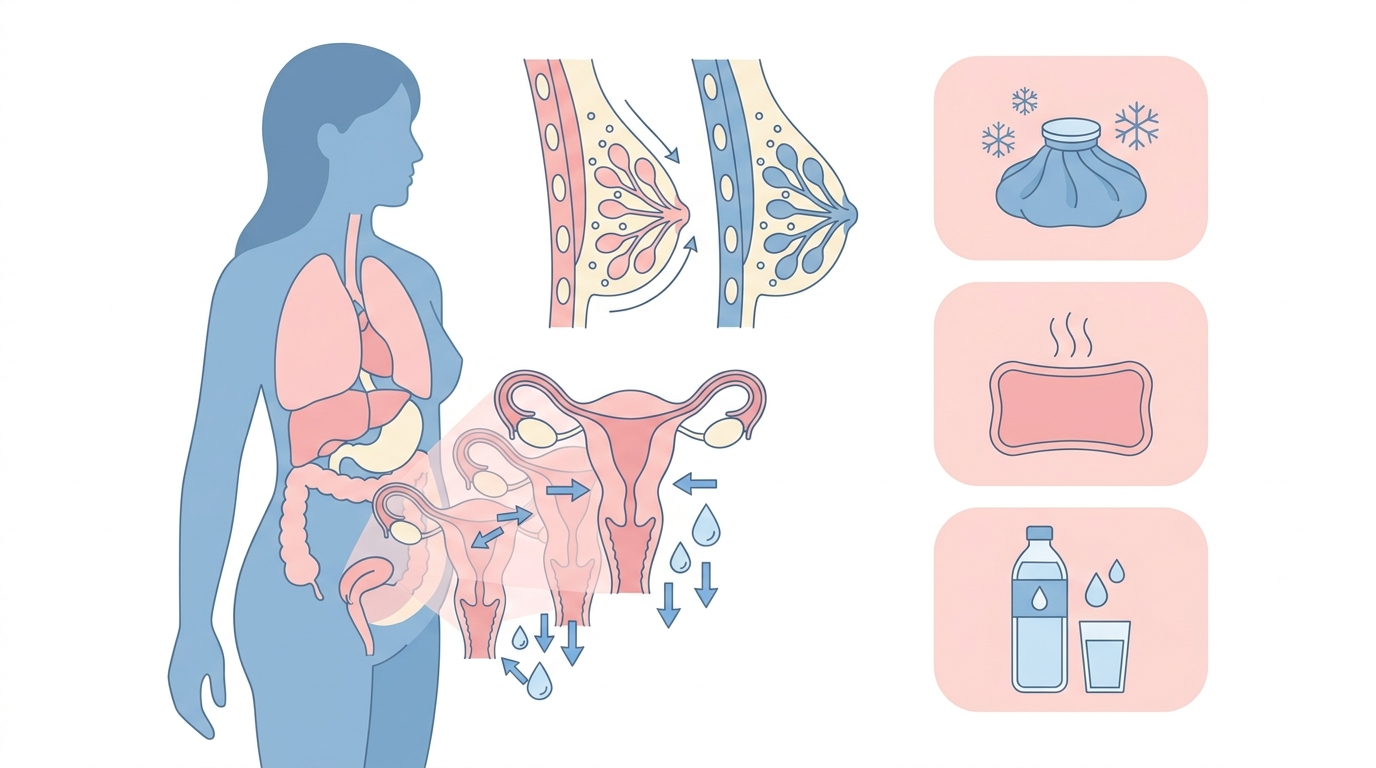
What is lochia? Is it the discharge from the vagina?
Yes, that's right. After you have a baby, especially if you had a vaginal delivery (normal delivery), you will have a discharge coming out of your vagina. We call this lochia . It smells a bit like your period, which is like a stale, slightly musty smell.
For the first three days, the lochia is dark red. It is normal to pass a few small clots of blood , no larger than a pea-sized piece of bread, along with it. Then, from the fourth to the tenth day, the discharge becomes a slightly watery, pinkish-brown color. Then, from the seventh to the tenth day, for about fourteen days, the lochia is cream or yellow.
You may notice that you have a little more lochia when you first wake up in the morning, when you do strenuous work, or when you breastfeed your baby. For those who have had a C-section, the amount of lochia may be less than that of those who have had a vaginal birth after 24 hours. This bleeding usually stops within four to six weeks after delivery. During this time, you should use sanitary pads and not tampons . It is not a good idea to put anything inside the vagina for six weeks.
Is there any drainage from the surgical wound? (Incision drainage)
If you have had a C-section or a tubal ligation , which is a family planning procedure, it is normal to have a small amount of pink, watery discharge from the incision site. The most important thing is to keep the wound clean and dry. Wash the wound thoroughly with soap and lukewarm water. You can shower and bathe as usual. However, if the discharge doesn't stop, you should definitely see your doctor .
Is it normal to have discharge from your breasts?
Yes, if you are breastfeeding, your breasts may leak some milk. Even if you are not able to breastfeed, you may still have some milk in the early stages, but this will stop within a week or two after your baby is born. Breast pads worn under your bra can help keep you dry during this time.
What about breast swelling and tightness (Breast engorgement)?
This is what we call breast engorgement . In this case, the breasts swell and feel warm, hard, and heavy to the touch. This happens because blood flow to the breasts increases. This can happen when your milk starts to come in, if you are breastfeeding, or if you miss a feeding.
Think of it like a water tank being full. This tightness occurs when the milk collects and has no way to get out.
If you are bottle-feeding your baby, you can take a pain reliever as prescribed by your doctor to help reduce this discomfort. You can also apply ice packs . Wearing a supportive bra that is not too tight can also help.
If you are breastfeeding , you can help prevent this condition by feeding your baby frequently or pumping your breasts. Try these things to reduce discomfort:
- Apply warm compresses or take a bath in lukewarm water. This will help your milk come in more easily. But you should breastfeed or pump immediately afterwards. If this doesn't help, don't do it again, as the swelling may increase and your milk may stop coming in.
If you're still having trouble, try these things:
- Apply ice packs .
- Before feeding your baby, express some milk by hand.
- To reduce swelling, take an anti-inflammatory medication like ibuprofen , as directed by your doctor.
- Wear a good supportive bra .
If this problem persists, see your doctor, a lactation consultant , join a breastfeeding support group, or call a lactation hotline. If a single area of your breast is red and has a wedge-shaped lump near the nipple, it could be an infection . If you suspect an infection, see a doctor immediately .
What to do about discomfort in the perineal area?
If you have a baby and the area between your vagina and anus, called the perineum , is cut slightly (this is called an episiotomy) , that area can be very painful and sensitive. Sitz baths can help reduce this discomfort.You can try one. That is, sit in a tub filled with some water. (Do not put things like bubble bath in the water to prevent infection.) You can also get a small basin that you can put on the toilet. You can also do this treatment for the discomfort caused by hemorrhoids .
Simply put, a sitz bath is a simple way to soak your vagina and anus in lukewarm, clean water for a short period of time. This can help reduce pain and speed up healing.
How to keep the perineal area clean?
Keeping the perineum clean will reduce discomfort and reduce the risk of infection. Every time you go to the toilet or change your pad, fill the peri bottle that the hospital gives you with lukewarm water. Then spray the water from top to bottom on the area between the vagina and anus. Wipe the area with a toilet tissue and pat dry. Do not rub vigorously . Always use a new pad to keep it clean. Keep cleaning the perineum this way for a week after the baby is born.
Uterine contractions / After-pains
Within a few hours of having your baby, the top of your uterus (called the fundus ) has almost reached the level of your cervix. It stays there for about a day, then gradually moves down. If you're breastfeeding, this may happen a little faster. Without complications, your uterus will shrink back to its pre-pregnancy size (about the size of a pear) by about six weeks.
After-pains , or stomach cramps, occur when the uterus contracts to stop bleeding from the placenta. You may feel this pain more if you have more than one baby. The pain can be a little intense - especially when you're breastfeeding - for about five minutes, but it will gradually subside.
You can try these methods to reduce this discomfort:
- Lie down on your stomach with a pillow under your stomach.
- Take a walk.
- Take a painkiller recommended by your doctor.
- Take a sitz bath .
- Place a heating pad on your stomach.
Do you have pain when urinating? (Urination discomfort)
You may feel discomfort or pain when urinating. Although this is normal, if you have pain or difficulty urinating , you should definitely tell your doctor .
Is it difficult to control urine? (Incontinence)
As your muscles tighten after giving birth, you may temporarily have difficulty controlling your urine and sometimes your bowel movements. You may leak urine frequently, such as when you laugh, cough, or lift something heavy. To help reduce this urinary incontinence, try doing Kegel exercises . This should improve within a few weeks after giving birth. However, if the problem persists after your first postpartum check-up, talk to your doctor.
Also be careful about constipation.
The first bowel movement after having a baby may be delayed by three to four days. Your doctor may recommend a stool softener , which you can buy at the pharmacy. This will help reduce discomfort during bowel movements. Include more fruits, vegetables, greens, and whole grains in your diet, which will help your bowel movements pass more easily. Also, make sure to drink at least 10-12 glasses of water a day. Narcotic pain relievers can make this condition worse, so try to limit their use. Over-the-counter creams and sitz baths can also help relieve the discomfort caused by hemorrhoids . If constipation continues to be a problem, talk to your doctor.
Does it seem like you're sweating too much?
It's normal to sweat more after having a baby, especially at night. This is because your body's hormone levels are adjusting after having a baby. Protect yourself from catching a cold by taking a shower, changing your clothes, and changing your bedding. Also, drink plenty of water, as you'll be thirsty most of the time.
When will menstruation start again?
If you are breastfeeding, your period may not start until your baby stops breastfeeding. But remember, even if you miss your period while breastfeeding, you can still get pregnant . If you are bottle-feeding, your period will usually start within six to twelve weeks after you have your baby. The first few periods after having your baby may be a little irregular .
When should you see a doctor after having a baby?
If you have any of these symptoms, you should see your doctor immediately :
- If you have a fever over 38 degrees Celsius (100.4 degrees Fahrenheit) or feel very cold ( chills ).
- If the vaginal discharge has a bad odor .
- If the bleeding is still dark red after the third day.
- If large blood clots (larger than a blood clot) are passing.
- If you have pain, burning , or difficulty urinating.
- Not even less than painkillersIf you have severe stomach cramps or abdominal pain.
- If your perineum area becomes red, swollen, bruised, or painful, or if the stitches appear to have broken.
- If the amount of vaginal discharge or bleeding increases and you have to use more than one sanitary pad per hour .
- If your vision is blurred .
- If you experience a severe headache or fainting .
- If there is increased pain, redness, discharge, or wound separation at the site of the cesarean delivery .
- If one leg or arm hurts more than the other, is swollen, or red .
- If there are hot, red, or painful areas in the breasts.
- If you feel like you're having trouble breathing .
- If you have symptoms of postpartum depression , such as being unable to perform daily activities, having thoughts of harming yourself or your baby, and feeling anxious, worried, or scared all day long.
Remember, if you see something like this, the most important thing is not to panic, but to seek medical advice immediately. You are not alone, and help is always available.
Things you need to remember from all of this (Take-Home Message)
After having a baby, your body goes through a lot of changes. This is very natural.
- Expect things like vaginal discharge called lochia , breast changes, surgical scars, and stomach cramps.
- You can cope with all of this. Proper rest, nutritious food, and cleanliness are very important.
- If you have unusual symptoms (fever, severe pain, heavy bleeding, foul-smelling discharge, mental distress) , do not panic and seek medical advice immediately .
- If you have a problem, talk to your doctor, your family, or a loved one. You are not alone .
I hope this information is helpful to you. I wish you and your baby good health!
` Childbirth, postpartum care, childbirth, breast swelling, cesarean section, women's health, mother and child
Doctor's Note
After giving birth (postpartum period), a mother's body undergoes great physical and hormonal changes. The primary processes that take place here are the contraction of the uterus back to its normal size (involution), discharge of vaginal secretions (Lochia), and preparation of the breast for lactation. As the body takes time to heal, the mother needs good rest, nutritious food and psychological support. If severe bleeding, high fever, or unbearable pain occurs, seek immediate medical attention.
❓ Some more questions you may encounter (FAQ)
What is postpartum lochia?▼
It is a vaginal discharge containing blood, mucus, and tissue fragments that comes out of the vagina about 4-6 weeks after childbirth. Over time, its color changes from red to light.
How long does it take for the uterus to return to its previous position?▼
Around 6 weeks after giving birth, the uterus gradually shrinks and returns to its normal size in the pelvic cavity.
What is postpartum depression?▼
Hormonal changes can cause a mother to feel very sad, anxious and tired after giving birth. If this persists for more than 2 weeks, medical advice and family support is needed.


💬 Comments (0)
No comments yet. Be the first to share your thoughts here.
Add Your Comment