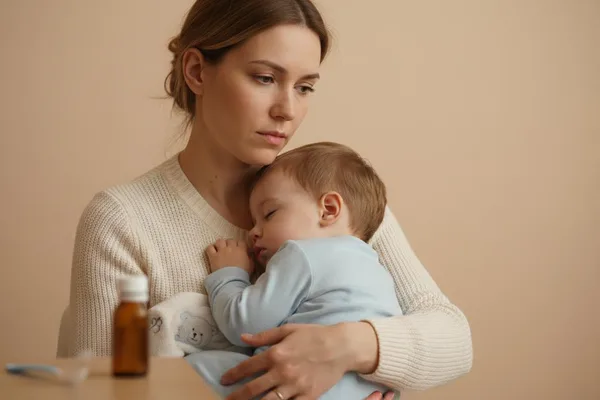
Is it dangerous to give your little one too much paracetamol? (Acetaminophen Toxicity) Let's find out exactly what this is!

Is it dangerous to give your little one too much paracetamol? (Acetaminophen Toxicity) Let's find out exactly what this is!

When your little one has a fever or body ache, we often give them paracetamol, right? Whether you go to see a doctor or buy medicine from a pharmacy, you will always find this paracetamol. In fact, if given correctly, it is very safe and beneficial. However, did you know that sometimes, due to ignorance or a small mistake, if a child gets too much paracetamol, it can cause a big problem? That is what we call `(Acetaminophen Toxicity)` or paracetamol poisoning.

What is this "Acetaminophen Toxicity"?

Simply put, paracetamol is a medicine that doctors give to young children to reduce fever and relieve pain. You may also have heard of it as ``Tylenol®''. It is very safe when given in the correct dosage. Doctors prefer to give paracetamol instead of aspirin, because aspirin can cause a rare but dangerous condition called ``Reye's syndrome'' in some children (which can affect the child's brain and liver).

However, if anyone, especially a young child, takes more than the recommended amount of paracetamol, that's where the problem starts. That is, paracetamol poisoning (Acetaminophen Toxicity) can occur. This is a really dangerous situation . Do you know what happens? Our liver is the one that filters these drugs and removes harmful substances from the body. So, when you take too much paracetamol at once, the liver cannot handle it. If a child takes too much paracetamol (or if they take the recommended amount for a long time), the toxins start to accumulate in the body. This poisoning can cause vomiting, liver damage, and even death . Therefore, if something like this happens, it is very important to act quickly.

How do you know exactly how much paracetamol (Tylenol) to give a young child?

This is a very important question. The dosage given to every child is not the same. It depends on several factors:

  • The child's weight and age: This is the most important thing.
  • How to give paracetamol: That is, as a liquid, as a pill, or as a dissolvable tablet.
  • Other medications the child is taking at the time: Paracetamol may not be compatible with some medications, or the dosage may need to be changed.

Therefore, you and your child's doctor will decide together the exact dose of paracetamol to give your child.

Important: Remember, other medicines you give your child, especially over-the-counter cold medicines, may also contain paracetamol. So, be sure to read the label on the cold or sinus medicine packet to see how much paracetamol it contains.

Every time you give your child paracetamol, it's a good idea to write down the dose and time somewhere.

How common is this paracetamol poisoning?

In fact, paracetamol overdose and toxicity are more common than you might think. Anyone can experience adverse effects from taking too much paracetamol. In a country like the United States, it is estimated that about 50,000 people a year go to the emergency room with problems caused by taking too much paracetamol. This paracetamol toxicity is a major cause of liver damage (hepatotoxicity).

Some people are more at risk of liver damage than others. For example, infants and young children who already have liver disease, or who have hepatitis A, B, or C, are more likely to develop serious symptoms if they take too much paracetamol. Their liver has difficulty clearing the drug properly, which can lead to liver failure.

What are the causes of paracetamol poisoning in young children?

Simply put, your child's liver acts as a filter for the body. It cleans up medicines and removes toxins from the body. However, if your child's liver has to clean up a large amount of medicine at once, or if it has to clean up medicines continuously for a long time, the liver can stop working. Paracetamol poisoning can cause your child to:

  • If you take more than the prescribed dose, or if you take several doses too close together.
  • If you take the prescribed dose continuously for several days in a row.

What are the symptoms of paracetamol poisoning in young children?

Even if you take too much paracetamol, the symptoms may not start immediately. It may take up to 24 hours for any symptoms to disappear. Therefore, it is very important to remember when you gave your child paracetamol and how you gave it (whether it was a liquid, a tablet, or a time-release capsule/tablet).

Some symptoms of paracetamol poisoning are:

  • Constant nausea and vomiting .
  • Feeling pain on the right side of the abdomen, under the ribs .
  • Food is tasteless .
  • Feeling tired all the time (fatigue).
  • Dark urine, possibly with blood , or a decrease in the amount or frequency of urination.
  • Confusion, drowsiness, and loss of consciousness .
  • Yellowing of the skin and eyes (we call it jaundice).
  • Difficulty breathing .
  • Blurred vision .

If your child has one or more of these symptoms, and you have any suspicion that they may have taken too much paracetamol, call 911 immediately, or take your child to the nearest hospital emergency department. Or, call your local Poison Control Center. In Sri Lanka, you can call the government's Poison Information Center.

What are the possible complications of paracetamol poisoning?

Paracetamol overdose is a life-threatening emergency. If overdose is not treated quickly, the following can occur:

  • Severe liver damage and liver failure .
  • Kidney failure .
  • Pancreatitis (inflammation of the pancreas).
  • Even death can occur.

How do doctors determine if a child has paracetamol poisoning?

A doctor will examine your child and ask you questions about any medications you have recently taken. For example:

  • How much did you take?
  • Approximately what time did you take it?
  • What kind of medicine did you take? (Like a liquid, a pill, or a type that dissolves in water).

To make sure your child has not taken too much paracetamol, your child will have several blood tests . These blood tests will check for:

  • The levels of paracetamol in the child's blood.
  • Liver function , that is, how well the liver is working.

What are the treatments for paracetamol poisoning?

Treatment depends on how long it has been since your child took the wrong dose. Depending on when the overdose occurred, treatment may include:

  • Pumping their stomach / Gastric lavage: If the child comes in for treatment less than 30 minutes after taking the medication, doctors will try to remove the medication from the child's stomach. This is done by inserting a tube through the mouth and washing the stomach. This is only successful if the child comes in for treatment immediately after taking the medication.
  • Activated charcoal: Within four hours of taking the medication, doctors can give your child activated charcoal (a powder mixed with liquid). This causes the toxic chemicals in your child's gastrointestinal tract to stick to the charcoal, allowing them to pass through the intestines and out of the body without being absorbed.
  • N-acetylcysteine ​​(NAC): This is the main medication that can prevent liver damage from paracetamol overdose. However, it cannot reverse liver damage that has already occurred. Your doctor may give you this medication by mouth or intravenously (IV). It is most effective if given within eight hours of the paracetamol overdose. N-acetylcysteine ​​(NAC) can cause nausea and vomiting. Your child may need to take several doses of NAC over a period of about 72 hours. The dose is determined by the child's blood paracetamol levels.
  • Liver transplant:If the liver damage is severe, your child may need a liver transplant. The doctor will explain the details to you.

What is the health status of children who have been poisoned by paracetamol?

The prognosis depends on how much paracetamol the child took and how quickly treatment is started. Children who receive prompt treatment for paracetamol poisoning are much more likely to recover without long-term health problems, such as liver damage.

How to prevent paracetamol poisoning in children?

To avoid the dangers of giving too much paracetamol, follow the prescribed dosage exactly. Talk to your doctor about the right dosage for your child's weight and age. Do not give more than one medicine containing paracetamol at the same time.

Here are some other ways to prevent paracetamol poisoning:

  • Keep medicines out of the reach of children. Keep medicines away from children. Always keep childproof lids tightly closed.
  • Read the labels. Do not give more than the prescribed dose. Some liquid paracetamol brands may have different concentrations. So read the label on each bottle carefully. If you have any questions about how much to give, ask your doctor.
  • Avoid a double dose . Many medicines (such as cold medicines) contain paracetamol mixed with other medicines. Read the label to see if the medicine already contains paracetamol.
  • Follow your doctor's instructions. Do not give your child paracetamol for longer than the doctor recommends. Do not leave too much time between doses, and always follow the instructions for the correct dosage. When giving liquid medicine, use the measuring device provided in the packet to measure the exact dose.
  • Write down the dosage information. Keep a record of the time the medicine was given and the amount given.
  • Measure the medicine in a well-lit area. Do not give the medicine in a dark room. If you do, you are more likely to give the wrong dose.

When should you talk to a doctor about paracetamol poisoning?

Paracetamol poisoning is a life-threatening emergency. If you think your child has taken an overdose of paracetamol, you should immediately call 911 (in Sri Lanka, an emergency number such as 1990), go to the emergency room, or call a poison control center immediately.

Doctors consider Tylenol to be a safe and effective medicine for your child to relieve pain and reduce fever when given according to the instructions on the package. However, because Tylenol is found in many medicines, you may be giving your child too much without realizing it. This can be dangerous. Taking too much Tylenol can cause liver damage and even death. If you think your child has taken too much Tylenol, even by mistake, seek medical advice immediately. Your child may not have any symptoms, but it is important to get help anyway.

Finally, remember (Take-Home Message)

So, although paracetamol is a common medicine that we use for fever and pain, it is very important to use it correctly and carefully. Especially when giving it to young children, remember to give it only in the prescribed dose, at the prescribed time, and for the prescribed number of days as prescribed by the doctor. Also check if other medicines contain paracetamol.

If you have the slightest suspicion that your child has taken too much paracetamol, do not hesitate to take your child to the nearest hospital immediately. Because prompt treatment can save the child's life and prevent further damage to the liver.

We all wish for your child to be healthy and happy!

👩🏽‍⚕️ Additional questions (FAQs)

💬 What is Acetaminophen Toxicity?

Paracetamol (syrup and tablets like Panadol/Calpol) is one of the safest medicines in the world, but if you take it too early or take too much, it can become a deadly poison. When the body gets too much of this medicine, the liver can't process it, and the liver can completely rot and die.

💬 How do you know if your baby has overdosed on paracetamol/poisoned it?

The most dangerous thing here is that within the first 24 hours, there are 'no serious symptoms'. Maybe there is just a stomachache or nausea. But after 2-3 days, the eyes turn completely yellow (Jaundice), severe stomach pain occurs, the patient falls into a coma and dies due to liver failure.

💬 What should you do if you find out that your child has been given too much medicine?

Never wait for symptoms to appear (it's too late once symptoms appear)! Take the child to the nearest hospital within 4-8 hours. There, doctors will immediately administer an injection of the antidote, NAC (N-acetylcysteine), to save the child's liver 100%.


` Paracetamol, acetaminophen, children's health, drug poisoning, liver, dosage, safety

⚠️ Important: The medical articles and information on Nirogi Lanka are for general awareness only, and are by no means a substitute for professional medical advice, diagnosis, or treatment. For any medical problem you have, consult a qualified physician immediately.

💬 Comments (0)

No comments yet. Be the first to share your thoughts here.

Add Your Comment

Please calculate: 8 + 1 =
Is it dangerous to give your little one too much paracetamol? (Acetaminophen Toxicity) Let's find out exactly what this is!
MedicationsMay 1, 2026

Is it dangerous to give your little one too much paracetamol? (Acetaminophen Toxicity) Let's find out exactly what this is!

When your little one has a fever or body ache, we often give them paracetamol, right? Whether you go to see a doctor or buy medicine from a pharmacy, you will always find this paracetamol. In fact, if given correctly, it is very safe and beneficial. However, did you know that sometimes, due to ignorance or a small mistake, if a child gets too much paracetamol, it can cause a big problem? That is what we call `(Acetaminophen Toxicity)` or paracetamol poisoning.

What is this "Acetaminophen Toxicity"?

Simply put, paracetamol is a medicine that doctors give to young children to reduce fever and relieve pain. You may also have heard of it as ``Tylenol®''. It is very safe when given in the correct dosage. Doctors prefer to give paracetamol instead of aspirin, because aspirin can cause a rare but dangerous condition called ``Reye's syndrome'' in some children (which can affect the child's brain and liver).

However, if anyone, especially a young child, takes more than the recommended amount of paracetamol, that's where the problem starts. That is, paracetamol poisoning (Acetaminophen Toxicity) can occur. This is a really dangerous situation . Do you know what happens? Our liver is the one that filters these drugs and removes harmful substances from the body. So, when you take too much paracetamol at once, the liver cannot handle it. If a child takes too much paracetamol (or if they take the recommended amount for a long time), the toxins start to accumulate in the body. This poisoning can cause vomiting, liver damage, and even death . Therefore, if something like this happens, it is very important to act quickly.

How do you know exactly how much paracetamol (Tylenol) to give a young child?

This is a very important question. The dosage given to every child is not the same. It depends on several factors:

  • The child's weight and age: This is the most important thing.
  • How to give paracetamol: That is, as a liquid, as a pill, or as a dissolvable tablet.
  • Other medications the child is taking at the time: Paracetamol may not be compatible with some medications, or the dosage may need to be changed.

Therefore, you and your child's doctor will decide together the exact dose of paracetamol to give your child.

Important: Remember, other medicines you give your child, especially over-the-counter cold medicines, may also contain paracetamol. So, be sure to read the label on the cold or sinus medicine packet to see how much paracetamol it contains.

Every time you give your child paracetamol, it's a good idea to write down the dose and time somewhere.

How common is this paracetamol poisoning?

In fact, paracetamol overdose and toxicity are more common than you might think. Anyone can experience adverse effects from taking too much paracetamol. In a country like the United States, it is estimated that about 50,000 people a year go to the emergency room with problems caused by taking too much paracetamol. This paracetamol toxicity is a major cause of liver damage (hepatotoxicity).

Some people are more at risk of liver damage than others. For example, infants and young children who already have liver disease, or who have hepatitis A, B, or C, are more likely to develop serious symptoms if they take too much paracetamol. Their liver has difficulty clearing the drug properly, which can lead to liver failure.

What are the causes of paracetamol poisoning in young children?

Simply put, your child's liver acts as a filter for the body. It cleans up medicines and removes toxins from the body. However, if your child's liver has to clean up a large amount of medicine at once, or if it has to clean up medicines continuously for a long time, the liver can stop working. Paracetamol poisoning can cause your child to:

  • If you take more than the prescribed dose, or if you take several doses too close together.
  • If you take the prescribed dose continuously for several days in a row.

What are the symptoms of paracetamol poisoning in young children?

Even if you take too much paracetamol, the symptoms may not start immediately. It may take up to 24 hours for any symptoms to disappear. Therefore, it is very important to remember when you gave your child paracetamol and how you gave it (whether it was a liquid, a tablet, or a time-release capsule/tablet).

Some symptoms of paracetamol poisoning are:

  • Constant nausea and vomiting .
  • Feeling pain on the right side of the abdomen, under the ribs .
  • Food is tasteless .
  • Feeling tired all the time (fatigue).
  • Dark urine, possibly with blood , or a decrease in the amount or frequency of urination.
  • Confusion, drowsiness, and loss of consciousness .
  • Yellowing of the skin and eyes (we call it jaundice).
  • Difficulty breathing .
  • Blurred vision .

If your child has one or more of these symptoms, and you have any suspicion that they may have taken too much paracetamol, call 911 immediately, or take your child to the nearest hospital emergency department. Or, call your local Poison Control Center. In Sri Lanka, you can call the government's Poison Information Center.

What are the possible complications of paracetamol poisoning?

Paracetamol overdose is a life-threatening emergency. If overdose is not treated quickly, the following can occur:

  • Severe liver damage and liver failure .
  • Kidney failure .
  • Pancreatitis (inflammation of the pancreas).
  • Even death can occur.

How do doctors determine if a child has paracetamol poisoning?

A doctor will examine your child and ask you questions about any medications you have recently taken. For example:

  • How much did you take?
  • Approximately what time did you take it?
  • What kind of medicine did you take? (Like a liquid, a pill, or a type that dissolves in water).

To make sure your child has not taken too much paracetamol, your child will have several blood tests . These blood tests will check for:

  • The levels of paracetamol in the child's blood.
  • Liver function , that is, how well the liver is working.

What are the treatments for paracetamol poisoning?

Treatment depends on how long it has been since your child took the wrong dose. Depending on when the overdose occurred, treatment may include:

  • Pumping their stomach / Gastric lavage: If the child comes in for treatment less than 30 minutes after taking the medication, doctors will try to remove the medication from the child's stomach. This is done by inserting a tube through the mouth and washing the stomach. This is only successful if the child comes in for treatment immediately after taking the medication.
  • Activated charcoal: Within four hours of taking the medication, doctors can give your child activated charcoal (a powder mixed with liquid). This causes the toxic chemicals in your child's gastrointestinal tract to stick to the charcoal, allowing them to pass through the intestines and out of the body without being absorbed.
  • N-acetylcysteine ​​(NAC): This is the main medication that can prevent liver damage from paracetamol overdose. However, it cannot reverse liver damage that has already occurred. Your doctor may give you this medication by mouth or intravenously (IV). It is most effective if given within eight hours of the paracetamol overdose. N-acetylcysteine ​​(NAC) can cause nausea and vomiting. Your child may need to take several doses of NAC over a period of about 72 hours. The dose is determined by the child's blood paracetamol levels.
  • Liver transplant:If the liver damage is severe, your child may need a liver transplant. The doctor will explain the details to you.

What is the health status of children who have been poisoned by paracetamol?

The prognosis depends on how much paracetamol the child took and how quickly treatment is started. Children who receive prompt treatment for paracetamol poisoning are much more likely to recover without long-term health problems, such as liver damage.

How to prevent paracetamol poisoning in children?

To avoid the dangers of giving too much paracetamol, follow the prescribed dosage exactly. Talk to your doctor about the right dosage for your child's weight and age. Do not give more than one medicine containing paracetamol at the same time.

Here are some other ways to prevent paracetamol poisoning:

  • Keep medicines out of the reach of children. Keep medicines away from children. Always keep childproof lids tightly closed.
  • Read the labels. Do not give more than the prescribed dose. Some liquid paracetamol brands may have different concentrations. So read the label on each bottle carefully. If you have any questions about how much to give, ask your doctor.
  • Avoid a double dose . Many medicines (such as cold medicines) contain paracetamol mixed with other medicines. Read the label to see if the medicine already contains paracetamol.
  • Follow your doctor's instructions. Do not give your child paracetamol for longer than the doctor recommends. Do not leave too much time between doses, and always follow the instructions for the correct dosage. When giving liquid medicine, use the measuring device provided in the packet to measure the exact dose.
  • Write down the dosage information. Keep a record of the time the medicine was given and the amount given.
  • Measure the medicine in a well-lit area. Do not give the medicine in a dark room. If you do, you are more likely to give the wrong dose.

When should you talk to a doctor about paracetamol poisoning?

Paracetamol poisoning is a life-threatening emergency. If you think your child has taken an overdose of paracetamol, you should immediately call 911 (in Sri Lanka, an emergency number such as 1990), go to the emergency room, or call a poison control center immediately.

Doctors consider Tylenol to be a safe and effective medicine for your child to relieve pain and reduce fever when given according to the instructions on the package. However, because Tylenol is found in many medicines, you may be giving your child too much without realizing it. This can be dangerous. Taking too much Tylenol can cause liver damage and even death. If you think your child has taken too much Tylenol, even by mistake, seek medical advice immediately. Your child may not have any symptoms, but it is important to get help anyway.

Finally, remember (Take-Home Message)

So, although paracetamol is a common medicine that we use for fever and pain, it is very important to use it correctly and carefully. Especially when giving it to young children, remember to give it only in the prescribed dose, at the prescribed time, and for the prescribed number of days as prescribed by the doctor. Also check if other medicines contain paracetamol.

If you have the slightest suspicion that your child has taken too much paracetamol, do not hesitate to take your child to the nearest hospital immediately. Because prompt treatment can save the child's life and prevent further damage to the liver.

We all wish for your child to be healthy and happy!

👩🏽‍⚕️ Additional questions (FAQs)

💬 What is Acetaminophen Toxicity?

Paracetamol (syrup and tablets like Panadol/Calpol) is one of the safest medicines in the world, but if you take it too early or take too much, it can become a deadly poison. When the body gets too much of this medicine, the liver can't process it, and the liver can completely rot and die.

💬 How do you know if your baby has overdosed on paracetamol/poisoned it?

The most dangerous thing here is that within the first 24 hours, there are 'no serious symptoms'. Maybe there is just a stomachache or nausea. But after 2-3 days, the eyes turn completely yellow (Jaundice), severe stomach pain occurs, the patient falls into a coma and dies due to liver failure.

💬 What should you do if you find out that your child has been given too much medicine?

Never wait for symptoms to appear (it's too late once symptoms appear)! Take the child to the nearest hospital within 4-8 hours. There, doctors will immediately administer an injection of the antidote, NAC (N-acetylcysteine), to save the child's liver 100%.


` Paracetamol, acetaminophen, children's health, drug poisoning, liver, dosage, safety

⚠️ Important: The medical articles and information on Nirogi Lanka are for general awareness only, and are by no means a substitute for professional medical advice, diagnosis, or treatment. For any medical problem you have, consult a qualified physician immediately.

💬 Comments (0)

No comments yet. Be the first to share your thoughts here.

Add Your Comment

Please calculate: 8 + 1 =