
Explore Health Topics
Heart Health Diabetes Women's Health Pregnancy Digestive Health Mental Health
Medical Guides → • Calculators →
✓ Medically reviewed by Dr. Priya Sammani (MBBS, PG Dip. FM) | Age — · M/F · BMI —
88%
🩺 Skin rashes and dermatitis

The Secret Behind the Doctor's Gel Prescription: What You Need to Know About Aloe and Iodoquinol

Dr. Priya Sammani (MBBS)

Medically reviewed by Dr. Priya Sammani (MBBS) — Updated on Oct 20, 2026 · 3 min read

The Secret Behind the Doctor's Gel Prescription: What You Need to Know About Aloe and Iodoquinol

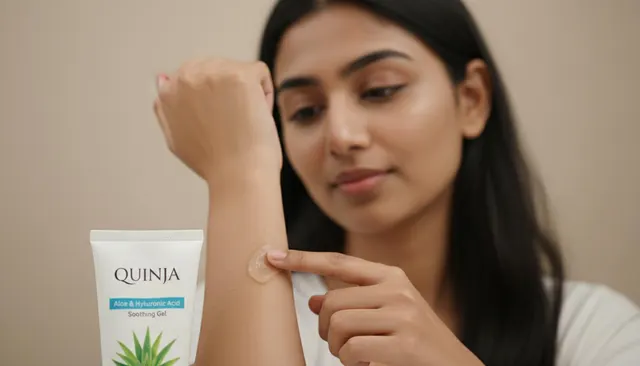
Has your doctor recently prescribed a special gel for your skin infection or stubborn eczema? When you look at the tube, you might see a long name: Aloe Polysaccharide; Iodoquinol. You might know this medicine by brand names like Aloquin or Quinja. It is designed to soothe and heal troubled skin, but using it safely requires knowing a few important details.

Skin conditions can feel frustrating and uncomfortable every single day. Your doctor chose this specific topical medicine to target the root cause and bring you relief. Let us walk through everything you need to know about how this gel works, how to apply it, and what safety steps to keep in mind.

⚡ Interactive Clinical Tool
⚖️
BMI Calculator

Know your body mass index (BMI) and weight classification

Open Interactive Calculator →
❓ FAQ

Frequently Asked Medical Questions (FAQ)

Evidence-based clinical answers to common patient questions

Can I use this gel on my face or open cuts?

You should only apply this gel to the exact skin areas prescribed by your doctor. Avoid applying it to open wounds, deep cuts, or directly near your eyes unless specifically instructed by your doctor.

What should I do if the gel gets into my eyes?

If accidental contact occurs, rinse your eyes thoroughly with clean tap water right away. If irritation, redness, or stinging persists, contact your eye doctor or visit an urgent care center for an evaluation.

Why does this medicine affect my thyroid tests?

Iodoquinol contains iodine, which is absorbed through your skin. This extra iodine can alter thyroid hormone levels in your blood, leading to inaccurate test results unless you stop using the gel beforehand as advised.

Is it normal for my skin to sting slightly after applying?

Mild tingling can sometimes happen on sensitive or inflamed skin. However, if you experience intense burning, a spreading rash, or signs of an allergic reaction, wash the gel off and call your doctor right away.

Can I stop using the gel as soon as my rash disappears?

No, you should complete the full course of treatment prescribed by your doctor. Stopping too early can allow the underlying infection or eczema to flare right back up again.

📚

Verified Scientific & Medical References (PubMed / WHO)

✓ Peer-Reviewed Sources
  1. Purpose: Used topically for specific skin infections and inflammatory eczema flare-ups.
  2. Thyroid Impact: Contains iodine, which can affect your thyroid gland function and medical test results.
  3. Application: Apply a thin layer to clean skin as directed by your doctor. Avoid your eyes completely.
  4. Full Course: Always finish the entire prescribed duration even if your skin looks better.
  5. Safety First: Never share your prescription with anyone else, as skin conditions require tailored medical care.
  6. Wash Your Hands First: Wash your hands thoroughly with soap before and after applying the gel. If you are treating an infection directly on your hands, washing before application is especially vital.
  7. Keep Away From Your Eyes: Never let this gel get into your eyes. If accidental contact happens, rinse your eyes right away with plenty of clean tap water.
  8. Follow Doctor Orders: Use the exact amount and frequency prescribed by your doctor. Never apply it more often than instructed.
  9. Complete the Full Course: Your skin may start looking better after just two or three days. However, you must finish the entire course of treatment prescribed by your doctor. Stopping early can cause the infection to bounce right back.
  10. Apply a Thin Layer: Smooth a very thin layer of gel gently over the affected skin area. You do not need to pile on a thick, heavy layer for it to work.
  11. Severe Allergic Reactions: Sudden skin rashes, intense itching, hives, or swelling of your face, lips, tongue, or throat.
  12. Rapid Heartbeat: A sudden sensation that your heart is beating too fast, pounding, or beating irregularly.
  13. Heat Intolerance: Feeling unusually sensitive to warm temperatures accompanied by heavy sweating.
  14. Physical Tremors: Feeling shakiness or trembling in your hands or body.
  15. Unusual Fatigue: Feeling profoundly exhausted, weak, or drained of energy.
  16. Weight Changes: Losing weight unexpectedly despite having an increased appetite.
  17. Mild diarrhea or loose stools.
  18. Dizziness or a spinning sensation.
  19. Fever or chills.
  20. Mild headache.
  21. Nausea or occasional vomiting.
  22. Mild skin rash, irritation, or itching that is not severe.
  23. Cleveland Clinic. Topical Skin Medicines and Systemic Absorption Guidelines.
  24. Mayo Clinic. Eczema and Skin Infection Management: Patient Safety Tips.
  25. National Health Service (NHS UK). Using Topical Gels and Creams Safely.
  26. Centers for Disease Control and Prevention (CDC). Skin Health and Infection Control Standards.
  27. NIH / U.S. National Library of Medicine. Iodoquinol and Aloe Polysaccharide Pharmacology and Thyroid Interactions.
🔍 Search Keywords: aloe polysaccharide iodoquinol gel • aloe polysaccharide iodoquinol topical gel • aloe polysaccharide iodoquinol topical gel symptoms • aloe polysaccharide iodoquinol topical gel causes and treatment • aloe polysaccharide iodoquinol topical gel sri lanka • The Secret Behind the Doctor's Gel Prescription: What You Need to Know About Aloe and Iodoquinol
🩺 Articles For You
Are Small Red Bumps on Your Face Driving You Crazy? Here is Everything You Need to Know About Acne Papules
Are you feeling down because of acne scars? Let's find out for sure!
Are you tired of constant sneezing, itchy eyes, and skin rashes that never seem to go away?
Is your little one constantly scratching dry, red patches? Here is how to soothe baby eczema for good.
Are stubborn back breakouts making you uncomfortable? Here is how to finally clear your skin!
What Is a Blood-Filled Pimple and Why You Should Never Pop It
💬 Patient Questions & Comments (0)

Have a question or experience to share? Post a comment or reply to other readers below.

🛡️ Plain Text Only • No Links
👤

No comments yet. Be the first to share your question or experience below.

⚠️ Important: Medical articles and information on Nirogi Lanka are strictly for educational and awareness purposes and do not substitute professional medical advice, diagnosis, or treatment. Always consult a qualified physician for any medical concerns.