

One late afternoon after wrapping up a medical education recording, I closed my laptop just as a close family friend, Gayan, hesitated at my clinic door. He looked physically worn, his shoulders weighed down by an unspoken crisis. Sensing his hesitation, I invited him to sit down and asked what was troubling him.
"Doctor, I am losing my mother while she is still sitting right in front of me," Gayan confided, his voice cracking with emotion. "She managed our family enterprise for thirty years with razor-sharp financial precision. Now, she forgets what day it is, hides money in odd corners and accuses us of stealing it, neglects her basic hygiene, and gets disoriented in her own living room. My wife is overwhelmed, my son is distressed, and I feel completely helpless. Is this just what getting older looks like, or is something much darker happening to her brain?"
What Gayan was witnessing was not ordinary, healthy cognitive aging. It was the insidious clinical onset of Alzheimer's disease—a progressive neurodegenerative disorder that gradually dismantles synaptic connections, memory, functional autonomy, and personality. Recognizing the transition between age-associated cognitive decline and neurodegenerative dementia is the first vital step toward securing timely medical support, preserving dignity, and preventing severe caregiver burnout.
Key Clinical Takeaways (At a Glance).
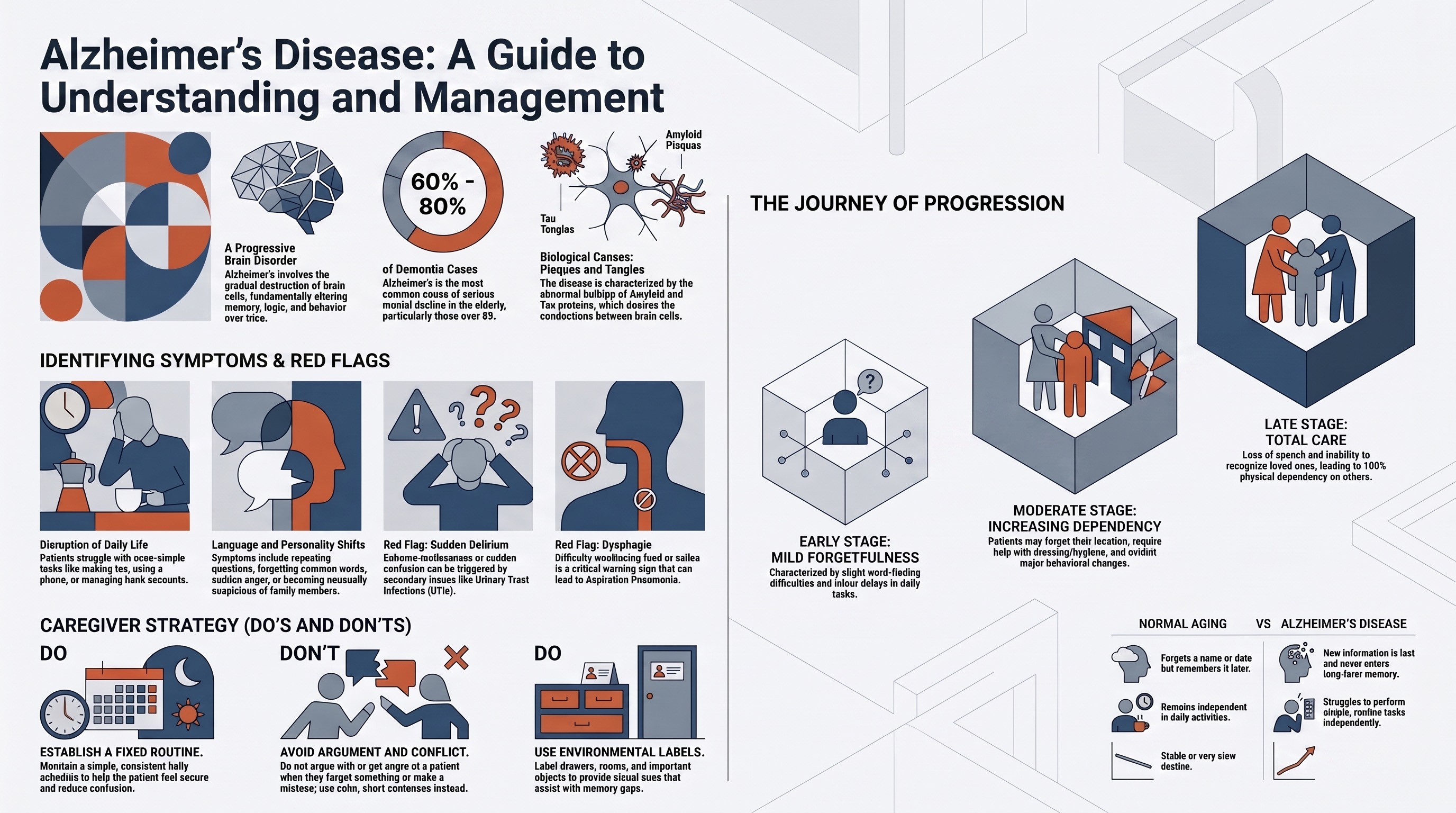
- Most Prevalent Form of Dementia: Alzheimer's disease accounts for about 60% to 80% of all global dementia cases, mostly affecting people aged 65 and older.
- Distinct from Normal Aging: Misplacing keys sometimes is normal; forgetting what keys are used for, being unable to retrace steps, or losing temporal orientation points toward neurodegenerative pathology.
- Biological Hallmarks: Extracellular amyloid-beta (Aβ) plaques and intracellular neurofibrillary tau tangles cause widespread cortical atrophy and profound cholinergic neurochemical deficits.
- Dual Treatment Approach: Current management pairs symptomatic medicines (cholinesterase inhibitors, NMDA receptor antagonists) and disease-modifying monoclonal antibodies with structured multidisciplinary supportive care.
What Is Alzheimer's Disease? Definition and Global Epidemiology.
According to the World Health Organization (WHO) and the National Institute on Aging (NIA), Alzheimer's disease is a progressive, irreversible neurodegenerative condition characterized by structural neuropathological changes that lead to the steady death of cerebral neurons. It represents the single most frequent etiology of clinical dementia worldwide.
While the greatest known risk factor is advancing chronological age—with incidence doubling roughly every five years after age 65—Alzheimer's disease is categorically not an inevitable consequence of normal senescence. In a smaller subset of patients (less than 5% to 10%), early-onset familial Alzheimer's disease can manifest between the ages of 30 and 60 due to autosomal dominant genetic mutations.
how it happens: What Happens Inside the Brain?
Decades before the first clinical episode of forgetfulness surfaces in daily life, microscopic biochemical alterations silently start within the cerebral cortex and hippocampus:
1. Amyloid-Beta Plaque Deposition.
Impaired enzymatic cleavage of amyloid precursor protein (APP) by beta- and gamma-secretase complexes leads to the accumulation of toxic amyloid-beta peptides (specifically the Aβ42 isoform). These fragments aggregate into insoluble extracellular fibrils, forming dense senile plaques that trigger neuroinflammation and disrupt inter-neuronal synaptic communication.
2. Hyperphosphorylated Tau Neurofibrillary Tangles.
Microtubules provide essential structural scaffolding and nutrient transport tracks within neuronal axons. In Alzheimer's pathology, the microtubule-associated protein tau undergoes hyperphosphorylation, detaching from microtubules and assembling into paired helical filaments known as neurofibrillary tangles (NFTs). Deprived of cellular transport, neurons undergo cytoskeletal collapse and cell death.
3. Cholinergic Deficit and Synaptic Loss.
Neuronal degeneration is especially severe in the basal forebrain (nucleus basalis of Meynert), leading to dramatic depletion of acetylcholine (ACh)—the central neurotransmitter governing attention, sensory processing, and memory consolidation.
Recognizing the Symptoms: The 4 Core Clinical Cardinal Signs.
The progression of Alzheimer's extends far beyond simple memory slips. Clinicians categorize core functional deficits across key domains:
- Executive Dysfunction in Familiar Daily Tasks: Difficulty balancing bank statements, paying household bills, preparing complex multi-step recipes, or managing chronic prescription medicines that the patient previously navigated effortlessly.
- Impaired Abstract Thinking and Problem Solving: Inability to follow multi-step instructions, calculate change during retail transactions, or make logical adjustments during minor domestic emergencies.
- Expressive and Receptive Language Impairments (Aphasia): Struggling to recall common vocabulary terms (substituting clumsy descriptions, such as calling a watch a "hand-clock"), losing track mid-sentence, or repeating the same question verbatim within minutes.
- Behavioral Changes and Disorientation (Agnosia and Apraxia): Sudden emotional volatility, paranoia (e.g., unfounded accusations of theft or infidelity due to mislaid personal items), social withdrawal, wandering, poor personal grooming, or inappropriate behaviors such as spitting in living spaces.
🚨 Emergency Red Flags: When to Seek Immediate Hospital Care.
Gradual cognitive decline is expected in Alzheimer's disease; sudden, acute deteriorations are not. Call 911 (US/Canada), 999 (UK), or proceed right away to the nearest Emergency Department (ER / A&E) if you observe:
- Sudden Acute Delirium: Dramatic confusion, hallucinations, or lethargy developing within hours or days (often pointing to an underlying acute systemic infection like a urinary tract infection [UTI] or sepsis).
- Focal Neurological Deficits: Unilateral facial drooping, arm weakness, hemiparesis, or sudden slurred speech (indicating an acute ischemic or hemorrhagic stroke).
- Severe Wandering and Environmental Exposure: An unsupervised patient missing in dangerous weather conditions, risking severe hypothermia, trauma, or dehydration.
- Uncontrolled Violent Agitation: Acute behavioral crisis posing an immediate risk of severe physical harm to the patient or household members.
Etiology and Risk Factors.
While an isolated root cause remains multifactorial, clinical research led by the CDC, NHS, and Mayo Clinic highlights prominent risk contributors:
- Non-Modifiable Genetic Determinants: Carrying the APOE ε4 allele greatly elevates person risk and lowers the age of clinical onset. Rare familial early-onset forms are linked to direct mutations in the APP, PSEN1, or PSEN2 genes.
- Vascular Health Determinants: Chronic midlife hypertension, poorly controlled diabetes mellitus (elevated HbA1c > 8.0% / 64 mmol/mol), hyperlipidemia, and smoking induce microvascular cerebral ischemia that accelerates neurodegeneration.
- Neurotrauma and Environmental Influences: Moderate to severe traumatic brain injury (TBI), chronic systemic depression, social isolation, and midlife hearing loss are major established modifiable risk factors identified by the Lancet Commission on Dementia.
Clinical Diagnosis and Staging.
Modern diagnostic workups have evolved beyond exclusion. A clear diagnosis utilizes standardized cognitive screening batteries (such as the Mini-Mental State Examination [MMSE] or Montreal Cognitive Assessment [MoCA]), volumetric structural neuroimaging (brain MRI to show bilateral hippocampal atrophy and exclude subdural hematomas or intracranial tumors), and baseline serum laboratories (TSH, vitamin B12, renal and hepatic profiles) to rule out reversible metabolic encephalopathies.
Specialized tertiary academic centers also employ cerebrospinal fluid (CSF) biomarkers or amyloid/tau Positron Emission Tomography (PET) tracers to confirm molecular disease signatures in vivo.
The 3 Clinical Stages of Alzheimer's Disease.
- Mild (Early Stage): Independent living remains largely intact. Subtle deficits include short-term memory loss, mild word-finding difficulties, and misplacing valuables.
- Moderate (Middle Stage): The longest phase. Patients require assistance with instrumental activities of daily living (bathing, dressing, choosing weather-appropriate clothing), experience spatial-temporal disorientation, sleep disturbances (sundowning), and significant personality shifts.
- Severe (Late Stage): Profound loss of functional independence. Patients lose verbal conversational abilities, require round-the-clock physical assistance with eating and continence, experience motor rigidity, and become vulnerable to aspiration pneumonia.
Evidence-Based Medical and Supportive Treatments.
| Therapeutic Category. | Mechanisms & Pharmacotherapy. | Clinical Objective. |
|---|---|---|
| Cholinesterase Inhibitors. | Donepezil, Rivastigmine, Galantamine (Oral / Transdermal patch). | Inhibit acetylcholinesterase to increase synaptic acetylcholine availability, temporarily stabilizing cognitive and functional decline in mild-to-moderate stages. |
| NMDA Receptor Antagonists. | Memantine (Monotherapy or combined with Donepezil). | Blocks pathological chronic glutamate excitotoxicity; indicated for moderate-to-severe stages to preserve basic daily function. |
| Amyloid-Targeting Monoclonal Antibodies. | Lecanemab, Donanemab, Aducanumab (Intravenous infusions). | Target and accelerate clearance of brain amyloid plaques in confirmed early-stage disease, slowing clinical cognitive decline on standardized rating scales. Requires MRI monitoring for ARIA (amyloid-related imaging abnormalities). |
| Multidisciplinary Supportive Care. | Speech-Language Pathology (SLP), Occupational Therapy, Physical Therapy. | Preserves functional swallowing mechanics, reduces home fall hazards, and introduces compensatory communication cues. |
Caregiver Survival: Do's and Don'ts for Household Management.
| ✔️ Evidence-Based Practices (Do). | ❌ Counterproductive Actions (Don't). |
|---|---|
| Use validation and redirection: Reassure emotional feelings rather than challenging altered realities when confusion or paranoia surfaces. | Don't engage in rational debate: Never argue, quiz, or scold the patient when they misplace items or misstate dates. |
| Establish structured daily routines: Maintain consistent meal, bathing, and sleeping schedules to reduce evening confusion ("sundowning"). | Don't introduce sudden drastic schedule overhauls: Avoid chaotic, over-stimulating home environments with loud background noise or clutter. |
| Implement safety modifications: Secure stoves with safety knobs, install grab bars in bathrooms, and use wearable GPS tracking tags. | Don't leave dangerous appliances accessible: Avoid leaving financial accounts, car keys, or stove tops unmonitored once insight wanes. |
| use structured respite care: Engage adult day-care programs or home health aides to protect family caregiver mental and physical health. | Don't carry the entire care burden alone: Refusing external help leads to severe caregiver depression, chronic stress, and exhaustion. |
Doctor's Clinical Note: Caring for the Caregiver.
Caring for a parent or spouse with Alzheimer's disease is one of the most emotionally demanding challenges a family can face. As a doctor, I emphasize to families like Gayan's that seeking external caregiving support, day programs, or specialized memory care facilities is not an act of abandonment—it is an act of responsible medical management. You cannot pour from an empty cup. Protecting your own emotional and physical well-being ensures your loved one receives safe, compassionate, and sustainable care throughout every stage of this journey.


💬 Comments (0)
No comments yet. Be the first to share your thoughts here.
Add Your Comment