
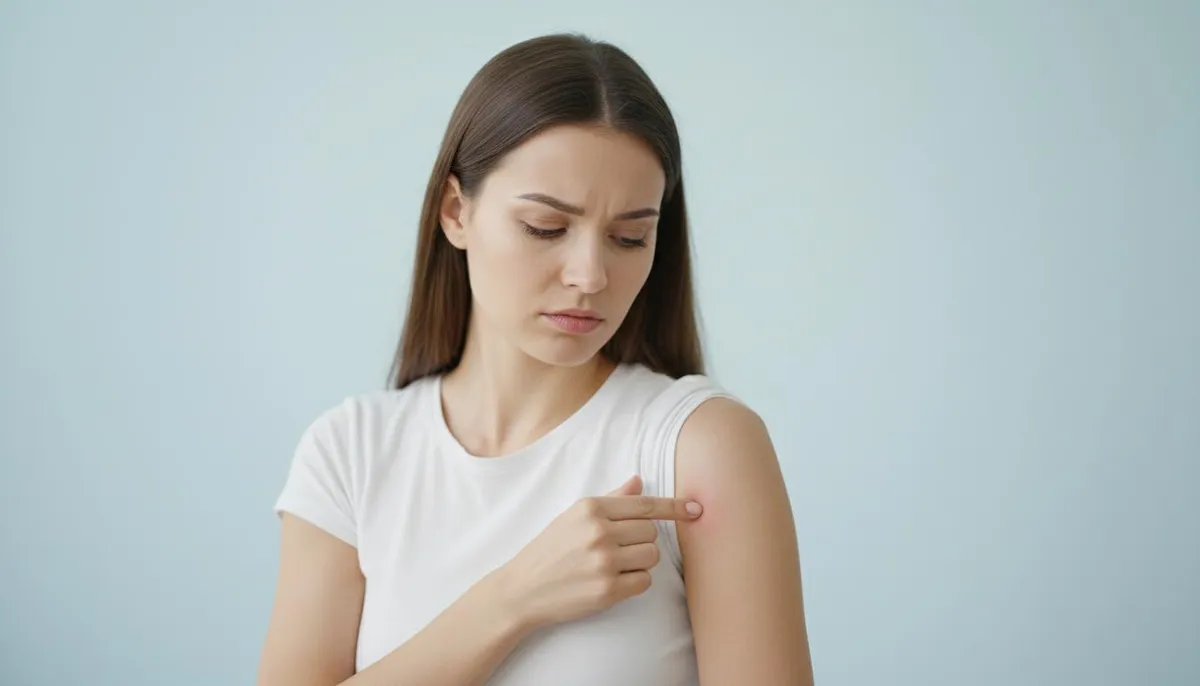
Have you ever walked out of a clinic feeling fine after a routine injection, only to wake up hours later with a rock-hard, throbbing lump on your arm? Maybe the skin turned bright red, swelled up dramatically, or felt just like a nasty insect sting that refused to calm down. When that kind of intense local flare-up happens after a repeat vaccine, we doctors often look closely at a specific immune response called an Arthus reaction.
Understanding why this happens matters because it is easy to confuse a severe localized immune response with a standard sore arm or a spreading bacterial skin infection. Today, we doctors want to walk you through what an Arthus reaction actually looks like, why your body triggers it, how to soothe it safely at home, and when you need to head to your Primary Care Physician (PCP), family GP clinic, Urgent Care center, or hospital Emergency Room (ER / A&E).
📌 Key Takeaways at a Glance
- What it is: A localized, delayed immune overreaction (type III hypersensitivity) that forms a firm, painful, swollen lump at an injection site, most often after a booster vaccine.
- Typical timing: Symptoms usually appear 4 to 12 hours after the injection and peak within 24 to 48 hours.
- Most common triggers: Tetanus and diphtheria booster shots (such as Tdap or Td), though other repeat vaccines or insect bites can occasionally trigger it.
- Expected recovery: Most cases resolve completely on their own within a few days using cold compresses, rest, and over-the-counter pain relievers.
- When to get urgent help: Blistering, blackened skin, foul-smelling drainage, or spreading fever require prompt medical assessment.
What Is an Arthus Reaction?
An Arthus reaction is a rare, localized type III hypersensitivity response that causes a firm, painful, red, and swollen lump under the skin at an injection site, typically appearing 4 to 12 hours after a booster dose of a vaccine you have received before.
Think about it for a second. When you get a routine shot, mild tenderness is completely normal. With an Arthus reaction, however, your immune system reacts much more aggressively right at the spot where the needle went in. We see it most frequently after booster shots containing tetanus or diphtheria toxoids, such as the Tdap vaccine, though any vaccine given in multiple doses can occasionally spark it. Less commonly, a similar localized reaction can follow certain insect bites or inhaled environmental triggers like farmer's lung (hypersensitivity pneumonitis).
What Are the Symptoms of an Arthus Reaction?
Have you ever wondered how to tell the difference between everyday post-shot soreness and a true Arthus reaction? Unlike immediate allergic reactions that happen within minutes, an Arthus reaction takes several hours to build up, usually showing up between 4 and 12 hours after your injection.
Look at what happens right around the needle mark when this reaction develops:
- A hard, painful lump: A firm swelling (induration) forms under the skin, often feeling as though a stone was pressed into your muscle.
- Noticeable swelling: Puffiness and fluid buildup (localized edema) expand outward across the upper arm or thigh.
- Distinct color changes: The overlying skin turns bright red or deep purplish-red and feels warm and tight.
- Skin breakdown in severe cases: Rarely, intense local inflammation causes a blister or a small open sore (skin ulceration) to form at the center.
Why Does an Arthus Reaction Happen? Common Causes
You might be wondering why your body would suddenly react so strongly to a vaccine it handled smoothly years ago. The short answer is that an Arthus reaction happens when your body already has very high levels of circulating antibodies against that specific vaccine ingredient, and you receive another dose too soon or while antibody levels are still at their peak.
When that booster dose enters your tissue, those pre-existing antibodies immediately lock onto the fresh vaccine proteins (antigens) right at the injection site. Instead of quietly processing the booster, your body rushes fluid and white blood cells to that exact spot at high speed. Pretty surprising, right? Your immune system isn't failing—it is actually responding with a little too much enthusiasm in one concentrated location.
How Does Your Immune System Cause This Reaction?
Let's break down how your immune defense works so this makes complete sense. Every day, your immune system scans everything entering your body, sorting harmless "self" tissues from foreign markers called antigens. When you get your very first dose of a vaccine, your body builds specialized defense proteins called immunoglobulin G (IgG) antibodies and stores a memory of how to fight that germ.
Now, look at what happens beneath your skin during a repeat booster shot. Those waiting IgG antibodies bind directly to the newly injected antigens, forming tiny microscopic clumps known as immune complexes. These immune complexes lodge inside the walls of tiny local blood vessels, triggering a complement cascade—an inflammatory alarm system—that causes localized blood vessel inflammation (vasculitis). Blood vessels widen, fluid leaks into the tissue, and immune cells crowd the area, creating that signature hard, swollen lump.
What Complications Can Come From an Arthus Reaction?
For the vast majority of patients, an Arthus reaction is uncomfortable for a few days and then fades away without leaving a mark. Still, we doctors always want you to know what happens on the rare occasion that inflammation gets too intense.
Remember how we talked earlier about immune complexes sticking inside tiny blood vessel walls? If severe localized blood vessel inflammation (vasculitis) blocks oxygen-rich blood from reaching the overlying skin, the affected tissue can break down and die—a complication called localized tissue death (necrosis). When the protective skin barrier breaks open into an ulcer, everyday skin bacteria can enter and cause a secondary bacterial skin infection (cellulitis or wound infection). Catching severe symptoms early prevents minor tissue irritation from turning into a stubborn wound.
How Do Doctors Diagnose an Arthus Reaction?
If you visit your Primary Care Physician (PCP), family GP clinic, or local Urgent Care center with a swollen arm, you do not usually need complicated scans or invasive procedures to get an answer. We doctors diagnose an Arthus reaction primarily by taking a careful medical history and examining the injection site closely.
We will ask exactly when you received the shot, which vaccine or medication was given, how many hours passed before the lump appeared, and whether you have had similar reactions before. Checking the firm border, warmth, and skin color helps us distinguish an Arthus reaction from a bacterial skin infection (cellulitis). Only in rare, severe, or uncertain cases might a doctor order basic blood tests to check inflammation markers or take a small fluid swab or skin sample (biopsy) to rule out infection.
What Are the Treatments for an Arthus Reaction?
Because an Arthus reaction is self-limiting, mild cases often improve without any prescription medication at all. When the swelling is large or painful, however, we doctors use straightforward treatments to calm your immune response and keep you comfortable while your body clears those immune complexes.
- Cold compresses: Applying a wrapped ice pack or cool damp cloth for 15 to 20 minutes at a time shrinks widened blood vessels and eases throbbing pain.
- Over-the-counter pain relievers: Standard medications like ibuprofen (an anti-inflammatory) or acetaminophen (paracetamol) relieve soreness and local inflammation.
- Antihistamines: Oral antihistamines such as cetirizine or loratadine can help ease itching and secondary histamine swelling around the lump.
- Corticosteroids: For severe swelling, your doctor may prescribe a short course of topical steroid cream or oral steroids (such as prednisone) to quiet the immune flare-up.
- Wound care for rare complications: If tissue death (necrosis) or secondary infection develops, a doctor or specialist will perform gentle surgical wound cleaning (debridement) and prescribe targeted antibiotics.
How Long Does an Arthus Reaction Last?
The reassuring news is that an Arthus reaction is temporary. Symptoms typically peak within 24 to 48 hours after the injection and then gradually soften and shrink over the next 3 to 7 days.
Most people notice the tightness and redness fading noticeably by day three or four, even if a small, painless firm knot takes a full week to disappear completely. If your swelling keeps expanding past 48 hours, or if pain grows worse instead of better after a few days, that is your cue to have a doctor re-evaluate the area.
What Is the Difference Between an Arthus Reaction and Serum Sickness?
Patients often hear the term "serum sickness" when researching vaccine or medication reactions, and it is easy to mix the two up because both involve type III hypersensitivity and immune complexes. The key difference comes down to where those immune complexes settle in your body.
An Arthus reaction stays strictly localized right at the injection site—your arm swells and hurts, while the rest of you feels fine. By contrast, serum sickness is a whole-body (systemic) reaction that usually develops 1 to 2 weeks after receiving certain medications, antitoxins, or monoclonal antibody infusions. Instead of one sore spot on your arm, serum sickness causes widespread hives, fever, aching joints, and swollen lymph nodes throughout the body.
To help you quickly compare what might be happening at your injection site, look at how these four possibilities differ in timing, appearance, and next steps:
| Condition or Reaction | What It Looks Like & Recommended Action |
|---|---|
| Normal Vaccine Soreness | Mild ache, slight puffiness, and faint pinkness starting within a few hours and fading within 1 to 2 days. What you should do: Move your arm gently, drink plenty of water, and use a cool cloth or over-the-counter pain reliever if uncomfortable. |
| Arthus Reaction | A hard, very painful, swollen, bright-red lump developing 4 to 12 hours after a booster shot and peaking around 24 to 48 hours. What you should do: Apply wrapped ice packs, take ibuprofen or acetaminophen (paracetamol) if safe for you, and contact your PCP or family GP clinic to document the reaction. |
| Serum Sickness | Widespread itchy rash, fever, joint aches, and fatigue appearing 7 to 14 days after certain antibody treatments or medications. What you should do: Book a prompt visit with your PCP, family GP clinic, or Urgent Care center for systemic anti-inflammatory treatment. |
| Bacterial Skin Infection (Cellulitis) | Spreading redness, increasing heat, pus drainage, red streaks, and worsening pain starting 24 to 72 hours or more after an injection, often with fever. What you should do: Seek same-day evaluation at your PCP, GP clinic, or Urgent Care center because bacterial infections require prescription antibiotics. |
How Common Is an Arthus Reaction From Vaccines, and Can You Prevent It?
When you see a dramatic lump on your arm, it is natural to worry that vaccines are risky. Let's put the numbers into perspective: a true Arthus reaction after vaccination is extraordinarily rare, occurring in roughly one in a million doses. We don't usually stop to think about how rare that is, do we? Billions of booster shots are given safely every year without triggering this response.
Better yet, once you have had an Arthus reaction, we doctors can help you prevent it from happening again. Because the reaction is driven by extra-high circulating antibody levels, health authorities like the CDC and NHS recommend spacing out future tetanus or diphtheria boosters—typically waiting at least 10 years before receiving another dose, even if you get a minor wound. Never skip recommended vaccines on your own, though; always review your vaccine record with your doctor so we can time future boosters safely.
When Should You See a Doctor, and What Questions Should You Ask?
You should schedule an appointment with your Primary Care Physician (PCP), family GP clinic, or local Urgent Care center whenever you develop a rock-hard, unusually painful lump after a vaccination or insect bite, or if redness keeps spreading after 48 hours. Even when symptoms are mild, having a doctor examine and record an Arthus reaction in your medical chart protects you from receiving an unnecessary early booster later on.
When you sit down with your doctor, bringing a short list of questions helps you get clear, practical answers right away:
- "Does this look like an Arthus reaction, a normal vaccine side effect, or a skin infection?"
- "How many days should it take for this lump and redness to go down?"
- "Which over-the-counter pain reliever or cold compress routine do you recommend for me?"
- "Should you record this in my immunization chart so my next tetanus or diphtheria booster is spaced out properly?"
- "What specific warning signs mean I should come back for a re-check?"
✔️ What You Should Do & ❌ What to Avoid
- ✔️ Do apply a wrapped ice pack: Place a cold pack or bag of frozen peas wrapped in a clean kitchen towel over the lump for 15 to 20 minutes every few hours to calm swelling.
- ✔️ Do wear loose, breathable clothing: Choose a soft short-sleeved cotton T-shirt so tight sleeves do not rub or press against the tender area.
- ✔️ Do stay well hydrated and rest: Drink plenty of water or soothing herbal tea and avoid heavy lifting with that arm for a day or two.
- ✔️ Do trace the border with a pen: Drawing a light ink line around the edge of the redness helps you and your doctor see whether it is shrinking or expanding.
- ❌ Avoid applying heating pads early on: Heat widens blood vessels and can worsen fluid swelling and throbbing during the first 48 hours.
- ❌ Avoid squeezing, poking, or lancing the lump: Pressing on inflamed tissue or trying to drain it introduces skin bacteria and risks serious infection.
🚨 When to Seek Immediate Emergency Care (Red-Flag Symptoms)
If you or someone near you develops any of these red-flag symptoms, do not wait — call 911 (or 999 in the UK / 000 in Australia) immediately or go straight to the nearest hospital Emergency Room (ER / A&E):
- Severe, escalating pain that does not ease at all with rest, ice, or over-the-counter pain medication.
- Fluid-filled water blisters (bullae) forming directly over the swollen injection site.
- Skin turning dark purple, gray, or black, which can signal localized tissue death (necrosis).
- Foul-smelling odor or thick gray, white, or yellowish pus leaking from the wound.
- Intense spreading heat, rapidly expanding red streaks up the arm, high fever, chills, or feeling dizzy and faint.
💡 Key Take-Home Message
- Rare and self-limiting: An Arthus reaction is a localized type III immune response after a booster shot that looks dramatic but rarely causes lasting harm.
- Simple home care works well: Wrapped cold compresses, arm rest, and standard pain relievers resolve most cases within 3 to 7 days.
- Document it for future boosters: Let your PCP or GP clinic confirm the diagnosis so future tetanus or diphtheria boosters are spaced appropriately.
- Watch for red flags: Blistering, blackened skin, pus, or high fever require immediate emergency medical attention.





No comments yet. Be the first to share your question or experience below.