
Learning how to administer subcutaneous injection treatments safely at home—including understanding the clinical meaning, common medical causes for needing one, normal needle and dosing ranges, and clear next steps—takes the mystery and anxiety right out of modern self-care. Be honest, staring at a tiny needle on your kitchen counter for the very first time feels a little intimidating, doesn't it? We doctors hear that exact confession every single week in our clinics, and we want you to know right away that these tiny under-the-skin shots are specifically engineered to be gentle, shallow, and remarkably easy to master.
Unlike deep hospital shots that go straight into muscle, an under-the-skin shot (subcutaneous injection, often shortened to SubQ or SC) slips just beneath the surface into your body's natural cushion of soft fatty tissue. Whether you are using a sleek prefilled pen for diabetes or weight management, a preloaded syringe to prevent blood clots after surgery, or a weekly biologic medicine for an autoimmune condition, getting the basics right protects your skin and helps every drop of medicine work properly.
In this practical guide, we doctors walk you through exactly how this layer of tissue absorbs medicine, which needle lengths and angles fit your body build, where to inject safely, and how to handle common hiccups at home without stress.
📌 Key Takeaways at a Glance
- Shallow & Gentle Delivery: A subcutaneous injection places liquid medication into the soft fatty layer (hypodermis) just under your skin for steady, predictable absorption.
- Short, Hair-Thin Needles: Normal SubQ needles measure just 4 mm to 12.7 mm long and 25G to 32G thin—much shorter and finer than vaccine or blood-draw needles.
- Simple Angle Rules: Short pen needles (4–6 mm) usually go straight in at a 90-degree angle, while longer syringe needles (8–12.7 mm) or leaner bodies often need a gentle skin pinch or 45-degree angle.
- Four Safe Body Zones: Your abdomen (at least 2 inches from your belly button), outer thighs, back of the upper arms, and upper buttocks offer the safest cushioning.
- Rotate Every Single Dose: Moving each shot at least 1 inch (2.5 cm) away from the last spot prevents firm, rubbery fat lumps (lipohypertrophy) that block medication absorption.
What Does It Mean to Administer a Subcutaneous Injection, and How Does It Work?
To administer a subcutaneous injection means delivering liquid medication directly into the soft fatty tissue layer just beneath your skin and above your muscle. Because this tissue contains fewer blood vessels than muscle, your body absorbs the medicine slowly and steadily over several hours or days with minimal discomfort.
Have you ever wondered why some medications cannot simply be swallowed as a morning pill or injected straight into your upper arm muscle? Think about it for a second. Protein-based medicines like insulin, hormone therapies, and biologic antibodies would be broken down instantly by stomach acid if you swallowed them like a tablet.
Look closely at what happens beneath your skin instead. Your skin has two thin outer layers—the epidermis on top and the dermis right below it, where tiny nerve endings sit. Directly underneath the dermis lies the fatty layer (subcutis or hypodermis), and deeper still sits rich, vascular skeletal muscle. When we doctors give a muscle shot (intramuscular injection, or IM) for a flu vaccine, the dense network of muscle blood vessels absorbs it rapidly. By contrast, a shallow skin-test shot (intradermal injection, or ID) sits right inside the top skin layer at a flat 10-to-15-degree angle. Subcutaneous tissue hits the sweet spot right in between: tiny Microscopic capillaries absorb your dose smoothly, acting like a natural slow-release reservoir. Pretty reassuring once you picture it, right?
Why Do Doctors Prescribe Under-the-Skin Shots? Common Causes and Medications
Patients often ask us what medical causes lead a Primary Care Physician (PCP), family GP, or hospital specialist to prescribe at-home injections rather than oral tablets. Whenever your body needs steady, round-the-clock drug levels without sudden spikes in your bloodstream, subcutaneous delivery becomes the safest clinical choice.
Here are the everyday reasons we doctors prescribe these injections across the US, UK, Canada, and Australia:
- Blood Sugar & Metabolic Care: Daily basal or mealtime insulin for type 1 and type 2 diabetes, as well as once-weekly incretin pens (GLP-1 receptor agonists like semaglutide or tirzepatide) for diabetes and medical weight management.
- Blood Clot Prevention: Short courses of blood thinners (low-molecular-weight heparins such as enoxaparin or dalteparin) after joint replacement surgery, C-sections, or long hospital stays to prevent deep vein clots (deep vein thrombosis).
- Autoimmune & Inflammatory Conditions: Targeted biologic pens or syringes for rheumatoid arthritis, psoriasis, Crohn's disease, ulcerative colitis, severe asthma, and migraine prevention.
- Fertility, Hormone & Blood Support: Timed hormone injections during IVF fertility cycles, growth hormone therapy, or red-blood-cell boosters in chronic kidney care.
One vital distinction to keep in mind: emergency adrenaline auto-injectors (like EpiPens for severe allergic reactions) are NOT subcutaneous—they are designed to fire deeper into your outer thigh muscle so the medicine works within seconds!
What Are the Normal Ranges for Needle Size, Injection Angle, and Dose Volume?
Walking out of your local pharmacy or chemist with a box of needles can feel like reading a hardware chart if nobody explains the numbers. Let's decode the exact clinical reference ranges we doctors use so you know your supplies match your body safely:
- Normal Needle Length (4 mm to 12.7 mm): Modern prefilled pen needles typically measure 4 mm, 5 mm, 6 mm, or 8 mm (5/32 to 5/16 inch). Traditional vial-and-syringe kits usually come with 8 mm to 12.7 mm (5/16 to 1/2 inch) needles. Anything longer than 12.7 mm risks poking down into muscle!
- Normal Needle Gauge (25G to 32G): Here is a quirky medical rule: the higher the gauge number, the thinner the needle. We rarely stop to think about needle numbers working backward like that, do we? Pen needles sit at an ultra-fine 31G or 32G (barely thicker than an eyelash), while thicker biologic liquids use 25G to 29G syringes.
- Normal Fluid Volume (0.2 mL to 1.5 mL): Because fatty tissue stretches gently, a typical subcutaneous dose ranges from 0.2 mL up to 1.5 mL. Standard clinical guidelines cap a single injection site at 1.5 mL to 2.0 mL maximum; larger volumes cause stinging, pressure, and fluid leakage.
- Normal Injection Angles (90° vs. 45°): With short 4 mm to 6 mm needles, most adults go straight in at a 90-degree angle. With longer 8 mm to 12.7 mm needles—or if you are very lean or injecting a child—pinch a soft fold of skin and enter at a 45-degree angle so the tip stays snugly inside fat rather than muscle.
Where Are the Safest Body Sites to Give a Subcutaneous Shot?
Choosing the right patch of skin affects both how little you feel the poke and how evenly your medicine works. Remember how we talked about that slow-absorbing fat cushion earlier? Not every body area carries the same thickness of subcutaneous fat or absorbs medicine at the exact same speed.
- The Abdomen (Fastest, Most Consistent Absorption): Inject into the soft tummy padding below your ribs and above your hip bones, staying at least 2 inches (5 cm) away from your belly button (umbilicus) and away from your beltline.
- Front and Outer Thighs (Moderate Absorption): Sit down comfortably and target the middle third of your front-to-outer thigh—halfway between your hip and knee. Avoid the sensitive inner thigh completely.
- Back of the Upper Arms (Moderate Absorption): That soft fleshy cushion halfway between your shoulder and elbow works wonderfully, though most people need a partner or caregiver to pinch and reach this spot accurately.
- Upper Buttocks / Flanks (Slowest Absorption): The padded "love handle" area just above your hip bone and back pocket works nicely for slow-acting evening doses.
What do you think happens if you inject into your favorite spot on the right side of your tummy week after week? Your fat cells react by forming a dense, rubbery scar-like lump under the skin (lipohypertrophy). Medicine injected into those lumps absorbs poorly and unpredictably! Always rotate in a clock-face or grid pattern, spacing every new shot at least 1 inch (two finger-widths) from the last one, and skip any bruised, sunburned, scarred, swollen, or mole-covered skin.
How Do You Administer a Subcutaneous Injection Step by Step at Home?
Once your nurse, pharmacist, or GP shows you your specific pen or syringe, following a calm, repeatable routine keeps every dose sterile and virtually painless. Here is the step-by-step clinical checklist we doctors teach our patients:
- Prep Your Hands and Check Your Dose: Wash your hands thoroughly with warm soap and water for 20 seconds. Check the medication label, dose, expiration date, and liquid clarity. If your medication lives in the fridge (like unopened biologics or GLP-1 pens), check the leaflet—letting it sit at room temperature for 15 to 30 minutes takes the icy sting right out! Never microwave or put vials in hot water.
- Clean and Fully Dry the Skin: Wipe your chosen rotation spot with a fresh 70% isopropyl alcohol swab from the center outward, then let it air-dry for 10 to 15 seconds without blowing on it. Injecting through wet alcohol stings sharply!
- Ready Your Device: Prime a pen needle if required by the manufacturer, or draw your exact syringe dose from a clean vial. Note: if you use a prefilled blood-thinner syringe (like enoxaparin), leave the tiny factory air bubble right inside unless your leaflet states otherwise—it pushes the final drop cleanly through the needle.
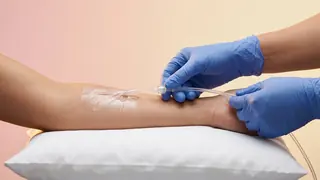
- Pinch (If Needed) and Insert Smoothly: If using a longer needle (8–12.7 mm) or if you have minimal body fat, gently pinch a 1-to-2-inch fold of skin between your thumb and index finger, keeping muscle flat underneath. Insert the needle in one smooth, quick dart-like motion at your recommended 90-degree or 45-degree angle. Do NOT pull back on the plunger (aspirate)—checking for blood is unnecessary in fat tissue and only causes bruising.
- Inject Slowly and Count to Ten: Press the plunger or pen button steadily until fully depressed. Before pulling the needle out, count slowly from 1 to 10. See why counting slowly to ten matters so much? It lets pressure equalize under your skin so expensive medicine doesn't dribble back out!
- Withdraw Straight Out and Dispose Safely: Pull the needle straight out at the same angle, release your skin pinch, and press gently with clean gauze or a cotton ball if a tiny pinpoint drop of blood appears—never rub or massage the area. Drop the used needle or syringe immediately into a hard-plastic sharps container without recapping freehand.
How Do Injection Angles, Sites, and Skin Reactions Compare?
When you start managing injections at home, tiny day-to-day questions pop up fast. Use this side-by-side clinical guide to tell harmless everyday findings apart from technique tweaks you should make right away:
| Factor, Choice, or Skin Finding | Clinical Explanation & Practical Next Step |
|---|---|
| 90-Degree vs. 45-Degree Angle | Short needles (4–6 mm) safely enter subcutaneous fat at a straight 90-degree angle in almost all adults, while longer needles (8–12.7 mm) or very slim limbs need a 45-degree angle or skin pinch to avoid hitting muscle. What you should do: Match your angle to your needle length and body build; ask your GP or diabetes educator to check your pinch technique if shots ache deeply. |
| Clear Drop of Liquid on Skin | A tiny bead of medicine sitting on the skin right after withdrawal usually means the needle came out before tissue pressure settled. What you should do: Never inject an extra "make-up" dose (which risks overdosing); simply hold the needle under the skin for a full 10-second count next time. |
| Pinpoint Bleeding or Small Quarter-Sized Bruise | Your needle nicked a microscopic surface capillary in the skin—very common, especially with blood-thinning shots, and does not ruin drug absorption. What you should do: Press gently with clean gauze for 30 seconds without rubbing spreads blood thinners and enlarges bruises), and pick a fresh site next dose. |
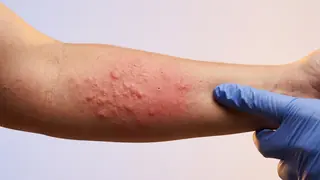
| Mild Pinkness or Brief Itching | Cold liquid, wet alcohol on the skin, or mild local sensitivity to drug preservatives can leave a coin-sized pink patch that fades within 24 to 48 hours. What you should do: Let refrigerated pens warm on the counter for 20 minutes (if approved on the label), let alcohol swabs dry completely, and apply a cool gel pack wrapped in a cloth for 10 minutes if itchy. |
| Firm, Rubbery Lump Under the Skin | Repeatedly injecting into the exact same spot triggers overgrown, scarred fat cells (lipohypertrophy) that trap medicine and cause erratic blood sugar or symptom control. What you should do: Stop using that lumpy patch completely for several months so the tissue can heal, and have your PCP or practice nurse examine your rotation zones. |
| Expanding Hot Redness, Throbbing Pain, or Pus | Worsening warmth, swelling, tenderness, or yellow drainage starting 1 to 3 days after an injection signals a bacterial skin infection (cellulitis or local abscess). What you should do: Draw a faint pen line around the red border to track spreading, and visit your family GP clinic or local Urgent Care center the same day for medical evaluation. |
✔️ What You Should Do & ❌ What to Avoid
- ✔️ Always use a brand-new needle for every single shot: Even using a pen needle twice bends its microscopic tip into a tiny hook, tearing skin fibers and increasing infection risk.
- ✔️ Keep a simple rotation log on your phone or calendar: Alternating left abdomen, right abdomen, left thigh, and right thigh gives each area weeks to recover.
- ✔️ Use an approved puncture-proof sharps bin: Pick up an FDA-, NHS-, Health Canada-, or TGA-approved sharps container from your pharmacy, and follow your local council or municipal drop-off rules when it hits the three-quarters full line.
- ❌ Never massage or vigorously rub the site afterward: Rubbing speeds up absorption dangerously fast (especially with insulin) or causes deep purple bruising with blood thinners.
- ❌ Never inject through clothing, scars, stretch marks, or within 2 inches of your belly button: Recall that two-inch belly-button rule we covered earlier? Dense tissue around the navel absorbs poorly and hurts much more.
- ❌ Never share multi-dose pens—even if you swap the needle: Microscopic droplets of blood can travel back into the pen cartridge and transmit bloodborne viruses.
🚨 When to Seek Immediate Emergency Care (Red-Flag Symptoms)
If you or someone near you develops any of these red-flag symptoms, do not wait — call 911 (or 999 in the UK / 000 in Australia) immediately or go straight to the nearest hospital Emergency Room (ER / A&E):
- Signs of a severe allergic reaction (anaphylaxis) minutes to hours after your shot: Sudden swelling of your lips, tongue, face, or throat, wheezing, shortness of breath, widespread hives, or feeling faint and dizzy.
- Rapidly spreading skin infection with whole-body symptoms: Hot, angry red swelling around an injection site accompanied by fever, chills, red streaks moving up your limb, or feeling confused and unwell.
- Severe low blood sugar (hypoglycemia) after an insulin injection: Extreme shakiness, cold sweats, slurred speech, confusion, seizure, or loss of consciousness that does not rapidly resolve with fast-acting glucose.
- Uncontrolled bleeding or a rapidly growing, tense blood lump (hematoma): Especially if you are injecting blood thinners and notice oozing that will not stop after 10 minutes of steady pressure, dizziness, black tarry stools, or coughing up blood.
💡 Key Take-Home Message
- Giving an under-the-skin shot gets second-nature fast once you pair the right needle length with a clean, dry fatty spot and a steady 10-second hold.
- Protecting your skin is all about the small habits: let alcohol dry, use a fresh needle every time, leave blood-thinner sites unrubbed, and rotate at least an inch away from your previous poke.
- Whenever a dose feels painful, leaks repeatedly, or leaves bumps under your skin, ask your Primary Care Physician, GP nurse, or local pharmacist to watch your technique—one quick tweak usually fixes everything!
No comments yet. Be the first to share your question or experience below.