

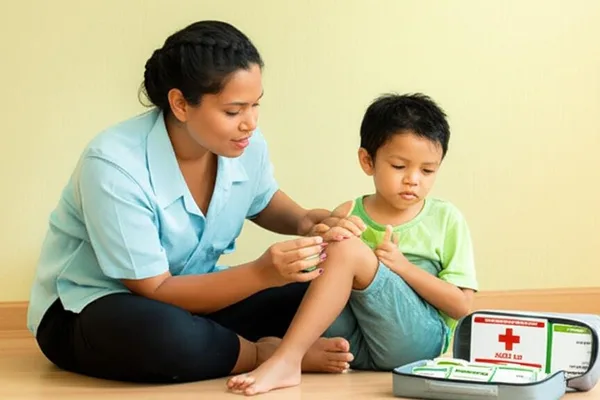
Imagine, if you were in the kitchen and suddenly burned your hand... or if your child fell and sprained his knee while playing... How valuable would it be to have a well-stocked first aid kit at home so that you don't have to worry and can do the little things you need to do before going to the doctor? At some point in our lives, we all need a first aid kit. Therefore, for the safety of you and your family, let's take some time to build a first aid kit that is perfect for home and for traveling.
Why do we need a first aid kit?
A home first aid kit is usually useful for treating minor accidents like this.
- Burns: Things like hot water spills, minor burns while cooking, etc.
- Cuts : Things like cutting your hand with a knife.
- Abrasions/Scrapes: Abrasions are abrasions to the surface of the skin caused by a fall.
- Insect bites (Stings): Animals like mosquitoes and wasps.
- Splinters: Stinging objects such as pieces of wood or thorns .
- Sprains/Strains: Things like twisting your arm or leg.
But the first aid kit that you carry when you travel should be a little more complete. Because it is not easy to find a pharmacy everywhere we go. Therefore, in addition to the usual minor accidents, you should also add things to control the symptoms of viral infections such as colds and coughs. For example, you should put the necessary medicines for fever, cough , sore throat, etc. It is also very useful to add something for stomach upset, skin problems, and allergies.
How do we make a good first aid kit ourselves?
You can buy it from the store, but you can make your own first aid kit very easily and inexpensively.
The most important thing is to keep it as simple as possible. Choose things that can provide multiple benefits from the same thing.
For a home first aid kit, you can use any container that clearly shows the contents. But if you're traveling, it's a good idea to choose a container that's water-resistant and won't break easily if dropped . You don't need to spend a lot of money on a special "medical bag." A small nylon bag or makeup bag will do.
A good way to do this is to use resealable bags to sort and store your belongings separately. For example, you can put your wound care supplies in one bag and your medications in another. This will make it easier to find them in an emergency.
How do I use this? Where should I put it?
Learn how to use it properly.
It's not enough to just have a first aid kit, you need to know how to use everything in it, especially the medicines . Also, teach the rest of your family how to use it. Because, you might end up needing first aid yourself, right?
Use things like exam gloves to protect yourself from other people's bodily fluids (e.g., blood). Check the box at least twice a year , remove expired medications , and replace them with new ones.
Very important: In an emergency, such as if someone has ingested a poison, find the telephone number of the National Poisons Information Centre at the Colombo National Hospital and keep it nearby in your first aid kit.
The best place to put it
Contrary to popular belief, the bathroom is not the best place to keep a first aid kit. The high humidity in the bathroom can cause medicines and other items to spoil quickly.
The best place to keep a first aid kit at home is the kitchen. This is because most of the work in a house is done and everyone hangs out in the kitchen, so accidents are more likely to happen. It's also easy to take with you when you need it. Keep a travel kit in your suitcase or bag. It's also great if you can keep a small kit like this in your car, boat (in a waterproof bag) and anywhere you spend a lot of time.
Essential items for a home first aid kit
You can easily buy these things at any pharmacy. If you have any doubts about anything, ask your doctor for advice.
| Item | Use and description |
|---|---|
| Adhesive tape | To fix things like gauze on wounds. |
| Calamine lotion | For itchy skin infections and insect bites. |
| Sterile gauze pads | To clean and cover wounds. |
| Ace bandages | For sprained joints and for applying gauze to wounds. (In sizes 2, 3, 4 inches) |
| Adhesive bandages | For small wounds of various sizes. |
| Oral antihistamines | For allergies and itching. (Example: Piriton - may cause drowsiness, Loratadine - does not cause drowsiness). Antihistamine creams applied to the skin can sometimes increase allergies, so do not use them without consulting your doctor. |
| Hydrocortisone 1% cream | For minor skin rashes. |
| Aloe vera gel | To relieve the pain of minor burns. |
| Exam gloves | To protect against infections. |
| Antibiotic cream | To prevent infection in minor wounds. |
| Scissors and Tweezers | To cut bandages and remove thorns and spines. |
| Safety pins | To fix the bandage. |
Things to pack in your travel kit
In addition to the items in your home kit, it would be great if you could add these items to your travel kit.
| Item | Usefulness |
|---|---|
| Painkillers | For example: Paracetamol, Ibuprofen - for fever and minor aches. |
| Medicine for stomach ache | Antidiarrheal, antacid. |
| Cough and cold medicine | Cough syrup, mucus-thinning tablets. |
| Disinfectant or soap | To clean wounds and hands. |
| Insect repellent | To protect against mosquitoes and other insects. |
| Sunscreen | SPF 30 or higher to protect skin from the sun. |
| Medications you personally take | Don't forget to bring your daily medications (e.g. diabetes, high blood pressure). |
| Digital thermometer | To check for fever. |
| A list of emergency phone numbers | Your doctor, family, and the nearest hospital numbers. |
Take-Home Message
- It is definitely important to have a well-stocked first aid kit in every home and vehicle.
- You don't have to spend a lot. Make your own kit with simple, versatile items.
- Keep your first aid kit in an easily accessible, dry place, such as in the kitchen.
- Check for expired items at least twice a year and renew them.
- It is very important that you and your family are aware of how to use the items in the box correctly.
- Even if first aid is provided in a minor accident, if the situation is serious or you have any doubts, see a doctor immediately or go to the nearest Emergency Department (ETU).




💬 Comments (0)
No comments yet. Be the first to share your thoughts here.
Add Your Comment