

What is this black mold?
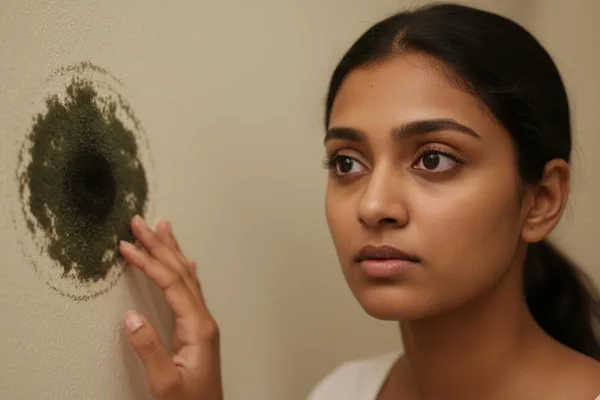
Simply put, black mold is a type of fungus . It's like the mold that forms when bread is stale, but this one is dark green or black. Although there are several types of black mold, most people are referring to a specific type called _Stachybotrys chartarum_ (S. chartarum) . This type of mold thrives in areas with a material called cellulose . Now you might be wondering what cellulose is. That's what's in things like paper, wood, and drywall. It's like the fiber in fruits and vegetables. Black mold needs warmth and moisture to grow. That's why it's often found in homes with water leaks, bathrooms, basements, and around windows.But remember this: Most healthy people do not develop serious illness or death from this black mold , so don't be unnecessarily alarmed.
Can black mold make us sick? How harmful is it?
Yes, some people can get sick from black mold. Especially if you have an allergy to mold , black mold can definitely affect you. This black mold releases tiny particles called spores into the air. Also, mold releases chemicals called microbial volatile organic compounds (mVOCs) . That musty smell is caused by mVOCs. If you have an allergy, these spores or mVOCs can cause allergy symptoms. What happens is that your immune system reacts to this and causes inflammation in places like your nose, eyes, and lungs. Even for people who don't have allergies, these mVOCs can sometimes cause some discomfort. Another thing is, if your immune system is weak (for example, due to certain diseases or taking medications that suppress the immune system), exposure to this black mold can cause a fungal infection, called mycosis , in your respiratory tract or elsewhere. However, black mold is not as dangerous as many people think. Any type of mold can cause discomfort to people with allergies.How quickly does black mold affect us? Who is most affected?
How quickly black mold affects you depends on whether you have an allergy or sensitivity to it. Not everyone is the same , so how you feel may be different from how someone else feels.- If you are allergic to black mold, symptoms may appear as soon as the spores enter the body.
- If there is no allergy, there may be no symptoms at all, or it may take a long time for symptoms to appear.
- If you personally or someone in your family has allergies .
- If you have respiratory diseases such as asthma or COPD ( Chronic Obstructive Pulmonary Disease ) .
- If you are frequently exposed to black mold due to high humidity and poor ventilation at work or home.
- People with weak immune systems .
What happens if you inhale black mold? What are the symptoms?
If you are allergic to black mold, you will have an allergic reaction when you breathe in black mold spores. This is when your body recognizes the mold spores as an “invader” and starts to fight them off. When black mold spores first enter your body, your immune system makes a special type of antibody called Immunoglobulin E (IgE) . These IgE antibodies attach to mast cells that contain histamine . These cells are found in our nose, skin, gastrointestinal tract, and respiratory tract. Then, if you are exposed to black mold spores again, those prepared cells release histamine and other chemicals. It is this histamine that causes the immediate allergic symptoms. They usually start within seconds. Other chemicals can also cause ongoing inflammation. The most common symptoms of black mold exposure are:- Sneezing
- Coughing
- Nasal congestion
- Postnasal drip
- Red eyes
- Wheezing
- Difficulty breathing (dyspnea)
- Dry cough and chest tightness
Can babies develop AIPH from black mold?
No. There is no evidence that exposure to black mold causes a condition called acute idiopathic pulmonary hemorrhage (AIPH) in babies. AIPH is a condition in which bleeding occurs in the lungs of babies. Also, there is no evidence that black mold causes memory loss, frequent nosebleeds, body aches, or mental problems. So don't be alarmed.How does this black mold form? How does it spread?
Black mold is a natural growth. You can find it in many places in nature. It can also grow in your home if the conditions are right for it to grow. For example, in the bathroom, basement, laundry room, or any water leaks. It needs the following things to grow:- Moisture
- Oxygen
- A temperature between 40 and 100 degrees Fahrenheit (4.4 and 38 degrees Celsius)
- A food source containing cellulose (e.g., drywall, paper, wood)
How do you know if you have a black mold allergy? (Diagnosis)
If you suspect you have a black mold allergy, you can see an allergist to confirm. He or she may perform several tests based on your symptoms.What kind of tests are done?
- Skin prick test: This involves injecting a very small amount of black mold allergens into your skin. This is usually done by making a small scratch on the skin of your forehead or back. If you are allergic, the area will turn red and a small wheal will appear within about 15 minutes. This can be done in less than an hour.
- Blood test (IgE blood test): This involves taking a small sample of your blood and measuring the amount of IgE antibodies that are produced against black mold. The results can take up to a week to come back. Sometimes these blood tests can give false-positive results. This means that they can show that you have an allergy even though you don't actually have one.
How do you treat black mold allergy?
Black mold allergy cannot be completely cured. However, the symptoms can be controlled . The first and most important thing is to:Avoid exposure to black mold. If you have a water leak in your home, fix it immediately. If there are any moldy items, remove them. Next, you can do the following to reduce symptoms:- Nasal irrigation: Rinsing the inside of the nose with saline water.
- Antihistamine medications: Pills or syrups that reduce allergy symptoms.
- Nasal corticosteroids: Sprays that reduce inflammation in the nose.
- Decongestants: Medicines that reduce nasal congestion (it is not good to use these continuously).
- Montelukast tablets: A medicine used to treat certain allergic and asthmatic conditions.
- Asthma inhalers: For those with asthma.
Do air purifiers help with black mold?
Yes and no. Air purifiers can help remove mold spores from the air . However, they cannot remove mold that has formed on surfaces like walls.How do you kill black mold instantly?
If you have mold in your home, it's not easy to get rid of it. If you try to remove it yourself, the spores can become airborne (aerosolized) and spread to other areas of the home. The best thing to do is to first fix any water leaks. Then, use a machine with a HEPA filter (High-Efficiency Particulate Air filter) to reduce the spores in the air, seal the room with the mold, and hire a professional to remove the mold.Do I need to detox after exposure to black mold?
Many people think that this mold is causing toxins to accumulate in the body and that they need to 'detox' it. However, it has not been medically proven that mold toxins actually cause illness in people. Therefore, there is no need for a special 'detox'. The best thing to do is to stay away from moldy environments and, if you have symptoms, seek medical treatment.
How to reduce the risk of developing a black mold allergy? (Prevention)
It is impossible to prevent a black mold allergy. However, there are things you can do to prevent the growth of black mold in your home :- Reduce the humidity in your home. Try to keep the humidity between 30% and 50%.
- If there are water leaks in your home, such as in pipes, walls, or roofs, fix them immediately .
- Remove wet carpets, rugs, fabrics, drywall, and ceiling tiles if they are not properly dried.
- Use exhaust fans in the bathroom and kitchen.
- A good quality air filter for your home's HVAC systemPut it in. Make sure there are no leaks in that system, and always have it serviced by a professional.
What to do if you have a black mold allergy?
Mold spores are ubiquitous in the environment, so it's impossible to completely avoid them. If you live in areas where mold is present, you may experience allergic symptoms. However, if you minimize the number of places in your home where mold can grow, you can reduce your exposure . Then, you can control your symptoms with medication. Sometimes, after immunotherapy, you can go into an asymptomatic state. If you suspect you have a black mold allergy, see a doctor or an allergist to confirm it.When should you see a doctor?
If you have symptoms of a black mold allergy, especially if those symptoms are affecting your daily life , see a doctor.What questions should you ask the doctor?
- How exactly can you tell if I have a black mold allergy?
- What allergy medications do you recommend?
- What are the side effects of those drugs?
- Do I need to take this medicine every day, or is it enough to take it only when symptoms occur?
- If I have another health condition, how can I manage it along with this allergy?
What is the difference between Black Mold and Mildew?
"Mildew" is not a specific word. Some people use it to refer to the appearance of mold on surfaces. Others use it to refer to certain types of mold. Black mold is a fungus that grows in warm, moist places. Its spores can trigger an allergic reaction in your immune system. This can cause symptoms like coughing, sneezing, a stuffy nose, and red eyes. However, it rarely causes serious illness in people. If you have symptoms of a black mold allergy, see a doctor. He or she can test you to confirm the allergy and prescribe medication to help prevent symptoms.The most important things for you to remember (Take-Home Message)
Okay, so let's remind you again of the most important points from what we've talked about:- Black mold is a fungus that grows in damp places. It doesn't affect everyone the same way.
- If you have an allergy to mold, you are most likely to be affected. Symptoms may include sneezing, coughing, nasal congestion, and red eyes.
- Black mold is not particularly dangerous compared to other types of mold. Don't be alarmed.
- The most important thing is to control the humidity in your home and prevent mold growth. Fix any water leaks and ensure good ventilation.
- Be careful when removing mold. If possible, seek professional help.
- If you have symptoms, seek medical advice. There are appropriate treatments for that.
- No special 'detox' methods are needed. The important thing is to stay away from the moldy environment and treat the symptoms.
` Black Mold, Black Mold, Types of Mold, Fungi, Allergies, Respiratory Diseases, Home Dampness, Stachybotrys chartarum, Mold Spores, Mold Allergy




💬 Comments (0)
No comments yet. Be the first to share your thoughts here.
Add Your Comment