
Blood in semen (hematospermia) after transperineal or TRUS prostate biopsy: why rust-colored fluid lasts 4–6 weeks is one of the very first questions men ask us doctors once they get home from their procedure. Even when your urology team mentions bleeding on your discharge sheet, actually seeing bright red, dark brown, or coffee-ground streaks in your ejaculate weeks later can still give you a real jolt. Be honest, seeing blood where it never usually belongs makes anyone's heart skip a beat, doesn't it?
Here is the reassuring clinical truth right up front: noticing blood in your semen is the single most common side effect of a prostate biopsy, showing up in roughly 70% to 90% of men who ejaculate in the weeks afterward. Whether you had an ultrasound-guided biopsy through the skin between your scrotum and back passage (transperineal prostate biopsy) or an ultrasound-guided biopsy through the rectum (transrectal ultrasound-guided biopsy, or TRUS prostate biopsy), tiny droplets of blood naturally collect inside the gland's storage ducts. Unlike urine, which flushes out of your bladder multiple times every single day, seminal fluid sits quietly in reserve until ejaculation.
In this practical guide, we doctors walk you through why that fluid shifts from fresh red to rusty brown, what week-by-week healing really looks like, how blood thinners change the clock, and which rare warning signs mean you should contact your Primary Care Physician (PCP) or family GP clinic, visit a local Urgent Care center, or head to the nearest hospital Emergency Room (ER / A&E).
📌 Key Takeaways at a Glance
- Completely expected recovery phase: Up to 9 out of 10 men notice blood in semen (hematospermia) after a prostate biopsy, and it does not mean the biopsy caused damage or found cancer.
- Why the 4–6 week timeline happens: Small pockets of blood sit inside the prostate ducts and seminal vesicles, oxidizing over weeks into dark brown, rust-colored, or coffee-ground fluid until cleared over 8 to 12 ejaculations.
- Urine clears first, semen clears last: Mild blood in the urine (hematuria) usually fades within 3 to 7 days because your bladder flushes constantly, whereas seminal passages empty much more slowly.
- Safe for you and your partner: Old rust-colored blood in seminal fluid is sterile healing debris—it cannot harm you or pass anything dangerous to your partner.
- Know the true red flags: Fever, shaking chills, inability to pass urine, or heavy bright-red clots in your urine or stool require prompt urgent medical evaluation.
Why Does Blood in Semen (Hematospermia) After Transperineal or TRUS Prostate Biopsy Last 4–6 Weeks as Rust-Colored Fluid?
Blood in semen (hematospermia) after a transperineal or TRUS prostate biopsy typically lasts 4 to 6 weeks because tiny amounts of blood from needle sampling sit inside the prostate ducts and seminal vesicles, slowly oxidizing into harmless rust-colored or dark brown fluid that clears gradually over several ejaculations.
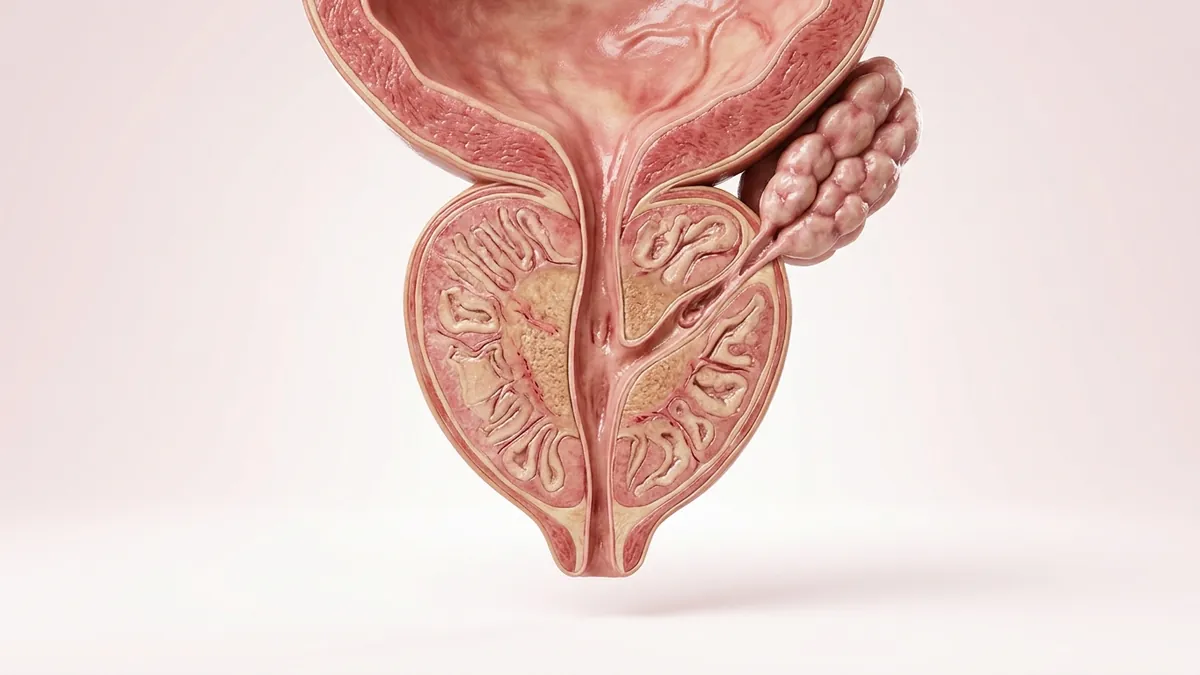
Have you ever wondered why a tiny skin bruise or an old nosebleed crust turns brownish-rust after a few days? Look closely at what happens inside the prostate gland, and the exact same biology explains everything. Your prostate isn't a hollow balloon like your bladder. Instead, think of it like a dense, honeycombed sponge packed with hundreds of microscopic branching tubes, tiny muscular ducts, and a rich network of delicate blood vessels, sitting right alongside two fluid-producing pouches called the seminal vesicles.
During a diagnostic biopsy, the specialist passes a thin, spring-loaded hollow needle into different zones of the prostate—usually taking 10 to 16 tissue cores—to check for cell changes after an elevated prostate blood test (prostate-specific antigen, or PSA test) or an abnormal prostate exam. Each tiny sample nicks microscopic capillaries inside those spongy ducts. Within minutes, your body seals off the vessels so active bleeding stops. Pretty reassuring, right?
However, a few leftover drops of blood remain tucked deep inside the winding prostatic ducts and seminal vesicles. Because seminal fluid stays stored in those chambers until you ejaculate, the iron-rich oxygen-carrying protein in red blood cells (hemoglobin) slowly breaks down and oxidizes. Fresh bright-red blood gradually turns burgundy, chocolate brown, muddy tan, or rusty orange—sometimes accompanied by tiny, soft "coffee-ground" specks—before your natural fluid turnover washes the passages completely clean over 4 to 6 weeks, and occasionally up to 8 weeks.
How Do Transperineal and TRUS Prostate Biopsies Compare for Bleeding and Recovery?
Many men assume that switching to the newer transperineal approach prevents blood in the semen altogether. We rarely stop to think about how both procedures target the exact same internal tissue, do we? Let's clear up how the two methods differ on the outside while behaving almost identically inside the prostate ducts.
In a transperineal prostate biopsy—now widely favored across hospitals in the United States, United Kingdom, Canada, and Australia—the needle passes through thoroughly cleaned skin in the perineum (the area between the scrotum and the back passage), completely bypassing the bowel wall. That slashes the risk of post-biopsy bloodstream infection (urosepsis) to well under 1% and virtually eliminates bleeding from the back passage. In a traditional TRUS prostate biopsy, the needle passes directly through the front wall of the rectum into the prostate, which carries a slightly higher infection risk (requiring preventive antibiotics) and often causes 1 to 3 days of light rectal spotting on toilet paper.
Yet once the needle enters the prostate gland itself, both techniques sample the very same fluid-producing zones—and targeted magnetic resonance imaging (MRI) fusion biopsies often take a few extra cores from suspicious spots. See? That's exactly why hematospermia occurs at nearly identical rates after both transperineal and TRUS biopsies. It also helps us doctors separate three very different types of post-biopsy bleeding so you don't mix them up at home: blood in urine (hematuria), which flushes out pink or rosé for 3 to 7 days; rectal spotting, which lasts 1 to 3 days after TRUS only; and blood in semen, which lingers quietly as rust-colored fluid for 4 to 6 weeks or longer.
What Is the Normal Week-by-Week Recovery Timeline and Stepwise Evaluation?
Remember how we talked about urine flushing every few hours while seminal ducts only empty during climax? Because every man's recovery pace and sexual frequency differ, we doctors guide patients using both a calendar timeline and an "ejaculation count" benchmark. Clinical studies show it takes roughly 8 to 12 ejaculations—or about 4 to 6 weeks on average—for stored old blood to wash out completely.
Days 1 to 5: Rest and Initial Clot Sealing
Most urology teams advise waiting 3 to 7 days before resuming sexual activity or masturbation so those tiny internal needle tracks can form firm, stable seals. During these first few days, mild pelvic ache, slight perineal bruising (especially after a transperineal biopsy), and light pink or tea-colored urine at the start or end of your stream are completely normal.
Days 5 to 14: First Ejaculations (Crimson to Dark Red)
Your first one or two ejaculations after that brief rest period often look bright red, dark wine-colored, or brick red, sometimes with small jelly-like dark specks. While startling to see, it should not cause sharp pain. If you take prescribed blood thinners (anticoagulants or antiplatelet medications such as aspirin, clopidogrel, apixaban, rivaroxaban, or warfarin) that your specialist cleared you to restart, this brighter stage can last an extra week or two.
Weeks 2 to 6 (and Beyond): Rust, Mocha, and Gradual Clearing
From week two onward, fresh bleeding has long since stopped. Your semen shifts to rust-colored, dark brown, tan, or yellowish-tint before returning to normal cloudy white. Men who ejaculate less frequently—or who pause sexual activity for a month—often notice brown fluid at week 8 or even week 10 simply because that oxidized fluid waited patiently in storage. Also keep in mind that we doctors typically wait at least 4 to 6 weeks after a biopsy before ordering any repeat PSA blood test, since healing inflammation temporarily bumps PSA numbers upward.
How Can You Tell Normal Post-Biopsy Fluid Changes Apart From Warning Signs?
When you are recovering at home, having a clear side-by-side reference takes the guesswork out of every trip to the bathroom or bedroom. Take a look at the two-column clinical guide below to match what you see with what is happening inside your body and what step to take next.
| Symptom, Fluid Color, or Stage | Clinical Meaning & Recommended Action |
|---|---|
| Bright red or dark wine semen (Days 4–14) | Freshly collected blood from biopsy needle tracks mixing with prostatic fluid during your first few ejaculations. What you should do: Stay calm, drink plenty of water, wait at least 3–7 days post-biopsy before starting sexual activity, and monitor for gradual darkening over the next week. |
| Rust-colored, chocolate brown, or coffee-ground semen (Weeks 2–6+) | Harmless, older oxidized blood clearing out of the prostate ducts and seminal vesicles—confirming no new active bleeding is occurring. What you should do: Continue normal daily life and comfortable sexual activity; use a condom or dark towel if staining worries you or your partner. |
| Light pink or rosé-tinted urine (Days 1–7) | Minor capillary oozing into the urinary channel (prostatic urethra) that dilutes rapidly in bladder urine. What you should do: Drink 6 to 8 glasses of water daily (unless fluid-restricted by your doctor) so your urine stays pale yellow and flushes smoothly. |
| Rusty semen lasting 8–12 weeks without pain or fever | Common in men who ejaculate less often or who take daily low-dose aspirin or prescription blood thinners. What you should do: Mention it at your routine follow-up with your urologist or Primary Care Physician (PCP) / family GP clinic for reassurance if it persists past 8–10 weeks. |
| Thick, tomato-soup red urine with large clots or slowing urine stream | Significant active bleeding inside the urinary tract that can block the bladder outlet (clot retention). What you should do: Stop strenuous activity immediately and go to your local Urgent Care center or nearest hospital Emergency Room (ER / A&E) the same day. |
| Cloudy, foul-smelling fluid with fever, chills, or burning urination | Possible post-biopsy urinary or prostate infection (acute prostatitis) requiring prompt antibiotic therapy. What you should do: Do not wait for a routine appointment—seek urgent medical evaluation immediately, especially if you feel shivery or unwell. |
In everyday life across the US, UK, Canada, and Australia, simple home habits make those first couple of weeks much smoother. Keep a water bottle on your desk, sip decaf herbal tea or diluted fruit juice, and hold off on heavy alcohol, extra-hot curries or chili sauces, and double espressos for the first few days, as these can irritate a healing prostate and make urination feel stingy. If pelvic soreness bothers you after sitting on a commuter train or office chair, plain acetaminophen (paracetamol in the UK and Australia) eases discomfort safely without thinning your blood.
✔️ What You Should Do & ❌ What to Avoid
- ✔️ Finish every prescribed antibiotic tablet (especially after TRUS biopsy): Even if you feel 100% fine, completing the exact course prevents lingering bacteria from sparking a prostate infection.
- ✔️ Stay consistently hydrated: Aim for steady water intake throughout the day so your bladder flushes gently and prevents small urinary clots from forming.
- ✔️ Pause cycling, rowing machines, and heavy gym lifts for 5–7 days: Hard bicycle saddles, lawn-mowing vibrations, and heavy squats press directly on the perineum and boost pelvic blood pressure.
- ❌ Don't take over-the-counter ibuprofen, naproxen, or extra aspirin right away unless cleared: Non-steroidal anti-inflammatory drugs (NSAIDs) make blood platelets less sticky and can prolong fresh bleeding; choose acetaminophen / paracetamol instead if safe for your liver.
- ❌ Don't restart prescription blood thinners without following your written plan: Always follow the exact restart day given by your urologist, cardiologist, or family doctor.
- ❌ Don't hold back ejaculation out of fear after the first week: Once your 3–7 day initial rest window passes and you feel comfortable, normal ejaculation is completely safe and naturally clears old rust-colored fluid.
🚨 When to Seek Immediate Emergency Care (Red-Flag Symptoms)
If you or someone near you develops any of these red-flag symptoms, do not wait — call 911 (US & Canada), 999 or 111 (UK), or 000 (Australia) immediately or go straight to the nearest hospital Emergency Room (ER / A&E):
- Fever of 100.4°F (38.0°C) or higher, violent shaking chills (rigors), or clammy sweats: Even days after a biopsy, fever and shivers can signal a serious bloodstream infection (urosepsis) needing immediate intravenous antibiotics.
- Sudden inability to pass urine (acute urinary retention): Feeling a painful, full bladder while only drops—or nothing at all—comes out means swelling or a blood clot requires urgent gentle catheter relief.
- Heavy, bright-red urinary or rectal bleeding with large clots: Urine that looks like thick ketchup or continuous bright-red bleeding from the back passage is not normal recovery spotting.
- Dizziness, lightheadedness, confusion, fast heartbeat, or fainting when standing up: Signs of significant blood loss or systemic infection that need emergency hospital care right away.
- Rapidly worsening swelling, severe throbbing pain, or hot redness in the scrotum or perineum: Could indicate an expanding collection of blood (hematoma) or localized infection.
💡 Key Take-Home Message
- Blood in semen (hematospermia) lasting 4 to 6 weeks—and turning dark brown or rust-colored—is a normal, harmless hallmark of prostate healing after both transperineal and TRUS biopsies.
- Color shifts from red to brown mean bleeding has already stopped and old stored droplets are simply oxidizing and washing out at their own unhurried pace.
- Protect your early recovery by drinking plenty of water, skipping bike rides and heavy lifting for a week, and watching closely for fever or trouble urinating.






No comments yet. Be the first to share your question or experience below.