
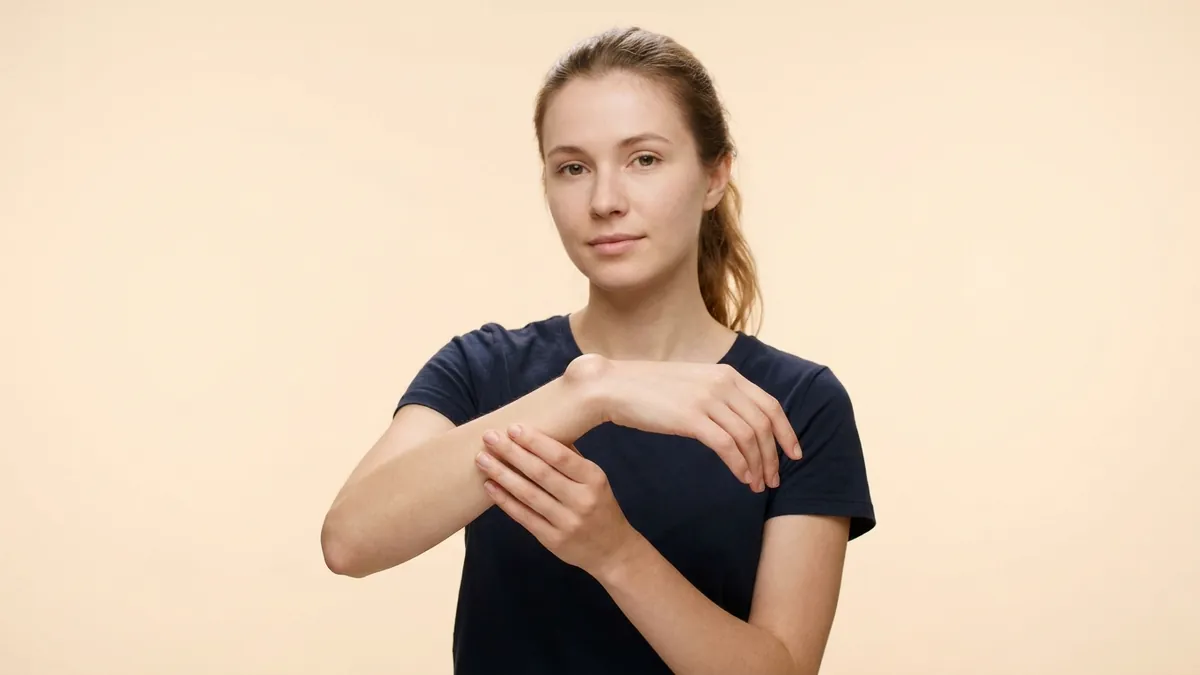
Just last week in the clinic, I sat across from Mark, a 38-year-old graphic designer and weekend tennis player who held out his right hand after curling his fingers around a morning coffee mug and spotting a stubborn bump on top of his hand. When patients search for Carpal Boss vs Dorsal Wrist Ganglion Cyst: How to Tell a Rock-Hard Bone Spur from a Fluid-Filled Lump, they are usually looking down at that exact same mystery bump and wondering why it suddenly showed up. Mark was convinced he had grown a fluid cyst from hours of mouse clicking, yet the moment his hand relaxed on the exam table, the bump felt as solid as a knucklebone.
Be honest, you have probably pressed on your own wrist bump a dozen times today trying to figure out whether it squishes or moves, haven't you? That reaction is completely human. When a new lump appears right under thin skin where there is barely any fat to hide it, even a tiny five-millimeter bump looks dramatic—especially when you bend your wrist downward to type on a laptop, carry heavy grocery bags, or grip a steering wheel.
Here is the comforting truth we doctors always share right away: more than nine times out of ten, a firm bump on the back of the wrist or upper hand turns out to be either a harmless fluid-filled joint pouch or an equally harmless bony ridge. Still, telling the two apart matters enormously because a treatment that drains a fluid cyst will fail completely—and hurt quite a bit—if someone tries it on solid bone. Makes sense, right?
📌 Key Takeaways at a Glance
- Two different tissues, one common mix-up: A wrist bone spur (carpal boss) is solid, immovable bone near the base of your index and middle fingers, while a fluid-filled wrist sac (dorsal wrist ganglion cyst) sits closer to the main wrist crease and feels firm-to-rubbery.
- Size changes give a huge clue: Ganglion cysts often swell up after heavy wrist use and shrink with rest, whereas a carpal boss stays the exact same size day after day.
- The dark-room flashlight check helps: Shining a focused penlight against the side of a clear fluid cyst makes it glow warmly (transillumination), while solid bone blocks light completely.
- Never slam a wrist lump with a heavy book: Smashing a ganglion causes internal tissue tearing and recurrence, and hitting a carpal boss can fracture your hand bones.
- Simple imaging settles any doubt: Your Primary Care Physician (PCP) or family GP clinic can order a targeted angled wrist X-ray or a quick, painless ultrasound scan to confirm the diagnosis in minutes.
Carpal Boss vs Dorsal Wrist Ganglion Cyst: How Do You Tell a Rock-Hard Bone Spur from a Fluid-Filled Lump?
A carpal boss is an immovable, rock-hard bony spur anchored permanently to the base of your index or middle finger bones, whereas a dorsal wrist ganglion cyst is a smooth, fluid-filled sac sitting closer to the wrist crease that feels rubbery, shifts slightly, and often fluctuates in size.
Think about it for a second: why do so many people—and sometimes even busy clinicians at first glance—confuse solid bone with a pouch of jelly? Look at the back of your own hand while bending your wrist toward the floor. Notice how tightly the skin stretches over those small wrist joints? When a fluid sac fills up under high pressure, its outer wall stretches tight like an overinflated bicycle tire, making it feel surprisingly hard to your fingertips.
To tell them apart accurately, we doctors check two things before anything else: exact neighborhood and finger-tip mobility. A dorsal wrist ganglion cyst almost always pops up right over the main wrist crease where your forearm meets your hand. By contrast, a bony wrist spur (carpal boss, or carpometacarpal boss) sits roughly two to three centimeters further down the back of your hand, right where your long index and middle hand bones meet the small wrist bones. Pretty helpful landmark, right?
What Happens Under the Skin to Cause Each Wrist Bump?
Have you ever wondered why your body would randomly build an extra ridge of bone or blow up a tiny balloon of joint jelly? Understanding the mechanics underneath your skin takes all the mystery—and anxiety—out of what you are feeling.
How a Carpal Boss Forms at the Hand Base
A carpal boss develops at the meeting point between your small wrist bones and the long hand bones of your index or middle finger (the second or third carpometacarpal, or CMC, joints). Unlike your thumb joint, these two joints barely move at all, acting like rigid pillars when you grip a golf club, tennis racket, or heavy frying pan. Repeated micro-stress from racket sports, weightlifting, manual trades, or mild local joint wear-and-tear (osteoarthritis) triggers the bone edges to grow a small protective bony overgrowth (osteophyte). In roughly one out of ten people, there is also a tiny extra accessory bone from birth (os styloideum) tucked right into that joint space that gets irritated later in adulthood.
How a Dorsal Wrist Ganglion Cyst Grows from the Joint Capsule
Now picture the tough fabric sleeve wrapping around your wrist bones (the joint capsule). Deep inside, a vital wrist strap (the scapholunate ligament) holds two central wrist bones together. If a pinpoint weak spot opens in that sleeve, natural joint lubricant (synovial fluid) squeezes outward through a tiny one-way stalk, forming a smooth balloon filled with clear, thick jelly (mucin). Because that stalk works like a one-way valve, heavy typing, push-ups, or gardening pumps more fluid into the pouch, making it puff up by evening and shrink after a quiet weekend.
Other Look-Alike Hand Lumps We Doctors Rule Out
Before locking in a diagnosis at your family GP clinic, we also keep a few close cousins in mind. Swollen tendon gliding sleeves (extensor tenosynovitis) move up and down right along with your fingers when you wiggle them. Small skin plug sacs (epidermoid cysts) attach directly to the top skin layer rather than deep bone, while benign tendon nodules (giant cell tumors of the tendon sheath) or inflammatory joint bumps (rheumatoid nodules) have distinct exam patterns we check for right at the desk.
How Do Doctors Examine, Test, and Scan Your Wrist Lump Step by Step?
Remember how we talked earlier about an overinflated ganglion cyst feeling almost as hard as bone? Because fingers alone can occasionally get fooled, we doctors use a neat, stepwise bedside routine followed by targeted imaging whenever needed.
First, we watch how the lump behaves when you flex your wrist downward versus extending it backward. Look at what happens here: a carpal boss stays locked onto the hand skeleton, becoming sharply prominent when your wrist bends down (a classic clinical clue known as Foucher's sign) and refusing to wiggle side-to-side even a millimeter. Meanwhile, the finger-straightening tendons passing over a bony carpal boss can occasionally snap sideways across the bony peak, causing a brief, dull click.
Second, we dim the exam room lights and press a focused medical penlight directly against the side of the lump—a completely painless check called light shining through tissue (transillumination). If the bump lights up with a warm reddish-pink glow, light is passing straight through clear jelly, pointing strongly toward a ganglion cyst. Solid bone blocks every beam of light, leaving a dark shadow.
What do you think happens when a tiny, deep cyst and a bone spur still look similar? That is where choosing the right scan saves you wasted time and money:
- Angled Wrist X-Ray (Plain Radiography with Carpal Boss View): Standard flat hand X-rays often miss a carpal boss because neighboring bones overlap. We request a specialized side-profile X-ray with your hand rotated slightly upward by 30 degrees (the 30-degree supinated lateral carpal boss view), which shows the bony beak or extra bone crystal clearly—whereas an uncomplicated ganglion cyst looks completely invisible on X-ray.
- High-Resolution Wrist Ultrasound (Musculoskeletal Ultrasonography): Quick, radiation-free, and widely available through radiology clinics, ultrasound immediately spots dark fluid sacs, measures the cyst stalk down to the millimeter, and checks nearby tendons in real time while you move your fingers.
- Magnetic Resonance Imaging (Wrist MRI): Reserved mainly when wrist pain lingers without an obvious bump (an occult ganglion), or before surgery so a hand specialist can check for deep bone bruising (bone marrow edema) around a painful carpal boss.
How Do Symptoms, Checks, and Treatments Compare Side by Side?
Just like we mentioned at the start, putting the two conditions side by side makes spotting the pattern much easier before your clinic appointment. Review each feature below along with the practical next step we recommend.
| Feature or Treatment Option | Clinical Meaning and Practical Action Step |
|---|---|
| Exact Spot on Your Hand or Wrist | A dorsal wrist ganglion cyst sits directly over the main wrist crease, whereas a carpal boss sits 2 to 3 cm further down toward the knuckles at the base of your index or middle finger. What you should do: Snap a quick phone photo with your wrist bent downward so your PCP or family GP can see where the bump peaks most clearly. |
| Touch, Firmness, and Wiggle Room | A carpal boss feels unyielding like your forehead bone and never shifts sideways; a ganglion cyst feels firm-to-spongy like the tip of your nose and shifts slightly under skin. What you should do: Check gently once with clean fingertips, then stop poking—repeated squeezing inflames the overlying tendons and skin nerves. |
| Day-to-Day Size Fluctuation | Ganglion cysts regularly swell after push-ups, pickleball, or long typing days and shrink with rest—nearly half even vanish on their own over time. A carpal boss never shrinks. What you should do: Keep a simple two-week note on your phone tracking whether wrist rest changes the bump's height or ache. |
| Penlight Glow Check (Transillumination) | Clear mucin jelly inside a ganglion cyst lets light pass through with a soft pinkish glow in a darkened room; solid bone in a carpal boss blocks light completely. What you should do: Leave definitive diagnosis to your doctor's office exam, especially if the bump is smaller than a pea and hard to light cleanly. |
| Splinting and Everyday Pain Relief | Up to 70% to 80% of people with either condition have mild or zero pain and need no procedure at all—just temporary wrist support during flare-ups. What you should do: Wear a breathable neutral wrist brace during aggravating chores and ask your doctor or pharmacist whether a short course of a topical anti-inflammatory gel (such as diclofenac gel) or oral ibuprofen is safe for your stomach and kidneys. |
| Needle Drainage vs Targeted Injection | A doctor can numb the skin and draw thick jelly out of a ganglion cyst with a sterile needle aspiration), though cysts refill about 50% of the time. You can never drain a bone spur, though an ultrasound-guided steroid injection into an irritated carpal boss joint can calm painful flare-ups. What you should do: Always confirm whether the bump is fluid or bone first so nobody attempts an unnecessary cyst aspiration on solid bone. |
| Specialist Day Surgery | If pain blocks your work, grip, or sports despite 6 to 12 weeks of conservative care, a hand orthopedic or plastic surgeon can remove a ganglion cyst with its root stalk (lowering recurrence to roughly 10% to 15%) or shave down a painful carpal boss (wedge excision). What you should do: Ask your GP or PCP for a referral to a fellowship-trained hand surgeon to weigh recovery timelines against your daily hand demands. |
Notice something reassuring in that comparison? Whether your bump turns out to be bone or fluid, neither one requires rushing into an operating room if it isn't bothering you! In everyday clinic life across the US, UK, Canada, and Australia, watchful waiting paired with smart ergonomic tweaks—like raising an ergonomic keyboard wrist rest, loosening a tight smartwatch band that rubs the bump, or switching to a thicker racket grip—keeps most patients completely comfortable.
✔️ What You Should Do & ❌ What to Avoid
- ✔️ DO rest and support your wrist during painful flare-ups: Slip on a lightweight velcro wrist splint in a neutral straight position during heavy lifting, yard work, or flare-ups so irritated tendons and joint capsules can settle down.
- ✔️ DO apply a cool pack for 10 to 15 minutes after heavy hand use: Wrapping a cold gel pack in a thin kitchen towel calms surface tendon irritation over both a carpal boss and a swollen ganglion cyst.
- ✔️ DO book a routine appointment with your PCP or family GP clinic: Especially if the bump aches, catches tendons when you straighten your fingers, or leaves you unsure what it is.
- ❌ DON'T ever bash a wrist lump with a heavy book: Years ago people called ganglion cysts "Bible bumps" and struck them flat—doing this ruptures joint tissues, triggers fierce inflammation, and risks fracturing your hand bones if the lump is actually a carpal boss!
- ❌ DON'T try to pop or pierce a wrist bump at home with a needle: Because a ganglion connects straight into your sterile wrist joint space, a household needle can introduce dangerous bacteria directly into the joint (septic arthritis).
- ❌ DON'T wear tight watch straps or rigid bracelets right over the bump: Direct friction irritates superficial sensory nerves on the back of your hand, causing annoying tingling down toward your fingers.
🚨 When to Seek Immediate Emergency Care (Red-Flag Symptoms)
If you or someone near you develops any of these red-flag symptoms, do not wait — call 911 (US & Canada), 999 or 111 (UK), or 000 (Australia) immediately, visit a local Urgent Care center for acute non-life-threatening injuries, or go straight to the nearest hospital Emergency Room (ER / A&E):
- Signs of a deep joint or skin infection: Rapidly spreading redness, hot throbbing swelling, pus drainage, red streaks climbing your forearm, or a fever and chills (especially after any skin scrape or needle procedure).
- Sudden numbness, coldness, or color change in your fingers: Fingers turning pale white, bluish, or ice-cold, or sudden loss of feeling and grip strength in your hand.
- Inability to straighten a finger suddenly: If a tendon rubbing across a sharp bony spur abruptly snaps, leaving your index or middle finger drooping and unable to lift on its own.
- Severe deformity or intense pain after a fall or impact: Falling onto an outstretched hand with immediate swelling and inability to rotate or bend your wrist.
💡 Key Take-Home Message
- Check the spot and feel gently: closer to the wrist crease, slightly movable, and changing size points to a fluid-filled dorsal wrist ganglion cyst; 2 to 3 cm down toward the index/middle finger bases, rock-hard, and unchanging points to a bony carpal boss.
- Both lumps are 100% benign—if yours causes zero pain and doesn't limit your grip, leaving it peacefully alone after a quick GP check is completely safe medical care.
- When aching or tendon snapping gets in the way of daily life, targeted angled X-rays or ultrasound guide simple splinting, targeted injections, or precise hand specialist care.





No comments yet. Be the first to share your question or experience below.