

Have you ever looked down at your hand and noticed a strange, hard bump sticking up on the back of your wrist? Finding an unexpected lump can make your heart race just a little bit. You might wonder if it is dangerous, if you injured yourself without noticing, or what you should do next. Take a deep breath and relax. In most cases, this harmless little bone growth is a common condition known to doctors as a carpal boss.
People often panic when they spot new growths on their bodies. However, understanding what is happening under your skin can put your mind completely at ease. Today, we will walk you through everything you need to know about a carpal boss in simple, everyday language. We will explore what causes it, how doctors tell it apart from other wrist lumps, and what simple steps you can take to keep your wrist healthy and strong.
Key Takeaways About Carpal Boss.
- What it is: A carpal boss is a hard, bony growth on the back of your wrist where hand and finger bones meet.
- How it feels: It feels completely hard like solid bone and does not move around when you press on it.
- Pain levels: Many people feel no pain at all, while others experience mild soreness during heavy wrist movement.
- Common confusion: It is often mistaken for a soft fluid-filled ganglion cyst, which feels much softer and squishier.
- Treatment needs: If it does not hurt, you usually do not need any medical treatment at all.
Check if you have anxiety with the internationally accepted GAD-7 system
What Is a Carpal Boss on Your Wrist?
Put simply, a carpal boss is an extra growth of bone that forms on the back side of your wrist. To picture where it happens, think about your pointer finger and your middle finger. Where those long hand bones connect with the small bones of your wrist joint is precisely where this bony lump likes to appear. When you press your finger against it, the bump feels completely hard because it is made of solid bone, and it stays firmly fixed in place.
Many people live their entire lives with a carpal boss and never feel a single moment of pain. Doctors also refer to this condition as a carpometacarpal boss. Because it looks like a lump, people often confuse it with a ganglion cyst. A ganglion cyst is also a common wrist lump, but it is very different because it feels soft, rubbery, and contains fluid. If you find any new lump on your body, visiting a doctor is the best way to get an accurate diagnosis.
What Are the Symptoms of a Carpal Boss?
Carpal bossing usually shows up on your dominant hand. That means if you write and throw with your right hand, your right wrist is more likely to develop the bump. Even so, it can appear on your non-dominant hand or sometimes on both wrists at the same time.
The main physical sign is that hard, immovable bony lump sitting right on top of your wrist. While many people have zero pain, others might feel a dull ache when bending or twisting their wrist. The skin and tissue directly over the bone might also feel a bit tender if you bump it against something.
Another interesting sign involves the tendons that run along the back of your hand. When you move your fingers up and down, those tendons slide smoothly over the bones. If a carpal boss sits right underneath them, a tendon can catch on the bony ridge. This creates a strange snapping sensation or a quiet clicking sound every time you move your fingers.
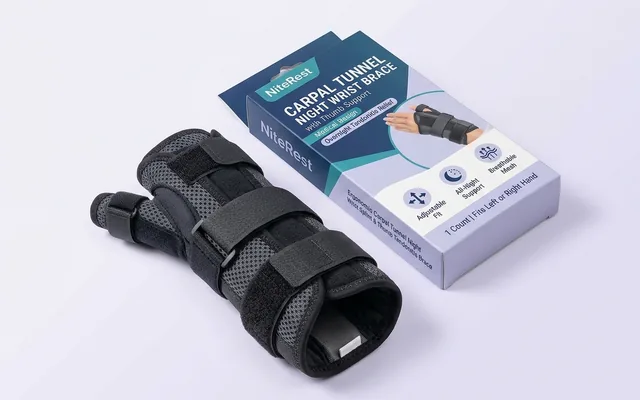
Lightweight cushioned aluminum-stay wrist splint that maintains neutral wrist alignment during sleep and typing to relieve carpal tunnel tingling, ganglion cysts, and tendonitis.
Why Does This Bone Bump Form?
Doctors and researchers do not know the exact reason why a carpal boss develops in every single case. Even so, medical experts point to several common factors that likely trigger this extra bone growth:
- Joint Wear and Tear: Over time, the smooth cartilage protecting your joint surfaces can wear down. When bone rubs directly against bone, your body may try to heal itself by forming extra bone spurs, leading to a carpal boss.
- Congenital Factors: Some people are simply born with minor variations in their wrist bone structure, making them more prone to developing a boss over time.
- Overuse and Strain: Doing repetitive work with your hands or playing sports that place heavy stress on your wrists can contribute to bone irritation and extra growth.
- Past Injuries: If you suffered a previous wrist fracture, a bad sprain, or direct trauma to the back of your hand, the healing process can sometimes cause bone irregularities later on.
Who Is Most at Risk for This Condition?
Medical studies show that carpal bossing most often develops in adults between the ages of 20 and 40. People whose daily jobs or hobbies require heavy hand tools, heavy lifting, or constant wrist extension may notice these bumps a bit more often.
How Do Doctors Diagnose a Carpal Boss?
When you visit a doctor because you noticed a new lump on your wrist, the evaluation starts with a friendly conversation. Your doctor will ask you about your symptoms. They want to know when you first saw the bump, whether it hurts, what makes the pain worse, and how it affects your daily routine.
Next, your doctor will perform a physical exam. They will gently press on the bump to check its texture, test how well your wrist bends in different directions, and check for tenderness. Because a carpal boss looks similar to other hand issues, your doctor may suggest diagnostic imaging to confirm the exact cause.
Depending on what your doctor finds during the physical exam, they may recommend one or more of these tests:
- Wrist X-ray: A quick imaging test that clearly shows your bones and highlights extra bone growth or spurs.
- Ultrasound Scan: Uses safe sound waves to show soft tissues, tendons, and fluid-filled cysts versus solid bone.
- CT Scan: Provides highly detailed 3D cross-sectional images of your wrist bones.
- MRI Scan: Uses powerful magnets to give a detailed look at bones, cartilage, and surrounding ligaments.
- EMG Test: Measures electrical activity in your nerves and muscles if nerve compression is suspected.
How Can You Get Relief From a Carpal Boss?
If your carpal boss causes zero pain and does not interfere with your life, your doctor will likely recommend leaving it alone. You do not need medical treatment just because the bone bump is there.
However, if your wrist hurts or feels stiff, treatment options focus on easing your discomfort. Doctors usually start with gentle, non-surgical approaches:
- Wrist Splint: Wearing a supportive brace keeps your wrist stable and gives irritated tissues time to rest.
- Ice Therapy: Applying a cold pack wrapped in a cloth reduces swelling and calms local inflammation.
- Pain Relievers: Over-the-counter medicine like acetaminophen or ibuprofen can help manage mild aches.
- Steroid Injections: If home care does not help, your doctor can inject a powerful anti-inflammatory medicine directly into the tender area.
Simple, non-surgical treatments successfully relieve symptoms for roughly 70% to 80% of patients. Most people find that minor adjustments give them all the comfort they need. If conservative care fails to stop your pain, surgery remains a safe and effective backup choice.
Will You Need Carpal Boss Surgery?
Carpal boss surgery is a minor procedure designed to remove the extra bone growth from your wrist. The operation typically takes less than an hour.
Before the surgery begins, your surgical team will give you local anesthesia. This numbs your hand and wrist completely so you feel zero pain while remaining awake and calm. The surgeon makes a small cut on the back of your wrist, carefully shaves away or removes the bony bump, and checks that surrounding tendons glide smoothly. If damaged cartilage or other bone spurs are found nearby, the surgeon can fix those issues during the same procedure.
After your operation, you will wear a protective splint for about a week to let the incision heal. Most people return to light daily activities within two weeks, and full recovery often happens within six weeks.
| Treatment Approach. | Best Used For. / Expected Outcome. |
|---|---|
| Observation. | Best Used For.: Painless bumps with no functional limits. Expected Outcome.: Complete peace of mind with zero downtime. |
| Splints & Rest. | Best Used For.: Mild overuse pain or workout soreness. Expected Outcome.: Reduced inflammation and restored comfort. |
| Surgical Removal. | Best Used For.: Persistent pain or tendon irritation. Expected Outcome.: Permanent removal of the bony lump. |
What Happens If You Have a Carpal Boss?
In most cases, a carpal boss is a completely benign condition. That means it is non-cancerous, does not spread, and rarely causes dangerous complications. Many people go through life comfortably with a small bony bump on their wrist without ever needing medical intervention.
Even so, some people experience ongoing aches if the bone bump presses against nearby nerves or tendons. When this happens, simple hand movements can feel frustrating or uncomfortable. Fortunately, medical science offers plenty of helpful solutions to restore your comfort and keep your hands working smoothly.
Can You Prevent a Carpal Boss From Forming?
Because doctors still do not know the exact root cause of every carpal boss, preventing it completely can be difficult. However, you can protect your wrists from overuse injuries by taking smart precautions during sports and heavy tasks.
Always warm up your hands and wrists with gentle stretches before physical activity. If you play high-impact sports, wearing supportive wrist braces can reduce joint stress. If you have questions about keeping your joints healthy, talk with your doctor for personalized advice.
When Should You See a Doctor?
Whenever you discover a new lump or bump on your wrist, you should schedule an appointment with a doctor. While you might suspect a carpal boss, other conditions like ganglion cysts or tendon issues share similar physical signs.
When to Seek Medical Attention right away.
Call emergency services (911 in the US/Canada, 999 in the UK) or visit your nearest emergency department right away if you experience sudden, severe wrist pain after an accident, inability to move your fingers, numbness, or signs of a severe infection such as high fever, spreading redness, and intense warmth around the bump.
What Questions Should You Ask Your Doctor?
Being prepared for your medical visit helps you get the exact information you need. Consider asking your doctor these helpful questions during your next appointment:
- Do I need immediate medical treatment for my wrist bump?
- What are the chances that this carpal boss will grow larger over time?
- At what point should we consider surgical removal?
- What are the primary risks and benefits of carpal boss surgery?
💡 Take-Home Message.
That hard bump on the back of your wrist is likely a carpal boss. Just like the boss in an office, it likes to stand out, but fortunately, it is rarely dangerous or harmful. If your wrist feels fine, you can simply ignore the bump and go about your daily life without worry.
If the bump causes pain, stiffness, or tendon clicking, relief is within reach. Simple home care, braces, or minor outpatient surgery can solve the problem easily. Speak with your doctor today to find out what is best for your hands!


No comments yet. Be the first to share your question or experience below.