
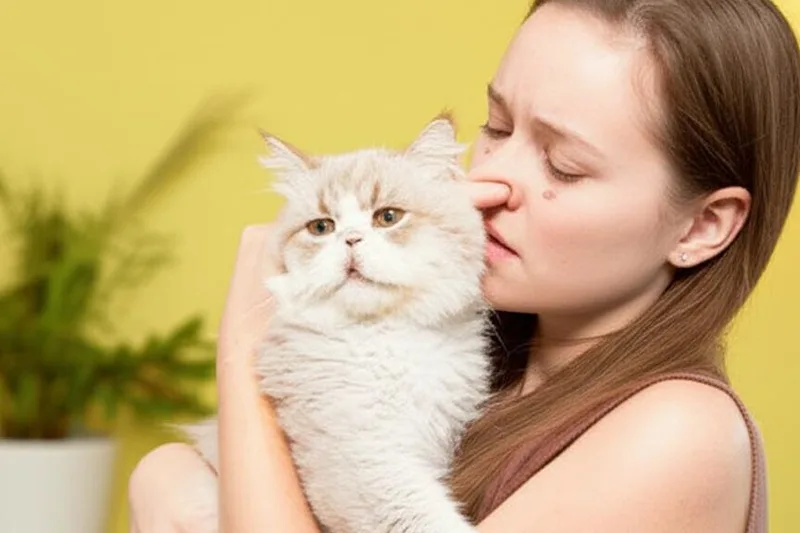
Having a cat as a pet is something that many people love. But have you ever thought that this cute animal could be the reason for the cough that comes without you knowing, the cold that never goes away, and the body aches? Or could it be that your child is constantly catching colds because of a cat? Most of the time, we don't pay much attention to these things. But the condition that could be behind this is the cat allergy. Today, we will talk about all about this.
What are the symptoms of a cat allergy?
Watch for these symptoms after touching a cat or being in an environment where there are cats. Sometimes these symptoms can appear within minutes, or they can take several hours.
| Symptom | Description |
|---|---|
| Characteristics of the respiratory system | Frequent sneezing, nasal discharge, nasal congestion, coughing, and wheezing. |
| Characteristics of the eyes | Redness, itching, and tearing of the eyes. |
| Skin symptoms (Allergic Dermatitis) | Skin conditions such as hives, severe itching, and eczema may develop. These are especially common on the chest and face. Areas where a cat has scratched, chewed, or licked may also become red and swollen. |
| Characteristics of young children | Just like adults, you may experience itchy eyes, sneezing, stuffy nose, itchy throat, and asthma symptoms (coughing, difficulty breathing). |
Be aware of serious symptoms
Some people can develop serious conditions due to this allergy. Especially for someone with asthma, going near a cat can suddenly worsen their asthma. If you have difficulty breathing, your chest is heaving, your nose is completely blocked and you can't breathe, or you can't sleep at night because of difficulty breathing, see a doctor immediately or go to the nearest hospital's emergency department (ETU).
What really causes this allergy?
Many people think that cat fur is the cause of allergies. But that's not the truth. The real cause of allergies is a protein found in cat saliva, urine, and dander . When a cat licks itself, the protein in the saliva gets deposited on the fur. Then, the fur and dander particles float around in the air throughout the house.
Simply put, the immune system of someone with allergies is a little overly sensitive. Their body mistakes these harmless cat proteins for a big enemy (like a virus). Then the body starts fighting against this 'enemy'. All those symptoms we talked about earlier occur as a side effect of this fight.
Also, remember that even if you are not allergic to cats, when an outdoor cat comes into your home, it can bring other allergens, such as pollen and mold, into your home. You may still experience allergy symptoms.
How do I know for sure if I'm allergic to cats?
Even if the symptoms are clear, it may not be the cat itself that is causing the problem, so it is best to see a doctor to confirm this rather than simply suspecting your pet at home.
Your doctor may run several tests for this.
- Skin Prick Test: This involves placing a few drops of a liquid made from various substances, including cat allergens, on the skin of your hand and lightly pricking it with a small prick. Within 15-20 minutes, if you are allergic to cats, the area will turn red, develop a small blister, and start to itch, as if you were bitten by a mosquito.
- Blood Test : Some people cannot have a skin test due to skin conditions or medications they are taking. In such cases, a blood sample is taken to check for antibodies your body makes against cat allergens.
In addition to these tests, your doctor may recommend that you keep your cat away from home for a few weeks to see if the symptoms subside.
What are the treatments for this?
Although there is no way to completely cure an allergy, there are many effective treatments to control the symptoms. However, be sure to consult your doctor before using any of these medications.
- Antihistamines : These are the most commonly prescribed medications for allergies. They come in pill form, such as Cetirizine and Loratadine, and some are available as nasal sprays.
- Decongestants: Medicines that provide relief from nasal congestion.
- Nasal Steroid Sprays: These are very helpful in controlling allergy symptoms.
- Allergy Shots / Immunotherapy: This is a longer-term treatment. It involves gradually injecting the allergen into the body over a period of years, allowing the immune system to adapt to it. This does not work for everyone, and it is not usually given to children under 5 years of age. You should talk to your doctor about whether this is right for you.
Things you can do at home to control allergies
Although medications can control symptoms, the best thing to do is to reduce exposure to the allergen as much as possible.
The best solution is to stay away from cats.
If you or someone in your family has a severe cat allergy, the best thing to do is to not have a cat in your home. As sad as it may sound, it's the best thing to do when it comes to your health.
What if there is already a cat at home?
If removing the cat is not practical, at least try these things.
- Never bring your cat into your bedroom. This is very important. Keep the door closed.
- Avoid touching or picking up the cat frequently. If you do touch the cat, wash your hands thoroughly with soap afterward.
- Don't let your cat roam the entire house. If possible, confine the cat to one area of the house.
- Keep your home clean at all times. Cat dander is everywhere. So sweep and mop the floor daily. It's especially good if you use a vacuum cleaner with a HEPA filter . Regular filters can't capture these allergens.
- Remove carpets, rugs, and thick curtains. These easily trap allergens.
- Bathing your cat: Some experts say that bathing your cat once a week can help reduce allergens. However, if it causes your cat a lot of discomfort, don't force it.
### Is it true that "Hypoallergenic Cats" are true?
Some people say that hairless cats like the Sphynx don't cause allergies. But that's a complete misconception. Because as we said before, the cause of allergies is not the fur, but the proteins in the saliva and skin. Therefore , any breed of cat, with any amount of fur, can cause allergies.
Never ignore these symptoms. Don't think that 'it will get better with time'. This could be getting worse and leading to a more serious condition like asthma. So if you have symptoms, see a doctor to find out exactly what the problem is and find the most appropriate solution for it.
Take-Home Message
- Cat allergies are not caused by the fur, but by proteins in their saliva, urine, and dead skin cells.
- Sneezing, runny nose, itchy eyes, skin rashes, and difficulty breathing are the main symptoms.
- If you have these symptoms, definitely see a doctor to confirm whether it's an allergy.
- The best solution is to stay away from cats. If you have a cat at home, never bring it into your bedroom.
- Regular cleaning of the home, especially using a vacuum cleaner with a HEPA filter, can help reduce allergens.
- Don't ignore the symptoms. It can lead to serious conditions like asthma. Seek medical advice immediately.


💬 Comments (0)
No comments yet. Be the first to share your thoughts here.
Add Your Comment