

As a parent, you care deeply about your baby's health and safety. You want to protect your little one from dangerous illnesses and give them a strong, healthy start in life. Understanding the childhood immunization schedule is one of the most powerful steps you can take. Following this schedule correctly builds a vital shield of protection around your child against many serious diseases.
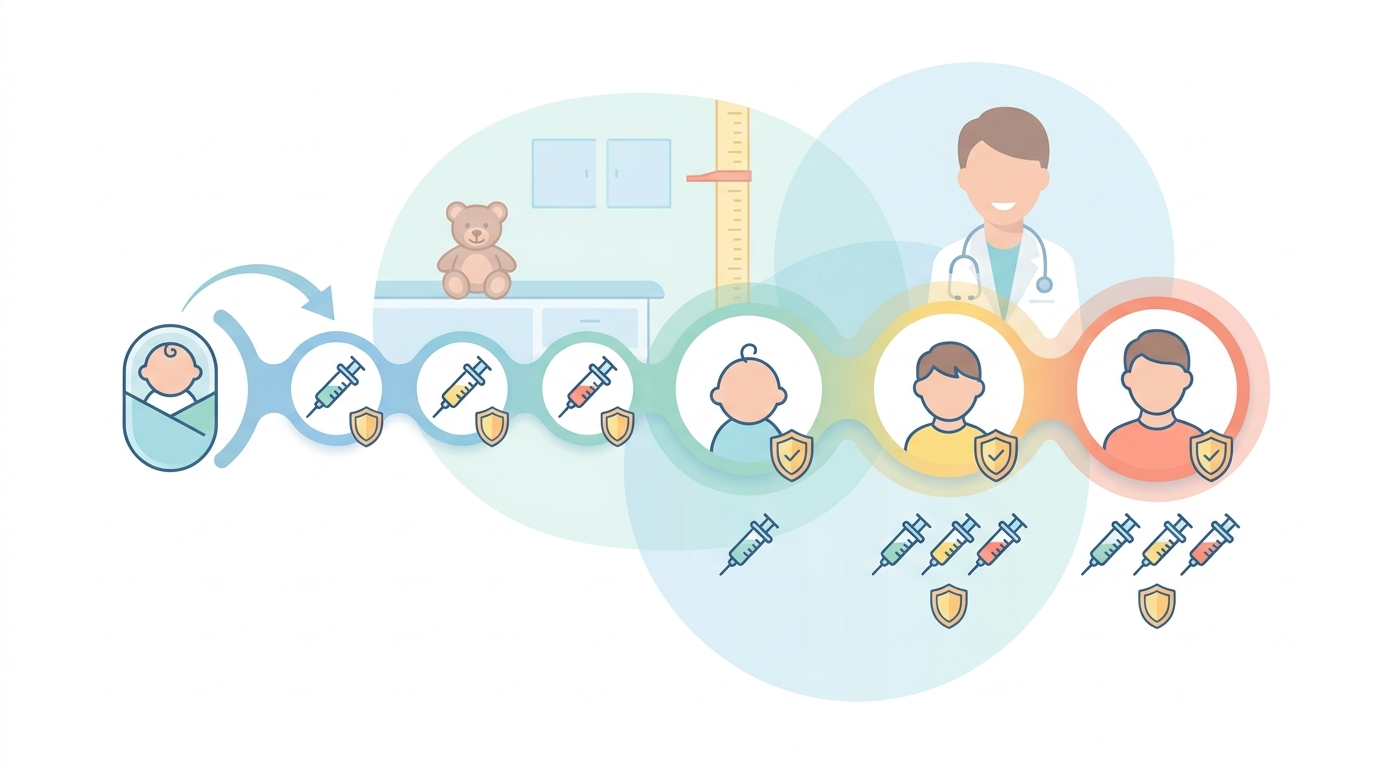
Every parent wonders why vaccines must be given at exact ages. Medical experts and extensive scientific research design this immunization schedule carefully. Two main factors determine the timing of every shot:
- Immune system response: Vaccines are given when your child's immune system responds best. This timing ensures the body builds strong antibodies to fight specific infections effectively.
- Age of highest risk: Certain dangerous diseases threaten children most during specific age windows. Giving vaccines before these vulnerable periods protects your child when they need it most.
Doctors give these essential vaccines during your regular well-child visits. Keeping up with these appointments ensures your child receives every dose on time. Let us explore each age group and the specific vaccines your little one needs.
Key Takeaways.
- The childhood immunization schedule protects your baby from severe and potentially fatal infections.
- Vaccines are timed to match your child's developing immune system and peak age risks.
- Most primary vaccines are completed during your baby's first two years of life.
- Combination vaccines reduce the number of needle picks while offering complete protection.
- Always consult your pediatrician right away if you miss a scheduled vaccine dose.
Know your body mass index (BMI) and weight classification
Why Timely Vaccination Matters.
Timing matters greatly in pediatric medicine. Giving vaccines at recommended intervals primes your child's immune system correctly. Delaying doses leaves your child vulnerable to preventable infections during their most sensitive months.
Ages and Stages: When Do Children Receive Vaccines?
Most childhood vaccines occur before your child turns two years old. Infants have developing immune systems that make them highly vulnerable to infections. Without timely vaccines, common illnesses can cause severe complications or even death. Therefore, completing the infant vaccine schedule is extremely important.
While most vaccines finish during early childhood, flu shots and COVID-19 vaccines require ongoing doses. Children receive yearly influenza vaccines and updated COVID-19 doses starting at six months of age.
Your pediatrician will recommend the right vaccination schedule based on your child's unique health needs, age, and current medical guidelines.
Newborn Vaccines in the First 24 Hours.
Your baby's first vital vaccine occurs within the first twenty-four hours after birth:
- Hepatitis B (HepB) First Dose: This initial dose protects your newborn's liver from a serious viral infection. It is the first step in a three-dose series.
Babies born during the RSV season may also receive preventive care within their first week of life:
- RSV (Respiratory Syncytial Virus) Protection: Infants receive this if maternal RSV vaccination during pregnancy was missed. RSV causes severe lung infections in young babies. This treatment provides direct antibodies rather than teaching the immune system to make them.
Vaccines at Two Months of Age.
When your baby reaches two months old, their clinic visit includes several important injections and oral drops:
- Hepatitis B (HepB) Second Dose: Continues liver protection.
- Rotavirus (RV) First Dose: An oral liquid that prevents severe diarrhea and dehydration caused by rotavirus.
- DTaP First Dose: Protects against diphtheria, tetanus, and pertussis (whooping cough).
- Hib First Dose: Protects against Haemophilus influenzae type b, which can cause severe meningitis.
- PCV First Dose: Pneumococcal conjugate vaccine protects against pneumonia and severe blood infections.
- IPV First Dose: Inactivated poliovirus vaccine protects against paralyzing polio.
Vaccines at Four Months of Age.
At four months old, your baby receives the second round of primary immunizations:
- Rotavirus (RV) Second Dose: Strengthens gut protection.
- DTaP Second Dose: Reinforces defense against whooping cough and tetanus.
- Hib Second Dose: Maintains bacterial meningitis protection.
- PCV Second Dose: Strengthens defense against pneumococcal bacteria.
- IPV Second Dose: Reinforces polio protection.
Vaccines at Six Months of Age.
By six months of age, your baby receives these scheduled doses:
- Hepatitis B (HepB) Third Dose: Completes the primary hepatitis series.
- Rotavirus (RV) Third Dose: Given only if using a three-dose vaccine brand.
- DTaP Third Dose: Continues protection against bacterial toxins.
- Hib Third Dose: given depending on the specific vaccine series.
- PCV Third Dose: Maintains strong pneumococcal defense.
- IPV Third Dose: Strengthens polio immunity.
- Influenza (Flu) Vaccine: Given annually starting at six months.
- COVID-19 Vaccine: Recommended based on current pediatric guidelines.
Vaccines at 12 Months of Age.
When your toddler reaches their first birthday, they receive key milestone vaccines:
- MMR First Dose: Protects against measles, mumps, and rubella.
- Hepatitis A (HepA) First Dose: Protects liver health against viral transmission.
- PCV Fourth Dose: Completes the primary pneumococcal series.
Vaccines at 15 Months of Age.
At 15 months, your toddler receives additional booster doses:
- Varicella (VAR) First Dose: Protects against chickenpox.
- DTaP Fourth Dose: Strengthens pertussis immunity.
- Hib Final Dose: Completes the Haemophilus immunization series.
Vaccines at 18 Months of Age.
- Hepatitis A (HepA) Second Dose: Completes the hepatitis A protection series.
Vaccines at Four Years of Age.
Children receive preschool booster doses between ages four and six:
- DTaP Fifth Dose: Prepares children for school entry.
- IPV Fourth Dose: Booster dose for polio.
- MMR Second Dose: Ensures robust measles, mumps, and rubella immunity.
- Varicella Second Dose: Booster dose for chickenpox protection.
Vaccines for Preadolescents Ages 11 to 12.
As children grow into preadolescents, booster shots maintain strong immunity:
- Tdap Booster: An adolescent formulation protecting against tetanus, diphtheria, and pertussis.
- HPV Vaccine: Given as a two-dose series to protect against human papillomavirus and associated cancers.
- Meningococcal (MenACWY) First Dose: Protects against severe meningococcal bacterial infections.
Vaccines at 16 Years of Age.
- Meningococcal (MenACWY) Second Dose: A vital booster dose given during late adolescence for enhanced protection.
How Many Vaccines Do Children Receive?
The complete childhood immunization schedule includes around fifteen vaccine types, with some requiring multiple doses. While this list may sound long, these vaccines protect your child when they are most vulnerable to infections.
Modern combination vaccines allow doctors to give protection against multiple diseases in a single injection, reducing the number of needle picks for your child.
What If a Vaccine Dose Is Delayed?
Life can be unpredictable, and appointments sometimes get missed. If your child falls behind on their schedule, do not panic. Contact your pediatrician right away to create a safe catch-up schedule.
When to Seek Emergency Medical Attention.
Call 911 (US/Canada), 999 (UK), or go to the nearest Emergency Department right away if your child experiences severe allergic reactions after a vaccine, such as breathing difficulty, facial swelling, hives, high persistent fever, or unusual lethargy.
Comparison of Vaccine Schedule Milestones.
| Age Group. | Key Vaccines given. / Primary Health Purpose. |
|---|---|
| Newborn (Birth). | Key Vaccines given.: Hepatitis B (1st dose). Primary Health Purpose.: Early liver infection defense. |
| 2 to 6 Months. | Key Vaccines given.: DTaP, IPV, HepB, Hib, PCV, Rotavirus. Primary Health Purpose.: Core infant immunity development. |
| 12 to 18 Months. | Key Vaccines given.: MMR, Hepatitis A, Varicella, Boosters. Primary Health Purpose.: Toddler protection and viral defense. |
| 4 to 6 Years. | Key Vaccines given.: DTaP, IPV, MMR, Varicella boosters. Primary Health Purpose.: School-age immunity reinforcement. |
| 11 to 16 Years. | Key Vaccines given.: Tdap, HPV, Meningococcal vaccines. Primary Health Purpose.: Adolescent and long-term protection. |





No comments yet. Be the first to share your question or experience below.