

You have probably heard people talk about cholesterol many times before. Maybe a friend or family member told you that their doctor said their cholesterol was a bit high. It is a very common topic in modern healthcare conversations.
You might wonder what cholesterol actually is and why doctors care about it so much. Understanding your levels helps you take charge of your personal health and protect your long-term heart wellness.
Let us break down everything you need to know in plain and simple English. We will look at what the numbers mean, why they matter, and what you can do to manage them.
Key Takeaways About Cholesterol.
- Cholesterol is a waxy fat found naturally in your body that helps build cells and make hormones.
- High levels of bad cholesterol can build up inside your blood vessels and block normal blood flow.
- High cholesterol usually has no early signs, which makes regular blood tests extremely important.
- A standard lipid panel checks your total cholesterol, LDL, HDL, and triglyceride levels.
- You can improve your numbers through healthy food choices, regular exercise, and medical guidance.
Check the risk of developing a heart disease within the next 10 years with the Framingham Score
Why Is Cholesterol So Important to Us?
Simply put, cholesterol is a type of fat, or lipid, found inside your body. Your body needs cholesterol to build healthy cells and produce important hormones. However, just like many things in life, having too much of it can cause serious problems.
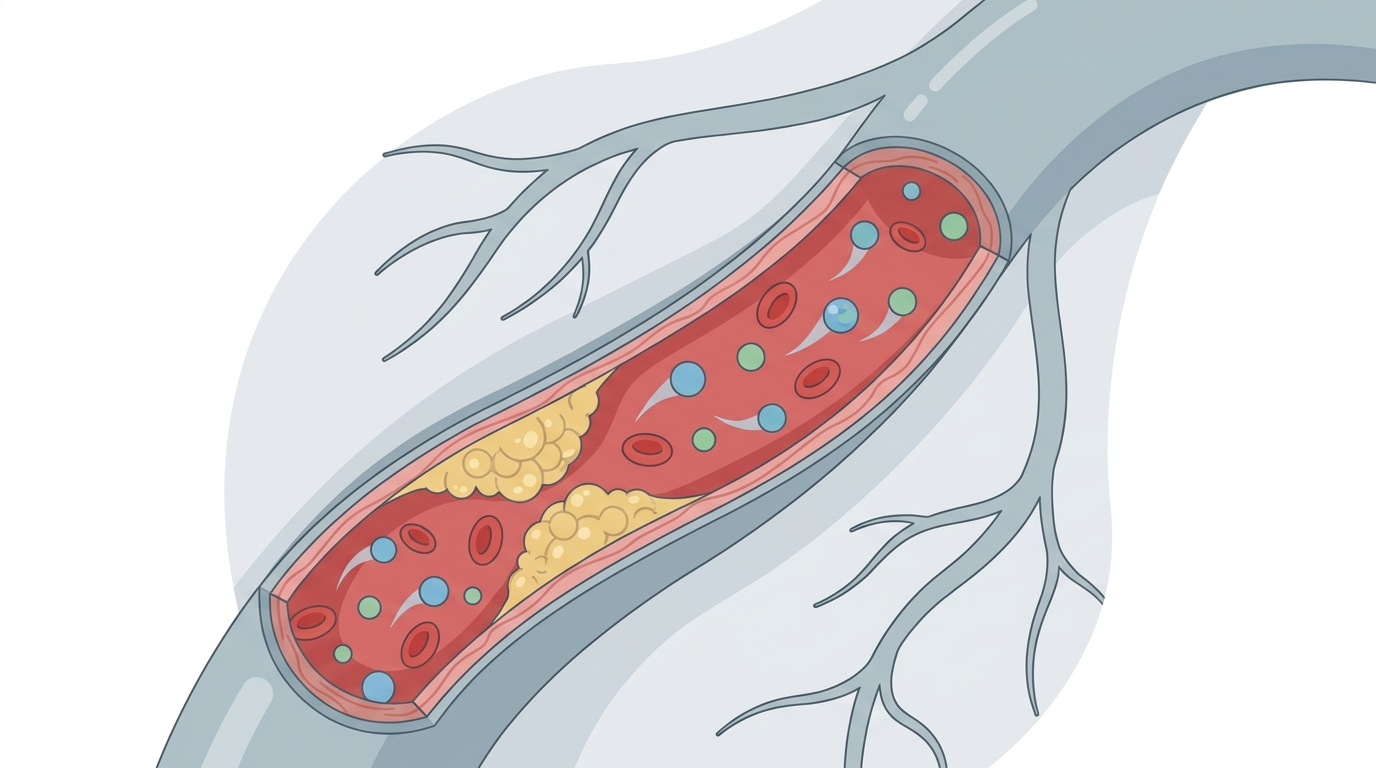
Imagine your blood vessels are like clean water pipes in your home. When your cholesterol gets too high, the extra cholesterol slips into the walls of your blood vessels. Over time, it builds up and hardens into a plaque, which doctors call an atherosclerotic plaque.
This buildup narrows the pathway where your blood flows freely. It is very similar to how sludge or mineral buildup clogs a household water pipe. When this happens, it can lead to dangerous medical conditions throughout your body.
Here are three major health problems caused by narrowed blood vessels:
- Coronary artery disease: This happens when the blood vessels supplying your heart muscle become narrow or blocked. Your heart struggles to receive the oxygen and nutrients it needs to pump properly.
- Peripheral artery disease: This condition occurs when fatty deposits reduce blood flow to your legs and arms. You might feel pain, cramping, or fatigue in your limbs during physical activity.
- Carotid artery disease: This happens when the main blood vessels leading to your brain become narrowed. Reduced blood flow here can greatly increase your risk of a stroke.
Cholesterol Works Like a Silent Thief.
The most dangerous thing about high cholesterol is that it sneaks up on you quietly. Even if your cholesterol is high and plaque is forming inside your vessels, you will usually feel no symptoms at all.
It is like someone walking softly across a carpet without making a sound. In the beginning, there are no warning signs, no pain, and no outward clues that anything is wrong.
However, as years pass, these hidden deposits grow larger and severely restrict blood flow. Suddenly, without any prior warning, a major health crisis can strike with great force.
You might experience a sudden heart attack or a stroke before you ever realized your cholesterol was high. This sudden onset is why high cholesterol is often called a silent condition.
Your cholesterol levels could remain elevated for many years without you feeling sick or uncomfortable. This is why regular cholesterol screenings are so vital for your long-term health and safety.
Discovering that you have high cholesterol, medically known as hyperlipidemia, gives you and your doctor a crucial early warning. It allows you to take action before permanent damage occurs to your cardiovascular system.
Millions of people live with high cholesterol, and it remains a leading risk factor for heart disease. The wonderful news is that your cholesterol numbers are not set in stone forever.
You have the power to change them with the right lifestyle adjustments. Catching high levels early gives you a fantastic opportunity to bring your numbers back into a healthy range.
Types of Cholesterol Tested in a Lipid Panel.
When you visit your doctor for a routine checkup, they may order a blood test called a lipid panel or lipid profile. For this test, a clinician takes a small sample of blood from a vein in your arm.
Your doctor will likely ask you to fast for about 12 hours before the test, meaning you should only drink water. It is very important to follow these specific preparation instructions closely for accurate results.
A standard lipid panel measures four main components:
- Total cholesterol: This measurement shows the combined amount of all cholesterol found inside your blood sample.
- LDL cholesterol: Low-density lipoprotein is widely known as bad cholesterol. It sticks to vessel walls, forming plaque that leads to heart attacks and strokes.
- HDL cholesterol: High-density lipoprotein is known as good cholesterol. It helps clear excess cholesterol away from your arteries and carries it back to your liver.
- Triglycerides: These are another common type of fat found circulating in your bloodstream. High triglyceride levels also raise your risk of heart problems.
Once your lab results arrive, your doctor will review the numbers with you during an appointment. Many modern clinics also allow you to view your results securely through online patient portals.
Doctors measure cholesterol levels using milligrams per deciliter, abbreviated as mg/dL. Triglycerides are measured using this exact same unit of measurement.
What Are Healthy Cholesterol Levels?
Healthy cholesterol targets can vary slightly from person to person based on person factors. Your age, biological sex, family history, and overall health all influence your ideal targets.
For most healthy adults, standard target ranges fall within these general limits:
- Total cholesterol: An overall reading below 200 mg/dL is considered desirable.
- LDL cholesterol: Keeping your bad cholesterol below 100 mg/dL is ideal. If you already have heart disease or major risk factors like diabetes or smoking, your doctor may suggest an even lower target under 70 mg/dL.
- HDL cholesterol: Higher numbers are much better for your heart. An HDL level of 60 mg/dL or higher offers strong protection against heart disease.
- Triglycerides: Your goal should be to keep your triglyceride level below 150 mg/dL.
The golden rule of cholesterol is simple: you want your LDL bad cholesterol to be low, and your HDL good cholesterol to be high.
There are also slight differences in target levels based on biological sex, specifically regarding HDL. Adult women should aim for an HDL level of at least 50 mg/dL. This adult men should aim for at least 40 mg/dL.
Compare your personal lab report against these general guidelines to see where you stand. However, never make medical decisions on your own without professional guidance.
Always talk over your lab results with your doctor so you can understand what your specific numbers mean for your body.
When Is Cholesterol Considered "High"?
Doctors generally consider a total cholesterol reading of 200 mg/dL or higher to be high. However, medical professionals break this category down further to help guide treatment decisions.
For instance, a total cholesterol level between 200 and 239 mg/dL is often labeled as borderline high. This gives you and your doctor a chance to try lifestyle changes before considering medicine.
When looking specifically at your LDL bad cholesterol levels, the standard categories include:
- 130 to 159 mg/dL: Borderline high.
- 160 to 189 mg/dL: High.
- 190 mg/dL and above: Very high.
If your lab report shows numbers falling into these elevated ranges, schedule a follow-up discussion with your doctor right away. They will help you create a personalized plan to protect your cardiovascular health.
Can Cholesterol Levels Be Too Low or Too High?
Many patients wonder if certain types of cholesterol can ever drop too low. It is a very reasonable question to ask about your health.
When looking at your total cholesterol and LDL bad cholesterol, lower is generally better for your health. Medical researchers have not found a lower limit where LDL becomes harmful, meaning the lower your bad cholesterol goes, the better protected your arteries remain.
On the other hand, your HDL good cholesterol follows the opposite rule. Higher levels provide better protection, and there is no known upper limit where good cholesterol becomes dangerous.
To summarize, you never need to worry about your LDL dropping too low or your HDL climbing too high. Both outcomes represent excellent news for your long-term wellness.
How Often Should You Check Your Cholesterol?
The right testing schedule depends heavily on your personal health profile and medical history. Your doctor will advise you on how often you need routine blood screenings.
Several key factors influence your recommended testing frequency:
- Age: As you grow older, your doctor will usually recommend more frequent checkups.
- Family history: If your parents or siblings experienced heart disease or high cholesterol early in life, your personal risk increases, requiring earlier and more frequent screening.
- Risk factors: Pre-existing heart conditions, diabetes, high blood pressure, and smoking all necessitate regular and careful monitoring.
- Biological sex: Men are often advised to begin regular cardiovascular screening at an earlier age than pre-menopausal women.
For children and teenagers, doctors usually recommend a first cholesterol screening between the ages of 9 and 11. Subsequent tests typically happen every five years.
However, if a child has a strong family history of early heart disease, screening may begin at a much younger age. Adult screening guidelines follow a similar tailored approach.
For healthy adults between 20 and 39 years old, getting checked every four to six years is usually enough. Once you pass age 40 or 45, more frequent annual or biennial screenings are recommended, especially if you have other risk factors.
Women should pay close attention to their lipid levels after going through menopause, as hormonal shifts can negatively impact cholesterol balance.
The best approach is always to consult your doctor to determine a personalized testing schedule that fits your unique health needs.
💡 Take-Home Message.
Knowing your cholesterol numbers is a powerful step toward understanding your personal heart disease risk. Keep in mind that your cholesterol report tells only part of the story.
Your doctor will review your cholesterol numbers alongside other vital health markers like your blood pressure, blood sugar, body weight, and daily habits to assess your overall wellness.
If your lab report shows numbers outside the normal range, try not to panic. Elevated readings give you actionable information to improve your future health.
Schedule a discussion with your doctor to review your lab results in the context of your overall health. With healthy dietary changes, regular physical activity, and medical guidance when needed, you can successfully bring your cholesterol into a safe range.
When to Seek Emergency Medical Attention.
High cholesterol can eventually lead to severe cardiovascular events. Call emergency services right away (911 in the US/Canada, 999 in the UK) or go to the nearest emergency department if you experience any of the following warning signs:
- Sudden crushing chest pain, pressure, or tightness in your chest.
- Pain that spreads to your jaw, neck, back, or one or both arms.
- Sudden shortness of breath or difficulty catching your breath.
- Sudden dizziness, lightheadedness, or fainting spells.
- Sudden weakness or numbness in your face, arm, or leg, especially on one side of the body.
- Sudden confusion or trouble speaking and understanding speech.
Cholesterol Levels Comparison Guide.
| Test Type. | Desirable / Optimal. / Borderline High. / High Risk. |
|---|---|
| Total Cholesterol. | Desirable / Optimal.: Less than 200 mg/dL. Borderline High.: 200 - 239 mg/dL. High Risk.: 240 mg/dL and above. |
| LDL (Bad Cholesterol). | Desirable / Optimal.: Less than 100 mg/dL. Borderline High.: 130 - 159 mg/dL. High Risk.: 160 mg/dL and above. |
| HDL (Good Cholesterol). | Desirable / Optimal.: 60 mg/dL or higher. Borderline High.: 40 - 59 mg/dL (Men) 50 - 59 mg/dL (Women). High Risk.: Less than 40 mg/dL (Men) Less than 50 mg/dL (Women). |
| Triglycerides. | Desirable / Optimal.: Less than 150 mg/dL. Borderline High.: 150 - 199 mg/dL. High Risk.: 200 mg/dL and above. |






No comments yet. Be the first to share your question or experience below.