
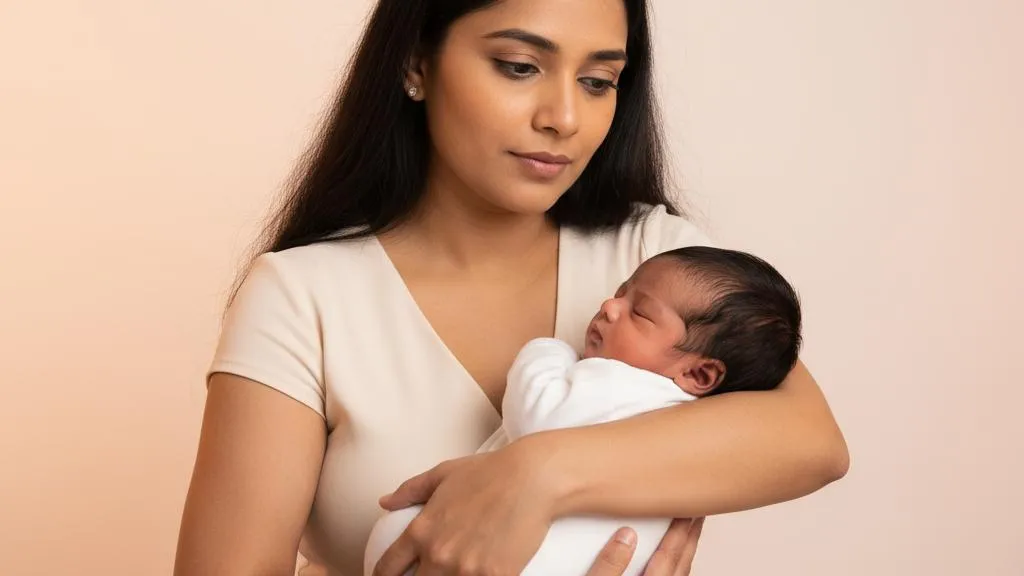
Few moments in life bring up more emotion—or more complicated questions—than welcoming a new addition to the family when there is uncertainty about biological parentage. Asking, "Who is the real biological father of this baby?" is far more common than most people realize, whether it comes up for deeply personal peace of mind, medical history, or legal clarity.
When you are carrying that kind of weight, guessing only adds stress. Thankfully, modern medical genetics gives us a clear, reliable way to find out for sure. A DNA paternity test is the most accurate scientific method available today to confirm or rule out biological fatherhood, and we doctors are here to walk you through every step in plain, everyday language.
📌 Key Takeaways at a Glance
- Over 99.9% Accuracy: A DNA paternity test compares a child's genetic markers with the mother's and alleged father's DNA to confirm paternity with greater than 99.9% certainty or rule it out completely at 0%.
- Safe Options Before and After Birth: Testing can be done safely during pregnancy using a simple maternal blood draw called a Non-Invasive Prenatal Paternity (NIPP) test, or painlessly after birth with a cheek swab.
- Home Kits vs. Legal Tests: Private at-home kits give personal answers, but courts and government agencies require a witnessed, chain-of-custody legal DNA test from an accredited lab.
- Simple Prep Matters: Avoiding brushing your teeth, using mouthwash, eating, drinking, or smoking for one hour before a cheek swab prevents sample contamination.
- Alternatives When Dad Is Unavailable: If the alleged father cannot be tested, labs can analyze DNA from his biological parents, siblings, or other close relatives.
What Is a DNA Paternity Test in Simple Terms?
A DNA paternity test is a scientific genetic test that compares a child’s DNA profile with the biological mother’s and alleged father’s DNA to confirm biological fatherhood with greater than 99.9% accuracy. Because every child inherits exactly half of their genetic blueprint from each biological parent, unmatched markers conclusively rule out paternity.
To picture how this works, think about what DNA actually is. Short for deoxyribonucleic acid, DNA is the microscopic instruction manual tucked inside nearly every cell of your body. It shapes everything from your eye color and height to your blood type. Have you ever wondered how a tiny cotton swab can answer one of life's biggest questions? Look at what happens behind the scenes in the lab.
When a baby is conceived, 23 chromosomes come from the mother's egg and 23 come from the father's sperm. Lab geneticists examine specific regions along those chromosomes called short tandem repeats (STRs). First, they identify which genetic markers the child shares with the mother. Every remaining marker must come from the biological father. If the tested man's DNA matches those remaining paternal markers across every tested location, he is confirmed as the biological father. Pretty reassuring, right?
Why Might You Need a Parental DNA Test?
People come to their Primary Care Physician (PCP) or family GP clinic asking about parental DNA testing for many different reasons, and every single one is valid. Broadly, those reasons fall into three practical areas:
- Legal and Financial Protection: Verified biological parentage is often required before adding a father's name to a birth certificate, establishing child support, arranging shared custody, claiming inheritance rights, or accessing health insurance, veteran, or social security survivor benefits.
- Medical and Family Health History: Knowing both biological parents gives your child's doctors an accurate family health map. Certain inherited genetic conditions—such as cystic fibrosis, sickle cell trait, or hereditary heart conditions—are passed down silently from healthy carriers. While chromosomal variations like Down syndrome typically happen spontaneously at conception rather than being inherited, knowing both parents' genetic backgrounds helps doctors guide appropriate health screenings.
- Emotional Identity and Peace of Mind: Uncertainty can quietly strain relationships between partners and extended family. Getting a clear, objective answer allows everyone to move forward honestly, and later helps the child understand their roots and personal identity.
We don't usually stop to think about how closely medical care and family history connect until a doctor asks about hereditary conditions at a checkup, do we?
What Types of Paternity DNA Tests Are Available?
One of the biggest reliefs for expectant parents is learning you do not necessarily have to wait until after delivery to get answers. Depending on your timing and medical needs, we doctors categorize DNA paternity tests into prenatal (before birth) and postnatal (after birth) options:
- Postnatal Cheek Swab or Blood Test: Once the baby is born, a painless buccal (cheek) swab rubbed gently inside the mouth collects cheek cells in seconds—even on a newborn. A standard venous blood draw works equally well, though swabs are far gentler for babies.
- Non-Invasive Prenatal Paternity (NIPP) Test: Starting around 7 to 8 weeks into pregnancy, tiny fragments of the baby's DNA (called cell-free fetal DNA) circulate naturally in the mother's bloodstream. A routine blood draw from the mother's arm combined with a cheek swab from the alleged father allows labs to test paternity safely with zero risk to the pregnancy.
- Chorionic Villus Sampling (CVS) and Amniocentesis: Performed between 10 and 13 weeks (CVS) or 15 and 20 weeks (amniocentesis), these diagnostic procedures collect placental tissue or amniotic fluid using a fine needle guided by ultrasound. Because both carry a small risk of miscarriage (roughly 1 in 200 to 1 in 500), specialists only perform them when medically necessary to check for serious fetal genetic disorders—never solely for paternity.
How Do Different Paternity DNA Tests Compare?
Choosing the right test comes down to timing, safety, and whether you need court-admissible paperwork. Think about it for a second—comparing your options side by side makes the decision much clearer:
| Test Type & Timing | How It Works & What You Should Do |
|---|---|
| Postnatal Buccal (Cheek) Swab Any time after birth | A soft swab collects epithelial cells from the inside cheek of the baby, alleged father, and ideally the mother. It is completely painless and achieves over 99.9% accuracy. What you should do: Choose an accredited lab and book a witnessed collection appointment if you need results for legal or birth certificate purposes. |
| Non-Invasive Prenatal Paternity (NIPP) From 7–8 weeks of pregnancy onward | Analyzes cell-free fetal DNA from a standard blood draw from the pregnant mother alongside a cheek swab from the alleged father, posing no physical risk to the fetus. What you should do: Confirm your gestational age via ultrasound with your doctor or midwife before scheduling so enough fetal DNA is present in your blood. |
| Chorionic Villus Sampling (CVS) 10–13 weeks of pregnancy | A maternal-fetal medicine specialist collects a tiny sample of placental tissue under ultrasound guidance, primarily to diagnose chromosomal or inherited disorders. What you should do: Only consider CVS if your obstetrician recommends it for medical genetic testing, and ask the genetics lab if paternity markers can be analyzed simultaneously. |
| Amniocentesis 15–20 weeks of pregnancy | A specialist uses a thin needle to withdraw a small amount of amniotic fluid surrounding the baby to evaluate fetal chromosomes or neural tube conditions. What you should do: Discuss the small procedural risks carefully with your obstetric team, and never request an amniocentesis strictly for paternity alone. |
How Should You Prepare Before a DNA Paternity Test?
Good preparation takes almost no effort, yet it makes a huge difference in preventing inconclusive or delayed results. What do you think happens if you brush your teeth or drink coffee right before a cheek swab? Trace chemicals, food particles, and bacteria can interfere with DNA extraction in the lab.
If you or your child are having a cheek swab taken, follow these simple steps for at least 60 minutes beforehand:
- Do not brush your teeth, floss, or use antiseptic mouthwash.
- Avoid smoking, vaping, or chewing tobacco.
- Skip eating, chewing gum, or drinking anything other than plain water (for babies, schedule the swab at least 30 to 60 minutes after a milk or formula feed).
- Remove dentures or retainers briefly before swabbing, and rinse your mouth with plain water 10 minutes prior.
If you are having a blood draw for a prenatal NIPP test, you do not need to fast. Drink plenty of water beforehand so your veins stay well hydrated, and eat a light, familiar breakfast—like whole-grain toast or oatmeal—to keep from feeling lightheaded.
What Is the Truth About Private At-Home DNA Paternity Tests?
You have probably seen private at-home DNA test kits sold online or at local pharmacies. They are affordable, discreet, and easy to mail in from your own kitchen. Remember how we talked earlier about the difference between personal peace of mind and legal proof? This is where that distinction becomes critical.
The truth about at-home kits comes down to two facts: scientific accuracy versus legal admissibility. If you purchase a kit from a laboratory accredited by recognized standards—such as the Association for the Advancement of Blood & Biotherapies (AABB) in North America or ISO/IEC 17025 accreditation in the UK and Australia—and collect the swabs carefully without mixing them up, the scientific result is just as accurate as a clinic test.
However, no family court, passport office, or child support agency will accept an at-home test. Why? Because the court has no proof that the swabs actually came from the people listed on the envelope. For any legal matter, you must complete a Legal DNA Paternity Test under strict chain of custody rules—meaning an approved neutral collector checks government photo IDs, photographs the participants, witnesses the swabbing, and seals the tamper-evident package directly to the lab. Makes sense, right?
How Do You Read and Understand DNA Paternity Test Results?
Opening a lab report full of genetic numbers can feel intimidating at first glance, so let's break down what really matters. Standard results arrive within 2 to 5 business days up to 2 weeks for cheek swabs and prenatal NIPP tests, while CVS or amniocentesis results may take 2 to 4 weeks.
Look straight at the line labeled Probability of Paternity:
- 0% Probability of Paternity (Exclusion): The alleged father does not share the required paternal genetic markers with the child. Scientifically, he is 100% excluded as the biological father.
- 99.9% or Higher Probability of Paternity (Inclusion): The alleged father matches every obligate paternal DNA marker tested. Labs report 99.9% to 99.9999% rather than an absolute 100% simply because testing every human being on Earth is impossible, though clinically this confirms biological fatherhood beyond reasonable doubt.
See? That's why we doctors always remind patients to check both the accreditation of the testing laboratory and whether the mother's sample was included, as testing the mother alongside the child and alleged father boosts statistical certainty even higher.
Can You Do a Paternity Test Without the Alleged Father?
Testing the alleged father directly is always the gold standard. Still, life is not always straightforward—sometimes the alleged father has passed away, lives abroad, or refuses to participate. Just like we mentioned a moment ago, DNA is shared across biological family trees, which means accredited labs can often reconstruct his genetic profile indirectly.
Common alternative relationship tests include:
- Grandparentage DNA Testing: Comparing the child's DNA with the alleged father's biological parents (the child's paternal grandparents) can reliably confirm or rule out a biological link.
- Avuncular (Aunt or Uncle) Testing: Testing a full biological brother or sister of the alleged father evaluates shared inherited markers, especially helpful when paired with the mother's sample.
- Sibling DNA Testing: Comparing two children determines whether they share one biological parent (half-siblings) or both parents (full siblings).
- Y-Chromosome (Y-STR) Testing: If the child is a boy, his Y chromosome passes virtually unchanged from father to son, allowing labs to compare him directly with any male relative on the father's paternal line.
✔️ What You Should Do & ❌ What to Avoid
- ✔️ Verify Lab Accreditation First: Choose a facility accredited by AABB, UKAS/Ministry of Justice, or NATA/ISO 17025 so your results are reliable and scientifically valid.
- ✔️ Include the Mother's Sample Whenever Possible: Adding a cheek swab from the biological mother makes separating maternal and paternal markers faster and even more precise.
- ✔️ Follow the 1-Hour Clean-Mouth Rule: Rinse with plain water and avoid food, drinks, toothpaste, or tobacco for 60 minutes before swabbing.
- ❌ Do Not Rely on Home Kits for Legal Disputes: Avoid using mail-in kits if there is any chance you will need the report for custody, child support, or birth registration.
- ❌ Never Seek Invasive Prenatal Tests Just for Paternity: Avoid CVS or amniocentesis unless your obstetrician advises them for medical diagnosis; choose a safe NIPP blood test instead.
🚨 When to Seek Immediate Emergency Care (Red-Flag Symptoms)
If you or someone near you develops any of these red-flag symptoms, do not wait — call 911 (or 999 in the UK / 000 in Australia) immediately or go straight to the nearest hospital Emergency Room (ER / A&E):
- Heavy Vaginal Bleeding or Clots After Prenatal Testing: Soaking through a pad or experiencing bright red bleeding following an amniocentesis or CVS procedure requires urgent obstetric evaluation.
- Gushing or Steady Leaking of Clear Fluid: Fluid leaking from the vagina after a prenatal needle procedure can signal ruptured membranes.
- Severe Abdominal Cramping, Fever, or Chills: Strong uterine contractions, a temperature of 100.4°F (38°C) or higher, or shaking chills after CVS or amniocentesis may indicate an intrauterine infection.
- Overwhelming Emotional Crisis or Thoughts of Self-Harm: Difficult relationship or paternity news can trigger acute distress; reach out immediately for emergency support (988 in the US and Canada, 999 or 111 in the UK, or 000 / Lifeline 13 11 14 in Australia).
💡 Key Take-Home Message
- A DNA paternity test confirms biological fatherhood with greater than 99.9% accuracy or rules it out completely at 0%.
- During pregnancy, a Non-Invasive Prenatal Paternity (NIPP) blood test provides safe answers without risking the baby.
- For legal matters like birth certificates, child support, or custody, always arrange a witnessed, chain-of-custody legal test rather than an at-home kit.
- Your Primary Care Physician (PCP) or family GP clinic can help guide you to an accredited testing center and support your family's physical and emotional wellbeing.






No comments yet. Be the first to share your question or experience below.