

It's important for all of us to be aware of our bodies. Especially as a woman, your reproductive system is a truly amazing and complex creation. But many people have very little knowledge about it, and sometimes misinformation. So today, like your friend, we're going to talk about it very simply, without hiding anything, and openly.
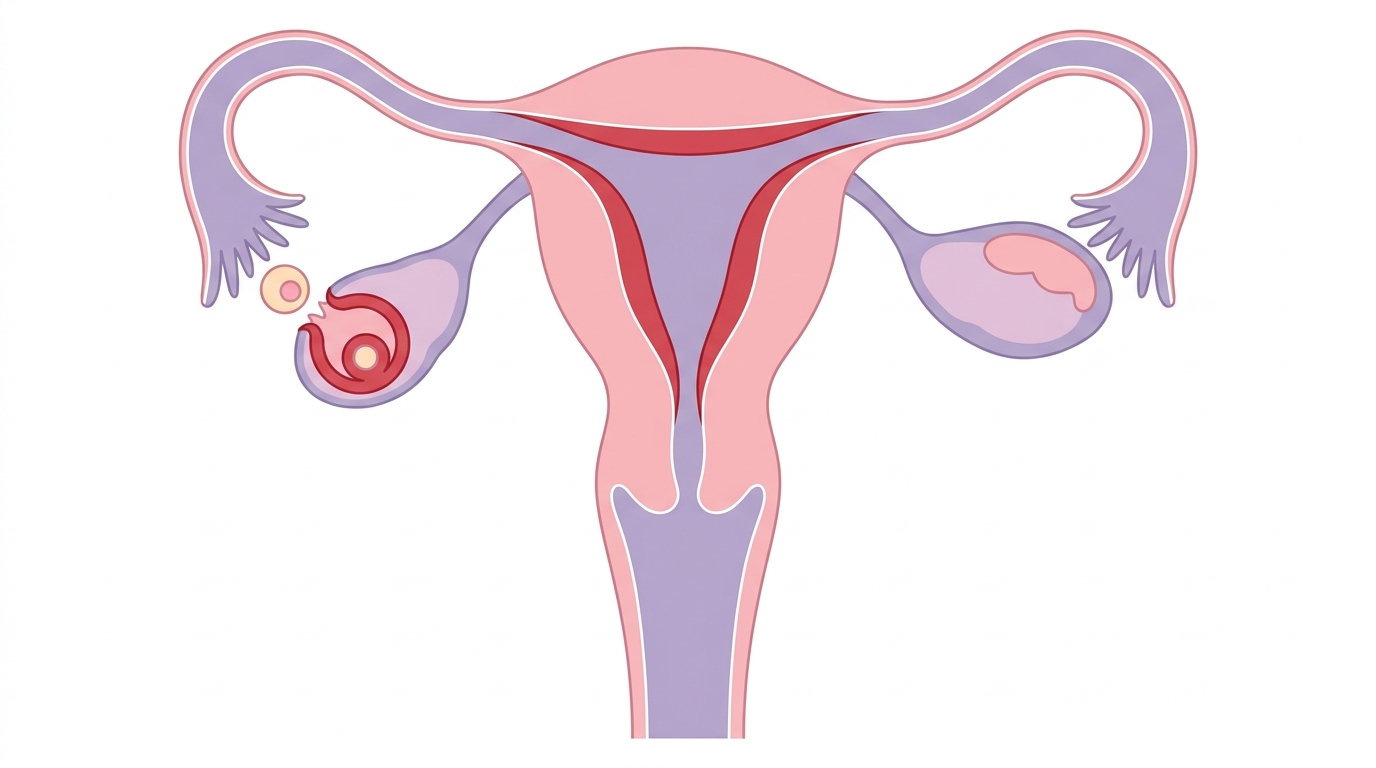
Simply put, what is the female reproductive system?
This is the organ system in your body that identifies you as a woman. It has three main functions.
1. Aiding in sexual intercourse: This system is essential for a healthy sex life.
2. Reproduction (giving birth to children): The most amazing ability of this is to bring a new creature into the world, that is, to help create a child.
3. Menstruation: This same system controls the menstrual cycle that occurs every month.
What are the parts of this system?
The parts of the female reproductive system can be divided into two main parts. Those are the parts that are visible from the outside and the parts that are inside the body . Although many people call all of these parts the "vagina", it is actually just one part that is inside. All of the parts that are visible from the outside are commonly called the "Vulva" . Let's now look at each of these parts separately.
External Genitals
The main function of these parts is to protect the sensitive internal organs from infection and to allow sperm to enter during sexual intercourse.
- Labia Majora: Simply called the "big lips." These are the two outer folds of skin that surround and protect the rest of your body. As you reach puberty, hair grows in this area. They also contain glands that produce sweat and oil.
- Labia Minora: Also known as the "small lips." These are located inside the labia minora. They can vary greatly in size and shape, which is completely normal . They surround the opening of the vagina and the opening through which urine comes out. This skin is very delicate and can be easily injured and swollen.
- Clitoris: This is a small, very sensitive part located at the junction of the labia minora and the labia minora. It can be compared to the male penis in some ways. This part is very important during sexual arousal.
- Vaginal Opening: This is where menstrual blood and childbirth come out. It is also where objects such as a penis, fingers, or a tampon are inserted during sexual intercourse.
- Hymen: This is a thin tissue that partially covers the vaginal opening. It is present at birth. Its nature and presence can vary from person to person.
- Opening to the Urethra: This is the hole through which you urinate. It is located slightly above the vaginal opening.
Internal Organs
These parts play the biggest role in the reproductive process. Let's look at the table below to understand them clearly.
| Internal organ | A simple explanation |
|---|---|
| Vagina | This is a tube made of muscle. It connects the cervix to the outside of the body. It can expand dramatically during childbirth and then contract again to hold something small, like a tampon. It is lined with mucous membranes that help keep it moist. |
| Cervix | This is the lowest, narrowest part of the uterus. It's like a gate. The small hole in the middle allows sperm to enter and menstrual blood to leave. During childbirth, this cervix opens (dilates) to allow the baby to come out. It's also the cervix that keeps things like a tampon you use from getting lost inside your body. |
| Uterus | This is a hollow, pear-shaped organ. During pregnancy, the baby (fetus) grows inside it. The uterus is divided into two parts: the cervix and the main part of the uterus (corpus). This part, called the ``corpus``, expands as the baby grows. |
| Ovaries | These are two small, pear-shaped glands located on either side of the uterus. These ovaries produce eggs and female hormones (estrogen, progesterone). |
| Fallopian Tubes | These are two narrow tubes that are connected to the upper part of the uterus. The egg, which is released from the ovaries, travels along these tubes to the uterus. Normally, a sperm and an egg meet and fertilization occurs inside these fallopian tubes. Then, the fertilized egg travels to the uterus and implants itself in the uterine wall. |
What is the Menstrual Cycle?
This is the most amazing process in the female reproductive system. It is a cycle of hormonal activity that occurs almost every month in all women of reproductive age (usually from 11-16 years old). Whether you are expecting a baby or not, your body prepares for pregnancy every month. This cycle usually lasts about 28 days. If pregnancy does not occur, the inner wall (lining) of the uterus is shed and comes out of the vagina with blood. We call this "menstruation" or "having your period."
This entire cycle is controlled by four main types of hormones.
- Follicle-stimulating hormone (FSH)
- Luteinizing hormone (LH)
- Estrogen
- Progesterone
This cycle can be divided into three main stages.
1. Follicular Phase - The time when an egg develops
This phase begins on the first day of your period.
- Your brain releases two hormones called `FSH` and `LH` into your bloodstream.
- These hormones travel to the ovaries and stimulate the 15-20 eggs there to begin developing. Each egg is contained in its own "follicle."
- These hormones also increase the production of the hormone estrogen .
- When estrogen levels increase, it stops the production of `FSH`. This gives priority to only one egg and stops the other from developing.
- Eventually, one follicle in an ovary becomes "dominant" and continues to mature. The other follicles die. This dominant follicle continues to produce estrogen.
2. Ovulatory Phase - The day the egg is released
This usually happens around day 14 of the cycle (the time may vary).
- When the level of estrogen produced by the dominant follicle reaches its peak, the brain suddenly releases a large amount of the hormone `LH`. This is called an `LH surge`.
- Due to this increase in `LH`, the dominant follicle ruptures and the mature egg inside it is released from the ovary. This is called ovulation .
- The released egg is captured by the finger-like structures (fimbriae) at the end of the fallopian tube and pulled into the tube.
- A few days before ovulation, some people may notice a change in their vaginal discharge. It is a clear, runny discharge that looks like egg white. This makes it easier for sperm to reach the egg.
3. Luteal Phase - The period after ovulation
These are the things that happen during this phase, starting after ovulation.
- After the egg is released, the empty follicle becomes a new structure called the `corpus luteum`.
- This `corpus luteum` secretes both the hormones progesterone and estrogen. Progesterone in particular is responsible for nourishing the inner wall of the uterus with blood, thickening it, and preparing it like a ``bed'' for a fertilized egg to arrive and implant.
- During this time, if sexual intercourse occurs and a sperm unites with an egg (fertilization occurs), the resulting embryo travels down the fallopian tube and implants itself in the prepared uterine wall (implantation). This is how pregnancy begins.
- But if the egg isn't fertilized, it dissolves. Then, since it doesn't need to help with pregnancy, the thickened uterine lining sheds and starts to come out of the vagina along with blood. That's when your next period begins.
Understanding this amazing cycle that happens in your body every month is a great help in taking care of your health.
How many eggs does a woman have?
This is a surprising fact that many people don't know. You are born with the full number of eggs you will need for your entire life.
- As a fetus in your mother's womb, you have about 6 million eggs.
- At birth, that number drops to about one million.
- When you reach adulthood, you'll only have about 300,000 left.
- As we age and with each menstrual cycle, the number of eggs continues to decrease. A major reason for the decline in fertility with age is the decline in the number and quality of these remaining eggs.
Take care of your body.
For human reproduction to occur, both the male and female reproductive systems must work together. A new life begins when a sperm and an egg unite.
The appearance and nature of everyone's reproductive organs may vary slightly. This is normal. However, some people may be born without certain organs or with irregular shapes. In such cases, the functioning of the reproductive system may be affected.
Therefore, if you have any questions, concerns, or doubts about your genitals, unusual pain, irregular bleeding, difficulty conceiving, or pain during sex, please don't be shy or afraid to talk to your doctor about it . It's very important for your health.
Take-Home Message
- The female reproductive system is a collection of organs located both inside and outside the body, each with a specific function.
- The menstrual cycle is a natural process that is controlled by hormones every month and prepares the body for pregnancy.
- Being aware of how your body works is essential to living a healthy life.
- If you have any problems, pain, or anything unusual regarding your reproductive health, never hesitate to talk to a doctor about it.
Doctor's Note
The Female Reproductive System is a very complex system designed to give birth to a child and produce hormones. This includes external organs as well as internal organs such as ovaries, fallopian tubes, uterus and vagina. Ovaries produce estrogen and progesterone hormones and control the menstrual cycle. Seek medical advice immediately if you experience unusual pain related to the reproductive system, changes in your menstrual cycle, or abnormal discharge.
❓ Some more questions you may encounter (FAQ)
What is the function of Fallopian tubes?▼
The fallopian tube is where the egg released from the ovary is transported to the uterus and where an egg and sperm unite and fertilization takes place.
What is the endometrium of the uterus?▼
It is the innermost tissue layer of the uterus. In the case of non-pregnancy, this layer is shed and leaves the body as menstrual blood, and when pregnant, the embryo is deposited here.
How many days does a menstrual cycle usually last?▼
A normal menstrual cycle lasts 21 to 35 days, and bleeding can last 3 to 7 days.


💬 Comments (0)
No comments yet. Be the first to share your thoughts here.
Add Your Comment