
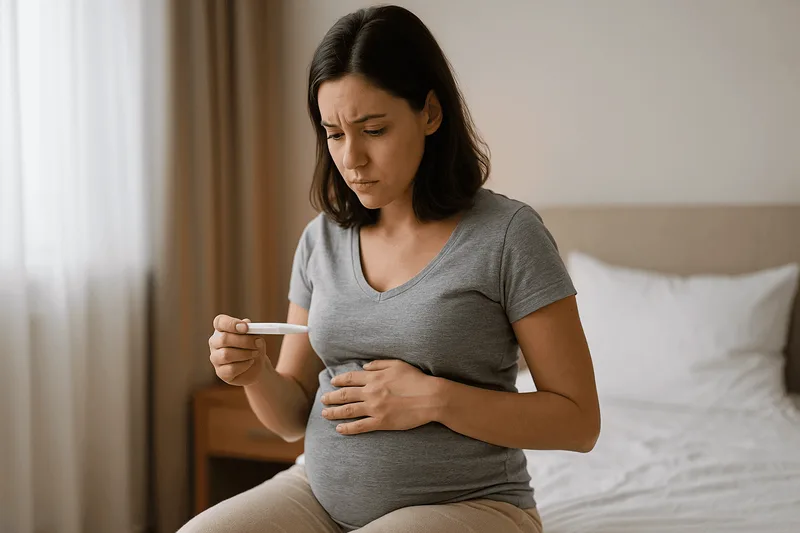
Expecting a baby is a very special time in life, full of hope and curiosity. During this time, your body goes through a lot of changes, and it's normal for your mind to have questions and doubts. One of the biggest questions that many people have is, "If I'm pregnant, will I still get my period?"
You may notice a few drops of blood or spotting from your vagina after you find out you're pregnant. It's normal to feel anxious and scared. Questions like, "Is this your period? Is something wrong with the baby?" come to mind.
So, what's the deal? Can you still have your period when you're pregnant? The straight answer is, no . If you're expecting a healthy baby, your normal menstrual cycle, or period, will stop completely. However, during pregnancy, especially in the early months, you may experience vaginal bleeding or spotting for other reasons. Although these may look like your period, the cause is different.
In this article, we'll look at why menstruation stops during pregnancy, when bleeding can occur for other reasons, what you should do at such times, and how to know for sure if you're pregnant.
Why Don't Real Periods Happen During Pregnancy?
To understand this, let's take a look at how a period usually happens. A woman's body prepares to receive a baby every month. An egg is released from the ovaries ( ovulation ), and the lining of the uterus (endometrium) becomes well-nourished, thick, and ready to receive a baby. All of this happens because of the fluctuations in hormones in the body.
If the released egg does not join with a sperm (fertilization), the hormone levels that helped maintain the uterine lining decrease. Then the thickened lining is shed and comes out of the vagina with blood. This is what we call menstruation, the period, or menstruation.
However, if the egg joins with a sperm and the resulting embryo implants itself in the uterine wall (implantation), the body's functions change. A lot of hormones, such as progesterone, are produced to protect the baby in the womb. These hormones prevent the thickening of the uterine wall from breaking down and remain in place for the baby's growth. Also, when you get pregnant, the release of new eggs (ovulation) stops.
Simply put, when you're pregnant, the way your hormones work changes, and the entire process that causes your period stops. That's why someone who's trying to have a healthy baby doesn't get a normal period.
So, what is bleeding during pregnancy?
Even if you miss your actual period during pregnancy, you may experience vaginal bleeding, spotting, or even bleeding that feels like a normal period for other reasons. There are several reasons for this. While some are not dangerous, others may be conditions that require immediate medical attention.
1. Implantation Bleeding
This can often happen in the first few weeks (6-12 days after the egg and sperm meet) before you even know you're pregnant. When the developing embryo implants itself into the uterine wall, the tiny blood vessels in that wall can be damaged, causing a small amount of bleeding.
- Timing: It usually happens a few days before your next period is due. That's why some people wonder if this is a period.
- Appearance: This is not a heavy bleed. It may be a small spot on your underwear, like spotting, pink or brown in color. It is not as dark red as a normal period, and it is not heavy.
- Time: A few hours, maybe two days at most.
- Important: This is usually not dangerous and can be a sign that the baby is latching on properly. However, it is a good idea to tell a doctor about any bleeding.
2. Ectopic Pregnancy - An Emergency! 🚨
This is a very dangerous situation and requires immediate medical attention. An ectopic pregnancy is when the pregnancy develops outside the uterus, often in the fallopian tube (the tube that carries the baby to the uterus), or sometimes in the ovary.
- Why is it dangerous?: A baby growing outside the womb doesn't have the space to grow properly. As it grows, a place like the fallopian tube can rupture. If that happens, a lot of blood can leak into the abdomen (internal bleeding), which can be a serious threat to the mother's life.
- Characteristics:
- Vaginal bleeding (may be light or heavy).
- Severe, unbearable pain in the abdomen or lower abdomen (pelvic area) (often on one side).
- Shoulder tip pain - This could be a sign of bleeding inside the abdomen.
- I feel dizzy, I feel like I'm losing consciousness, and my body feels very lifeless.
- What to do: If you think you are pregnant and have these symptoms (especially severe pain along with bleeding), go to a hospital emergency room immediately or call an ambulance like in 1990. An ectopic pregnancy is a medical emergency .
3. Losing a baby (Miscarriage)
A miscarriage is the loss of a pregnancy within the first 20 weeks (often within the first 3 months) of pregnancy, causing the fetus to stop developing. While this can be very distressing, it is important to know that a significant number of early pregnancies end in this way.
- Characteristics:
- Vaginal bleeding - It can start as spotting and then become heavy bleeding. It can sometimes be dark red and may be accompanied by clots.
- Cramping - Pain or discomfort in the abdomen or back - may be more severe than normal period pain.
- The previously experienced pregnancy symptoms (e.g., breast tenderness, nausea) are decreasing.
- What to do: If you are bleeding during pregnancy or have any of these symptoms, it could be a sign of miscarriage. It is important to see a doctor as soon as possible. The doctor will perform the necessary tests (e.g. a scan) and tell you exactly what is going on. If that happens, they will be able to prescribe the necessary medication and provide you with the necessary psychological support.
4. Other Causes
In addition to those three main reasons, there may be other reasons for spotting during pregnancy:
- Cervical Changes: During pregnancy, the cervix becomes more sensitive due to increased blood flow . You may experience a small amount of spotting after sex or after a doctor performs an internal examination (e.g., a Pap test).
- Infections: Blood spotting can sometimes occur due to infections (e.g., bacteria, fungi) in the vagina or cervix.
What Should You Do If You See Bleeding During Pregnancy?
This is the most important thing. If you notice any vaginal bleeding or spotting during pregnancy, no matter how small, it is important to inform your doctor or midwife. Even if it is not something serious like implantation bleeding, it is important to know for sure and to rule out anything else.
When do you need to go to the hospital quickly?
- Pain with bleeding: Especially if there is unbearable pain on one side of the abdomen (could be a sign of an ectopic pregnancy).
- If you are bleeding heavily: If you are bleeding so much that you completely soak a sanitary pad in an hour.
- Passage of large blood clots.
- Dizziness, fainting, feeling extremely weak.
- Pain in the tip of the shoulder.
- Fever.
If you have one or more of the above symptoms, it could be an emergency, such as an ectopic pregnancy or a severe miscarriage, so go to the nearest hospital emergency department without delay or call an emergency ambulance service such as 1990.
If there are only minor blood spots and no other severe symptoms, there may be no need to go to the hospital immediately, but it is very important to call your doctor for advice or visit the clinic as soon as possible .
Suspect Pregnancy? Tests and Signs
If your period is late by a few days or a week and you suspect you are pregnant, you can try a home pregnancy test.
- Pregnancy Tests: These work by detecting a hormone called hCG (Human Chorionic Gonadotropin) in the urine. This hormone is produced after pregnancy.
- False results: Sometimes, especially if you test before or during your period, you may still be pregnant even if the result is negative. This may be because the hCG hormone in your urine is not yet detectable by the test. Therefore, if you get a negative result and your period has not yet arrived and you are experiencing pregnancy-like symptoms , it is best to test again in a few days or see a doctor.
- Other signs of pregnancy: There are other common signs that may indicate that you are expecting a baby:
- Missed period.
- Morning sickness (nausea/vomiting) in the morning or at other times of the day.
- Tender breasts.
- Feeling very tired (Fatigue).
- Frequent urination.
- Mood swings.
- Cravings or aversions to certain foods.
If you suspect you are pregnant, even if a home test comes back positive, it is important to see a doctor or a family health clinic .
Why is Seeking Medical Advice Essential?
Even if you suspect you are pregnant or have a positive home pregnancy test, it is essential to see a doctor for the following reasons:
- Confirm: Make sure you are actually pregnant and that the baby is in the right place in the uterus (intrauterine) (especially to make sure there is no ectopic pregnancy).
- Dating Scan: Find out how many weeks pregnant you are and when your baby is due (Estimated Due Date - EDD).
- Prepare a clinic book / start treatment (Prenatal Care): To have a healthy baby, start taking necessary treatments (e.g. folic acid) and tests from the very beginning.
- Find the cause of the bleeding: If you are bleeding for any reason during pregnancy, find out the exact cause and do what is right for it.
- Get advice/make up your mind: Ask your questions, clear your doubts, and get peace of mind.
Summary and Final Word
So, to reiterate, if you are pregnant, you will not have a normal period. However, during pregnancy, especially in the early months, you may experience vaginal bleeding or spotting due to various reasons such as implantation bleeding, ectopic pregnancy, and miscarriage.
The most important thing is: Don't ignore a little bleeding during pregnancy. Even if it's just a little spotting, tell your doctor . If you're bleeding a lot, have severe pain, or feel dizzy, go to the hospital right away without delay.
Your health and that of your baby are the most important things. Never be afraid to ask a doctor when in doubt. It will go a long way in helping you bring a healthy baby into this world!




💬 Comments (0)
No comments yet. Be the first to share your thoughts here.
Add Your Comment