

Have you noticed any small white streaks or spots on the surface of your little one's teeth? They may even be yellowish or brownish. Many parents worry that their child's teeth are stained when they see something like this. But this is actually not a disease, so don't worry. In medical terms, we call this condition related to the appearance of teeth Fluorosis . So, let's talk about this clearly and simply today.
What exactly is Fluorosis?
Simply put, fluorosis is a change in the appearance of teeth caused by excessive exposure to the mineral fluoride during the first 8 years of a child's life, when permanent teeth are forming. This is not tooth decay or a disease that affects the strength of the teeth. It is simply a change in the appearance of the enamel on the surface of the teeth.
Imagine, in the early 20th century, researchers in a region of Colorado, USA, noticed strange brown stains on people's teeth. They called them "Colorado Brown Stains." Later, they discovered that the groundwater in that area naturally contained very high levels of fluoride. And, surprisingly, they found that people with these stains had much less tooth decay than others.
That's where the world learned that fluoride has both good and bad sides. Fluoride is essential for preventing tooth decay. But if it's too much, it can cause conditions like fluorosis.
Today, fluoride is added to toothpaste and mouthwash in appropriate amounts to stop tooth decay, not to cause fluorosis.
What are the main causes of fluorosis?
Most of the time, this situation occurs in ways we don't even think about. The main reason is that young children use fluoride toothpaste incorrectly. Think about it, some toothpastes come in fruit flavors. So young children like that flavor and swallow it after brushing their teeth without spitting it out. As they swallow little by little throughout the day, the amount of fluoride their body receives increases.
Apart from that, there are several other reasons:
- Giving a child more fluoride supplements than the recommended dose prescribed by a doctor.
- Providing additional fluoride tablets when the drinking water you use already contains enough fluoride.
- Give your child fluoride-enriched fruit drinks and soft drinks frequently.
How do you recognize the symptoms exactly?
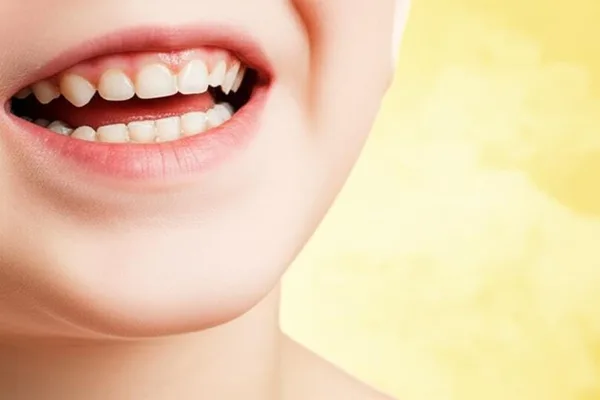
The symptoms of fluorosis vary from person to person. Some people may have only small white streaks that are barely visible to a dentist. Others may have clearly visible brown spots and roughened, pitted surfaces.
Healthy teeth are usually smooth, shiny, and creamy white. If you notice white streaks, spots, or brown spots on your child's teeth, it's best to see your dentist and talk about it.
Dentists classify this condition as follows.
| Severity Level | Visible Signs |
|---|---|
| Questionable level | There is a very slight change in the enamel of the tooth, perhaps a few small white dots. |
| Very Mild | Small, opaque white spots, like paper, are scattered over less than 25% of the tooth's surface. |
| Mild | The white spots are a little more visible, but they still cover less than 50% of the tooth surface. |
| Moderate | White spots cover more than 50% of the tooth surface. |
| Severe level | The entire enamel of the tooth is affected. You may even see brown spots on the surface of the tooth and small pitting that is difficult to clean. |
What are the treatments for this?
The good news is that most cases of fluorosis are so mild that no treatment is needed. Sometimes, these stains are located deep inside the mouth, on the back teeth, and no one can see them.
However, if moderate or severe fluorosis is affecting a child's appearance, especially their smile, there are treatments that can mask the spots. These work by making them less visible rather than removing them.
- Tooth Whitening: This method is used to remove surface stains. However, sometimes bleaching your teeth can temporarily make fluorosis stains more visible.
- Bonding: In this, a resin that matches the color of the tooth is applied to the surface of the tooth and fixed.
- Crowns: Artificial tooth coverings that completely cover the tooth.
- Veneers: These are like a shirt that you wear on your teeth. They are thin, custom-shaped covers that are attached to the front surface of your teeth. They are used in severe cases.
- MI Paste: This is a product containing calcium phosphate. It is used in conjunction with some treatments to reduce tooth stains.
Your dentist will decide which of these treatments is best for your child.
Most importantly: How to prevent fluorosis?
It's easier to prevent than to treat. Here, the attention and vigilance of parents is the most important thing.
- How to use toothpaste: When brushing your child's teeth, only put a pea-sized amount of toothpaste on the toothbrush . That amount is enough to protect the teeth. Also, teach your child to spit out the toothpaste after brushing instead of swallowing it . It's also a good idea to choose a plain toothpaste instead of a flavored toothpaste that children like to swallow.
- Keep fluoride products away from children: Keep everything like toothpaste, mouthwash, and fluoride tablets high up and out of reach of small children.
- Water fluoride levels: If you use tap water, you can check the fluoride levels in your water with your local Medical Officer of Health (MOH). If you use well water, you can have it tested by a laboratory. If you have a rough idea of how much fluoride your child gets from the water and other beverages they drink, talk to your doctor to decide whether your child needs additional fluoride tablets.
Warning: If a child swallows a large amount of fluoride at once (e.g. a significant amount from a tube of toothpaste), symptoms such as nausea, vomiting, diarrhea and stomach cramps may occur. Although this is usually not a serious condition, see a doctor immediately in such cases. If necessary, go to the nearest Emergency Department (ETU) . You can also call the National Poisons Information Centre at the Colombo National Hospital for advice.
Take-Home Message
- Fluorosis is not a disease. It is an effect on the appearance of a child's teeth caused by excessive fluoride exposure during the development of their permanent teeth.
- When brushing your child's teeth, always use only a pea-sized amount of toothpaste.
- Teach your child from an early age to spit out toothpaste instead of swallowing it.
- Keep all products containing fluoride, such as toothpaste and mouthwash, safely out of the reach of small children.
- If you notice unusual white, yellow, or brown spots on your child's teeth, don't panic and seek advice from a dentist .




💬 Comments (0)
No comments yet. Be the first to share your thoughts here.
Add Your Comment